Quick answer
A complete dog biking kit should include a well-fitting harness, a shock-absorbing bungee leash, and a secure bike attachment. Focus on harness size adjustability and the type of bike mount that works with your bicycle.
Harness fit is the foundation of comfort and control
The harness is the most important piece of a dog biking kit. A poor fit can cause chafing, restrict movement, or allow your dog to slip out. Look for a harness with multiple adjustment points—around the neck, chest, and girth—so you can fine-tune the fit for your dog's body shape.
Freemotion harnesses, like those included in Non-stop dogwear biking kits, are designed for pulling sports. They distribute force across the chest and back, reducing strain on the neck. If your dog is between sizes, choose the larger size and adjust snugly rather than forcing a smaller fit.
Bungee leash: shock absorption protects both of you
A dog bike leash needs to absorb sudden pulls to prevent jarring stops. A bungee leash with a built-in shock absorber smooths out the ride and reduces the risk of injury to your dog's neck or your handlebars. The length should be short enough to keep your dog close to the bike but long enough to allow natural movement.
All Non-stop dogwear biking kits include a bungee leash, which is a key safety feature. If you already have a bungee leash, check that it is rated for your dog's weight and pulling strength.
Bike attachment: antenna vs. frame mount
The bike attachment connects the leash to your bicycle. The most common options are an antenna mount that extends out from the rear axle or a frame mount that attaches to the seat post or chainstay. Antenna mounts keep the leash away from the wheels and reduce tangling, making them a popular choice for bikejoring.
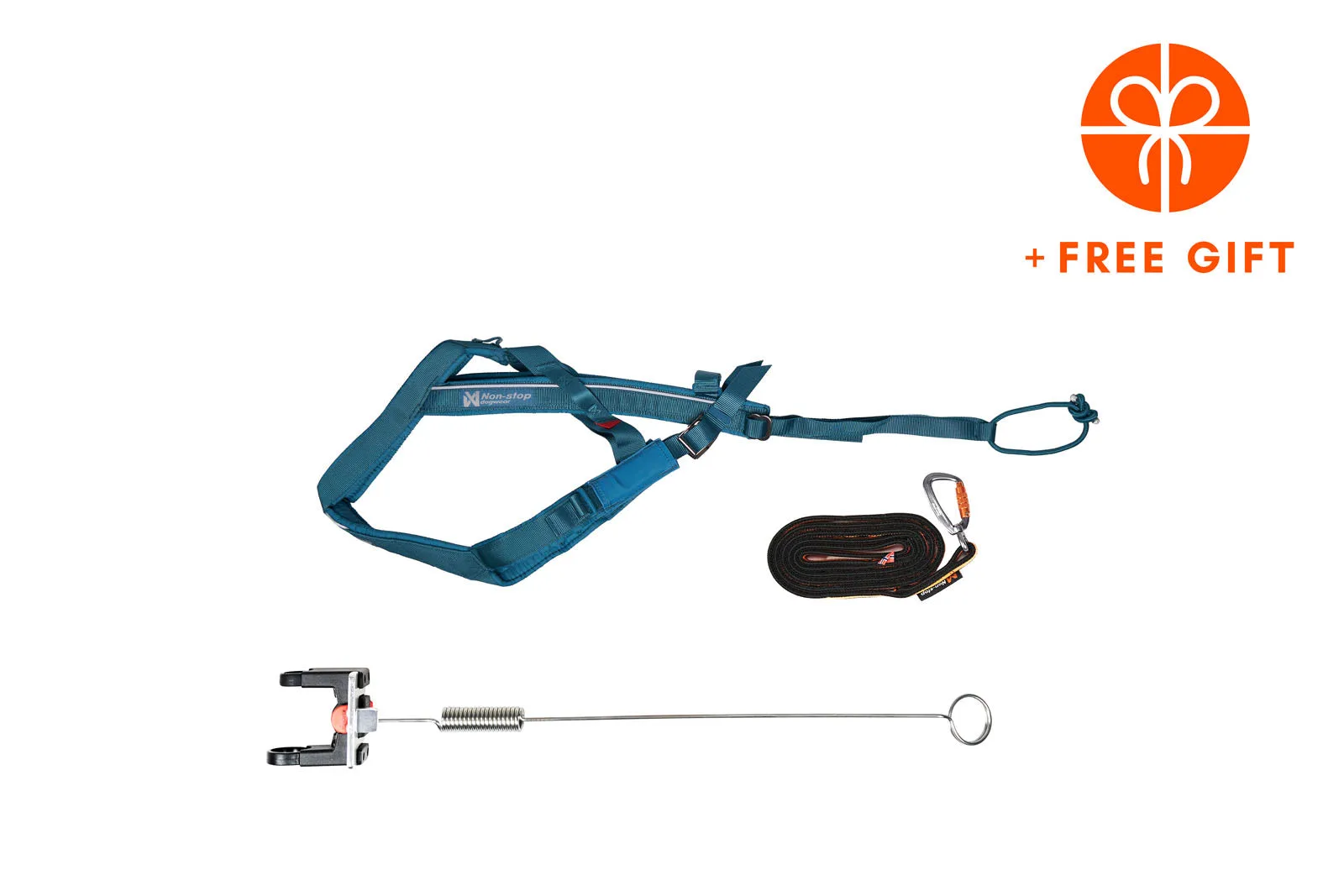
Some kits include a bike antenna, like the KLICKfix system in the Biking kit Klickfix Teal. Others include a standard bike antenna. Consider whether your bike has a rear axle that can accommodate an antenna mount, or if you prefer a frame-mounted solution.
Decision rules for choosing a biking kit
- Check harness adjustability: Measure your dog's chest girth and neck circumference. Compare with the harness size chart. The harness should have at least three adjustment points for a custom fit.
- Choose your bike attachment type: If your bike has a standard rear axle and you want easy on/off, pick a kit with a KLICKfix antenna. If you prefer a fixed mount or have a non-standard axle, a standard bike antenna or frame mount works. Test the antenna fit on your bike before committing to a kit.
- Consider the bungee leash length: A leash around 60–80 cm (24–32 inches) is typical for bikejoring. Longer leashes increase tangling risk; shorter leashes reduce your dog's range of motion.
- Look for a free gift in the kit: Some biking kits include a free gift (e.g., a treat pouch or spare part). This adds value but should not be the deciding factor.
Product facts
-
Biking kit Klickfix Teal: Includes the Freemotion harness 5.0, Bungee leash, and Bike antenna KLICKfix, plus a free gift. The KLICKfix antenna is a quick-release mount that fits most bike axles, making setup and removal fast without tools.
Biking kit Klickfix Teal
-
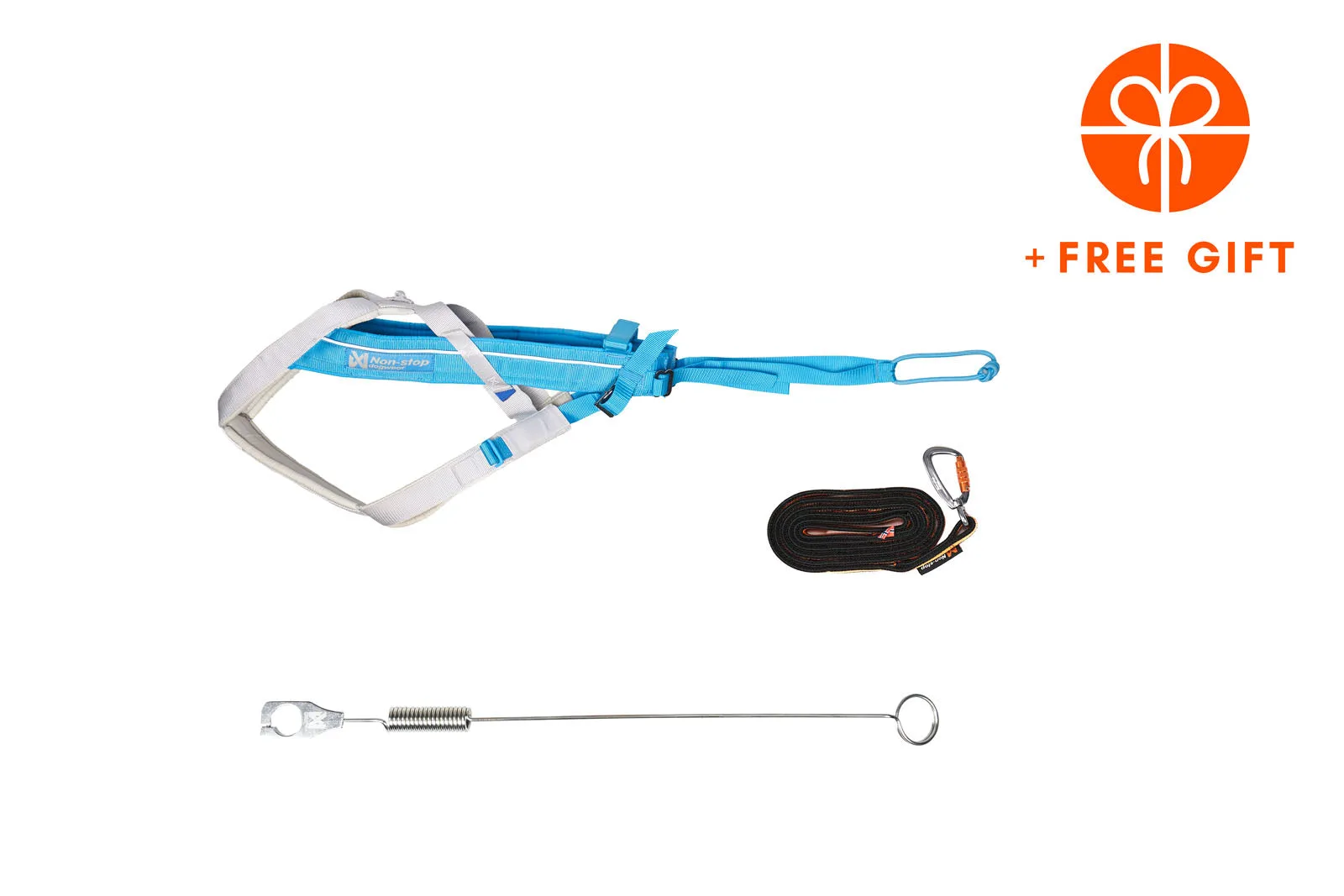
Biking kit Blue/gray: Includes the Freemotion harness 5.0, Bungee leash, and Bike antenna, plus a free gift. This kit offers the same core components as the Klickfix version but with a standard bike antenna, which may be more compatible with certain bike frames.
Biking kit Blue/gray
Who should buy a biking kit?
Best for
- Dog owners new to bikejoring who want a complete, matched set
- Riders who want a harness, leash, and bike attachment that work together out of the box
Not for
- Owners who already have a harness and bungee leash and only need a bike attachment
- Dogs with unusual body proportions that require a custom or specialized harness