Quick Answer
Match eyepiece focal length to the magnification you actually use. Divide your telescope's focal length by the eyepiece focal length to get magnification; aim for one low-power wide-field eyepiece, one medium-power workhorse, and one high-power eyepiece for planets and double stars. For most refractors, a 30mm low-power eyepiece and a medium-power eyepiece cover the majority of deep-sky and lunar viewing.
How Eyepiece Focal Length Sets Magnification
Magnification equals telescope focal length divided by eyepiece focal length. A 30mm eyepiece in a 714mm refractor gives about 24x; a 10mm eyepiece gives about 71x. The eyepiece does not change the telescope's aperture or resolution, so pushing magnification past what the optics and sky support only enlarges a blurry image.
True field of view depends on the eyepiece's apparent field and the magnification. A low-power eyepiece with a wide apparent field shows more sky, making it easier to find objects and frame large nebulae or star clusters. High magnification narrows the field, which helps for planets but makes pointing harder.
A Three-Eyepiece Strategy That Covers Most Nights
Start with a low-power eyepiece around 25–32mm for locating objects and viewing large deep-sky targets. Add a medium-power eyepiece around 12–18mm for globular clusters, the Moon, and smaller nebulae. Finish with a high-power eyepiece around 6–10mm for planets, double stars, and lunar detail when the atmosphere is steady.
If you observe under light-polluted skies, the low-power eyepiece will get the most use because it concentrates faint light into a smaller exit pupil. If you travel to dark sites, the medium-power eyepiece often becomes the sweet spot for galaxies and emission nebulae.
Exit Pupil and Eye Relief: The Numbers Behind Comfort
Exit pupil is eyepiece focal length divided by telescope focal ratio. For a 30mm eyepiece in an f/7 refractor, the exit pupil is about 4.3mm, which suits most dark-adapted eyes and makes faint objects easier to see. Very high magnification can shrink the exit pupil below 1mm, where floaters and eye imperfections become distracting.
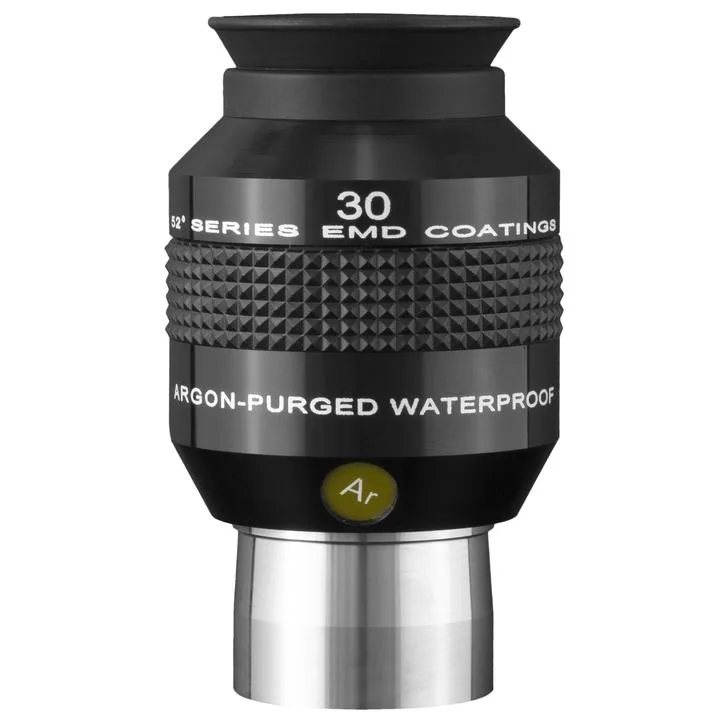
Eye relief is the distance your eye must sit from the lens to see the full field. Long eye relief helps if you wear glasses, but very long eye relief can cause blackouts if your eye drifts. The 52° 30mm Waterproof Eyepiece is a low-power option with a 30mm focal length, useful for deep-sky observing where a large exit pupil matters.
Matching Eyepieces to Your Telescope Type
Refractors with focal ratios around f/6 to f/8 are forgiving with most eyepiece designs. Faster telescopes, including many smart scopes, demand better-corrected eyepieces to avoid edge distortion, but smart telescopes like the DWARF 3 often use built-in sensors rather than removable eyepieces, so eyepiece selection applies mainly to traditional refractors.
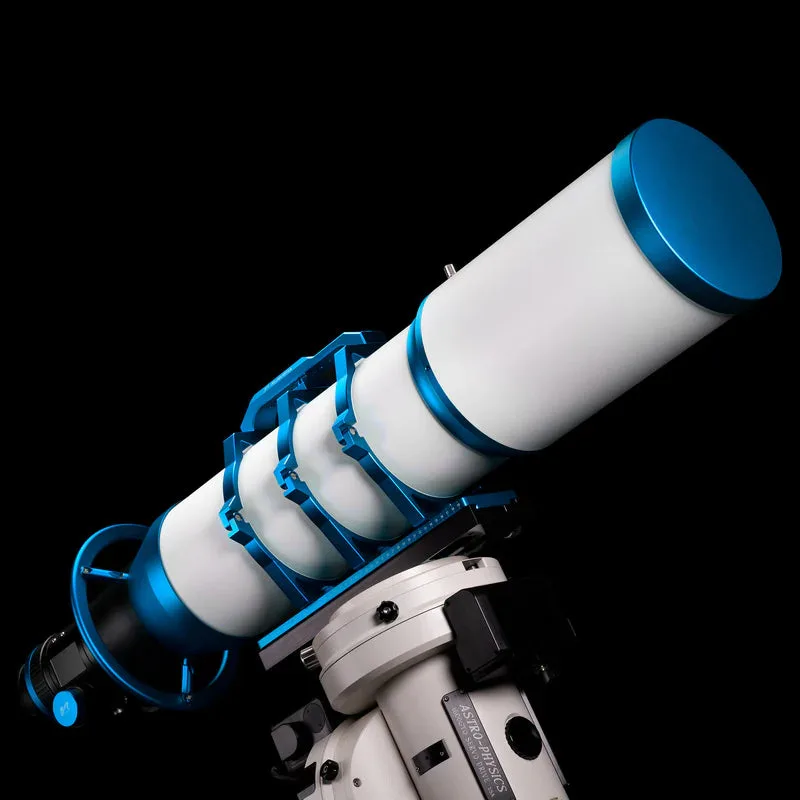
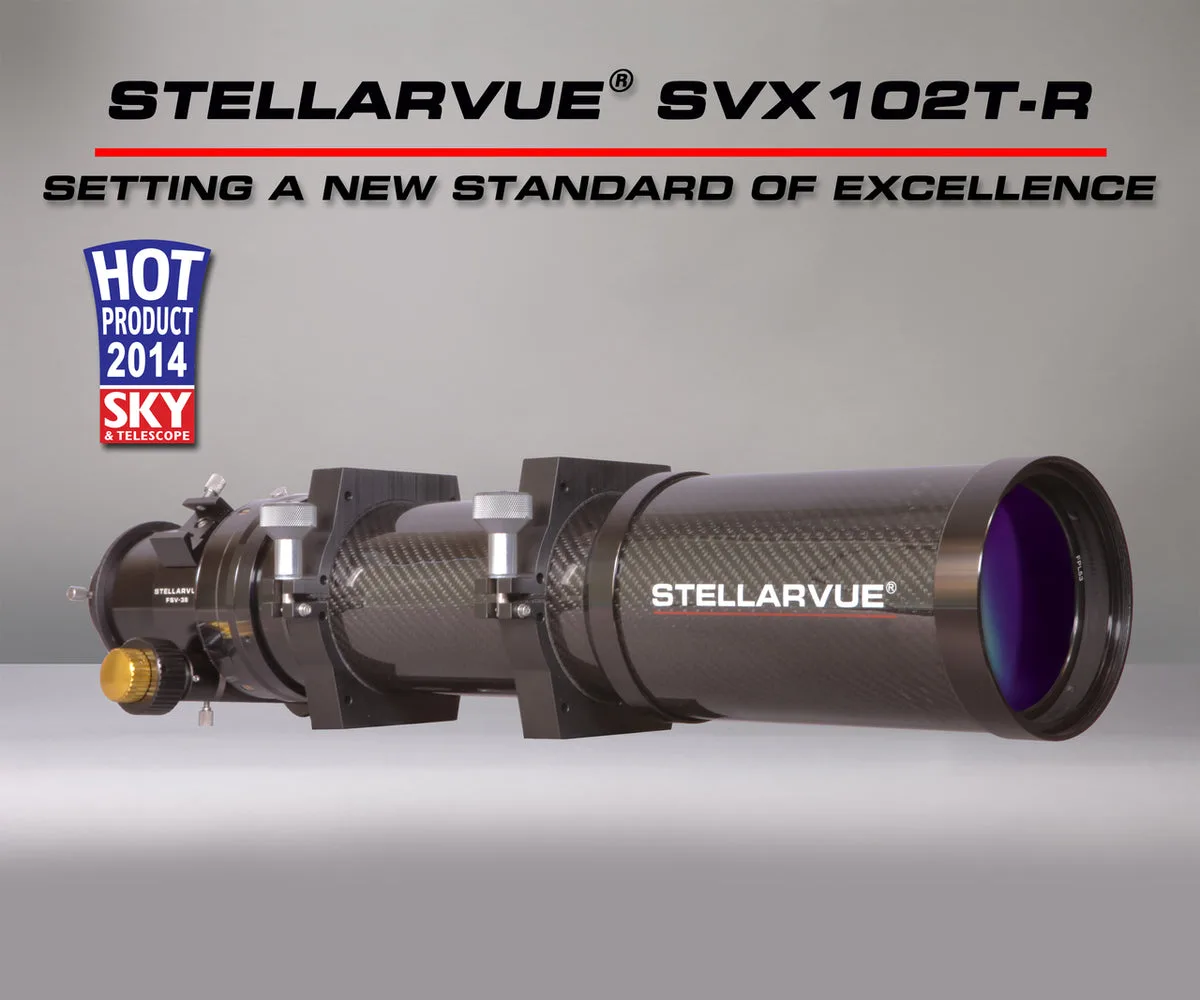
If you own a refractor such as the SVX102T-R, its 714mm focal length pairs well with a 30mm low-power eyepiece for wide fields and a 12mm medium-power eyepiece for general viewing. For a larger imaging-oriented refractor like the Pleiades 181 with its 998mm focal length, the same eyepiece set yields higher magnification at every step, so you may prefer a slightly longer low-power eyepiece to keep the field wide.
What to Skip and What to Upgrade First
Skip eyepiece kits that include very short focal lengths you will rarely use; a single high-quality medium-power eyepiece usually beats three mediocre ones. If you wear glasses, prioritize eye relief over the widest apparent field, because comfort determines how often you actually observe.
Upgrade your low-power eyepiece first if you star-hop to find objects, or your medium-power eyepiece first if your main targets are planets and the Moon. A 2x Barlow can double your magnification range, but it also doubles the effective focal length and can make eye relief longer or shorter depending on the design.
Decision Rules for Buying Eyepieces
- Start with a low-power eyepiece (25–32mm): Choose this first if you star-hop or view large deep-sky objects. It gives the widest true field and the brightest exit pupil for faint targets. Best first purchase for most observers.
- Add a medium-power eyepiece (12–18mm): This becomes your most-used eyepiece for the Moon, planets, and smaller deep-sky objects. Match it to your telescope's focal ratio for a comfortable exit pupil. The workhorse magnification for most nights.
- Add high power only if your sky supports it: A 6–10mm eyepiece helps on steady nights for planets and double stars. If your seeing is usually turbulent, spend the money on a better medium-power eyepiece instead. Skip high power if you rarely get steady air.
Product Facts
- 52° 30mm Waterproof Eyepiece (EPWP5230-01): 52° 30mm Waterproof Eyepiece (EPWP5230-01) with a 30mm focal length, described as producing a large exit pupil for deep-sky observing. A 30mm eyepiece gives low magnification and a wide true field, making it easier to locate faint galaxies and nebulae and to frame large objects.
- SVX102T-R Premier Apochromatic Triplet Refractor (with Feathertouch Focuser, Flattener, & Dovetail Plate): SVX102T-R Premier Apochromatic Triplet Refractor with a 714mm focal length and f-7 focal ratio. With a 714mm focal length, a 30mm eyepiece yields about 24x and a 12mm eyepiece about 60x, so a simple two- or three-eyepiece set covers most observing.
- Pleiades 181: Pleiades 181 with a 181mm diameter and 998mm focal length, designed for imaging with medium format cameras. Its longer focal length raises magnification for any given eyepiece, so visual observers may want a longer low-power eyepiece to keep the field wide.
Who Should Buy Which Eyepiece
Best for
- Observers with a refractor around 700–1000mm focal length who want a simple three-eyepiece set
- Deep-sky observers who need a low-power, wide-field eyepiece for locating faint objects
- Glasses wearers who need long eye relief for comfortable viewing
Not for
- Smart telescope owners whose scope uses a built-in sensor instead of removable eyepieces
- Observers who only view the Moon and planets and never need low power
- Beginners who want a single eyepiece to do everything; two or three well-chosen focal lengths work better