Quick answer
For most Dwarvenite terrain, choose a water-based acrylic paint made for miniatures or scale models, then seal it with a matte varnish. If you are painting resin terrain, use the same acrylics but expect to prime first because resin is smooth and non-porous. Avoid oil-based house paints unless you are working on large table coverage pieces where cost and durability matter more than fine detail.
Dwarvenite is a dense, slightly flexible PVC that holds acrylic paint well once it is clean. That flexibility is the main difference from resin, which is rigid and smooth. The paint you choose should be able to flex with the material without cracking, which is why water-based acrylics are the default for miniature terrain paint.
This guide gives you decision rules instead of brand loyalty. You will learn how to match paint to surface, finish, and budget, and how to test a small area before committing to a whole set. It also covers where paint behaves differently on Dwarvenite versus resin terrain, so you can buy once and paint with confidence.
Match the paint to the material: Dwarvenite vs resin
Dwarvenite has a slight texture and a tiny amount of give. Water-based acrylics bond to it without a primer in most cases, especially if you wash the piece first with warm soapy water to remove mold release. Resin terrain is smooth and non-porous, so acrylic paint can bead or rub off unless you prime it with a model primer or a thin coat of matte medium.
This difference matters when you are buying paint for a mixed collection. If you own both materials, choose a primer that works on resin and a flexible acrylic for Dwarvenite. A single paint line can cover both, but you will need different preparation steps. Skipping primer on resin is the most common reason paint chips during play.
- Wash Dwarvenite and resin pieces with warm water and dish soap, then let them dry completely before painting.
- Test a hidden area first: paint a small patch, let it cure for 24 hours, then scratch it gently with a fingernail.
- If the paint peels on resin, add a primer coat before repainting.
Choose the right finish for terrain that gets handled
Matte finishes hide brush strokes and look natural on stone, dirt, and wood. Satin and gloss finishes are more durable but can look toy-like on dungeon walls. For pieces that are handled every session, a matte varnish over a matte acrylic gives you the best balance of appearance and protection. If you want a wet look for water effects, use gloss varnish only on those specific areas.
Consider how often you will pack and unpack your terrain. Dwarvenite is durable, but paint on high-contact edges like corners and door frames will wear faster. A thin coat of matte varnish on those edges extends the life of your paint job without changing the look. For display pieces like the Eldritch Hero (LED) - Radiant Horror, a satin or matte varnish keeps the hand-painted details readable under LED light.
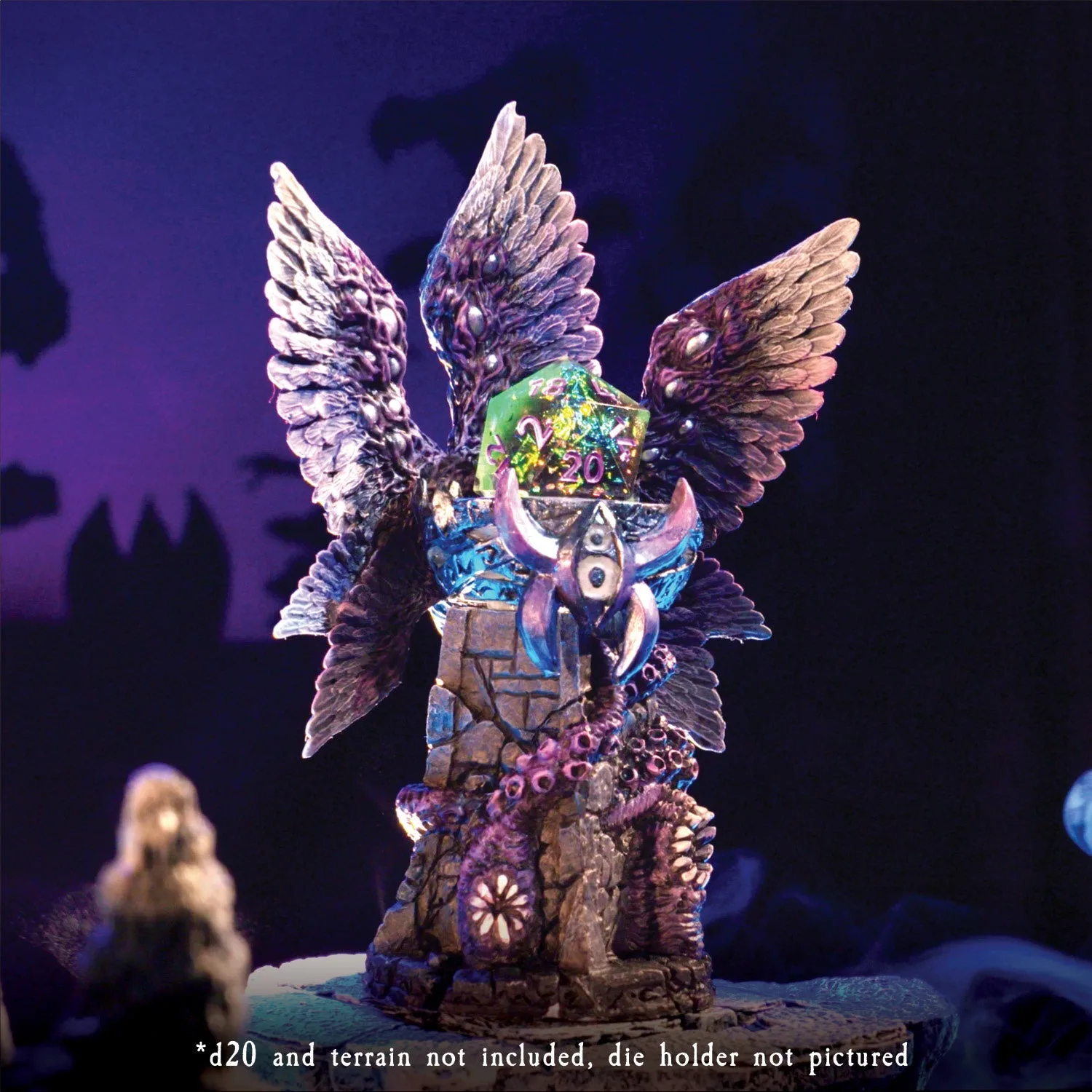
Eldritch Hero (LED) - Radiant Horror
- Use matte acrylics for stone and earth; reserve gloss for water, slime, or magical effects.
- Apply two thin coats of varnish rather than one thick coat to avoid clouding.
- Avoid enamel or oil-based paints on Dwarvenite unless you are prepared for long dry times and strong fumes.
Buying paint for large coverage vs small details
Large table coverage pieces like Battleboards need more paint per square inch, so cost per ounce matters. Craft acrylics in large bottles work well for basecoats on these surfaces because you can apply them with a wide brush or roller. Save your finer miniature paints for details like lanterns, runes, and faces where control and pigment density matter more than volume.
If you are painting an entire dungeon set, buy one or two large bottles of your base stone color and a set of smaller bottles for accents. This keeps your budget predictable and avoids running out mid-project. For individual pieces like the Classic Dungeon Wall (Painted), you may only need touch-up paint, so a small bottle of matching acrylic is enough.
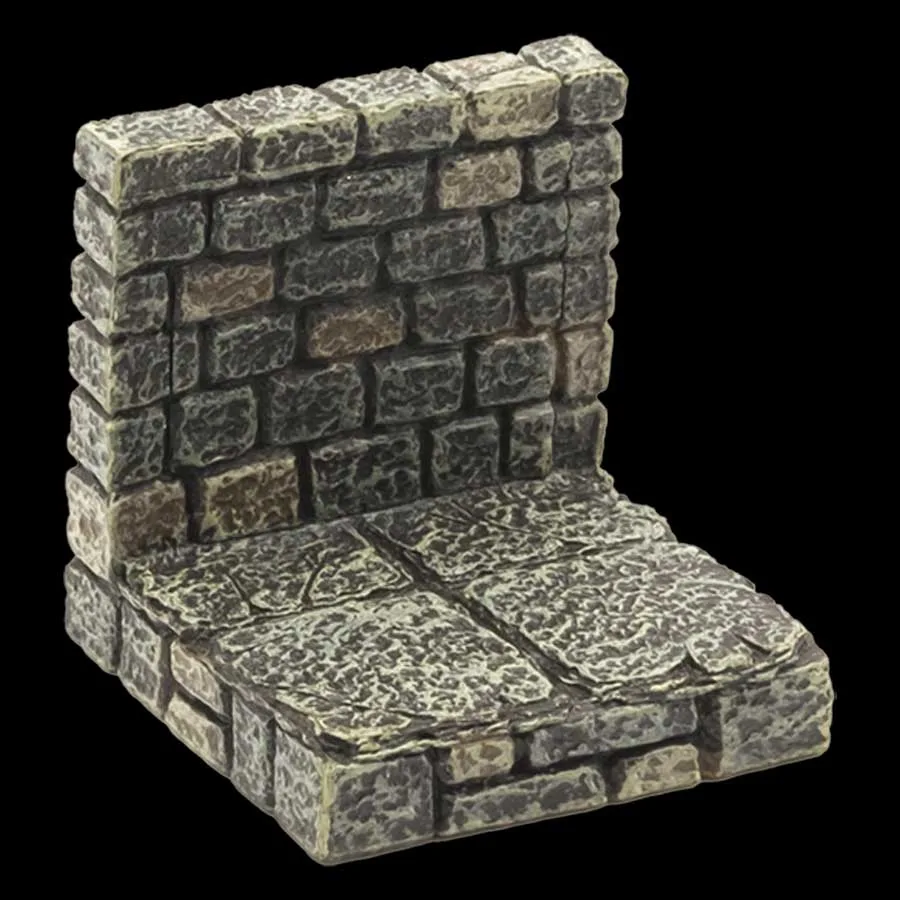
Classic Dungeon Wall (Painted)
- Estimate coverage: a 2 oz bottle of acrylic covers roughly 1-2 square feet of terrain with one coat, depending on thickness.
- Buy a color you can mix: a neutral gray or brown base stretches across many stone and dirt schemes.
- Label your mixed colors so you can reproduce them later for touch-ups.
When to use specialty paints and effects
Specialty paints like washes, inks, and metallics are not required, but they speed up shading and highlighting. A brown or black wash settles into cracks on Dwarvenite and instantly adds depth. Dry pigments and weathering powders work well on resin terrain because the smooth surface holds them without absorbing them. If you are painting LED pieces, keep paint away from the light openings and battery compartments.
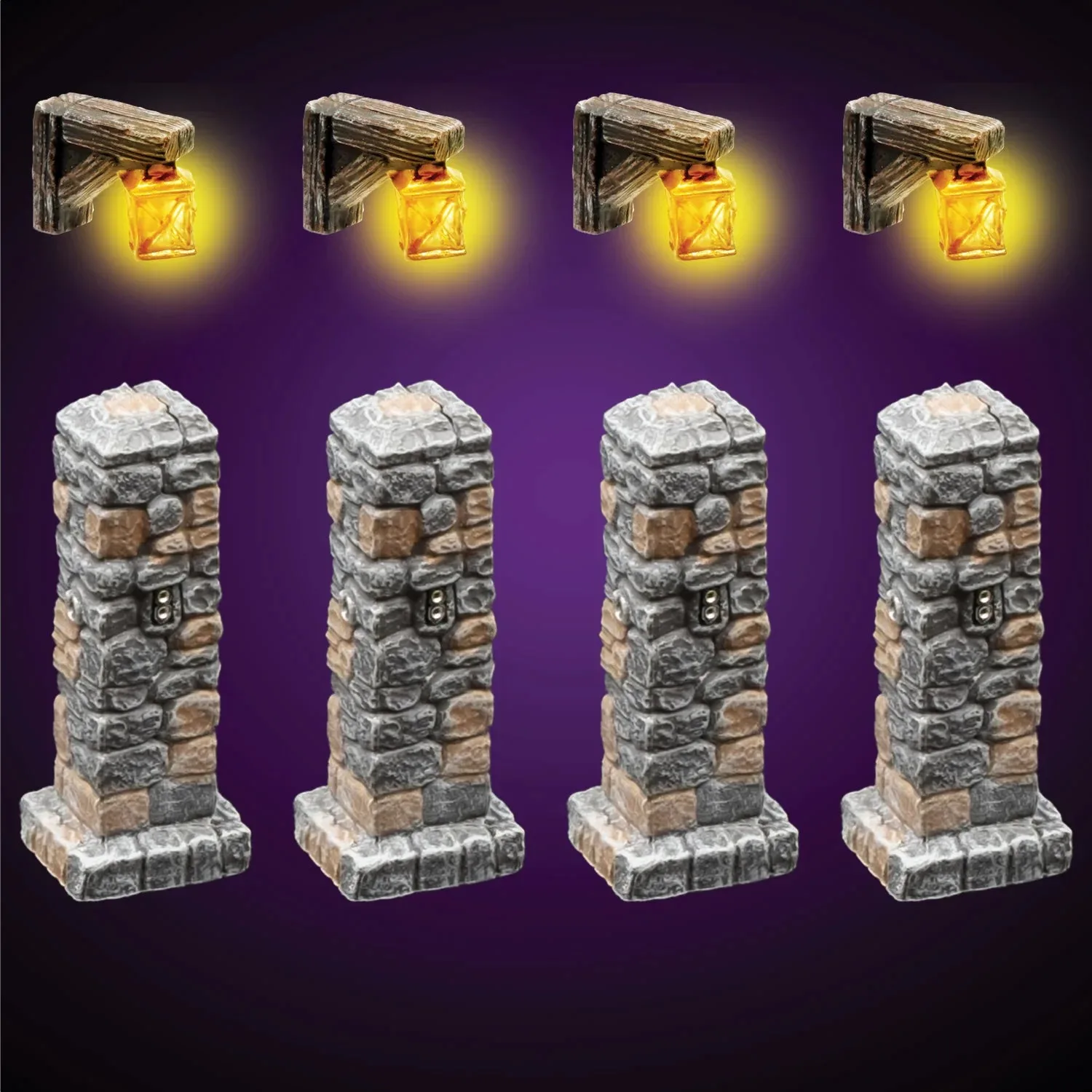
For LED sets such as the LED Lantern Posts (Unpainted) or LED Elements Assortment (Unpainted), use thin acrylics and avoid thick layers that could block light. A wash over the stone pillars adds definition while still letting the lantern glow read clearly. Test the light after painting to make sure you did not cover a critical opening.
- Apply washes after your basecoat and before varnish; they need a matte surface to grip.
- Keep paint off electrical contacts and battery doors on any LED terrain.
- Metallic paints can be used sparingly on hinges, weapons, and treasure piles, but they show brush strokes more than matte acrylics.
Budget and quantity: how much paint to buy
Start with a limited palette: a base stone color, a dark wash, a highlight color, and a matte varnish. That set covers most dungeon and castle terrain. If you are painting a full set, buy the largest bottle of your base color you can justify, because running out mid-project leads to color mismatches. For small individual pieces, a 17ml dropper bottle is often enough for several pieces.
Do not buy a 50-color paint set before you know what you like. Buy one or two colors at a time, test them on a spare piece, and expand only when you have a specific need. This approach saves money and keeps your paint collection usable. Remember that paint for resin terrain may need a primer, which adds a small cost but prevents wasted paint on failed adhesion.
- A starter kit of 6-8 acrylic colors plus a wash and varnish covers most terrain projects.
- Buy primer only if you paint resin or if your Dwarvenite pieces have a shiny surface.
- Store paint tightly sealed and upside down to keep air out and make mixing easier.
Decision rules for buying terrain paint
- If you paint Dwarvenite only: Choose water-based acrylics made for miniatures or craft use. You can skip primer if the surface is clean and matte. Add a matte varnish for handling. Best balance of cost, flexibility, and adhesion.
- If you paint resin terrain: Prime first with a model primer or matte medium. Then use the same acrylics. Without primer, paint may chip or bead on smooth resin. Primer is non-negotiable for resin.
- If you paint LED pieces: Use thin coats and avoid blocking light openings or electrical contacts. A wash is safer than thick paint for adding depth around lights. Test the light after each coat.
- If you paint large table coverage: Buy craft acrylics in large bottles for basecoats. Use smaller, higher-pigment paints for details. Estimate 1-2 square feet per 2 oz bottle. Cost per ounce matters more than brand for basecoats.
- If you are unsure: Buy a single neutral acrylic, a wash, and a matte varnish. Test on a spare piece or the underside of a terrain piece before committing to a full set. Start small, expand only when you have a specific need.
Product facts that affect paint choices
- LED Lantern Posts (Unpainted): Tall stone pillars with lanterns to illuminate a castle courtyard or town square. Includes 4 LED elements, all of which can be lit simultaneously with the included pillars. This set contains 8 pieces: 4-LD-001 LED Lantern 4 and 4-LD-004 LED Socket Pillar 4. Because these pieces light up, use thin acrylic coats and avoid covering the LED openings. A wash over the stone adds depth without blocking the glow.
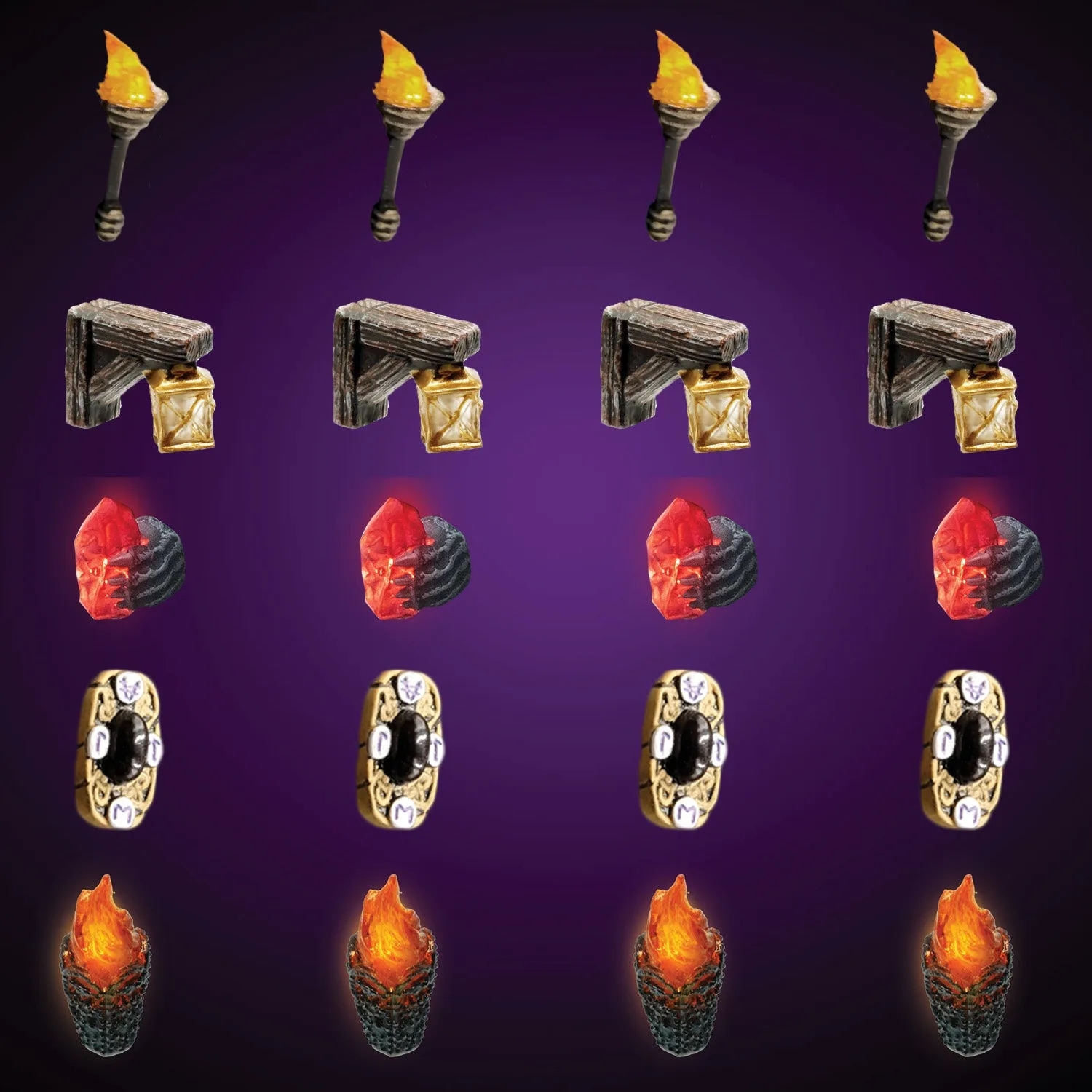
- LED Elements Assortment (Unpainted): A wide variety of LED pieces for customizing your city or fortress. Includes 20 different LED pieces; power source not included. These pieces are suitable for placement in the Gatehouse, LED Pillar, Large Tower LED Wall, and City Builder LED Wall. You will paint many small LED inserts, so a fine brush and thin paint are more important than large bottles. Keep paint off the contacts and plan for a power source separately.
- Classic Dungeon Wall (Painted): The Classic Dungeon Wall (Painted) is an individual piece from Dwarven Forge, part of the Classic Dungeon line and the Dungeon of Doom (KS5) range. It arrives painted and ready to use in your builds. Individual piece, not a full set. Painted finish. Made of Dwarvenite. Features anchor magnets. If you already own painted pieces, you only need touch-up paint for chips or custom accents. Match the existing finish with a matte acrylic rather than repainting the whole piece.
- Battleboard Single 12"x12": Packed Dirt: Battleboards are great for anyone looking to get a whole square 12-inches of coverage. One side is already printed with a graphic, and the other side accommodates any of our 12x12 terrain trays. Battleboards have the same height (thickness) as a large portion of our floors, helping to build faster, easier, and still be backwards compatible. These large surfaces need more paint if you customize them, so use craft acrylics in bulk for basecoats and save detail paints for accents. The printed side may not need paint at all.
Who this guide is for
Best for
- New painters who need a clear starting point for painting Dwarvenite or resin terrain
- Experienced hobbyists looking for decision rules on finish, primer, and budget
- Anyone painting LED terrain or large table coverage pieces who wants to avoid common mistakes
Not for
- Collectors who only buy pre-painted pieces and never customize them
- Painters looking for advanced color theory or competition-level blending techniques
- Anyone seeking brand-specific paint reviews or exact color matching for a pre-painted set
Choosing paint for Dwarvenite terrain comes down to three decisions: match the paint to the material, pick a finish that survives handling, and buy only the colors you will actually use. Start with a water-based acrylic, a wash, and a matte varnish. Test on a spare piece, then paint your set with confidence.