Quick answer
Buy the tent for the frame and the floor you already have. A fabric cover sized to a large Montessori triangle gives toddlers a cozy hideout without adding footprint, while a freestanding tent needs clear floor space and a stable base. Measure the triangle base plus 10–15 cm on each side, then choose a cover that fits that frame rather than guessing from photos.
Fabric choice: what toddlers actually need
For toddlers, prioritize a fabric play tent that is soft, breathable, and easy to wipe or wash. Cotton canvas and cotton-poly blends hold shape well and feel less plasticky than thin synthetic shells, but they are heavier and can shrink if washed hot. A fabric cover also changes the acoustics and light inside the tent, which matters more than most parents expect: a darker, enclosed space encourages quiet reading and pretend sleep, while a bright cover keeps the play area feeling open.
Check how the cover attaches before buying. Ties, elastic loops, or a fitted sleeve all work, but they must match your frame's rungs or corners. A cover that only drapes over the top will slide during climbing and frustrate a child who wants a fortress that stays put.
Wooden play tent frame: match the cover to the triangle
A wooden play tent frame is usually a climbing triangle or a similar rung-and-rail structure. The cover is the removable part, so the frame's dimensions decide whether the tent fits. Measure the triangle's base width, height, and the distance between the two side rails at the height where the cover will sit. If those numbers are not listed, ask before ordering; a cover that is 5 cm short will pull loose at the corners.
Wooden frames also carry weight and movement. A cover adds fabric tension but not structural strength, so the frame must already be stable on the floor. If your triangle slides on hardwood, fix that first with a rug or non-slip pads rather than expecting the tent to steady it.
Play tent floor space: measure before you fall in love
Indoor play tent size is really a floor-space question. Mark the triangle's footprint with painter's tape, then add the clearance your child needs to crawl in and out. As a working rule, leave at least 30 cm of open floor on the entry side and 10–15 cm on the other sides so the fabric is not pressed against a wall or radiator. In a small bedroom, that often means the tent lives in a corner and comes out for play sessions rather than staying up permanently.
Height matters too. A tent that is taller than your child's reach invites pulling, and one that is shorter than the triangle leaves the frame exposed. Check ceiling height if the tent sits on a loft bed or near a shelf, and keep the tent away from blind cords and low windows.
Freestanding tent or triangle cover?
A freestanding tent is the better choice when you want a dedicated quiet zone that can move between rooms or travel. A triangle cover is better when you already own the climbing frame and want more play value from the same footprint. The trade-off is flexibility versus stability: covers depend on the frame, while freestanding tents need their own base and storage space.
If your child is still a toddler, a low cover on a triangle keeps the entry close to the floor, which is easier to crawl through. Older kids may prefer a taller freestanding tent they can stand in or arrange with cushions.
Decision rules for choosing a play tent
- Rule 1: Frame first, cover second: If you already own a large Montessori triangle, choose a cover sized to that frame. If you do not, compare the cost and footprint of a freestanding tent before buying a frame just for the cover. No matching frame, no fitted cover.
- Rule 2: Measure the base plus clearance: Tape out the triangle or tent base, then add 30 cm on the entry side and 10–15 cm elsewhere. If the tape touches furniture or a door swing, the tent is too big for that spot. If it does not fit with clearance, it does not fit.
- Rule 3: Choose fabric for the child, not the photo: Toddlers need soft, breathable, washable fabric and a low entry. Older kids can handle a taller tent and lighter fabric. Avoid covers that only drape without ties or loops if your child climbs in and out roughly. Attachment method matters as much as color.
- Rule 4: Keep the tent secondary to the climbing frame: A tent should not block the run-up or landing zone of monkey bars, a ladder, or a climbing triangle. Place it beside the active zone, not under it. Tent play and climbing play need separate clear floor.
Product facts to check before buying
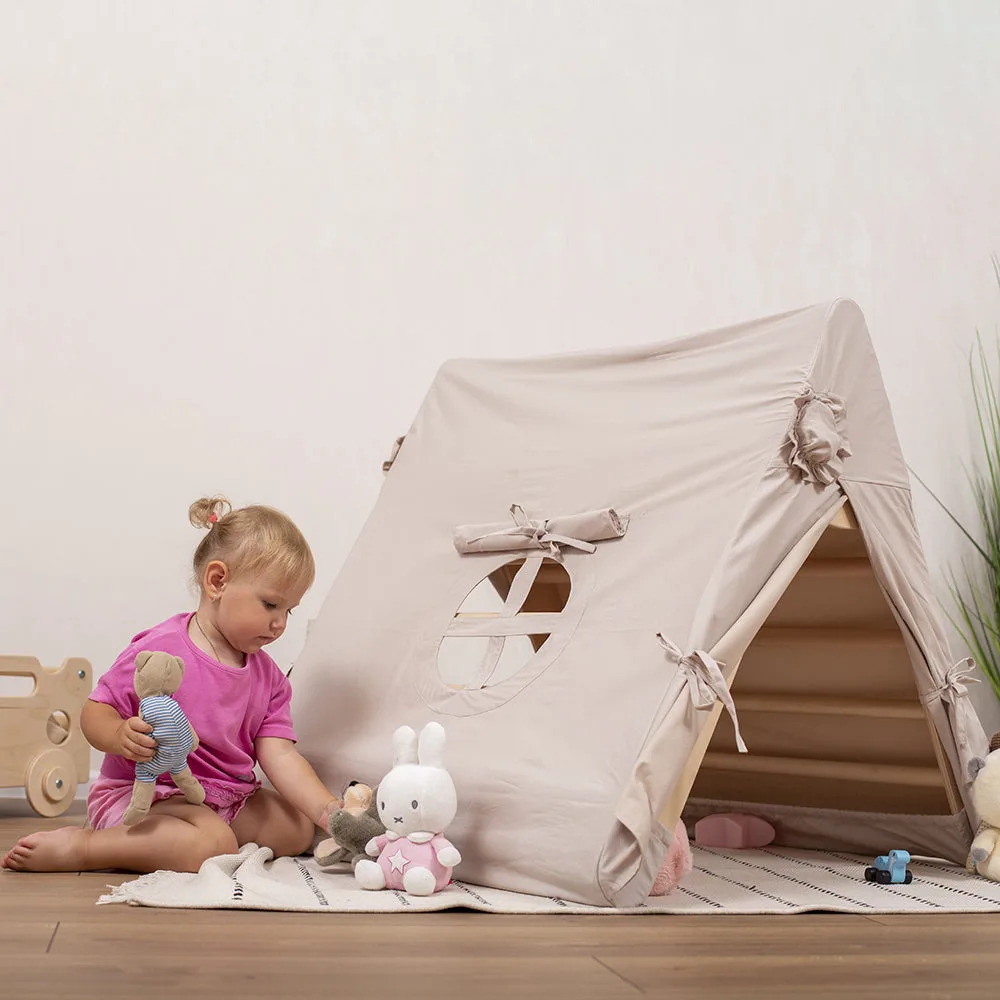
- Triangle Play Tent: The Triangle Play Tent is a fabric cover designed for a large Montessori triangle, turning the frame into a hiding place, fortress, or castle. It adds tent play without adding floor footprint, but only if your triangle matches the cover's dimensions.
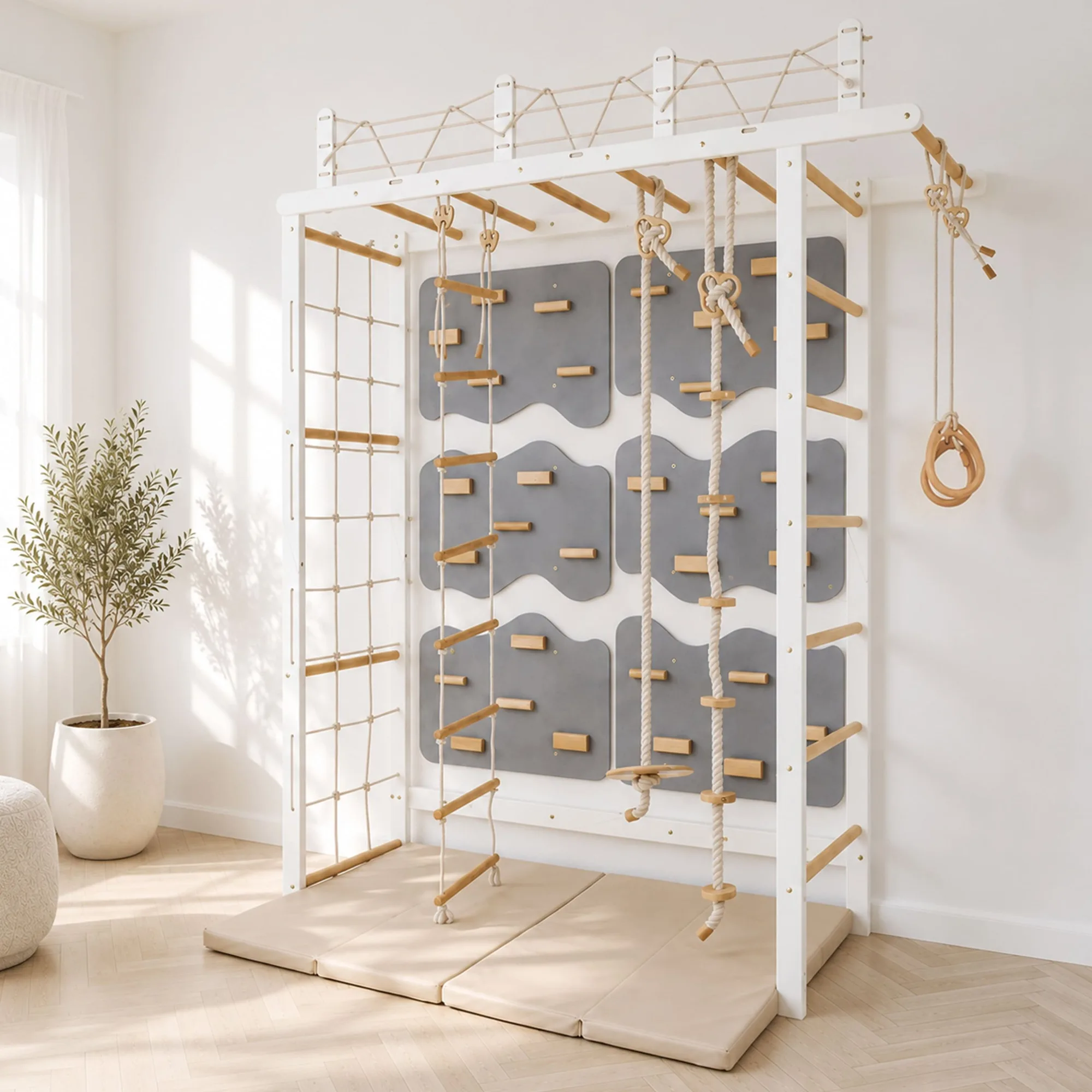
- Playground Set with Monkey Bars: The Playground Set with Monkey Bars is an all-in-one indoor gym that includes climbing monkey bars and is available in multiple colors. If your play area already centers on a climbing set, plan tent space around that footprint instead of buying a second freestanding structure.
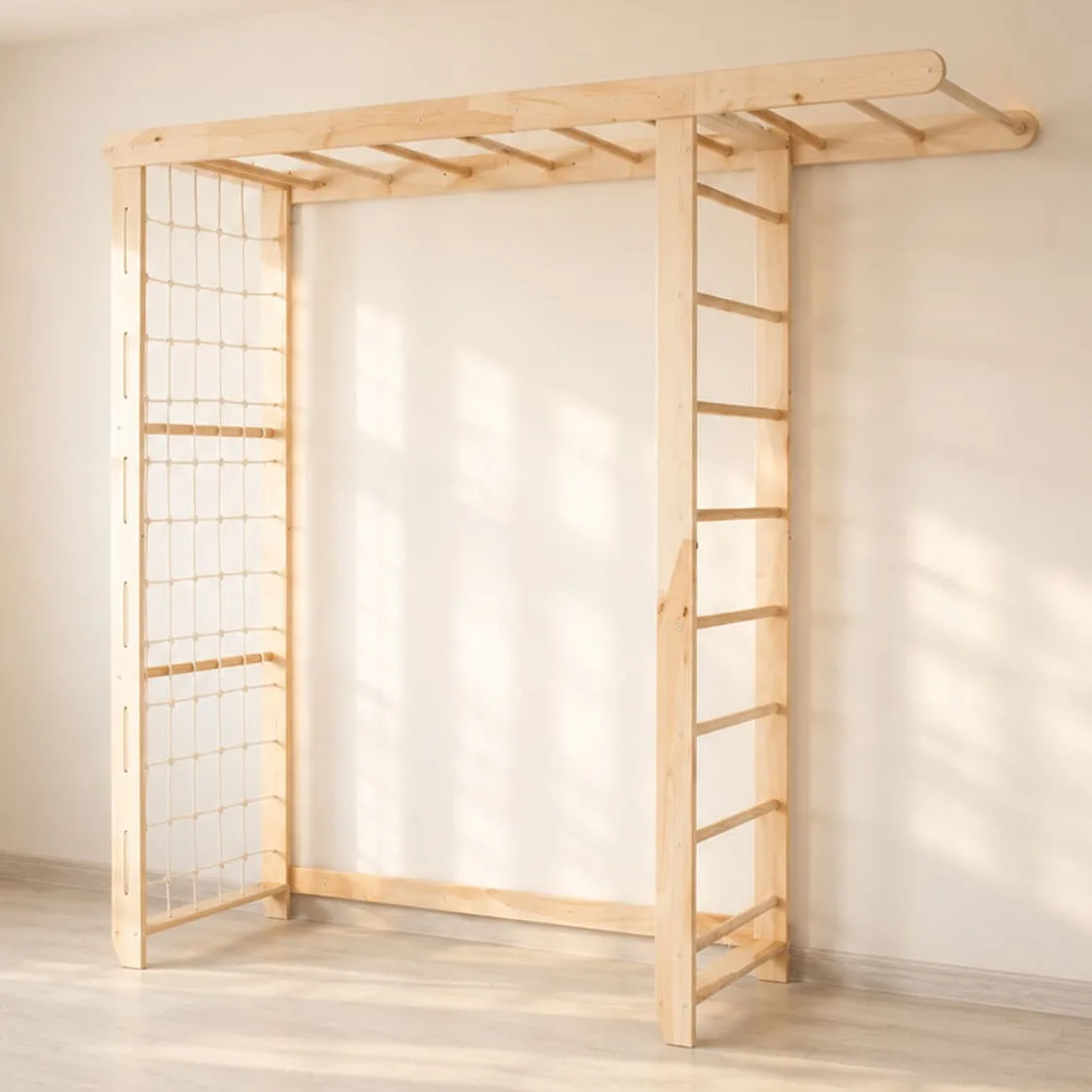
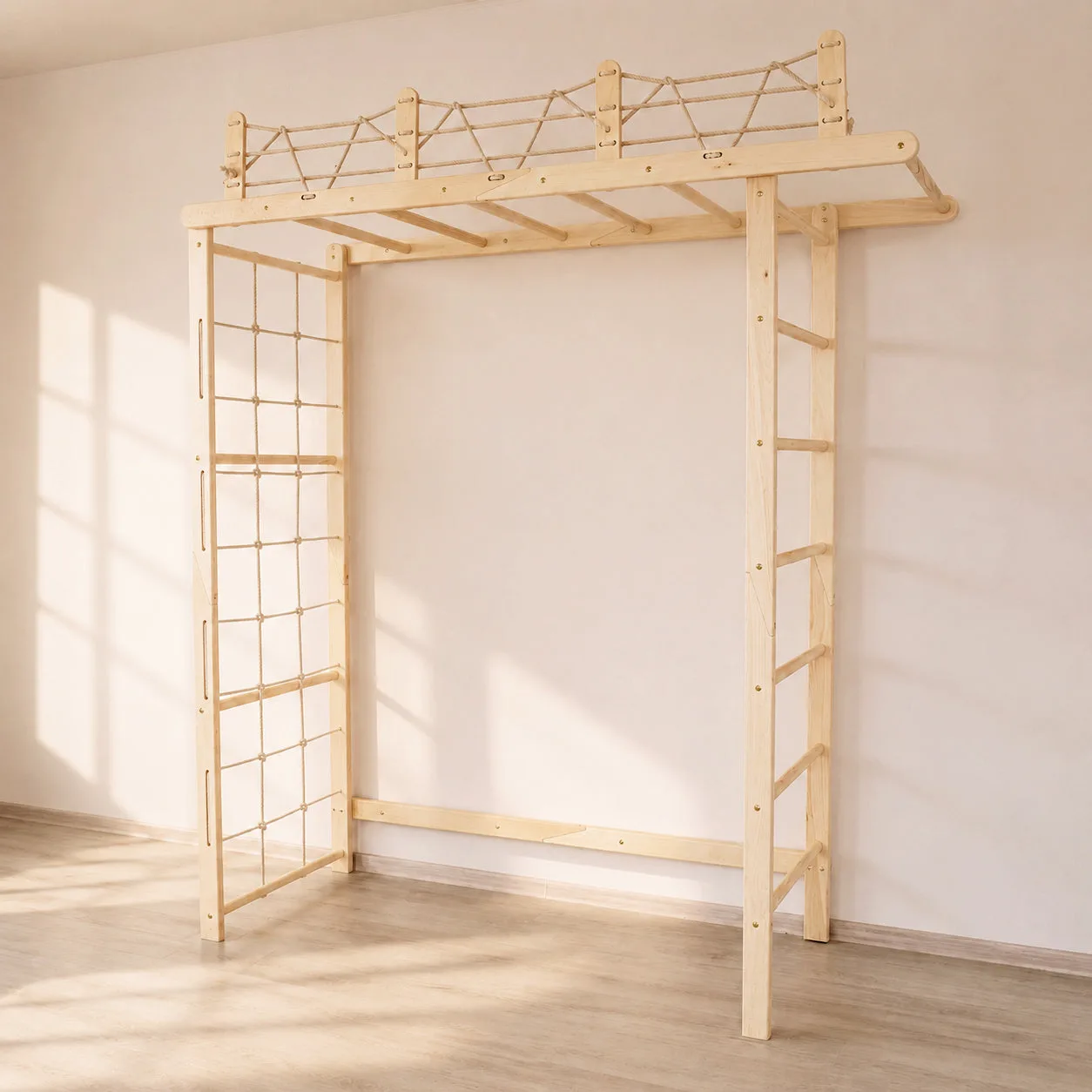
- Indoor Monkey Bars: Indoor Monkey Bars are a Montessori-inspired 4-in-1 climbing structure with a climbing ladder, designed for toddlers through teens and available in multiple colors. A multi-use climbing frame may leave less clear floor for a separate tent, so measure the combined footprint before choosing.
Who should choose which
Best for
- Families who already own a large Montessori triangle and want a fabric play tent for toddlers without adding floor footprint.
- Small bedrooms where a corner cover can be removed and stored when the room needs to be clear.
- Toddlers who want a low, enclosed reading and pretend-play nook.
Not for
- Households without a compatible triangle frame, who should choose a freestanding tent instead.
- Playrooms where the climbing set already fills the clear floor and a tent would crowd the landing zone.
- Families who need a tent that stands alone and moves between rooms or outdoors.