Quick Answer
Choose a dechlorinator for tap water changes, nitrifying bacteria for new tanks or after medication, and a disinfectant only for sterilizing equipment after illness.
Why You Can't Just Use One Conditioner
Many aquarists assume a single water conditioner handles everything, but tap water, new tank syndrome, and disease outbreaks are different problems. A dechlorinator removes chlorine, chloramine, and heavy metals from tap water. Nitrifying bacteria help establish the biological filter that processes ammonia and nitrite. A disinfectant kills harmful organisms on equipment, which is a job no conditioner should do.
Using the wrong product wastes money and can stress your fish. For example, adding nitrifying bacteria to perfectly healthy tap water does nothing, while using a disinfectant in your display tank would wipe out beneficial bacteria. Knowing which job each product performs is the first step.
Dechlorinator Tabs: Essential for Every Water Change
If you use municipal tap water, you need a dechlorinator every time you add water to your tank. Chlorine and chloramine are toxic to fish gills, and heavy metals can accumulate over time. Dechlorinator tabs are a convenient alternative to liquid conditioners because they are pre-measured and easy to store.
Some dechlorinators also offer emergency ammonia and nitrite reduction at double the dose. That can be a lifesaver during a power outage or filter failure. However, this is a temporary fix, not a substitute for proper biological filtration.
Nitrifying Bacteria: For Cycling and Recovery
New tank syndrome is the most common cause of fish loss in the first few weeks. A sudden spike in ammonia and nitrite happens when the biological filter hasn't matured. Live nitrifying bacteria help colonize the filter faster and reduce these harmful compounds.
Nitrifying bacteria are also useful after medication, deep cleaning, or a filter change that disrupted your beneficial bacteria. They are not a replacement for regular water changes, but they can shorten the cycling period and reduce fish stress.
One trade-off: these products are living organisms, so they have a shelf life and should be stored properly. Always check the expiration date before buying.
How to Choose: Decision Rules
- Routine tap water changes: Use a dechlorinator tab every time you add tap water. Match the dose to your water volume—typically one tab per 50 liters. Keep a bottle of dechlorinator tabs near your tank so you never skip this step.
- New tank or after filter disruption: Add nitrifying bacteria capsules to help establish or restore the biological filter. Follow the dosage for your tank volume and repeat as directed. Test ammonia and nitrite levels daily for the first week to confirm the bacteria are working.
- After illness in the tank: Use a disinfectant tab to sterilize equipment, decor, and empty tanks. Never add disinfectant to a tank with fish. Rinse everything thoroughly with dechlorinated water before reassembling the tank.
Product Facts
-
Castle Dawn Aquatics NITRIFIER Aquarium Live Nitrifying Bacteria 60 Capsules: Each capsule treats 100 liters, and a 60-capsule bottle covers up to 6,000 liters with millions of live nitrifying bacteria per capsule. This makes it a cost-effective choice for cycling new tanks or boosting biological filtration in larger aquariums.
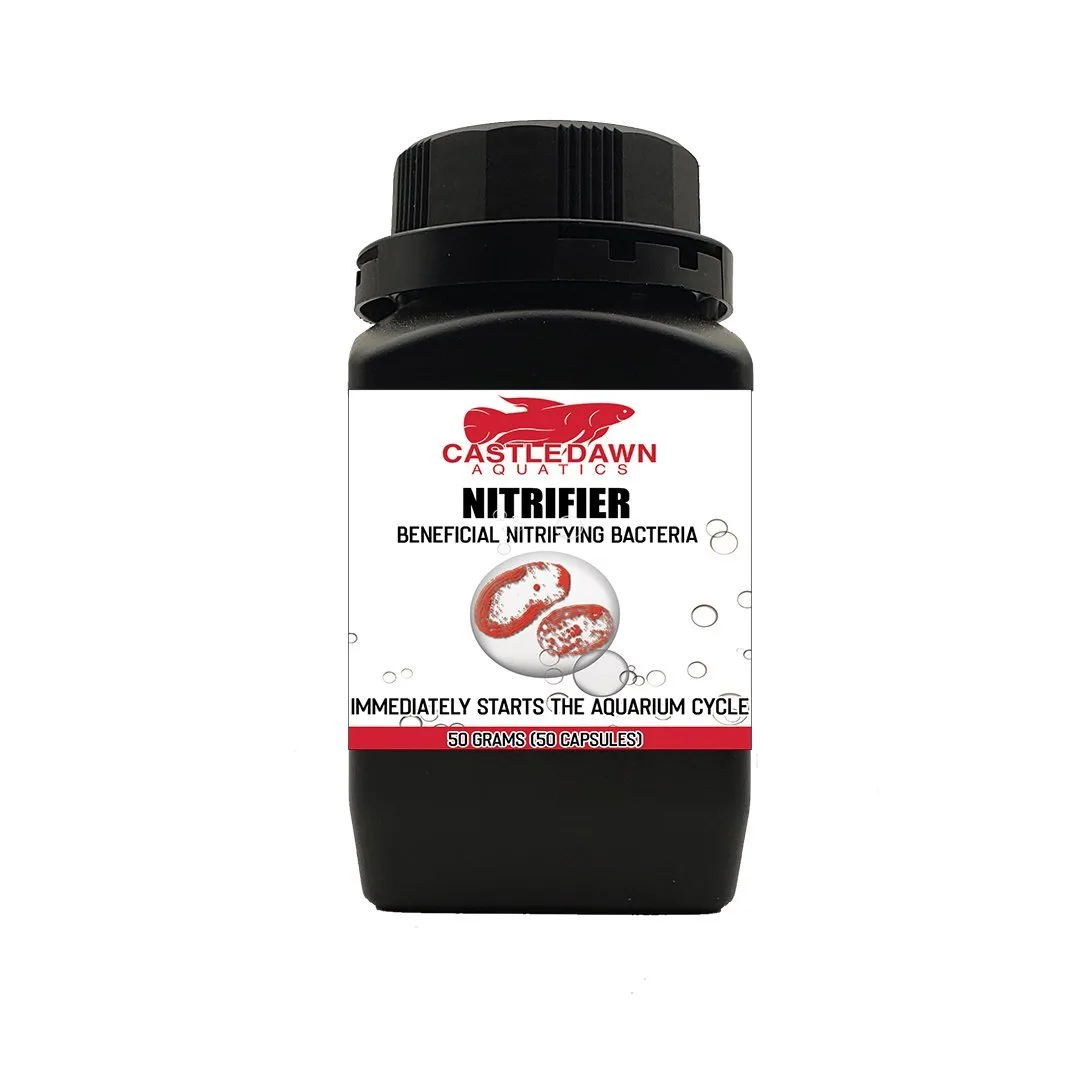
Castle Dawn Aquatics NITRIFIER Aquarium Live Nitrifying Bacteria 60 Capsules
-
Castle Dawn Aquatics BALANCE Aquarium Dechlorinator Tabs: One tab treats 50 liters of tap water, removing chlorine, chloramine, and heavy metals immediately, and can be doubled in emergencies to lower ammonia and nitrite. It's a simple pre-measured solution for routine water changes and a handy emergency tool for sudden toxin spikes.
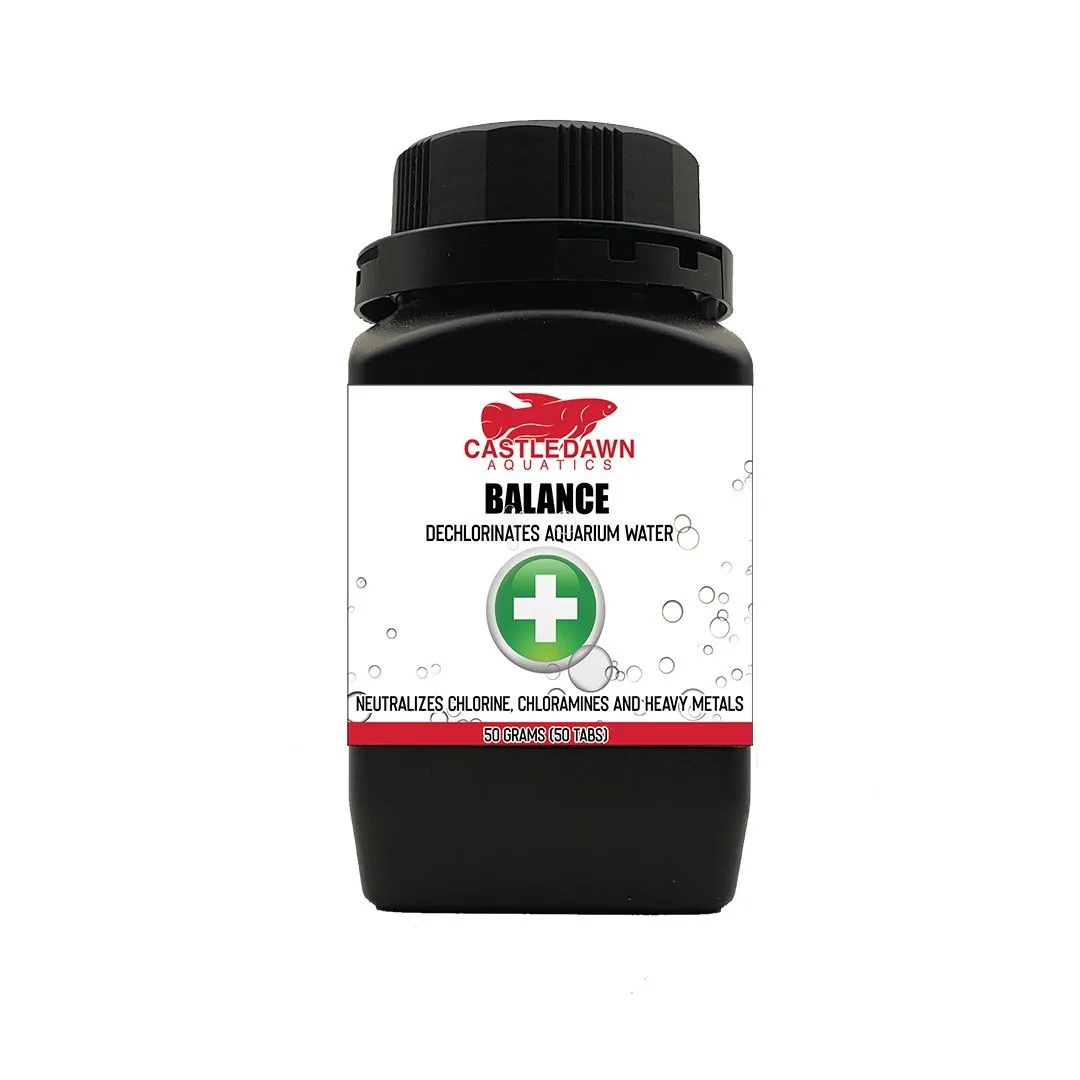
Castle Dawn Aquatics BALANCE Aquarium Dechlorinator Tabs
Which One Fits Your Setup?
Best for
- Aquarists who do regular water changes with tap water and need a simple dechlorinator
- New tank setups or tanks recovering from medication that need a biological boost
Not for
- Tanks with established biological filters and no tap water exposure—skip the dechlorinator
- Treating sick fish directly—disinfectants are for equipment only, not the display tank