Chewing is a natural and essential behavior for dogs. It helps keep their teeth clean, relieves stress, and provides mental stimulation. However, with countless chew options on the market, choosing the right one for your dog's age and size can be overwhelming. The wrong chew can pose a choking hazard, cause digestive issues, or simply be destroyed in minutes.
This guide will help you navigate the world of dog chews, focusing on safety, durability, and appropriateness for different life stages and sizes. Whether you have a teething puppy, a powerful adult chewer, or a senior with sensitive teeth, we'll cover what to look for and how to make the best choice for your furry friend.
Why Age and Size Matter for Dog Chews
Dogs of different ages have different dental needs and chewing strengths. Puppies, for instance, go through a teething phase where their gums are sore and they need something soft and soothing to chew on. Adult dogs, on the other hand, may have strong jaws that can easily destroy softer chews, while seniors might have weaker teeth that require gentler options.
Size is equally important. A chew that is too small can be a choking hazard, especially for larger breeds. Conversely, a chew that is too large might be difficult for a small dog to hold and chew comfortably. Matching the chew size to your dog's size ensures both safety and enjoyment.
- Always supervise your dog when giving a new chew.
- Consult your vet if you're unsure about the right chew for your dog.
Best Chews for Puppies: Teething and Training
Puppies need chews that are soft enough to soothe their sore gums but durable enough to withstand some chewing. Look for chews made from natural ingredients like beef gullet or other easily digestible proteins. These are gentle on a puppy's developing digestive system and provide a satisfying chewing experience.
For training purposes, small, soft treats are ideal. They can be broken into tiny pieces and given as rewards without interrupting the training flow. Consider options like our All-Natural Beef Gullet Sticks, which are both tasty and healthy for puppies. They are also a great choice for teaching bite inhibition.
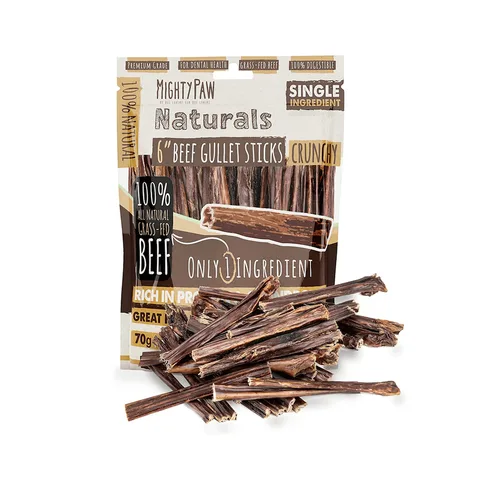
All-Natural Beef Gullet Sticks
- Avoid hard chews like antlers or bones for puppies under six months.
- Choose chews that are specifically labeled for puppies.
Choosing Chews for Adult Dogs: Durability and Taste
Adult dogs have stronger jaws and more experience with chewing. They need chews that can withstand aggressive chewing sessions. Look for long-lasting chews made from dense materials like yak milk, which are both durable and appealing. For heavy chewers, consider options that are designed to be tough yet digestible.
It's also important to consider your dog's chewing style. Some dogs are 'power chewers' who will destroy anything in minutes, while others are more gentle. For power chewers, choose chews that are specifically marketed as 'long-lasting' or 'for aggressive chewers.' Always monitor your dog to ensure they are not breaking off large chunks that could cause choking.
- Rotate chew types to keep your dog interested.
- If your dog is a power chewer, opt for tougher chews like yak chews.
Senior Dogs: Gentle Chews for Sensitive Teeth
As dogs age, their teeth may become more sensitive, and they might have dental issues that make hard chews painful. For senior dogs, choose chews that are soft and easy to chew, such as those made from softer proteins or even dental chews that help clean teeth without being too hard.
Always check with your veterinarian if your senior dog has dental problems. They can recommend specific types of chews that are safe and beneficial. Remember, the goal is to provide mental stimulation and enjoyment without causing discomfort.
Chew Size Guide: Matching Chew to Your Dog's Size
A general rule of thumb is to choose a chew that is larger than your dog's mouth to prevent accidental swallowing. For small breeds, look for chews that are small but not tiny enough to be a choking hazard. For medium and large breeds, choose larger chews that they can hold comfortably.
Many brands provide size guidelines on their packaging. For example, a chew that is 5-6 inches long might be suitable for medium dogs, while 8-10 inches is better for large breeds. Always err on the side of caution and choose a slightly larger size if you're unsure.
Safety Tips for Giving Chews to Your Dog
Safety should always be your top priority when giving your dog any chew. Always supervise your dog while they are chewing, especially with a new type of chew. This allows you to intervene if they start choking or if the chew breaks into dangerous pieces.
Discard chews that have become small enough to be swallowed whole, as they pose a choking risk. Also, be aware of any allergies your dog might have. If you notice any adverse reactions, stop giving the chew and consult your vet.
- Never give your dog cooked bones, as they can splinter.
- Store chews in a cool, dry place to maintain freshness.
Choosing the right chew for your dog doesn't have to be complicated. By considering your dog's age, size, and chewing style, you can find a safe and enjoyable option that will keep them happy and healthy. For a great starting point, check out our All-Natural Beef Gullet Sticks – a favorite among dogs of all ages and sizes. Remember to always supervise your dog with any chew and consult your vet if you have concerns.