Quick answer
The best film logbook for your workflow depends on whether you shoot multiple lenses or locations per roll, and whether you need developing notes alongside exposure data.
Why a dedicated logbook beats a generic notebook
A film logbook is designed to capture the specific data you need for each roll: camera, lens, film stock, ISO, frame-by-frame settings, and developing notes. A blank notebook forces you to create your own structure, which often leads to skipped entries or lost details. A purpose-built logbook keeps everything consistent and easy to reference later.
Trade-off: simplicity vs. flexibility
Some logbooks assume you shoot one lens and one location per roll, with a single field for each. That works if your workflow is consistent, but it falls apart when you switch lenses or move between different lighting conditions mid-roll. More flexible logbooks offer per-frame fields for lens, location, and exposure settings, but they can feel overwhelming if you prefer a minimalist approach.
Decision rules for choosing a film logbook
- Check your per-roll variability: If you frequently change lenses or locations mid-roll, choose a logbook with per-frame fields for lens and location. If you shoot one lens and one place per roll, a simpler layout works fine.
- Decide on developing notes: If you develop your own film, look for a logbook with dedicated developing notes sections. If you send film out for processing, you can skip this feature.
- Consider the number of rolls: A logbook that tracks 22 rolls is portable and lasts a reasonable time. If you shoot more than 22 rolls between refills, you may want a larger book or multiple copies.
- Match the format to your camera system: Ensure the logbook supports both 35mm and 120 if you shoot both formats. Some logbooks are format-specific, which can limit your tracking if you switch. If you shoot both 35mm and 120, a format-agnostic logbook like the WRKBKS Film Photographer's Logbook is a safe choice.
Product facts
-
WRKBKS Film Photographer's 35mm & 120 Logbook: Tracks 22 rolls of film with frame-by-frame exposure settings, camera, lens, film stock, ISO, location, date, lighting conditions, and developing notes. This logbook accommodates the reality of shooting different lenses and locations on the same roll, so you don't have to guess later which frame was shot with which setup.
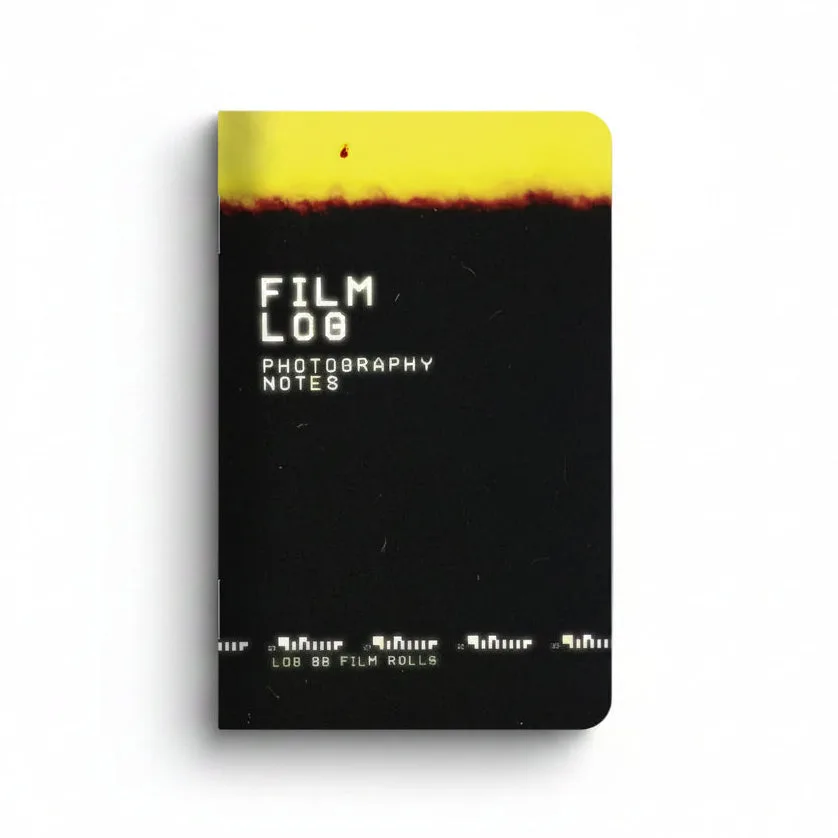
WRKBKS Film Photographer's 35mm & 120 Logbook
Who should buy this
Best for
- Film photographers who shoot multiple lenses or locations per roll and want per-frame tracking
- Photographers who develop their own film and need space for developing notes
Not for
- Shooters who prefer a completely blank notebook and create their own structure
- Photographers who only shoot one lens and one location per roll and want a simpler, cheaper option