Quick Answer
Choose an ultra-soft toothbrush with BPA-free bristles and a comfortable handle, and pair it with a gentle brushing technique to minimize gum irritation.
Why Bristle Softness Matters More Than You Think
Sensitive gums can become inflamed or bleed when brushed with medium or hard bristles. Ultra-soft bristles are designed to clean effectively while being gentle on delicate gum tissue, reducing the risk of micro-tears and recession.
The Tom's of Maine Gentle Charcoal Toothbrush features bristles that are two times softer than an ordinary flat trim toothbrush. This extra softness helps remove surface stains without the abrasiveness that can aggravate sensitive gums.
Handle Design and Grip: Small Details That Help
A comfortable, non-slip handle gives you better control, so you can avoid pressing too hard. Some handles are made from recycled plastic, which is a thoughtful choice if you want to reduce waste while caring for your gums.
The Tom's of Maine Gentle Charcoal Toothbrush has a handle made from 5% post-consumer recycled plastic, so you can brush with a lighter environmental footprint.
How to Choose and Use a Toothbrush for Sensitive Gums
- Check the bristle softness label: Look for a toothbrush labeled 'ultra soft' or 'soft.' Avoid medium or hard bristles, which can cause gum irritation and recession. The Tom's of Maine Gentle Charcoal Toothbrush is an ultra-soft option. If the label doesn't say 'ultra soft,' it's probably not gentle enough for sensitive gums.
- Choose a handle that feels comfortable: Pick a toothbrush with a handle that fits your grip well. A comfortable handle helps you avoid applying too much pressure, which is a common cause of gum damage. Test the grip in your hand before buying—if it slips, it's not ideal.
- Brush with a gentle technique: Hold the brush at a 45-degree angle to your gums and use short, circular motions. Let the bristles do the work—don't scrub hard. This reduces trauma to sensitive gum tissue. If you notice bleeding, you're likely pressing too hard or using a brush that's too stiff.
- Replace your toothbrush every 3–4 months: Bristles wear out and lose their softness over time. Replace your brush every 3–4 months, or sooner if the bristles become frayed. This keeps brushing gentle and effective. Mark your calendar or use a brush with color-indicator bristles to remind you when to switch.
Product Facts
-
Gentle Charcoal Ultra Soft Toothbrush: The charcoal-infused bristles are two times softer than an ordinary flat trim toothbrush, and the bristles are BPA-free. This ultra-soft design cleans teeth and removes surface stains while being gentle on sensitive gums, and BPA-free bristles reduce exposure to unnecessary chemicals.
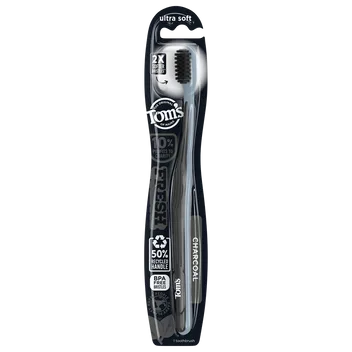
Gentle Charcoal Ultra Soft Toothbrush