Quick Answer
Start with a fixed blade around 7.5 inches overall if you want a dependable everyday carry that handles most tasks without feeling bulky. Choose a model with a blade steel like S45VN for a balance of edge retention and toughness, and make sure the handle material fits your grip and maintenance preferences.
Decide Between Fixed Blade and Folder
Half Face Blades offers both fixed blades and folders, and your choice should hinge on how you plan to carry and use the knife. Fixed blades are typically stronger because there is no pivot to fail, and they are easier to clean after outdoor use. Folders are more compact for pocket carry and may be more socially acceptable in urban settings, but they require more maintenance at the pivot and may not handle heavy abuse as well.
For a first knife, consider your primary environment. If you spend time camping, hunting, or doing general outdoor work, a fixed blade gives you confidence and simplicity. If you need a knife for light daily tasks like opening boxes or cutting cord in an office or city setting, a folder might be more practical. Remember that local laws can restrict blade length or carry methods, so check those before committing.
Match Blade Size to Your Tasks
Blade length directly affects control and capability. A blade around 3.5 inches is a sweet spot for many EDC tasks: it's long enough to handle food prep, carving, and rope cutting, yet short enough to be maneuverable and easy to carry. Longer blades offer more cutting power but can be unwieldy for fine work and may attract unwanted attention.
Think about the largest task you regularly need a knife for. If you mostly do light slicing, a shorter blade is easier to control. If you occasionally need to baton wood or process game, a longer, thicker blade is more suitable. The trade-off is weight and bulk, so be honest about what you'll actually carry daily.
Choose a Handle Material That Fits Your Grip
Handle material affects grip security, durability, and maintenance. Micarta is a popular choice because it offers a solid grip even when wet and develops a comfortable patina over time. G10 is another common option that is lightweight and provides excellent traction. Both are more durable than wood and require less upkeep.
Consider your hand size and typical conditions. If you have larger hands or wear gloves, look for a handle that fills your palm and provides a secure grip. Textured grips help in wet or slippery conditions but can be abrasive against bare skin during extended use. If you plan to use the knife for food prep, a smoother handle may be easier to clean.
Think About Carry and Sheath Options
How you carry your knife is as important as the knife itself. Fixed blades often come with a Kydex sheath, which offers secure retention and multiple carry options like belt loops or straps. Kydex is durable and holds the knife firmly, but it can be noisy and may wear the blade finish over time. Leather sheaths are quieter and more traditional but require more maintenance and may not retain as securely.
For a first knife, a Kydex sheath is usually the most practical because it's low-maintenance and works with various carry positions. If you prefer a classic look and don't mind occasional conditioning, a leather sheath can be added as an accessory. Make sure the sheath fits your belt width and preferred carry side before purchasing.
Decision Rules for Your First HFB Knife
- Rule 1: Start with a fixed blade: For your first Half Face Blades knife, a fixed blade gives you simplicity, strength, and easier maintenance compared to a folder. It's a reliable introduction to the brand's quality. Choose a fixed blade unless you specifically need a folder for legal or carry reasons.
- Rule 2: Aim for a 3.5-inch blade: A 3.5-inch blade is versatile enough for most EDC tasks while remaining easy to control. It's long enough to handle food prep and cutting chores, but not so long that it becomes cumbersome. Look for a blade around 3.5 inches for your first knife.
- Rule 3: Pick a handle material that matches your grip: Micarta and G10 are both durable and provide good traction. If you have larger hands or work in wet conditions, choose a textured grip. For a smoother feel, consider a less aggressive texture. Test the handle feel if possible; your grip comfort is key.
- Rule 4: Consider the sheath for carry: Kydex sheaths are low-maintenance and offer secure retention, ideal for everyday carry. Leather sheaths are quieter but need more care. Choose based on your carry style and environment. Start with Kydex for practicality, then add leather if you prefer the classic look.
Relevant Half Face Blades Options
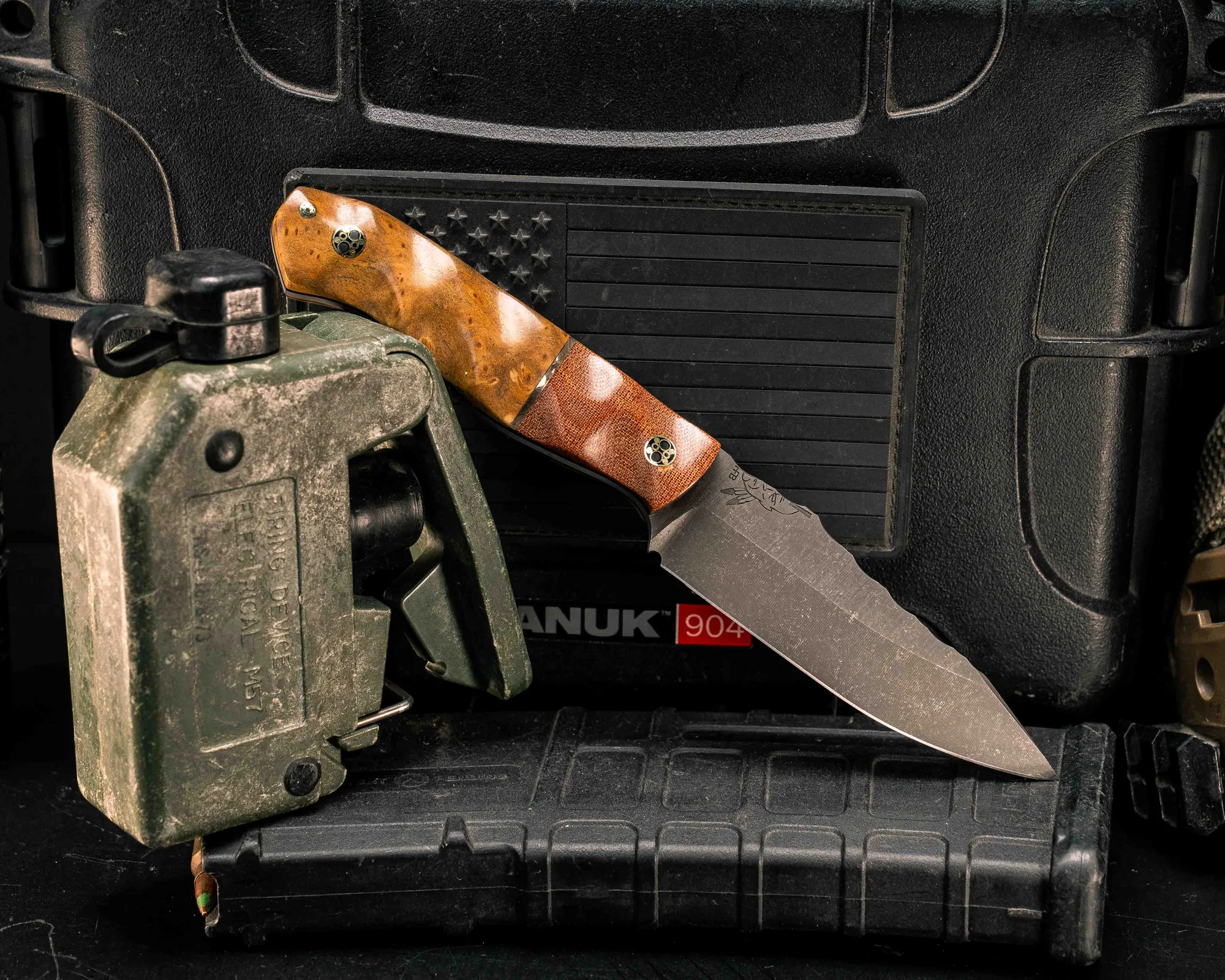
- Field Knife Jr- Vintage Butterscotch Micarta, Bronze Split, Teak, Mosaic Pins, Textured Grip: Field Knife Jr has a 7.5" overall length, 3.5" blade, .14" thickness, S45VN American steel, and comes with an acid etch Kydex sheath. This size is ideal for a first fixed blade: the 3.5-inch blade handles most EDC tasks, and S45VN offers a good balance of edge retention and toughness. The included Kydex sheath means you don't need to buy a separate carry solution right away.
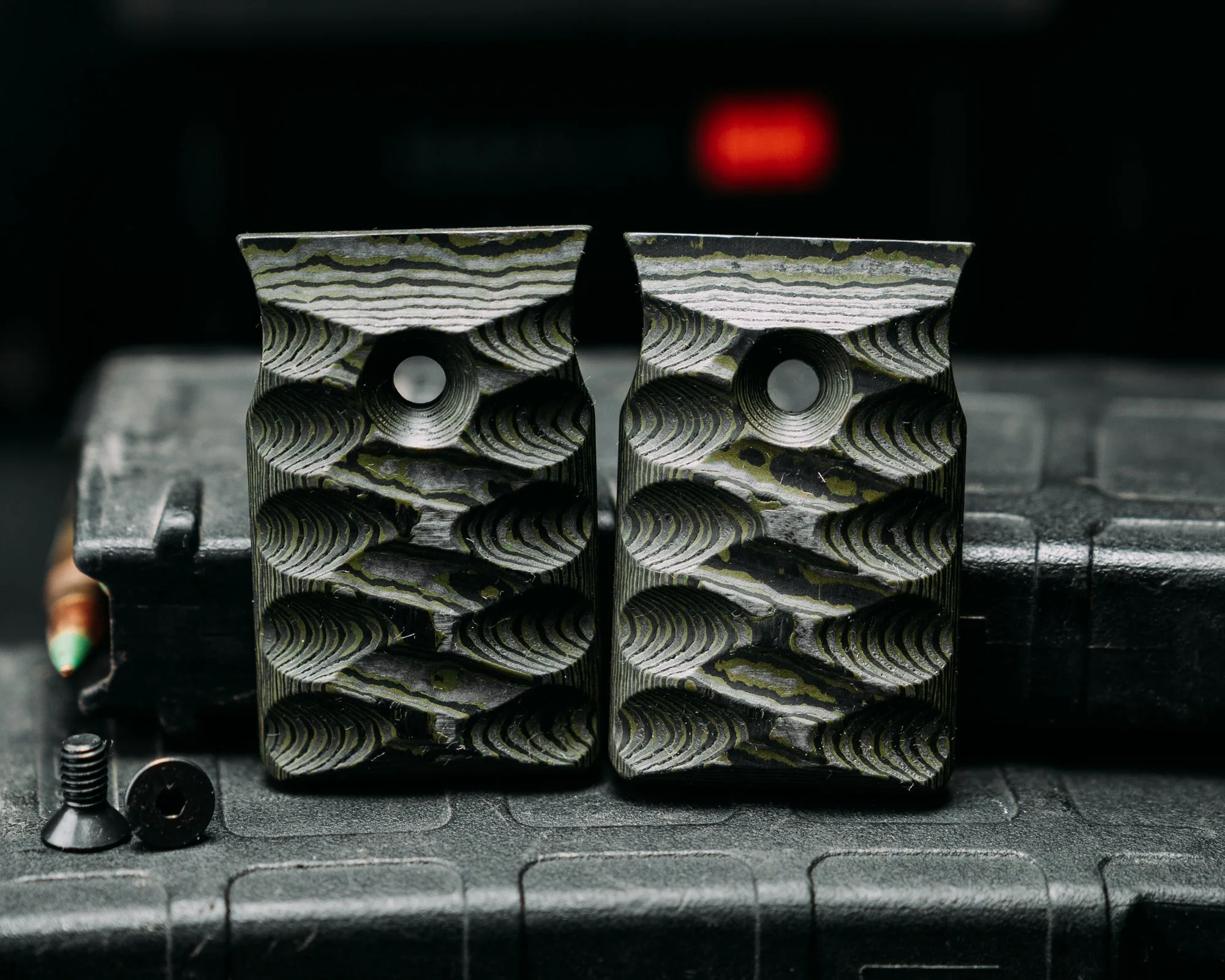
- HFB x Kinetic M-LOK FORE GRIP Scales ONLY - Junglewear Carbon Fiber: The HFB x Kinetic M-LOK Fore Grip Scales are M-LOK based fore grip system scales, compatible with all M-LOK rails, and are sold as scales only (frame sold separately). If you plan to use your knife in conjunction with a rifle or prefer a modular grip setup, these scales let you customize your fore grip. However, they are not a knife component, so they are only relevant if you're also building a firearm accessory.
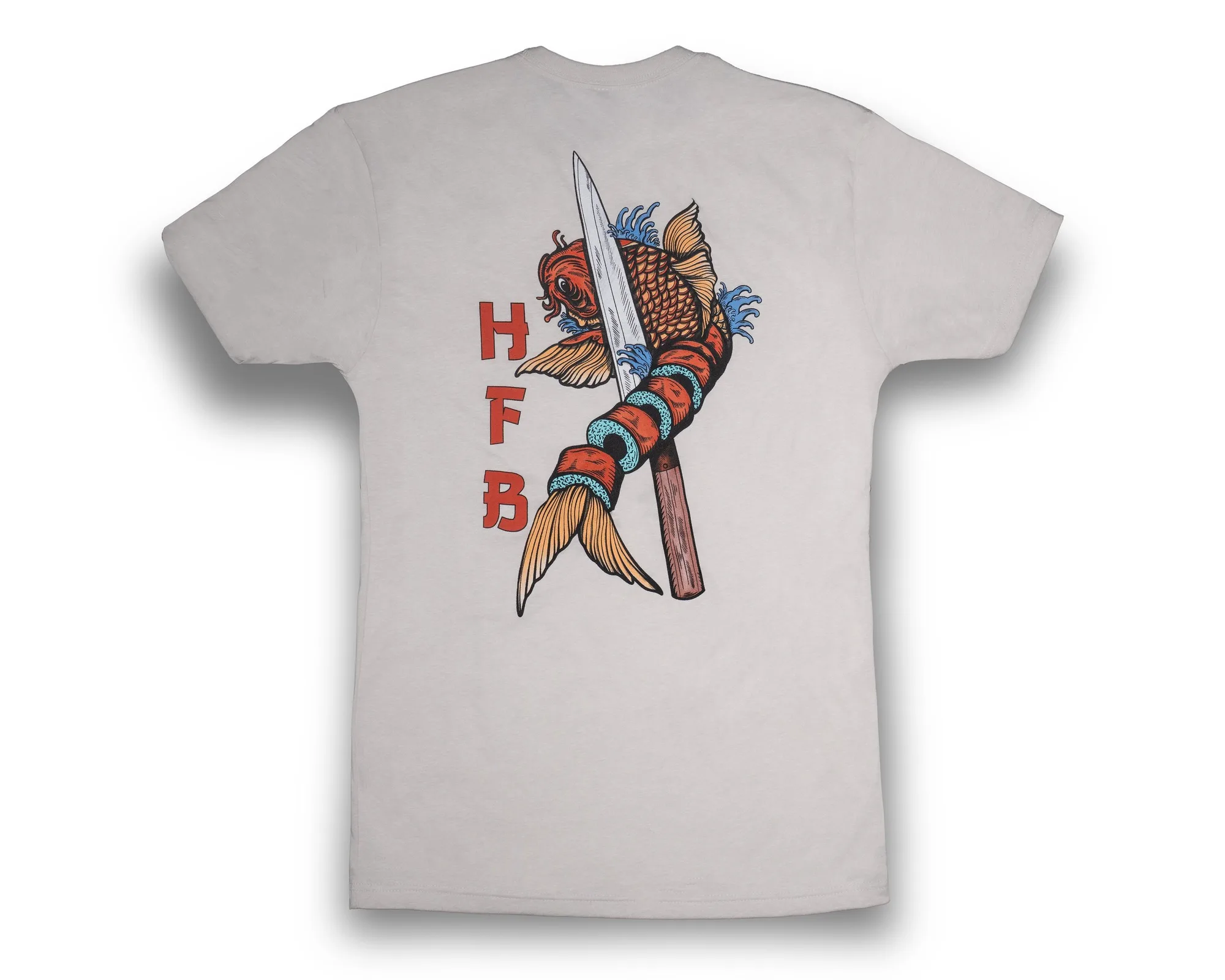
- HFB Sushi Tee (Sand): The HFB Sushi Tee in Sand is made of 60% cotton, 40% polyester and available in sizes Medium, XL, 2XL, and 3XL. While not a knife, this tee is a comfortable way to show brand support. The cotton-poly blend offers breathability and durability for everyday wear, and the size range covers most body types.
Is This the Right Knife for You?
Best for
- Outdoor enthusiasts who need a dependable fixed blade for camping, hiking, or hunting
- Everyday carriers who want a versatile blade around 3.5 inches for general tasks
Not for
- Those who need a compact folder for discreet urban carry or legal restrictions
- Users who prefer a larger blade for heavy-duty chopping or batoning