Quick answer
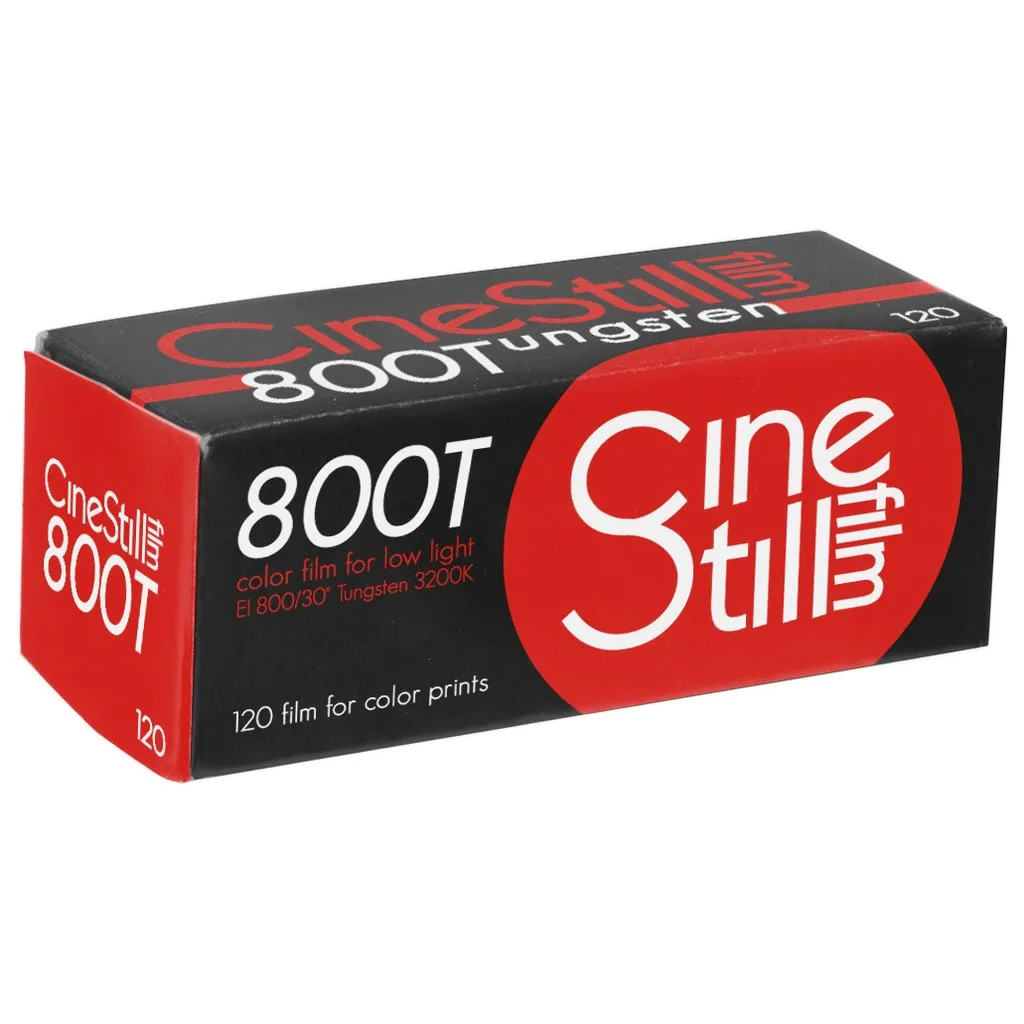
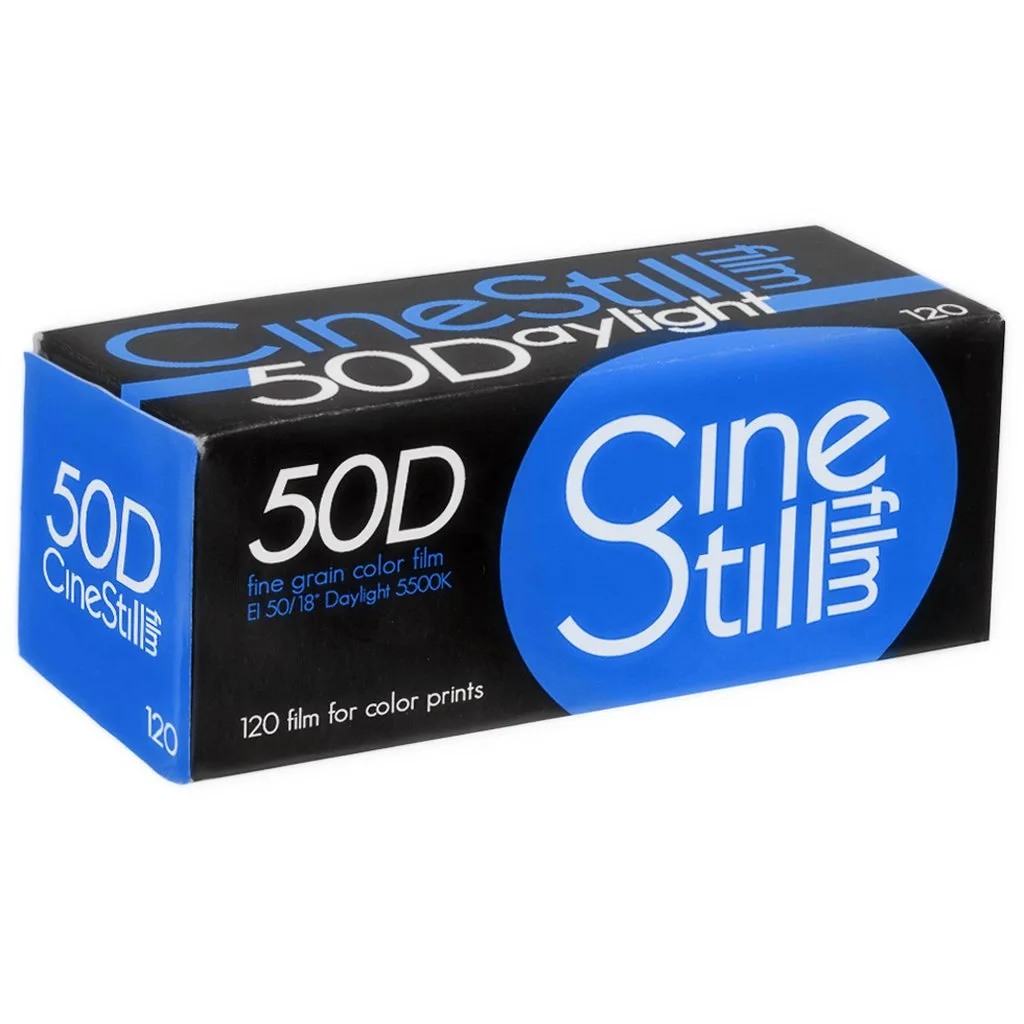
Choose Cinestill 800T for tungsten-balanced light or when you need speed and pushability; choose Cinestill 50D for daylight and the finest grain. Both are C-41 color negative films in 120 format, so your pick comes down to light source and how much grain you want.
How the light source changes your choice
The primary difference between these two stocks is their color balance. Cinestill 800T is tungsten balanced, meaning it renders neutral colors under tungsten light (around 3200K). Cinestill 50D is daylight balanced (5500K), so it stays neutral under daylight or electronic flash. If you shoot 800T in daylight without a correction filter, you get a cool blue cast; if you shoot 50D under tungsten without a filter, you get a warm orange cast. You can correct either in post, but the cleanest results come from matching the film to the light you actually have.
Speed and exposure latitude
Cinestill 800T has a rated ISO of 800, which gives you more flexibility in dim light. Its catalog facts note it can be rated from ISO 200 to 2000 and pushed over 3000, so you can expose it at different speeds and adjust development accordingly. Cinestill 50D is an ISO 50 film, so it needs much more light or a slower shutter speed and wider aperture. In bright daylight, that low speed is an advantage because it lets you use wider apertures or slower shutter speeds without overexposing. In shade or indoors, 50D becomes impractical without a tripod or flash.
Grain and look
Cinestill 50D is described as boasting the world’s finest grain, and its low ISO supports that. You can expect smooth tonality and high detail, which suits landscapes, architecture, and bright outdoor portraits. Cinestill 800T is a higher-speed film, so it will show more grain, especially if you push it. That grain is part of its character and is often used for night scenes, neon, and moody interiors. Neither film is inherently better; they produce different textures that you should choose intentionally.
Processing and handling
Both films are C-41 color negative stocks, so most labs can develop them without special handling. Cinestill 50D may also be processed in motion picture ECN-2 chemistry, but C-41 is the standard and more widely available option. Cinestill 800T is also a C-41 film. The catalog facts for 50D mention that Cinestill’s improved manufacturing process extends shelf life and reduces noticeable artifacts after expiration, which is useful if you buy film in advance. For either stock, store unexposed rolls in a cool, dry place and develop promptly after exposure for the most consistent results.
Choosing between 120 and 35mm
Both films are available in 120 format, which gives you larger negatives and finer grain for a given print size compared to 35mm. If you shoot 120, the grain difference between 50D and 800T will be less pronounced than in 35mm, but the color balance and speed differences remain the same. If you want the option of 35mm as well, the same emulsions exist in that format, but this comparison focuses on the 120 versions because that is what we stock.
Trade-offs at a glance
- Light source flexibility: 800T handles tungsten and mixed indoor light without filtration; 50D is optimized for daylight and flash. Match the film to your dominant light source to avoid heavy color correction.
- Speed vs grain: 800T gives you faster shutter speeds and pushability but more grain; 50D gives you the finest grain but needs much more light. Prioritize speed for handheld or night work, grain for bright, detail-rich scenes.
- Processing and shelf life: Both are C-41, but 50D can also be processed in ECN-2; 50D’s improved manufacturing extends shelf life and reduces expiration artifacts. Either film is lab-friendly; buy 50D if you stock up and want longer shelf life.
Key product facts
- Cinestill 800t Tungsten Xpro C-41 Color Negative Film - 120 Roll Film: Cinestill 800T is a 120 format color negative film, tungsten balanced, with a rated ISO of 800 that can be exposed from ISO 200 to 2000 and pushed over 3000. This makes it the more versatile choice for low light and for shooters who want to experiment with push processing.
- Cinestill 50 Daylight Xpro C-41 Color Negative Film - 120 Roll Film: Cinestill 50D is a 120 format color negative film, daylight balanced at 5500K, with an ISO of 50 and is boasted to be the world’s finest grain film. It is ideal for bright daylight when you want maximum detail and minimal grain, but it requires ample light or a support.
Which film fits your shoot?
Best for
- Night and indoor scenes under tungsten light
- Handheld shooting in low light
- Photographers who want to push film for creative effects
Not for
- Bright daylight when you want the finest possible grain
- Shooters who prefer a daylight-balanced film without filters
- Those who need maximum sharpness and minimal grain