Quick Answer
If your goal is handwriting practice and fine motor control, choose Grip Colored Pencils 12pk. If your goal is gross motor movement, boundary-setting, or obstacle courses, choose Circle Markers 9 in - Set of 6 Colors. They serve different developmental stages, and many families use both for a complete motor-skills program.
What Each Tool Actually Trains
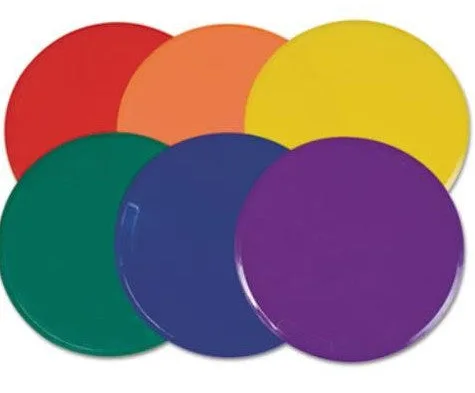
Circle Markers are flat PVC circles that stay in place on the floor. They are designed for obstacle courses, boundary-setting, and guiding children through movement sequences. Occupational therapists use them to build gross motor skills, balance, and spatial awareness. They do not involve a writing instrument at all, so they do not directly train pencil grasp or handwriting.
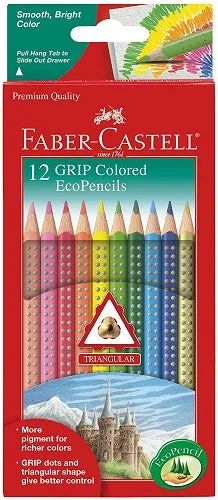
Grip Colored Pencils 12pk are writing tools with a triangular ergonomic shape and a patented Soft-Grip zone. They are made from re-forested wood, highly pigmented, and blend easily. The triangular shape encourages a secure hold, which supports fine motor practice and handwriting endurance. The trade-off is that they require a child to already have some grasp stability; they are not a starting point for a child who cannot yet hold a marker.
When a Pencil Grip Bridges the Gap
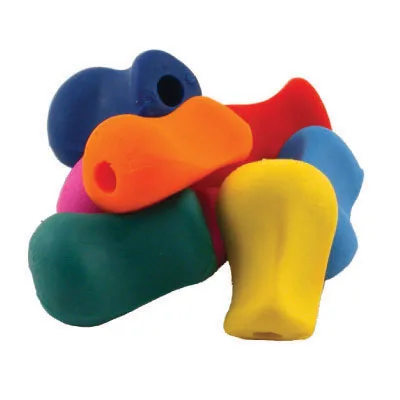
If your child can hold a pencil but tires quickly or grips too tightly, adding a Pencil Grip Original to a standard pencil or the Grip Colored Pencils can extend practice time. This grip is recommended by occupational therapists and teachers to promote correct gripping for kids with autism and other special needs. It fits most pencils, pens, crayons, markers, and brushes, and the soft material can prevent finger cramping.
The trade-off is that a grip adds bulk. Some children with tactile sensitivities resist the extra texture, and some pencils become top-heavy. Test a single grip before buying a full set, and pair it with the Grip Colored Pencils only if your child tolerates the added material. For handwriting practice specifically, the combination of a triangular pencil plus a slip-on grip can be redundant; start with one or the other.
How to Sequence Them in a Session
Use Circle Markers first as a warm-up. Lay out a simple path or target and let your child jump, step, or reach. This activates large muscle groups and provides proprioceptive input that can help a child settle before table work. After five to ten minutes of movement, transition to a table activity with Grip Colored Pencils. The contrast between gross motor and fine motor tasks can make the writing portion feel more manageable.
If your child resists transitions, keep the Circle Markers visible but out of reach during the writing segment. The goal is not to bribe, but to signal that movement time is paused and writing time is active. Keep writing sessions short—three to five minutes for beginners—and end before frustration builds. A small, quiet fidget like Mini Spinny can be available for one hand while the other practices, but only if it does not distract from the pencil task.
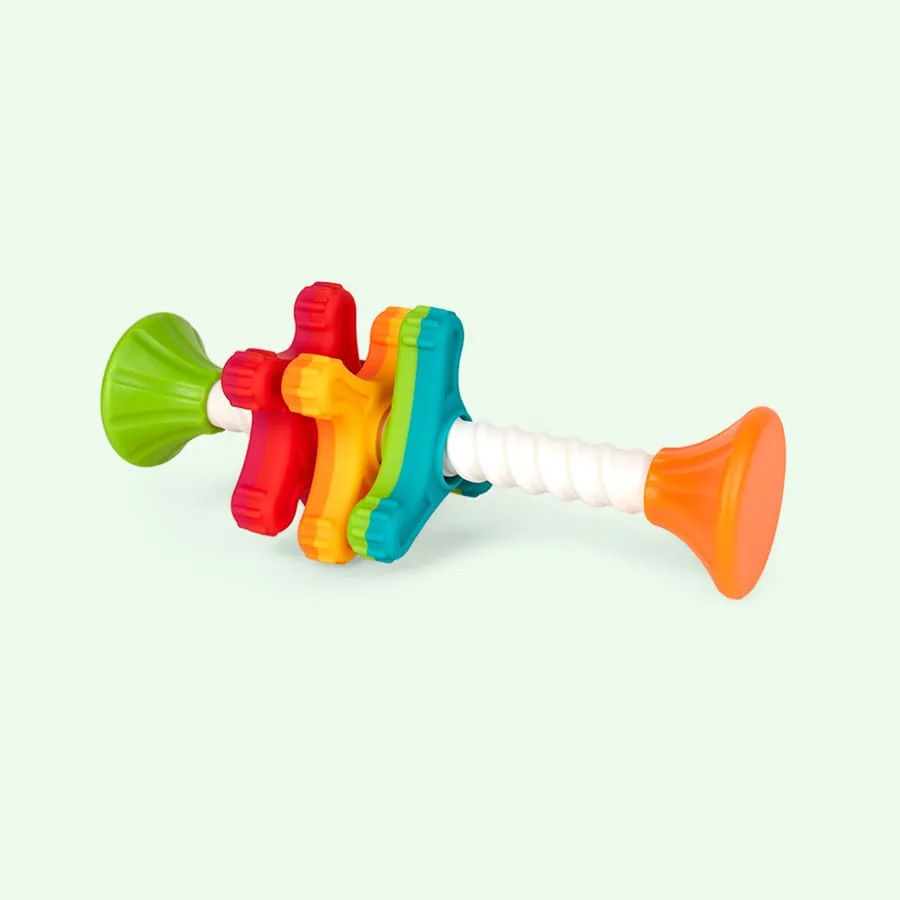
Mini Spinny
Trade-Offs at a Glance
- Gross motor vs. fine motor: Circle Markers build large-muscle movement, balance, and boundary awareness. Grip Colored Pencils build hand strength, grasp, and handwriting control. Choose based on the skill you want to develop right now.
- Floor vs. table setup: Circle Markers require open floor space and adult supervision for obstacle courses. Grip Colored Pencils work at a table with minimal setup. Consider your available space and your child's attention span in each environment.
- Immediate vs. foundational: Grip Colored Pencils target handwriting directly. Circle Markers support the foundational motor skills that often precede table work. Use Circle Markers as a warm-up, then transition to Grip Colored Pencils for writing practice.
Product Facts
- Circle Markers 9 in - Set of 6 Colors: The colorful circles are a great addition to any obstacle course. The circles are made of durable PVC and stay in place making them safe for children. They can be used to set boundaries, or to guide children and are a great tool for occupational therapists. These markers support gross motor development and spatial boundaries, not handwriting. They are a good fit for movement breaks and obstacle courses, but they do not replace a writing tool.
- Grip Colored Pencils 12pk: Premium quality EcoPencils made from re-forested wood are highly pigmented for a richer color lay down. Colors are vibrant and blend easily. The ergonomic triangular shape with patented Soft-Grip zone ensures an easy, secure hold for comfortable, effortless drawing. These easy-to-sharpen pencils are great for anyone who needs to practice their fine motor skills. The triangular shape and Soft-Grip zone directly target pencil grasp and fine motor practice, making these the better choice for handwriting and drawing tasks.
- Pencil Grip Original: This pencil grip is recommended by occupational therapists and teachers to promote correct gripping of pencil by kids with Autism and other special needs. The grip is a standard size fits most pencils, pens, crayons, markers, and brushes. The ergonomic design and soft material can prevent finger cramping and user discomfort. A slip-on grip can extend writing time for children who already hold a pencil but need support with grasp or comfort. It is a low-cost add-on, not a substitute for a full writing tool.
Which Should You Choose?
Best for
- Children working on handwriting, drawing, or fine motor endurance
- Occupational therapy sessions that include table-top pencil tasks
- Kids who need a triangular, ergonomic pencil to encourage a secure hold
Not for
- Children who cannot yet hold a writing instrument independently
- Gross motor or obstacle course goals
- Kids who are sensitive to added texture on pencils