Quick answer
A city dog walking kit should combine a short leash, a well-fitted collar, and a way to carry treats and waste bags without using your hands. Choose a kit that matches your daily route and your dog's size rather than buying pieces separately.
Why leash length matters more in the city
On crowded sidewalks, a long leash becomes a trip hazard and makes it harder to keep your dog close at crossings. A shorter leash gives you more control in tight spaces, but it also limits sniffing freedom. The right length depends on whether your walks are mostly curb-to-curb errands or include park time.
If you split your walking between dense streets and open paths, consider whether one leash can serve both. A kit with a fixed short leash is simpler for city-only routines; a separate longer leash may be worth adding for weekend hikes.
Collar fit is not one-size-fits-all
A rolled or braided collar can be gentler on skin than a flat nylon strap, but fit still decides comfort. Measure your dog's neck and check that you can fit two fingers underneath the collar without it slipping over the head. Puppies and dogs with thick coats need extra room for growth and fur.
Because collar sizing varies by brand, use the kit's size options as a starting point and confirm the measurement range before ordering. A collar that is too loose can slip off during a sudden lunge; one that is too tight can rub.
Hands-free treat and waste access
City walks involve frequent stops for training, potty breaks, and cleanup. Digging in pockets for treats or bags slows you down and can drop your attention from traffic. A kit that includes a treat pouch or bag holder keeps essentials within reach without a separate purchase.
Check whether the kit's storage is attached to the leash or worn on your body. Leash-mounted pouches swing less but can add weight; belt pouches stay steadier but need a belt or waistband that fits.
When a kit is not the right call
If you already own a leash and collar you love, buying a full kit duplicates gear. A kit also makes less sense if your dog is between sizes or still growing, because you may need to replace the collar soon. In those cases, buy the individual pieces that solve your specific problem instead.
Decision rules for choosing a city walking kit
- Match leash length to your route: Choose a short leash (around 30–36 inches) if most walks are on busy sidewalks, near roads, or in stores. Choose a longer leash or an add-on if your routine includes open park space. Walk your usual route once and note how often you need your dog close; that tells you whether a short leash is enough.
- Size the collar for now, not for growth: Measure your dog's neck and pick a collar size that fits with two fingers of room. If your dog is still growing, expect to replace the collar within a few months or buy a separate adjustable collar. Recheck collar fit monthly for puppies and thick-coated dogs.
- Decide whether you need hands-free storage: If you already carry treats and bags in a jacket or training vest, a kit without storage is fine. If you walk in lighter clothing or need quick access, prioritize a kit with a treat pouch or bag holder. Try loading your current pockets with treats and bags; if it feels clumsy, choose a kit with storage.
Product facts to know
-
City Walk Kit & FREE COLLAR: The City Walk Kit is a 3-piece system that includes a 33-inch city-length leash, plus a braided rolled collar free with purchase. The short leash suits crowded sidewalks, and the included collar means you can start walking without buying a separate collar.
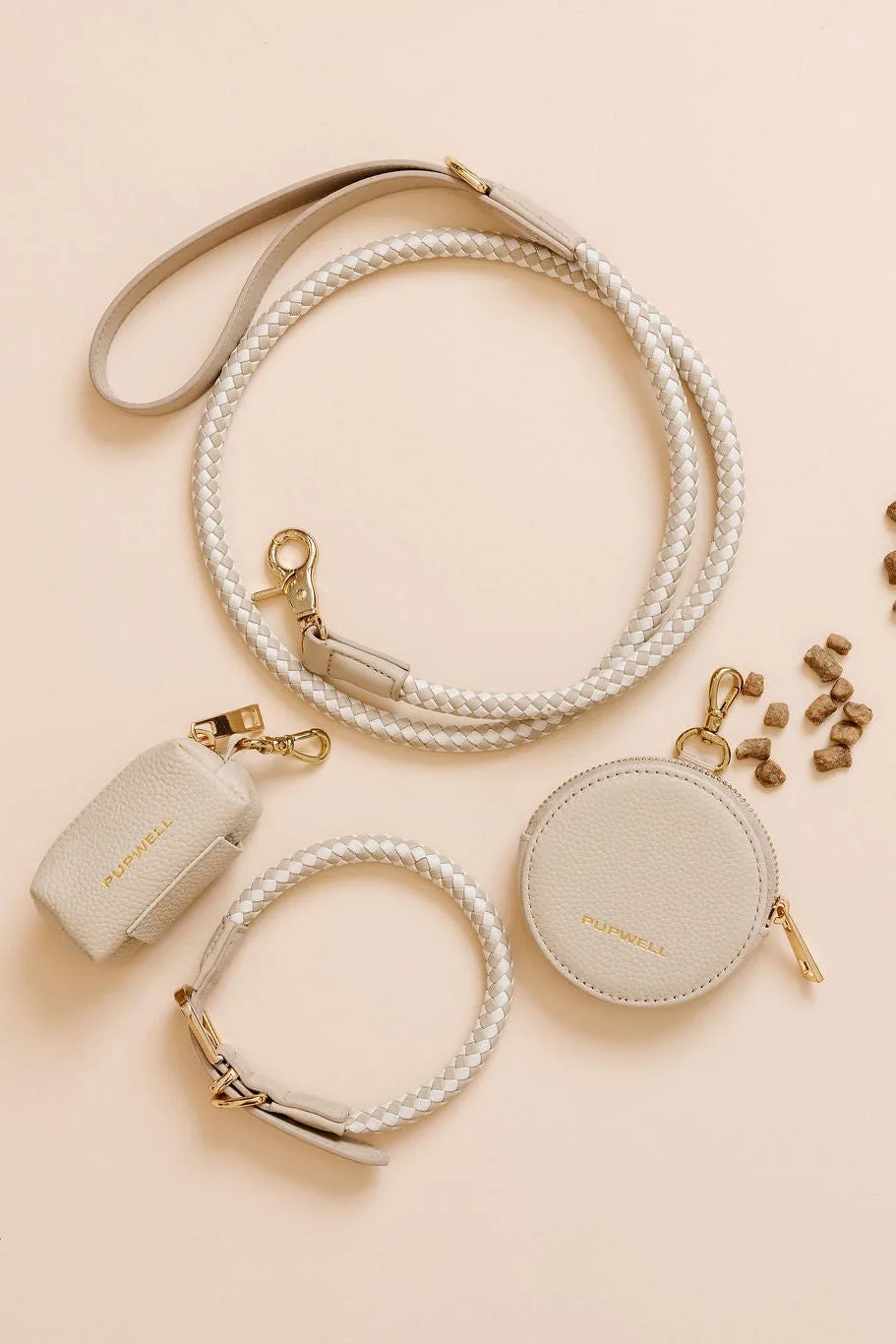
City Walk Kit & FREE COLLAR
Who this kit suits
Best for
- City dwellers who walk on sidewalks, near traffic, or in apartment hallways
- Owners who want a coordinated collar and leash without shopping for each piece
Not for
- Dogs whose neck size falls outside the kit's collar options
- Owners who already have a leash and collar they are happy with