Quick answer
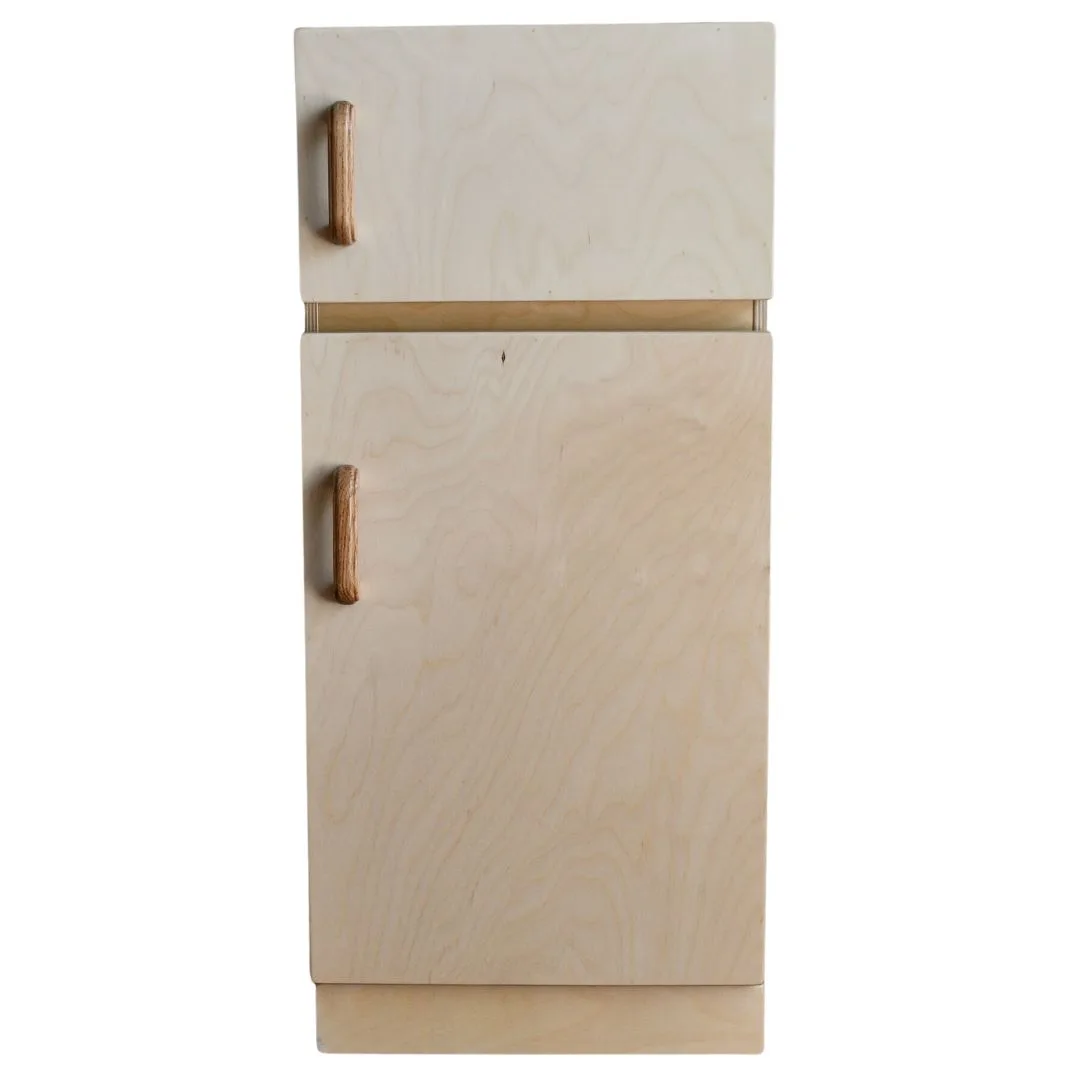
Place the Classic Wooden Play Refrigerator at the end of your play kitchen counter, at your child's hip height, then stock it with a few lightweight play food items on the lower shelves. Keep the freezer shelf for empty containers at first. This setup supports pretend play kitchen routines without overwhelming your child.
Measure the play kitchen zone before you move the fridge
Clear a floor area where your child can open both refrigerator doors without hitting a wall or another toy. The Classic Wooden Play Refrigerator has functional doors and multiple interior shelves, so it needs door-swing clearance on the hinge side and enough depth for a child to stand in front. If your play kitchen setup already has a stove and sink, put the fridge at one end rather than in the middle. That keeps the pretend play kitchen flow moving from storage to prep to clean-up.
Set the fridge at the right height for your child
A play kitchen fridge works best when the lower shelf sits near your child's waist and the freezer shelf sits near shoulder height. For toddlers, that may mean placing the unit on the floor with no riser. For older preschoolers, a low stable platform can raise the unit, but only if it cannot tip. Check the base for wobble before your child loads it with play food. A wobbly fridge gets abandoned quickly because opening the door feels unsafe.
Stock the shelves in three zones
Treat the interior like a real fridge so kids play kitchen routines make sense. Use the bottom shelf for heavier play food storage such as wooden cartons or a small basket. Use the middle shelf for daily items your child reaches for most, like play milk or a toy fruit set. Keep the two-shelf freezer for lightweight, empty containers at first. Labeling zones with pictures or colored dots helps children return items without adult reminders.
Pair the fridge with doll accessories for nurturing play
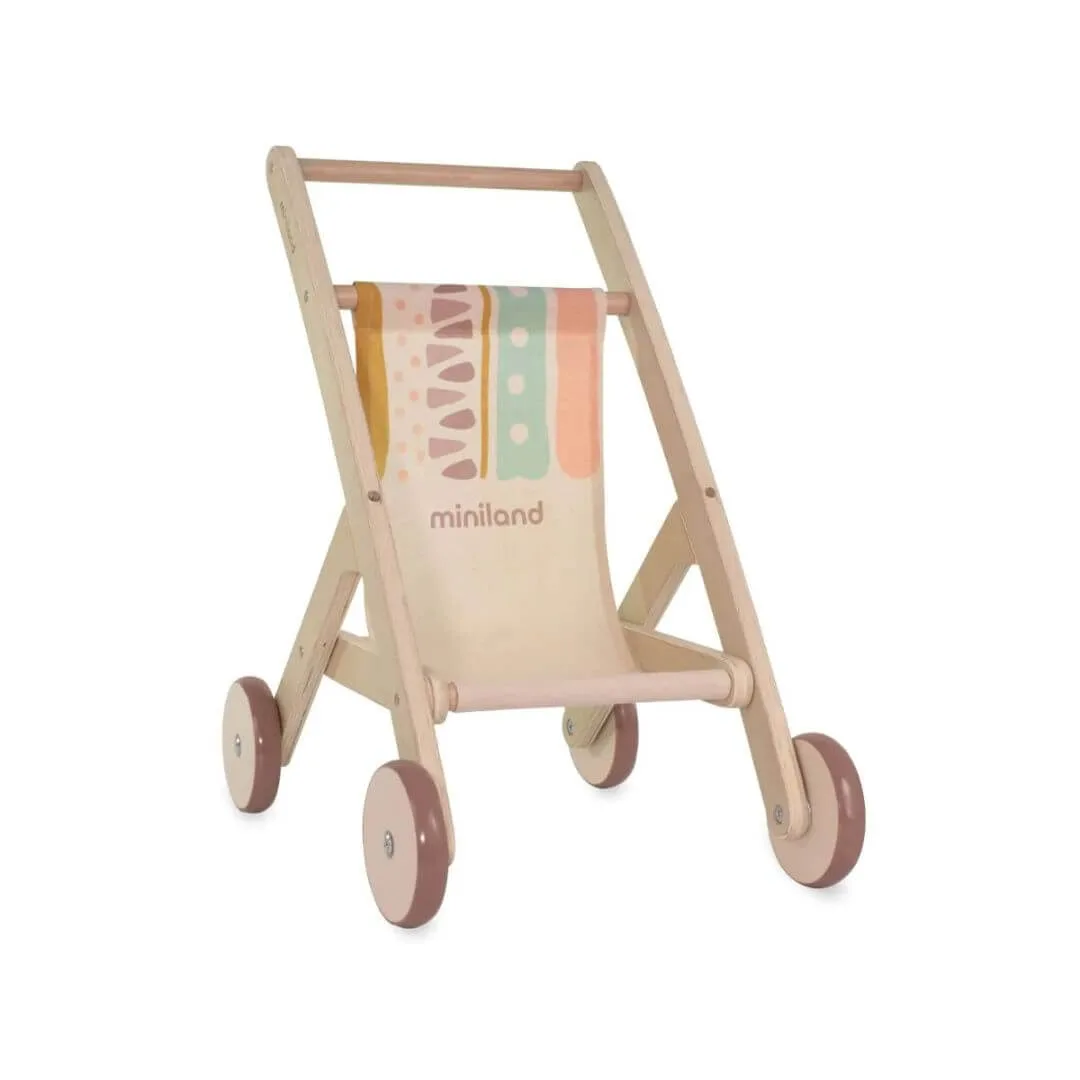
A fridge alone can limit pretend play to cooking and storing. Add a Wooden Doll Stroller so your child can take a doll on a shopping trip, then return to the play kitchen to unpack groceries. This connects storage, movement, and caregiving in one loop. The stroller is made from sustainably sourced wood with a cheerful fabric seat and supports gross motor development and independence. Keep the stroller parked beside the fridge, not in front of it, so door swing stays clear.
Rotate play food storage weekly
Too much play food turns the fridge into a junk drawer and slows pretend play kitchen scenarios. Keep five to eight items inside and store the rest out of reach. Rotate every week or two so the fridge feels new. This also makes clean-up faster because every item has a visible home. If your child ignores the fridge for several days, remove half the contents rather than adding more.
Clean and check the fridge monthly
Wipe the interior shelves with a barely damp cloth and dry immediately. Avoid soaking the wood or using harsh cleaners, which can dull the finish. Check door hinges and shelf stability at the same time. Tighten any loose hardware you can safely reach. If a shelf feels loose, remove it until it is secure. A stable kids play kitchen fridge gets used more because children trust it.
Six-step play kitchen setup
- Clear door-swing space: Measure a floor zone that lets both refrigerator doors open fully without hitting walls or other toys. Checkpoint: your child can stand in front and open the door alone.
- Level and stabilize the base: Set the fridge on a flat surface and test for wobble before adding any play food. Mistake to avoid: skipping this step makes the fridge feel unsafe and it gets ignored.
- Assign three shelf zones: Put heavier play food storage on the bottom, daily items in the middle, and lightweight empty containers in the freezer. Checkpoint: your child can name what belongs on each shelf.
- Add one movement accessory: Park a Wooden Doll Stroller beside the fridge so shopping and unpacking become part of the routine. Keep the stroller out of the door-swing path.
- Limit and rotate contents: Keep five to eight play food items inside and rotate the rest every week or two. Mistake to avoid: overfilling the fridge until it becomes a storage bin.
- Wipe and tighten monthly: Clean shelves with a barely damp cloth, dry immediately, and check hinges and shelf stability. Remove any loose shelf until it is secure.
Product facts that shape your setup
- Classic Wooden Play Refrigerator: Handcrafted from solid natural hardwood in Lancaster, Pennsylvania, with functional doors, multiple interior shelves, and a two-shelf freezer. The solid wood build and real door movement let children practice opening, closing, and organizing, which is central to a working play kitchen setup.
- Wooden Doll Stroller: Crafted from sustainably sourced wood with a cheerful fabric seat, designed to support nurturing pretend play and gross motor development. Adding a stroller extends pretend play beyond the kitchen, so your child can shop, deliver, and unpack play food.