Quick answer
Clean floor puzzle pieces with a dry microfiber cloth or a barely damp one, never soak them, and store the puzzle flat or in a rigid portfolio so the 4ft span is fully supported. If a piece is already bent, press it between two flat boards under gentle weight for a day before rebuilding. Glow in the dark and double sided puzzles need the same flat storage plus a dark, dry spot so the glow layer and printed back stay intact.
Match the cleaning method to the mess
Most floor puzzle damage starts with good intentions: a wet wipe, a spray bottle, or a sink rinse. Floor puzzle pieces are usually thick cardboard with a printed surface and sometimes a glow coating, so moisture is the main enemy. For dust and fingerprints, a dry microfiber cloth is enough. For sticky spots, dampen a cloth and wring it until it is almost dry, then wipe the piece and dry it immediately with a second cloth. Never submerge pieces, and do not use alcohol, bleach, or abrasive cleaners because they can lift ink or dull a glow layer.
- Dry cloth first for dust and everyday handling.
- Barely damp cloth only for sticky residue, then dry right away.
- Skip sprays, soaking, and harsh solvents entirely.
Store 4ft puzzles so the full span stays supported
A 4ft floor puzzle is long enough that a standard shelf or deep bin lets the middle sag. That sag is what bends pieces and opens gaps at the seams. Store the completed puzzle or the bagged pieces flat, on a rigid surface such as a foam board, a large portfolio, or a shallow box that matches the puzzle length. If you must stand it up, slide it between two stiff boards first so the cardboard cannot bow. Keep storage in a dry room away from radiators, damp basements, and direct sun, since heat and humidity warp cardboard faster than handling does.
- Flat storage with a rigid backing prevents mid-puzzle sag.
- Stand puzzles only between two stiff boards.
- Avoid damp basements, hot attics, and direct sunlight.
Protect double sided and glow in the dark surfaces
Double sided puzzles have artwork on both faces, so any storage method that rubs one side against a rough surface will scuff it. Place a clean sheet of paper or a soft cloth between stacked puzzles, and avoid stacking heavy boxes on top. For glow in the dark puzzle care, charge the puzzle under a bright light before play, then store it in a dark, dry place; a dark closet or a closed portfolio works better than a sunny windowsill because long sun exposure can fade printed colors. If the glow seems weak, clean the surface with a dry cloth first, since dust and skin oils block the glow layer.
- Separate stacked puzzles with paper or cloth.
- Charge glow puzzles under light, then store dark and dry.
- Clean dust and oils off glow surfaces before judging brightness.
Reassemble in a consistent order
Once pieces are clean and flat, rebuild the border first, then sort by color or anatomy sections. For a 100-piece floor puzzle, working in quadrants keeps the 4ft span manageable and reduces the temptation to force pieces. If a piece resists, do not push it; check the orientation and try a different neighbor. Forcing a piece is the most common cause of bent tabs, and it is avoidable with a slower, section-by-section approach.
- Border first, then quadrants or color groups.
- Never force a piece that does not seat easily.
- Rebuild on a flat, clean floor or large table.
Diagnose the damage before you fix it
- Symptom: pieces bow or rock on a flat surface: Likely cause: the puzzle was stored standing up, in a deep bin, or under heavy boxes, letting the 4ft span sag. Corrective action: lay the pieces between two flat boards with light weight for 24 hours, then store flat on a rigid backing. If the cardboard is creased white along the bend, the damage is permanent; stop pressing and consider a replacement puzzle.
- Symptom: glow side looks dim or patchy: Likely cause: dust, skin oils, or long sun exposure rather than a broken glow layer. Corrective action: wipe with a dry microfiber cloth, charge under bright light, and store in a dark, dry place. If it stays dim after a full charge and a dry clean, the glow coating has faded; use it as a daytime puzzle instead.
- Symptom: printed surface is sticky, cloudy, or lifting: Likely cause: a wet wipe, spray cleaner, or soaking. Corrective action: stop cleaning with moisture, dry the pieces flat, and switch to a dry cloth only. If ink lifts or the surface stays tacky, the coating is compromised; do not stack it against other puzzles.
- Symptom: pieces fit loosely or seams gap: Likely cause: humidity swelling the cardboard or repeated forced assembly. Corrective action: move storage to a dry room, let pieces acclimate flat for a day, and rebuild border-first without forcing. If gaps remain across many pieces, the puzzle has warped beyond easy repair; choose another option rather than forcing it.
Products that fit this care routine
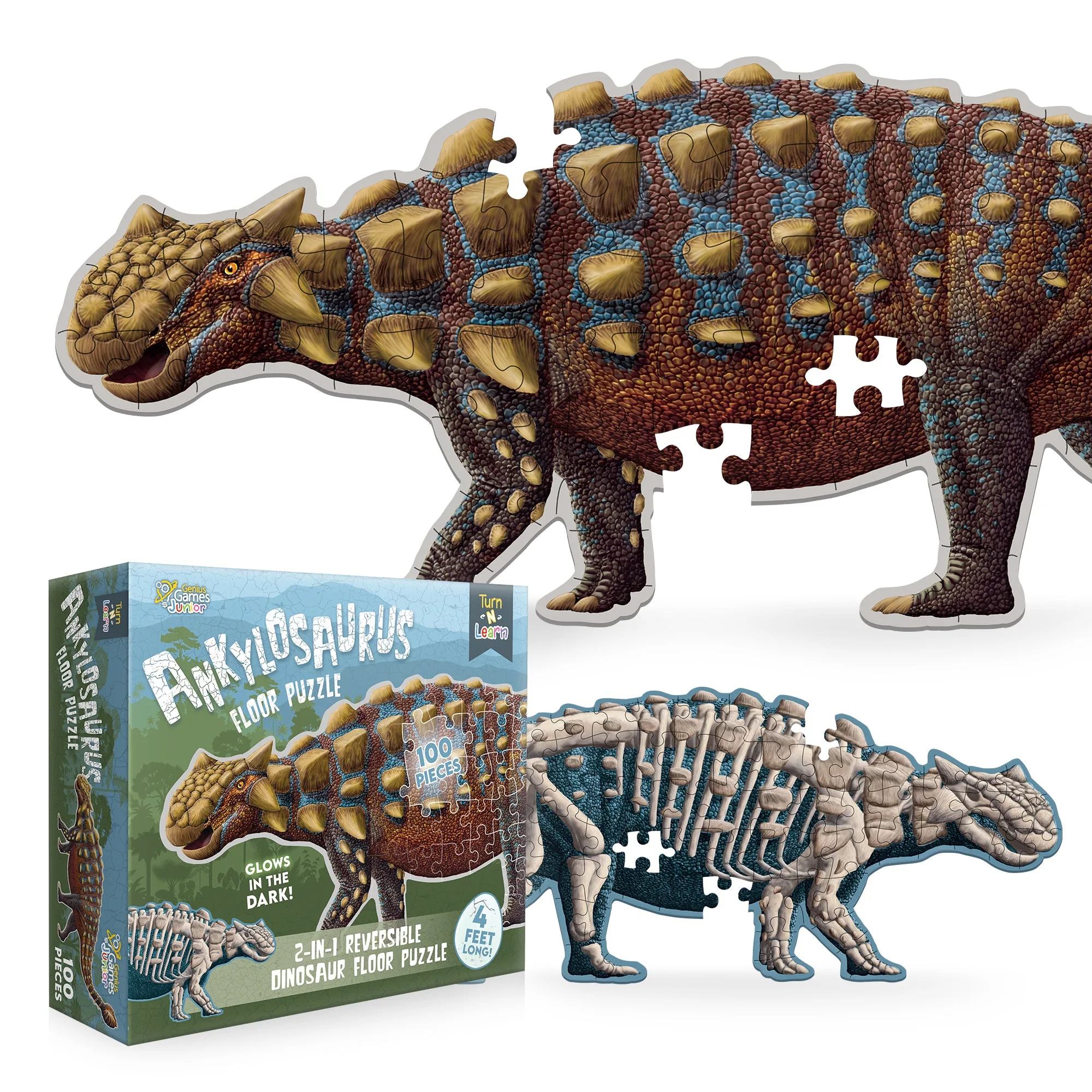
- Ankylosaurus Dinosaur Jigsaw Puzzle - 4FT Double Sided Glow in the Dark Floor Puzzle: 100-piece Ankylosaurus floor puzzle, 4ft long, double sided with a glow in the dark side and an anatomy reference guide. The 4ft length and double sided print make flat, rigid storage and gentle dry cleaning especially important.
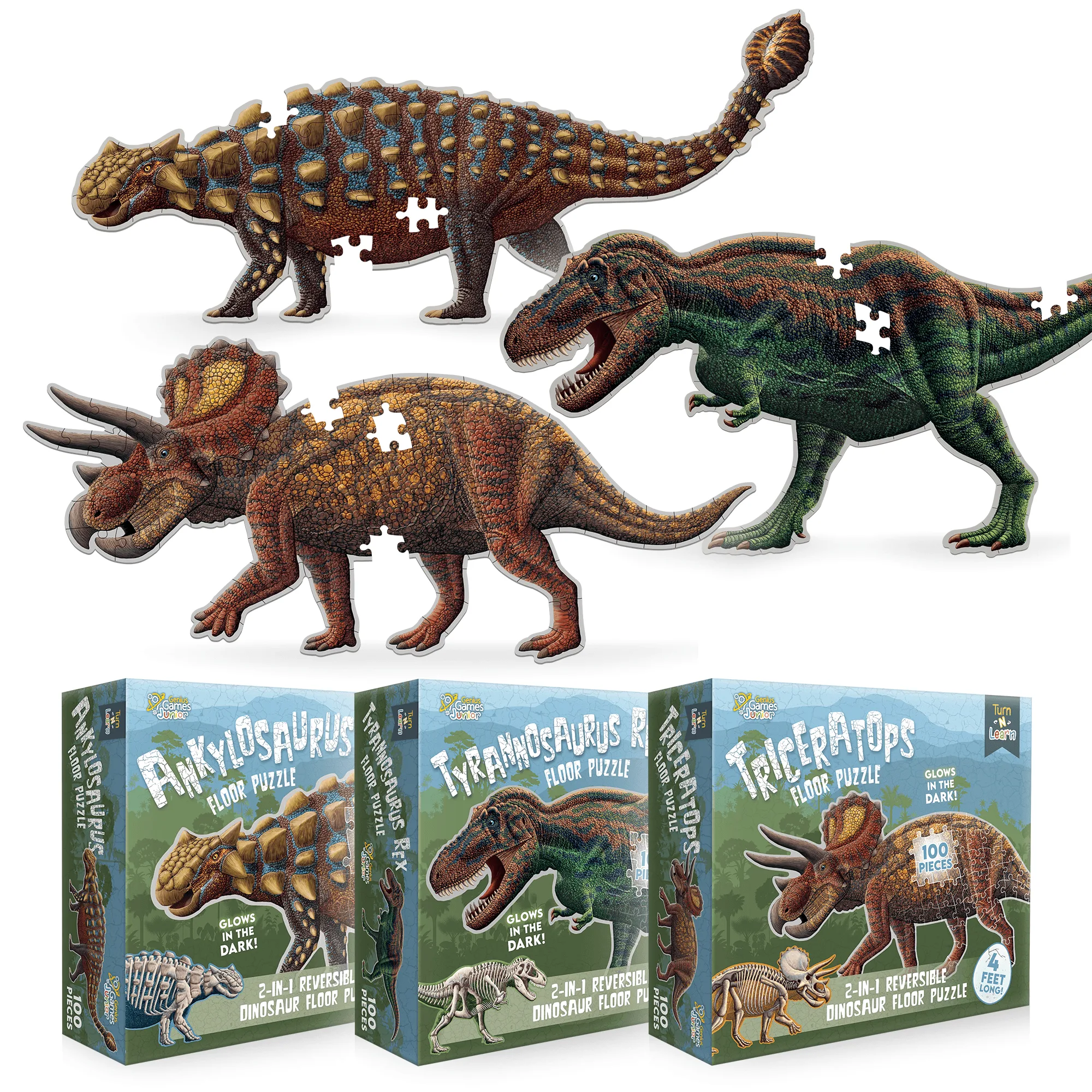
- Bundle - Tyrannosaurus Rex, Triceratops & Ankylosaurus Jigsaw Puzzle - 4FT Double Sided Glow in the DarkFloor Puzzle: Bundle of three 100-piece 4ft dinosaur floor puzzles: Tyrannosaurus Rex, Triceratops, and Ankylosaurus, each double sided and glow in the dark. Storing three long puzzles means separating them with paper or cloth and keeping each one flat so the glow sides do not rub.
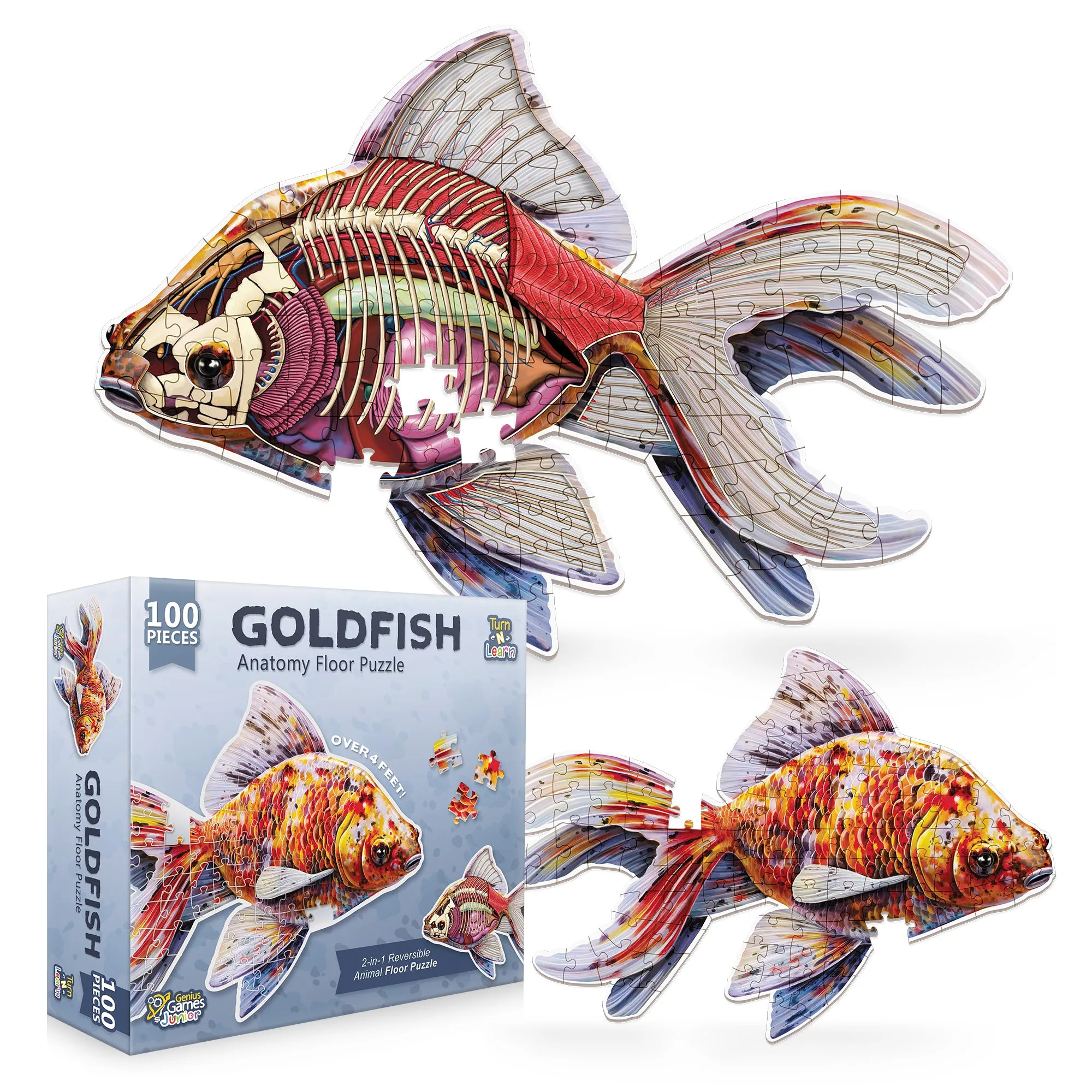
- Fantail Calico Goldfish Jigsaw Puzzle - 4FT Double Sided Floor Puzzle: 100-piece Fantail Calico Goldfish floor puzzle, double sided with inside and outside anatomy and an anatomy guide fact sheet. The double sided anatomy artwork needs the same dry cleaning and flat storage to keep both faces readable.