Quick answer
Clean silicone soothers after every use with warm soapy water, sterilise daily, and replace them every 6-8 weeks or at the first sign of wear.
Why silicone soothers need special care
Silicone soothers are durable and easy to clean, but they still collect bacteria, saliva, and food debris. Regular cleaning prevents irritation and keeps your baby safe.
Unlike latex, silicone can withstand high temperatures, so boiling and steam sterilising are safe options. However, always check the manufacturer's instructions first.
Daily cleaning vs. sterilising: what's the difference?
Daily cleaning removes dirt and germs with soap and water. Sterilising kills remaining bacteria and is recommended for babies under 6 months or those with weakened immune systems.
For older babies, daily washing may be enough, but sterilising a few times a week adds extra peace of mind.
Step-by-step soother care routine
- Rinse immediately after use: Rinse the soother under cool running water to remove saliva and debris. Do this as soon as your baby finishes using it to prevent buildup. Never let a used soother sit for hours before cleaning.
- Wash with warm soapy water: Use a mild dish soap and warm water. Gently scrub the teat and shield with a clean brush or cloth. Avoid harsh chemicals or abrasive cleaners. Check for cracks or tears while washing; replace if damaged.
- Sterilise daily (or as needed): For babies under 6 months, sterilise once a day using boiling water, a steam steriliser, or a microwave steriliser bag. Follow the product's instructions for timing. Always let the soother cool completely before giving it back to your baby.
- Air dry completely: Place the soother on a clean, dry surface or a drying rack. Ensure it is fully dry before storing to prevent mould growth. Do not use a towel to dry, as it may leave lint.
- Store in a clean, dry case: Keep the soother in a ventilated case when not in use. Avoid airtight containers unless they are designed for sterilising, as trapped moisture can cause mould. Use a case that doubles as a steriliser for on-the-go hygiene.
- Replace regularly: Replace silicone soothers every 6-8 weeks, or sooner if you notice any cracks, tears, or sticky spots. Also replace after an illness to prevent reinfection. Keep a spare soother handy so you always have a clean one.
Product spotlight
-
airflow soothers 2pk: Our airflow soothers 2pk feature a symmetrical teat, an airflow shield to protect delicate cheeks, and a travel case that doubles as a steriliser. The built-in steriliser case makes it easy to keep soothers clean on the go, and the shield helps prevent skin irritation.
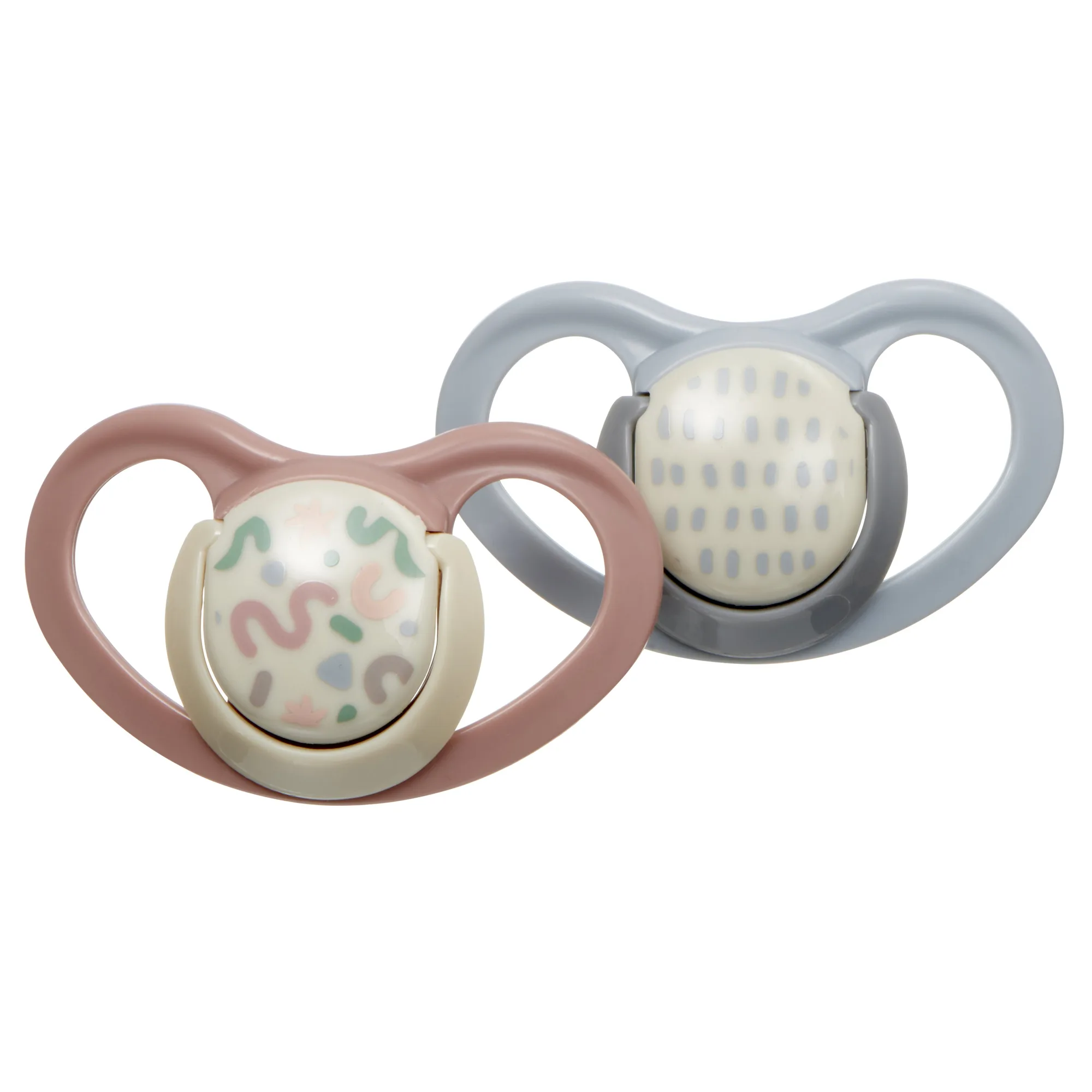
airflow soothers 2pk