The two claims that decide whether you buy a cleansing balm
Most hesitation about cleansing balms comes down to two fears: that the balm will leave residue behind and clog pores, or that it will clean so thoroughly it strips skin. Both fears are reasonable, and both deserve a specific answer rather than a blanket reassurance.
The useful way to judge them is to look at what a given balm is formulated to do, then separate that from what the supplied information does not confirm. Omega+ Complex Cleansing Balm gives us enough to check several of these claims directly.
Myth 1: A cleansing balm always leaves a pore-clogging film
A balm's texture tells you how it feels going on, not what it leaves behind. The rinse behavior is the relevant detail, and it is where this myth usually falls apart.
- What the claim assumes: That an oil-based balm stays on the skin after washing and settles into pores.
- What the supplied formula information says: Omega+ Complex Cleansing Balm is described as a velvety-smooth balm texture that rinses clean, and as rinsing completely clean. That describes the intended rinse behavior, not a guarantee for every skin type.
- Where the evidence stops: The supplied information does not include comedogenicity testing or pore-clogging assessments, so it cannot confirm or rule out pore congestion for an individual user. If you are prone to congestion, treat the rinse-clean description as a starting point and observe your own skin.
Myth 2: Cleaning thoroughly means stripping the skin
Thorough and harsh are not the same thing, and this is the claim where the product description is most direct. The balm is described as thoroughly cleansing without disturbing skin's barrier, and as leaving skin feeling soft and hydrated.
That is a statement about the intended cosmetic result of the formula, not a clinical measurement of barrier function. It does support the idea that a balm can be designed to clean well without a tight, stripped finish, which is the part of the myth worth discarding. It does not tell you how your own skin will respond, especially if you are already using actives or have a compromised barrier.
What Omega+ Complex Cleansing Balm is actually formulated to do
-
Omega+ Complex Cleansing Balm: Triple-action cleansing balm made with omegas 3, 6 and 9 that cleanses, softens and soothes while rinsing completely clean. This is the core claim behind the rinse-clean myth check: the balm is designed to remove residue rather than leave a film.
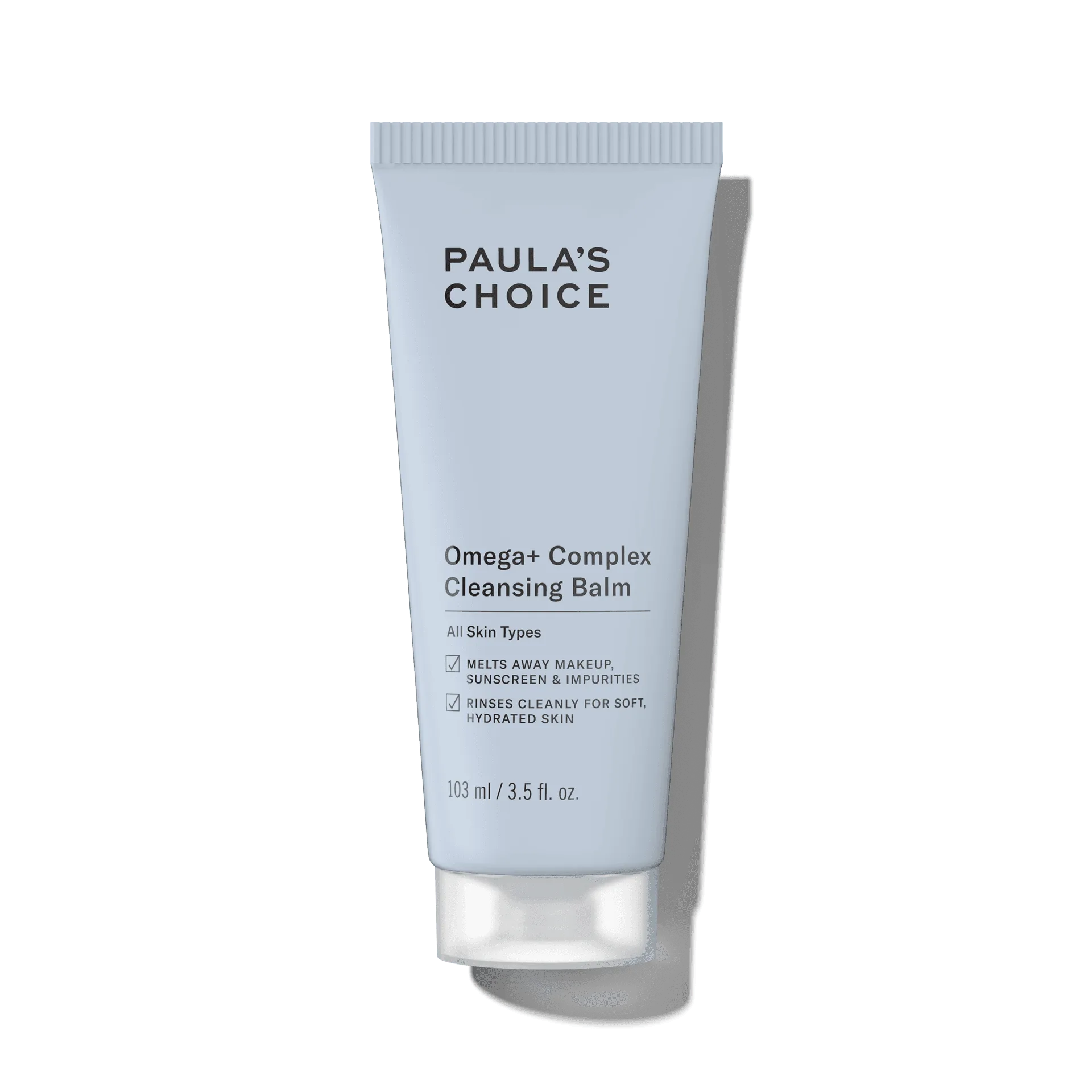
Omega+ Complex Cleansing Balm
-
Omega+ Complex Cleansing Balm: Thoroughly cleanses without disturbing skin's barrier. Directly addresses the stripping myth, though it describes intended cosmetic behavior rather than a measured clinical outcome.
-
Omega+ Complex Cleansing Balm: Jojoba and meadowfoam seed oils nourish, and the balm leaves skin feeling soft and hydrated. Explains why the finish is described as soft rather than tight, which is the opposite of the stripped-skin fear.
Myth 3: Cleansing balm is only for dry skin
This one is a half-truth. A balm is a format, not a skin type, and the supplied information does not restrict Omega+ Complex Cleansing Balm to dry skin or recommend it for oily skin either. What it does say is that the balm cleanses thoroughly, rinses clean, and leaves skin feeling soft and hydrated.
For oily skin, the practical question is whether the rinse-clean finish feels comfortable to you. The formula evidence supports a clean rinse; it does not include oil-control claims or sebum measurements. If you have oily skin, judge it on how your skin feels after rinsing rather than on the format alone, and note that the supplied information does not confirm suitability for any specific skin type.
Rinse-off tips that follow from the formula description
These are practical habits based on the product's described rinse behavior, not manufacturer instructions. The supplied records do not include a step-by-step application protocol, so treat the following as sensible usage rather than a required routine.
- Use enough water to emulsify: A balm that is described as rinsing completely clean needs water to do that. Add water and massage briefly before rinsing rather than wiping the balm off dry.
- Check the finish, not just the feel during cleansing: The claim is about the rinsed result. After rinsing, your skin should feel soft and hydrated rather than slick or tight. That is the simplest at-home check of the rinse-clean and non-stripping descriptions.
- Do not stack a second harsh cleanser by default: The balm is described as thoroughly cleansing on its own. The supplied information does not call for double cleansing, so add a second cleanser only if your routine genuinely needs it.
- Introduce it without changing everything else: If you are testing whether the balm suits your skin, keep the rest of your routine stable so you can tell what is responsible for any change.
What the supplied information cannot settle
The records for Omega+ Complex Cleansing Balm describe intended cosmetic benefits: cleansing, softening, soothing, a clean rinse and a comfortable finish. They do not include comedogenicity ratings, patch-test results, clinical barrier measurements, or guidance on how often to use the balm.
That matters for a myth-busting question, because it means the honest answer to does cleansing balm clog pores is product-specific and partly personal. The formula is described as rinsing clean and not disturbing the barrier, which argues against the strongest version of both myths. It does not prove the balm will never congest or never feel drying on your skin. If you have a history of congestion or a compromised barrier, introduce it carefully and watch how your skin responds.