The claims worth checking before you buy
Search for rosehip oil for acne-prone skin and you will meet two confident, opposite stories. One says a face oil during breakouts is the last thing you need; the other says the right oil is the answer. Neither is a useful starting point on its own.
The honest way to decide is to separate what a product record actually states from what the internet assumes. Below are the common claims about rosehip oil and blemish-prone skin, checked against the supplied information for Rosehip Bioregenerate Face Oil — including where that information simply does not answer the question.
Four common claims, checked
- “Rosehip oil clogs pores.”: The supplied record does not describe this oil as non-comedogenic, and it does not describe it as comedogenic either. That is a gap in the evidence available here, not a verdict. If pore congestion is your main concern, treat this as an open question rather than a settled fact in either direction.
- “A face oil during breakouts will always make things worse.”: The record makes no claim about how this oil behaves on active breakouts. It is positioned as an overnight rejuvenator that deeply nourishes and is proven to soften, smooth and brighten. Nourishment and breakout behaviour are different questions, and the record only supports the first.
- “All rosehip oils are basically the same.”: This is the claim the record pushes back on most directly. Most rosehip oils are cold-pressed from the seed alone, while this one uses CO2 supercritical extraction on the whole fruit and seed to capture a broader spectrum of actives. The record also cites independently verified levels of up to 7x more polyphenols, up to 65% more regenerative sterols and up to 24% more fatty acids than competing premium rosehip oils. Extraction and composition can differ meaningfully between products.
- “The deeper the colour, the more likely it is to irritate.”: The record treats the deep orange colour as a sign of higher carotenoid concentration, not a cosmetic addition. It does not link colour intensity to irritation risk, so that leap is not supported by the supplied information.
What the Rosehip Bioregenerate record actually confirms
-
Rosehip Bioregenerate™ Face Oil: Independently verified levels of up to 7x more polyphenols, up to 65% more regenerative sterols and up to 24% more fatty acids than competing premium rosehip oils. These are composition claims, not breakout claims. They help you compare this oil with other rosehip oils, but they do not tell you whether it will suit blemish-prone skin.
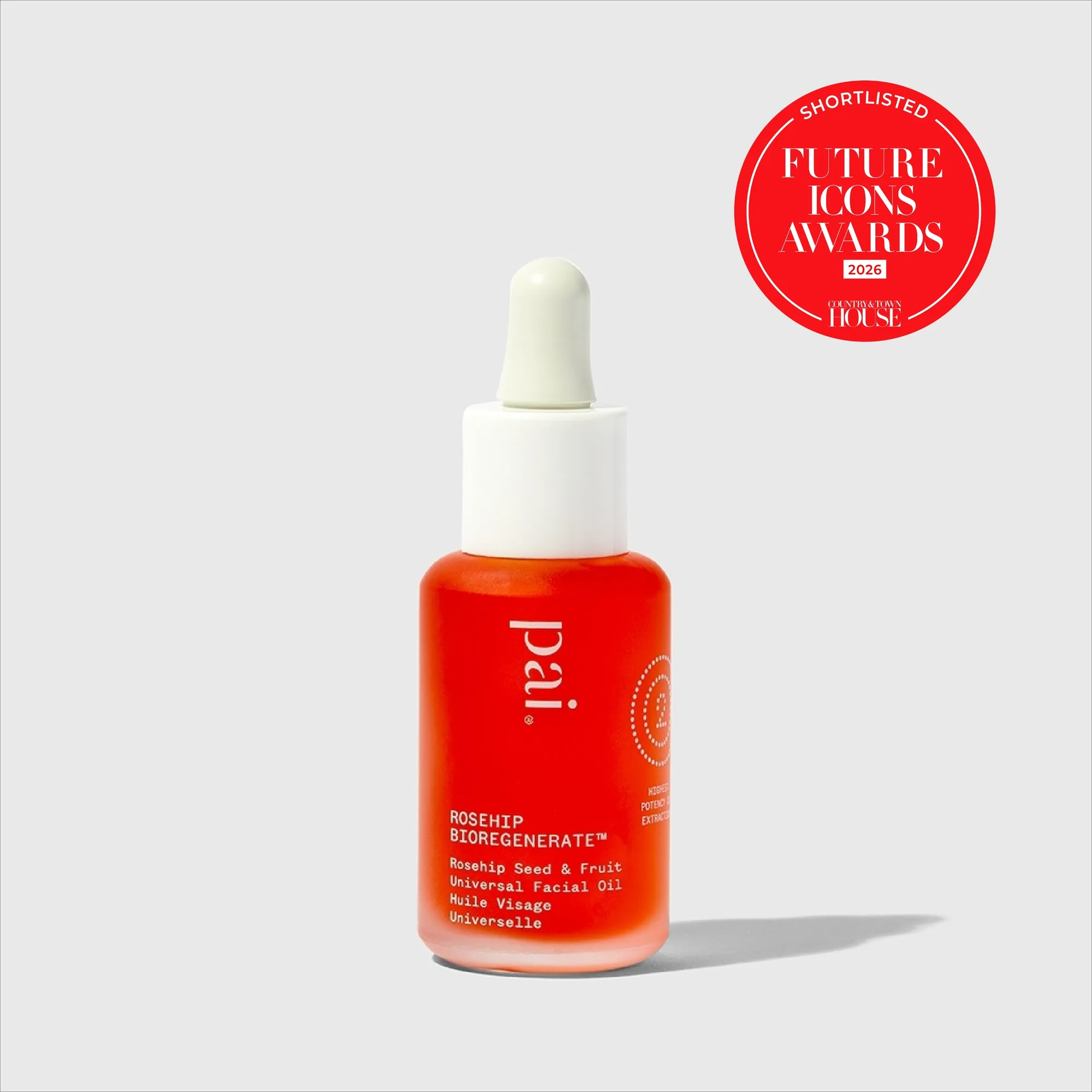
Rosehip Bioregenerate™ Face Oil
-
Rosehip Bioregenerate™ Face Oil: CO2 supercritical extraction on the whole fruit and seed, rather than cold-pressing the seed alone. This explains why the formula differs from a standard seed-only rosehip oil — useful context when you are weighing one face oil against another.
-
Rosehip Bioregenerate™ Face Oil: The record describes it as an overnight rejuvenator that deeply nourishes and is proven to soften, smooth and brighten, with antioxidants including Vitamins A and E to help even out skin tone and fade the appearance of dark spots. These are the intended cosmetic benefits the record supports. Notice that clearer-looking tone and softer texture are not the same as fewer breakouts.
Where the evidence stops on blemish-prone skin
This is the part most product pages skip. The supplied record does not state a recommended frequency, a patch-test result, or any suitability guidance for acne-prone or blemish-prone skin. It also does not confirm whether the formula is non-comedogenic.
That absence matters for a myth-busting read. It means you cannot use this record to prove the oil is right for breakout-prone skin, and you cannot use it to prove the oil is wrong either. What you can do is judge it on the claims it does make — nourishment, softening, smoothing, brightening and antioxidant support — and treat breakout suitability as something the record leaves open.
A cautious way to try it if you are breakout-prone
Because the record gives no frequency or patch-test instruction, the steps below are general caution, not manufacturer directions. Keep them modest and stop if your skin reacts.
- Start with a small test area: Apply a little to a small patch rather than the whole face first, so you can observe how your skin responds before committing.
- Keep the rest of your routine steady: Introduce one new product at a time. If you change several products at once, you cannot tell what caused a reaction or an improvement.
- Use it as the record positions it — overnight: The record frames this as an overnight rejuvenator. That is the only timing guidance the supplied information supports.
- Judge texture and tone separately from breakouts: The record supports claims about softening, smoothing and brightening. If your goal is fewer breakouts, this record does not give you a benchmark to measure against.
What this oil is — and isn't — positioned to do
- Supported by the record: Deep nourishment; proven softening, smoothing and brightening; antioxidant support from Vitamins A and E; helping even out skin tone and fade the appearance of dark spots; supporting the skin's natural repair cycle overnight.
- Not confirmed by the record: Non-comedogenic status; suitability for acne-prone or blemish-prone skin; a recommended usage frequency; patch-test results; any claim about reducing active breakouts.
The honest trade-off
Rosehip Bioregenerate Face Oil has a clear, well-documented story about nourishment and overnight renewal, and its extraction method and verified composition figures give you real points of comparison against other rosehip oils. If your goal is softer, smoother, brighter-looking skin, the record speaks directly to that.
If your goal is specifically to manage breakout-prone skin, the record does not settle the question — and no amount of confident marketing language should be read as proof that it does. Buy it for the benefits it documents, and treat pore congestion and breakout suitability as something to assess on your own skin, cautiously, rather than as a claim the evidence here can confirm.