Quick answer
Choose a clear backpack sized for your largest daily item, not for the number of pockets. A transparent school backpack works best when it holds a folder or tablet, a pencil pouch, a water bottle, and a lunch bag, and when you accept that every item inside stays visible.
Visibility changes what you can carry
A clear backpack for school is checked at a glance, so anything private, messy, or easily damaged becomes a problem. Loose pens, crumpled receipts, and snack wrappers are visible to everyone, and a cracked phone screen or a medication label cannot be tucked away. Plan to use small opaque pouches only where the rules allow them, and keep the rest of the bag intentionally simple.
Transparency also makes packing faster. You can see whether the folder is inside without unzipping, which matters in crowded hallways or security lines. The trade-off is that the bag looks cluttered unless you pack in layers: flat items against the back, bulky items in the main compartment, and small loose items in the front zipper pocket.
Size is a limit, not a selling point
Many clear backpacks are sold by pocket count, but a transparent school backpack size should be judged by its main compartment. A bag that fits a standard two-pocket folder and a 1-inch binder is usually enough for elementary and middle school daily use. If you carry a laptop, measure its length and width before buying, because clear PVC does not stretch and a tight fit strains the seams.
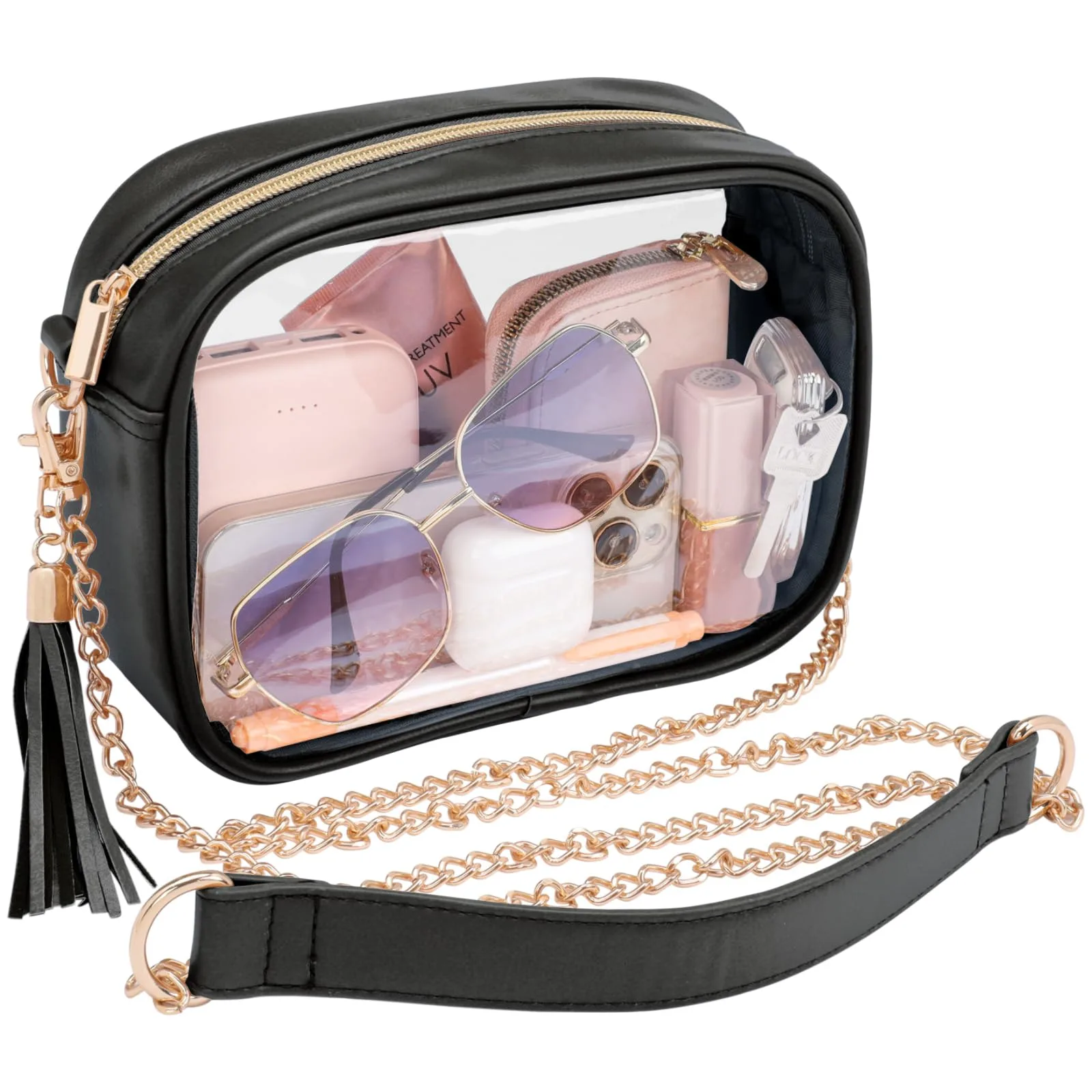
For events and workplaces, a smaller clear bag is often easier to carry and easier to inspect. The same rules that make a bag classroom approved can make it awkward for gym clothes or a full lunch: there is little give, and hard-edged items press against the clear panels.
What to leave out
Skip anything that leaks, stains, or reveals private information. That includes open drink containers, loose art supplies, and paperwork with addresses or account numbers. If you need a water bottle, choose one that seals tightly and place it upright in a side pocket or front pocket if the bag has one. Do not rely on a clear backpack to protect a fragile item; the panels show damage as clearly as they show the item.
Decision rules for choosing a clear backpack
- Measure your largest daily item first: Lay your folder, binder, or tablet flat and measure its length and width. Compare those numbers to the main compartment, not the exterior dimensions. If the item barely fits, size up or choose a different bag. A clear backpack that is too tight will strain seams and slow you down every morning.
- Match the closure to your routine: Choose a zipper closure for classrooms and commutes where items must stay secure. A top webbing loop is useful if you hang your bag in a locker or on a hook. If you need quick access, a front zipper pocket keeps small items from falling to the bottom. Decide whether security or speed matters more before you buy.
- Plan for what stays visible: Pack private or messy items in a small opaque pouch only if your school or venue allows it. Otherwise, leave medications, loose snacks, and paperwork with personal details at home. Use the front pocket for pens and keys so they do not scratch the clear panels. If you cannot carry it openly, a clear backpack is the wrong bag for that day.
- Check the rules before you commit: Some classrooms and events require fully clear bags with no colored panels or opaque pockets. Confirm the policy before buying, because a bag with a large front pocket may not pass. A simple clear bag with a zipper and loop is the safest default. A bag that fails inspection is not a bargain at any price.
Product facts
-
Clear Classroom Approved Backpack: Heavy-duty transparent PVC with double-stitched seams, a front zipper pocket, and a top webbing loop. The stitched seams and zipper closure support daily loading, while the loop lets you hang the bag in a locker or on a hook instead of setting it on the floor.

Clear Classroom Approved Backpack
Who this bag suits
Best for
- Students who need a clear backpack for school and carry folders, a pencil pouch, and a lunch bag
- Shoppers attending events or workplaces with clear-bag policies who want a simple, inspectable bag
- Anyone who wants to see contents at a glance and hang the bag in a locker or on a hook
Not for
- Carrying a laptop or binder that does not fit the main compartment without forcing
- Anyone who needs to keep medications, private paperwork, or messy snacks hidden
- Heavy loads with sharp edges that could press against clear PVC panels