Quick answer
A climbing arch gives younger children a low, rounded curve to crawl over, rock on, and rest against, while a climbing triangle offers a steeper, framed incline that builds grip strength and step-up confidence. If you want one piece for a toddler, start with an arch; if your child is ready to climb with hands and feet, a triangle is the better challenge.
A climbing arch and a climbing triangle can look like two versions of the same idea, but they ask different things of a child's body. The arch is a curve: low, open, and forgiving. The triangle is a frame: angled, structured, and more demanding. Which one belongs in your playroom depends less on age alone and more on how your child currently moves.
This comparison looks at the practical differences between a wooden climbing arch and a climbing triangle for kids, using the sets and accessories available at Woodandhearts as examples. You'll see how each shape fits a room, how they support development, and where a bundled set can cover both needs without doubling up on floor space.
Shape and movement: what each piece asks of a child
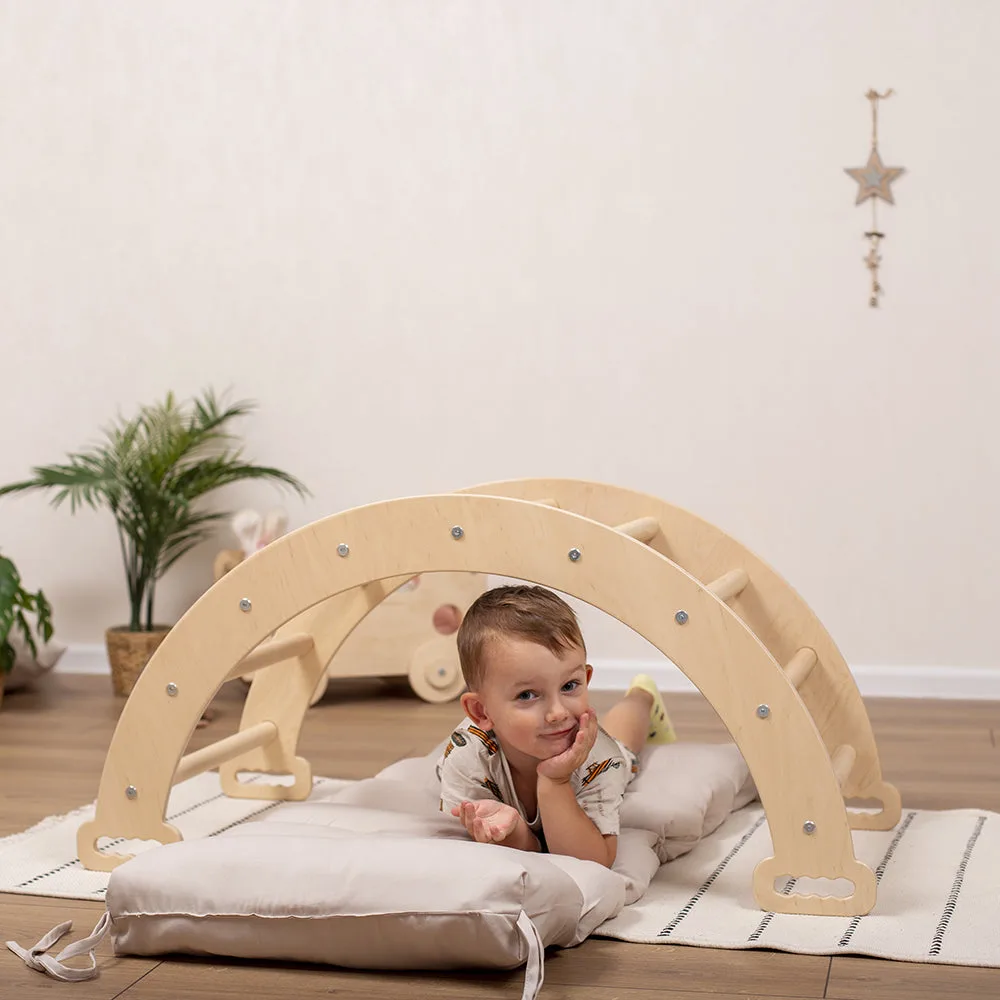
An arch is a continuous curve. Children crawl over it, rock gently on it, and lie across it during quiet moments. Because the apex is rounded and the sides are open, there's no single correct way to use it, which suits toddlers who are still figuring out balance. A triangle, by contrast, is a rigid frame with rungs or a climbing surface. It asks a child to reach, grip, and step in sequence, which builds coordination and upper-body strength.
The trade-off is challenge versus comfort. The triangle pushes a child to solve a climbing problem; the arch invites exploration without a fixed route. Many families find that a child who is not yet confident on a triangle will happily use an arch first, then graduate to the triangle once they can pull up and place their feet deliberately.
- Watch how your child climbs stairs or sofa cushions: a child who steps up with support is often ready for a triangle, while a child who prefers crawling over low obstacles will get more from an arch.
Footprint and storage in a real playroom
A triangle is deeper than it looks because the frame needs room to lean and be climbed from both sides. An arch is usually wider but shallower, so it can sit against a wall or under a window without blocking traffic. If your playroom doubles as a bedroom or living area, the arch is often the easier piece to slide out of the way.
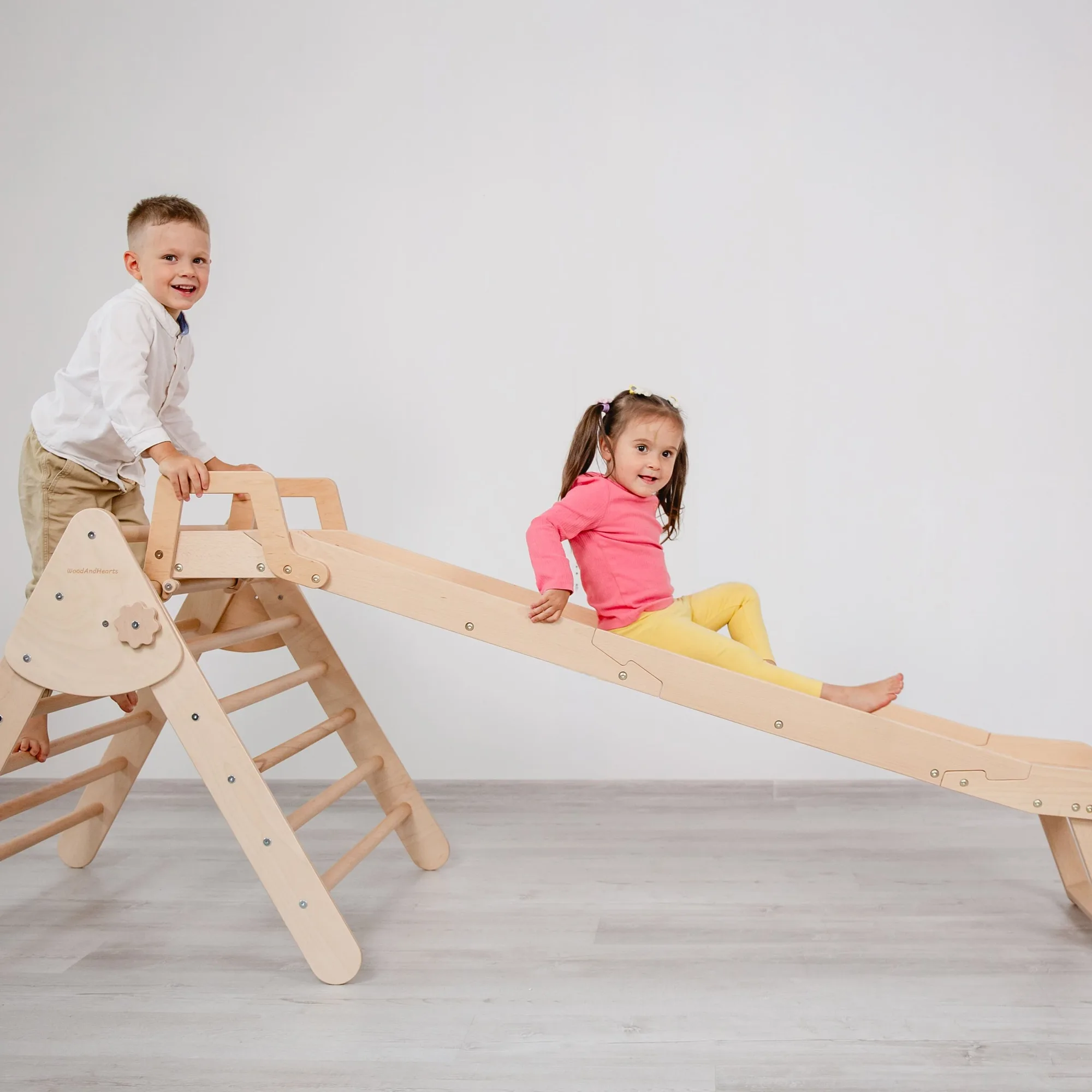
That said, a triangle can be paired with a slide or ramp to extend play, and some sets fold for storage. The Wooden Climbing Set is a 2-in-1 example: it includes a large Montessori triangle and a slide, so the triangle becomes the base for sliding as well as climbing. The trade-off is that a combined set takes more floor space when fully assembled than a single arch.
Wooden Climbing Set
- Measure your free wall space before choosing: a triangle plus slide needs a clear run, while an arch can tuck into a narrower gap.
Age, ability, and how the two pieces grow with your child
Neither shape has a single official age range, because children develop at different rates. In practice, an arch tends to suit the earliest climbing phase, when a child is pulling up and cruising. A triangle becomes more useful once a child can climb with alternating feet and wants a bigger physical challenge. The Montessori Climbing Set of 3 is described as available in Large size for ages 2 to 8, and it combines a foldable triangle, a climbing arch, and a rocker board, which lets you introduce each piece as your child is ready.

Montessori Climbing Set of 3
The honest trade-off is that buying both shapes separately costs more and takes more room than choosing one. A set that includes both can be more efficient if you have the space, but if your playroom is tight, start with the shape that matches your child's current ability rather than the one they might grow into next year.
- If you are unsure, choose the arch first for a child under two and the triangle first for a child who already climbs furniture confidently.
Comfort, add-ons, and safe setup
An arch has one advantage a triangle cannot match: it can be softened. The Climbing Arch Cushion with ties is designed to attach to the arch and can also be used on the floor, which turns the arch into a reading or resting spot between active bursts. A triangle is primarily a climbing tool, so padding is less relevant, though a mat underneath is still wise.
For either shape, place the equipment on a flat, non-slip surface and leave clear space around it. Check that the frame is stable before each use, and keep the climbing area free of hard toys. If you add a slide or ramp, follow the manufacturer's setup guidance and supervise younger children until they can mount and dismount safely on their own.
- A cushion with ties can make an arch more versatile, but remove it if it interferes with climbing or creates a tripping hazard.
Trade-offs to weigh before you buy
- Challenge vs. comfort: A triangle builds grip and step-up strength through a structured climb; an arch offers a lower, rounded shape that is easier to crawl over and rest on. Choose the triangle for a confident climber, the arch for a child still building balance.
- Floor space vs. play range: A triangle with a slide or ramp needs a longer clear run, while an arch is wider but shallower and easier to tuck against a wall. Measure your room first; if space is tight, the arch is usually the simpler fit.
- One piece vs. a bundled set: Buying a single arch or triangle costs less and takes less room, but a set like the Montessori Climbing Set of 3 gives you both shapes plus a rocker board for ages 2 to 8. If you have the space and want long-term variety, a set can be more efficient than two separate purchases.
Product facts that affect your choice
- Wooden Climbing Set: This 2-in-1 set includes a large Montessori triangle and a slide, so kids can climb up and slide down in one setup. If you want a triangle that also adds sliding motion, this set covers two activities without buying separate pieces, though it needs more floor space than a lone arch.
- Montessori Climbing Set of 3: The set combines a foldable triangle, a climbing arch, and a rocker board, and is available in Large size for ages 2 to 8. This is the option for families who want both shapes and a rocking element, with the foldable triangle making storage easier when playtime ends.
- Climbing Arch Cushion: The cushion has ties and can be attached to the arch or used on the floor, and it comes in various sizes and design options. It turns a climbing arch into a comfortable spot for resting or reading, which is something a triangle alone cannot offer.
Which should you choose?
Best for
- Toddlers who are pulling up, cruising, and crawling over low obstacles
- Families who want a climbing piece that doubles as a cushioned resting spot with a tied arch cushion
- Playrooms where floor space is limited and equipment needs to tuck against a wall
Not for
- Children who already climb furniture confidently and need a steeper, framed challenge
- Families who want sliding or ramp play in the same footprint
- Buyers who prefer a single piece that stores flat without adding a cushion or accessory
An arch and a triangle are not rivals so much as two stages of the same climbing journey. Match the shape to how your child moves today, and if you have the room, a set that includes both lets you follow that journey without starting over.