Quick answer
A kids climbing net suits children who crave full-body, dynamic movement like swinging and hanging, while a wooden climbing arch fits kids who prefer structured, imaginative play with a stable base. If you have a compact playroom and a child under five, the arch is often the smoother first step. For bigger spaces and older kids who need a physical challenge, the net is the stronger pick.
Your child's play style should drive this decision more than the product photos. A climbing net invites hanging, swinging, and vertical reach. A wooden climbing arch invites balancing, crawling, and turning into a boat, tunnel, or shop counter. Both build strength and confidence, but they do it through different movements.
This comparison breaks down how each option works in a real home, based on the materials and designs in our catalog. You will see where each one shines, where it asks more of your space or your child, and how to match the choice to the way your kid actually plays.
Movement style: swinging vs structured climbing
A kids climbing net is built for dynamic, whole-body movement. Children pull, hang, and swing, which develops grip strength and shoulder stability. The Kids Climbing Ropes set, for example, uses four long cotton ropes mounted to the ceiling, so the challenge is vertical and the motion is naturally pendular. That is exciting for a child who already climbs everything, but it can feel wobbly for a cautious beginner.
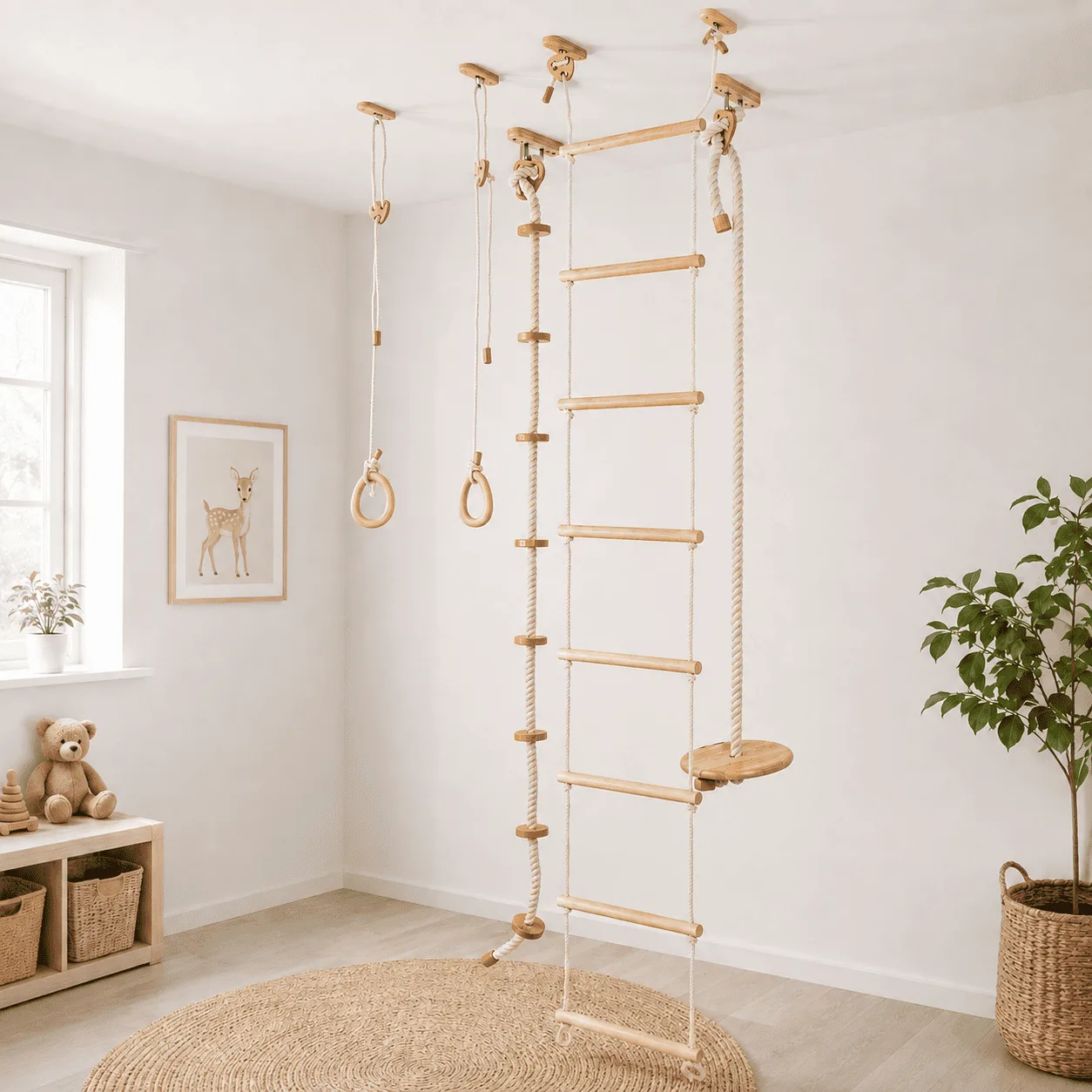
Kids Climbing Ropes
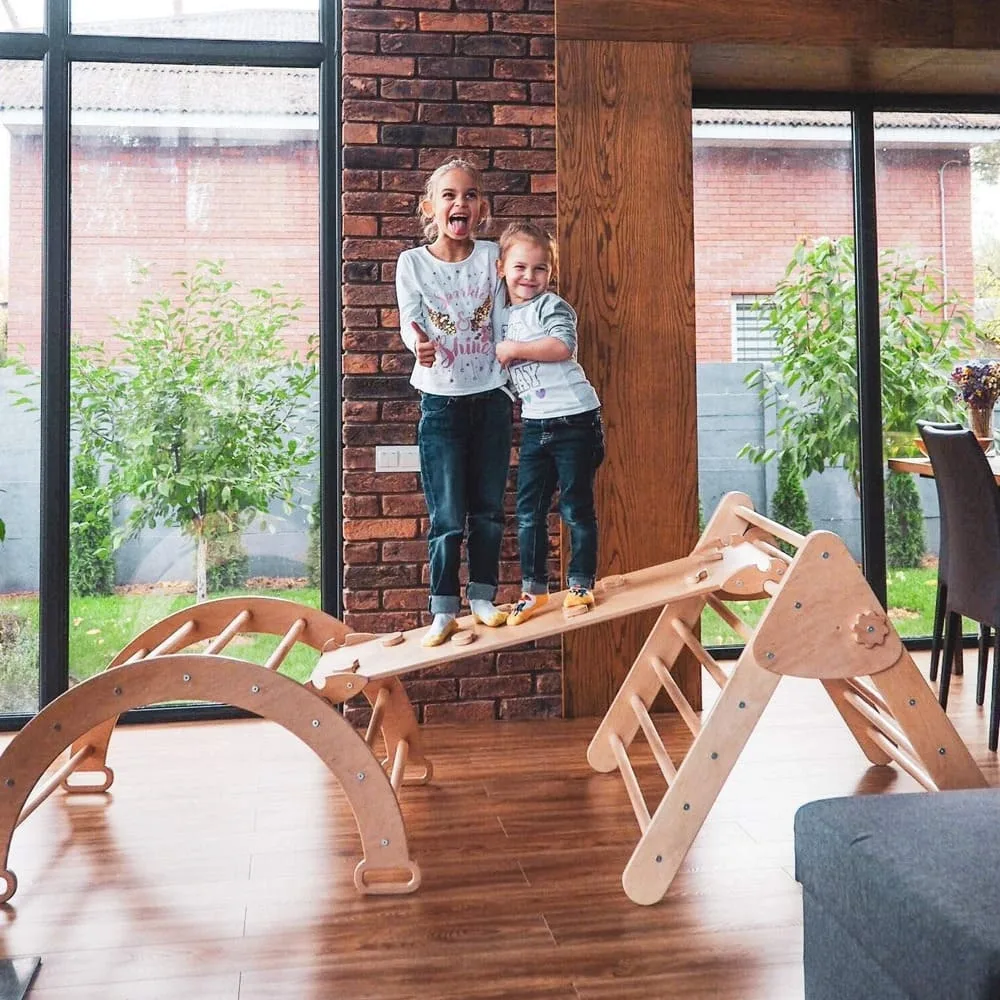
A wooden climbing arch is the opposite kind of challenge. It is a stable, curved structure that a child can crawl over, rock on, or lean against. The motion is controlled and grounded, which makes it easier for toddlers to build confidence without a spotter holding them steady. If your child likes to take their time and narrate a game while they move, the arch tends to hold attention longer.
- Choose the net if your child already hangs from doorframes and sofa arms.
- Choose the arch if your child prefers to climb up, sit, and invent a story.
Space and installation: ceiling vs floor footprint
Installation is where these two options diverge most. A climbing net for kids needs a secure ceiling mount and enough clear height for safe swinging. The Kids Climbing Ropes set is designed to be mounted to the ceiling, so you need a structural beam or a suitable fixing point and a room where the ropes can hang without hitting furniture. That rules out some rental apartments and low-ceiling rooms.
A wooden climbing arch sits on the floor and needs no drilling at all. It takes up a defined patch of playroom and can be moved aside when the room needs to serve another purpose. The trade-off is floor space: a large arch still occupies a meaningful footprint, and it will not disappear into a wall the way a ceiling-mounted net can. Measure your open floor area before you commit.
- Check ceiling height and fixing points before buying any hanging equipment.
- Mark the arch's footprint on the floor with tape for a day to test how it feels in the room.
Age, skill, and supervision needs
A climbing net for kids generally rewards children who already have some upper-body control, often around age four and up, because hanging and swinging require grip and shoulder strength. Younger children can use a net with close supervision, but they may need help getting on and off. The payoff is a challenge that stays interesting as your child grows stronger.
A wooden climbing arch is more forgiving for toddlers and preschoolers. Its low, stable curve lets a two-year-old practice balance without a big drop. That makes it a common first piece of indoor climbing equipment. The trade-off is that an older, stronger child may outgrow the physical challenge sooner, even if they still use it for pretend play.
- Match the equipment to your child's current ability, not the age on the box.
- Plan to supervise hanging play closely until your child can mount and dismount independently.
Material, maintenance, and long-term value
Both options in our catalog lean on natural materials. The Kids Climbing Ropes set combines cotton rope with beech wood, which feels warm and grippy but needs occasional checks for fraying or loose fixings. A wooden climbing arch is typically a solid wood frame that wipes clean and holds up well over years of daily use. Neither is maintenance-free, but the arch is the simpler object to inspect.
Long-term value depends on versatility. An arch often doubles as a reading nook, a bridge, or a puppet stage, so it stays in the play rotation even on low-energy days. A net is more single-purpose: when your child is not in a climbing mood, it hangs quietly. If you want one purchase that earns its space every day, the arch has the edge. If you want a dedicated physical challenge, the net delivers more intensity per square foot.
- Inspect rope and fixings monthly if you choose a hanging net.
- Wipe wooden arches with a damp cloth and re-tighten any bolts seasonally.
Trade-offs at a glance
- Dynamic challenge vs steady confidence: A ceiling-mounted net builds grip and shoulder strength through swinging, but it can feel unstable for a cautious beginner. A wooden arch builds balance and confidence on a stable base, but it offers less upper-body intensity. Pick the net for a strong, adventurous climber; pick the arch for a child still building physical confidence.
- Ceiling install vs floor footprint: The net requires a secure ceiling mount and clear swing space, which some homes cannot provide. The arch needs no drilling but permanently claims floor area in the playroom. If you rent or have low ceilings, the arch is the practical choice.
- Single-purpose intensity vs everyday versatility: A net is used mainly for climbing and hanging, so it sits idle on quiet days. An arch doubles as a reading nook, bridge, or pretend-play prop, so it stays in rotation more often. Choose based on whether you want a dedicated challenge or a multi-use play piece.
Catalog facts that affect your choice
- Kids Climbing Ropes: This set features 4 long ropes that should be mounted to the ceiling, made with cotton rope and beech wood. You need a suitable ceiling fixing point and clear height, so this is best for rooms where permanent hanging equipment is allowed.
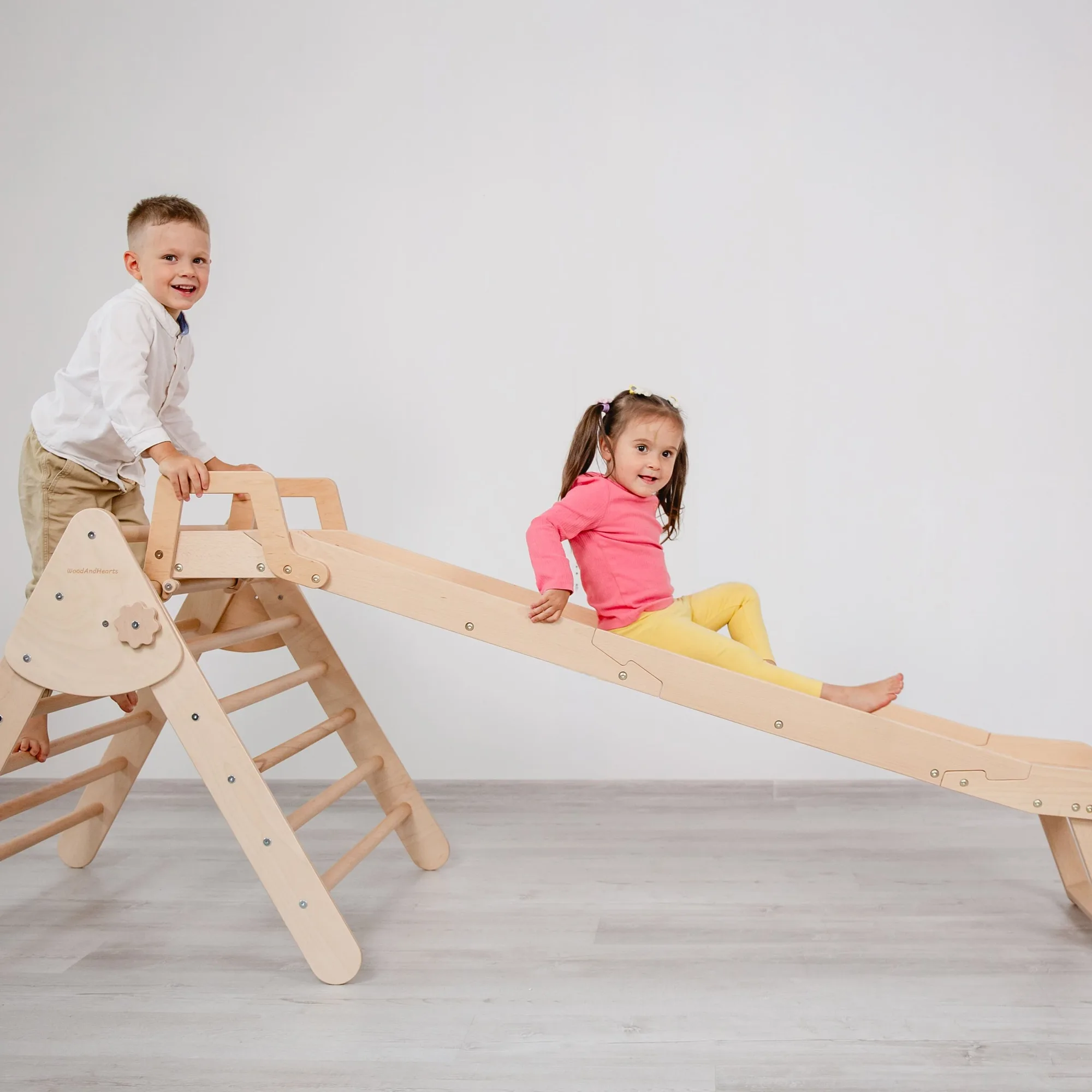
- Wooden Climbing Set: This 2-in-1 set includes a Montessori Triangle (Large size) and a Slide, so kids can climb up and slide down. If you want the stability of a wooden arch plus a sliding element, this set covers both without any ceiling mounting.
- Montessori Climbing Set of 3: The set includes a Foldable Triangle, Climbing Arch, and Rocker Board, available in Large size for ages 2 to 8. This is the most flexible wooden option because the arch can be used alone or combined with the triangle and rocker board as your child grows.
Which one fits your family?
Best for
- Families with a dedicated playroom, high ceilings, and a child aged 4+ who already climbs confidently.
- Parents who want a focused physical challenge that builds grip and upper-body strength.
- Homes where a permanent ceiling fixture is allowed and the net can hang without obstruction.
Not for
- Renters or anyone unable to drill into a ceiling beam.
- Toddlers under 3 who need a stable, low-to-the-ground first climbing experience.
- Small playrooms where hanging ropes would crowd the space or hit furniture.
There is no universal winner here, only a better match for your child's movement style and your room's constraints. If you want dynamic, hanging play and have the ceiling for it, go with a climbing net. If you want a stable, versatile wooden piece that grows with pretend play, a wooden climbing arch is the safer bet. Whichever you choose, check the installation and supervise the first few sessions closely.