Quick Answer
Clipper blades are wider and designed for bulk cutting and larger surface areas, while trimmer blades are narrower and built for precision work like outlines and fades. For most grooming tasks, you'll need both: a clipper for the main cut and a trimmer for the finishing details.
When you're setting up your grooming kit, one of the first decisions is choosing between clipper blades and trimmer blades. They look similar at a glance, but they serve very different jobs. Understanding those differences helps you pick the right tool for the cut you want and avoid frustration mid-groom.
In this comparison, we'll break down the key distinctions—size, cutting depth, and typical use cases—so you can decide what belongs in your rotation. We'll also touch on specific blade designs and how they affect your results.
Size and Cutting Area
The most obvious difference is size. Clipper blades are wider, typically around 2 inches or more, which lets them cover more ground quickly. That makes them ideal for the initial pass on the sides and back of the head, or for trimming longer hair down to a manageable length. A wider blade also means fewer strokes, which saves time during a full haircut.
Trimmer blades are narrower, usually around 1 inch or less. This smaller footprint gives you more control and visibility, which is crucial for detail work like lining up the edges, cleaning up the neckline, or creating sharp fades. The trade-off is speed: you wouldn't want to use a trimmer blade to buzz an entire head of hair—it would take far too long.
- Use a clipper blade for bulk removal and larger sections.
- Use a trimmer blade for precision lines and tight areas like around the ears.
Cutting Depth and Adjustability
Clipper blades often come with adjustable cutting depths, either through a lever or removable guard combs. This lets you vary the length without changing blades, which is handy when you're blending from a longer top to shorter sides. Many clipper blades can also be zero-gapped—set so the blade sits extremely close to the cutter—for a very close finish.
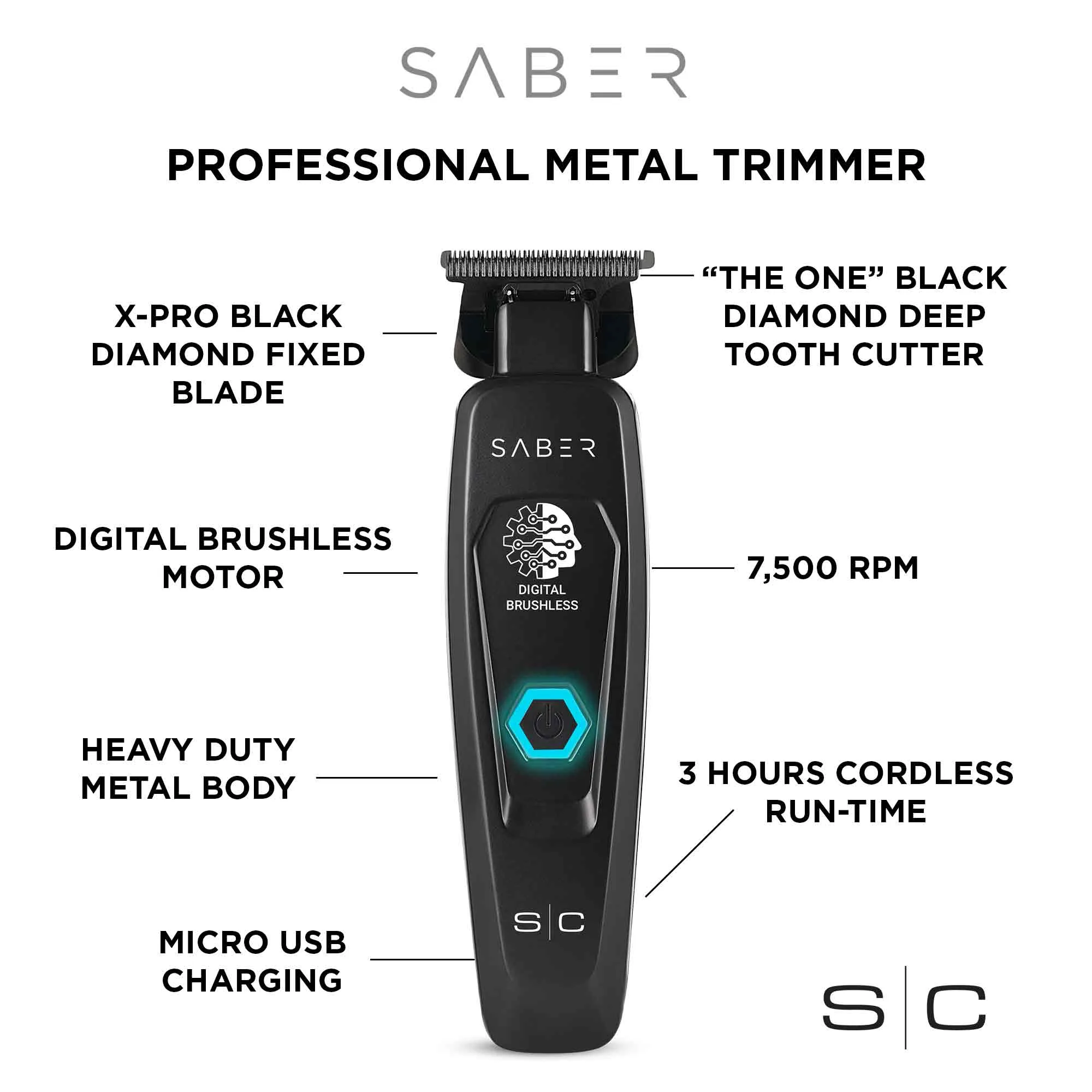
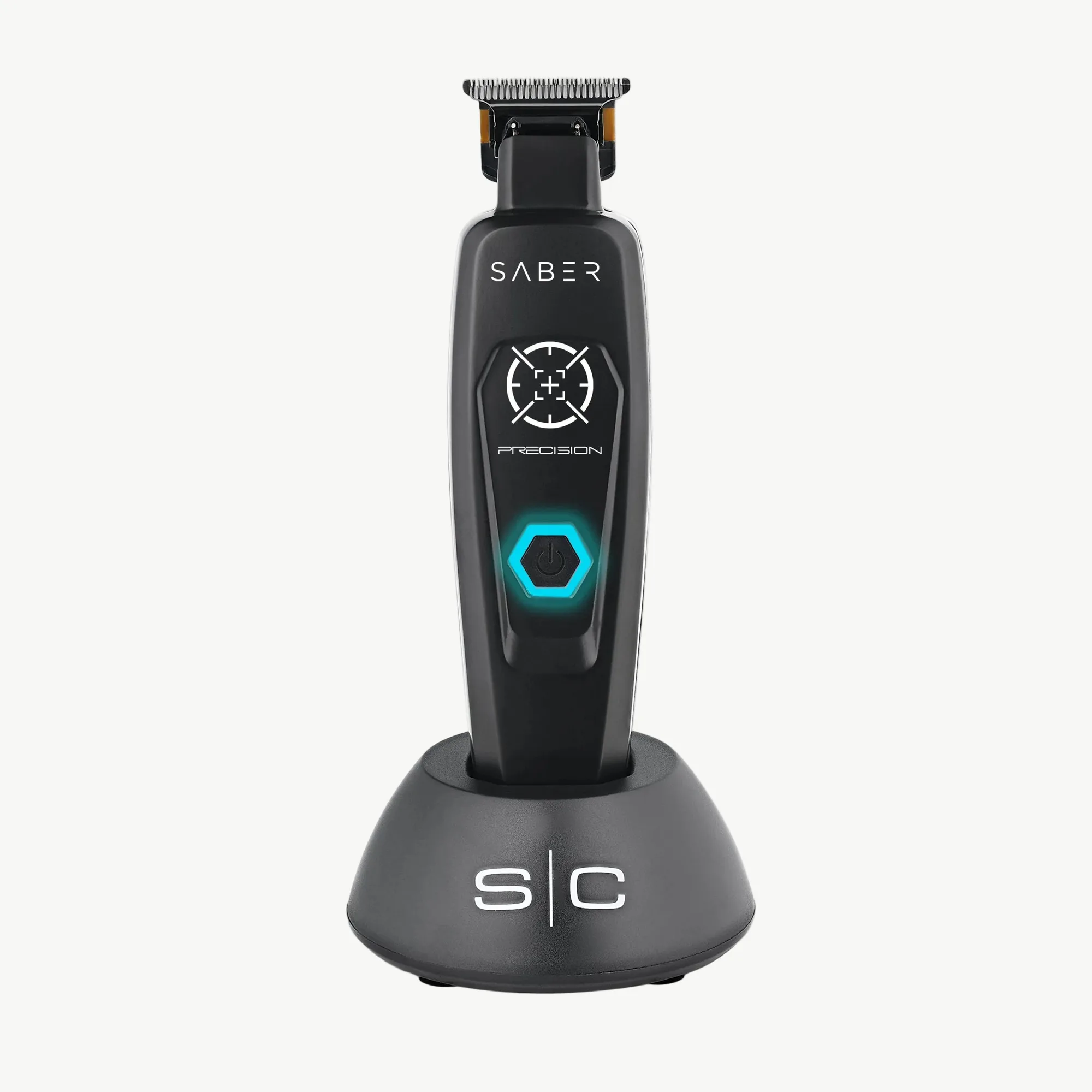
Trimmer blades are typically fixed at a closer cut, designed for detailing rather than length control. They excel at removing the last bit of stubble and creating crisp lines. Some trimmers, like the Precision Saber Professional Hair Trimmer, feature a fixed premium blade that's optimized for sensitive skin and close work, but you won't get the same range of lengths as you would with a clipper.
- If you need adjustable lengths, a clipper with a lever or guards is the way to go.
- For a consistent, close cut on edges, a trimmer blade is more reliable.
Blade Design and Materials
Blade design affects both performance and comfort. Clipper blades are often made from stainless steel or carbon steel, and some feature coatings like titanium or DLC (diamond-like carbon) to reduce friction and heat. The shape of the teeth also matters: wider teeth handle thicker hair, while finer teeth give a smoother finish.
Trimmer blades, especially those designed for fades, often use a narrower profile with a deep tooth design to get closer to the skin without irritation. For example, the Gold Titanium X-Pro Wide Trimmer Blade & Black DLC "The One" Cutter combines a wide 41mm fixed blade with a moving beveled design to cut closer while still covering a decent area. This kind of design is a bridge between a traditional clipper blade and a trimmer blade.
- Look for titanium or DLC coatings if you have sensitive skin or cut a lot of hair.
- A deep tooth design helps with close fades but may require more frequent cleaning.
Which Blade for Fades?
Fades are all about blending from one length to another, and that usually requires both a clipper and a trimmer. The clipper with its adjustable lever lets you create the initial fade by varying the blade gap. Then you switch to a trimmer to clean up the bottom edge and define the fade line.
If you're doing a skin fade, you'll want a trimmer blade that can get very close without causing razor burn. A wide trimmer blade like the Gold Titanium X-Pro can cover more area than a standard trimmer, making it easier to create a smooth transition. But for the tightest lines, a narrower trimmer gives you more control.
- Start with a clipper to establish the fade gradient.
- Finish with a trimmer for the skin line and crisp edges.
Trade-Offs to Keep in Mind
- Wide trimmer blade vs. standard trimmer blade: A wide trimmer blade (like the 41mm X-Pro) covers more area, reducing passes and saving time. However, it may be less maneuverable in tight spots compared to a narrower trimmer. Choose a wide trimmer if you do a lot of fades; keep a narrow trimmer for intricate line work.
- Clipper speed vs. precision: Clippers are built for speed and bulk removal, but they're not ideal for fine details. Trimmers offer precision but are slower for large areas. Use a clipper for the main cut, then a trimmer for the finish.
- Blade material and skin sensitivity: Titanium and DLC coatings reduce friction and heat, which is gentler on sensitive skin. But these premium blades often cost more and may require special care. Invest in a coated blade if you or your clients have sensitive skin; otherwise, standard steel may be sufficient.
Blade Options to Consider
- Gold Titanium X-Pro Wide Trimmer Blade & Black DLC "The One" Cutter: The fixed 41mm wide blade is ideal for large surfaces, bulk trimming, and can be fully zero gapped for the closest cut and finish. The moving beveled design "The One" cuts closer for the closest finish. This wide trimmer blade bridges the gap between clipper and trimmer: it covers more area than a standard trimmer but still offers the precision of a trimmer. It's a great choice if you want a close fade without switching tools.
- Precision Saber Professional Hair Trimmer: The high torque brushless motor and now assembled with a premium X-Pro Gold Titanium fixed blade are ideal for sensitive skin. "The One" Black Diamond Carbon deep tooth cutting blade... If you have sensitive skin, this trimmer's titanium blade is designed to minimize irritation. The deep tooth blade helps achieve a close cut while reducing the risk of nicks.
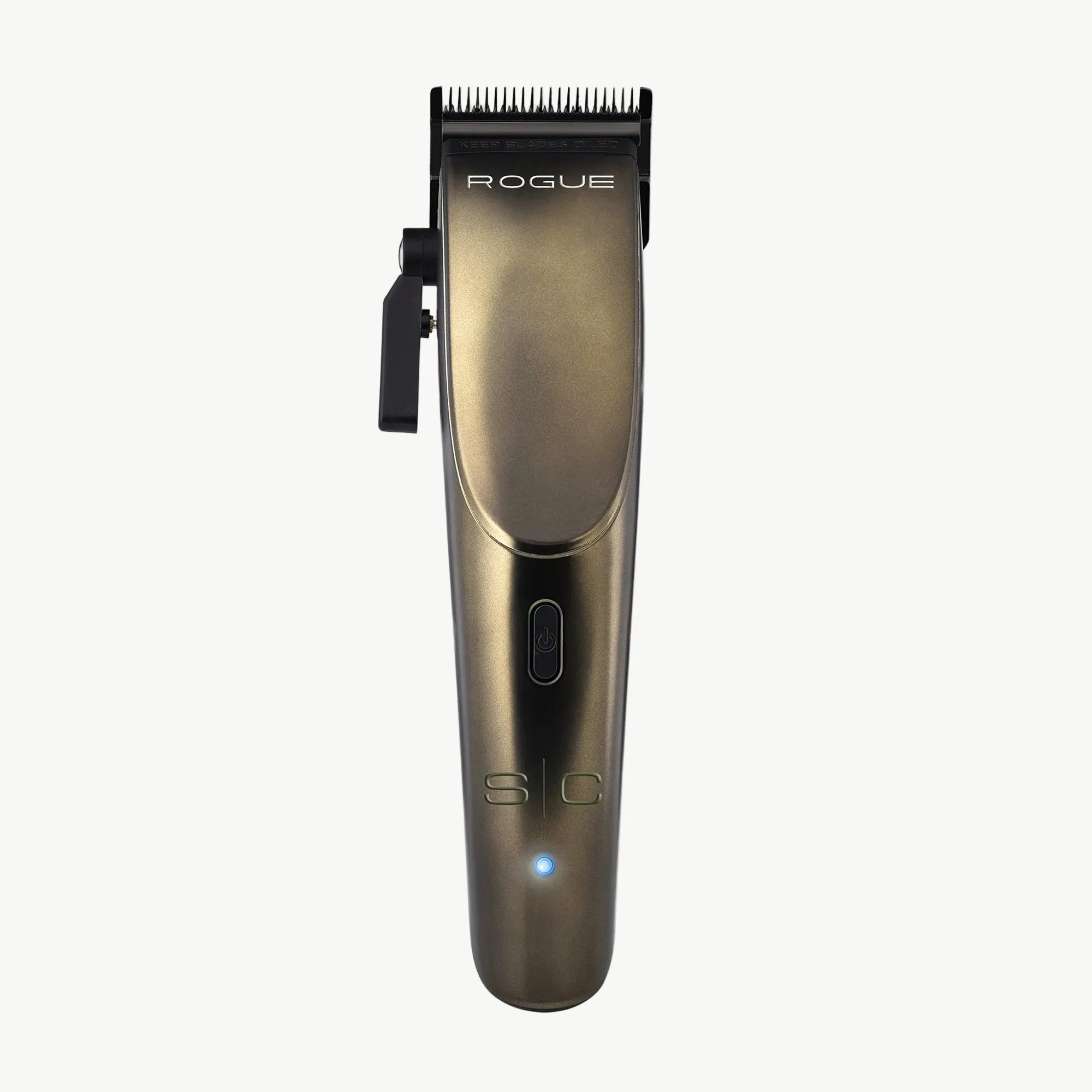
- Rogue Professional Hair Clipper: A turbocharged long-life magnetic motor runs up to 10,000 strokes per a minute, not only offering the ultimate in speed, power, and... For bulk cutting, a clipper like the Rogue provides the speed and power you need to get through thick hair quickly. Its motor performance is key when you're doing multiple cuts in a day.
How to Choose
Best for
- Barbers and home groomers who do fades and need a close, precise finish.
- Anyone with sensitive skin who wants a trimmer blade that minimizes irritation.
Not for
- Those who only need quick, all-over trims and don't require precision detailing—a clipper with guards is enough.
- Professionals who rely on a single tool for both bulk and detail work, since neither a clipper nor a trimmer does both optimally.
Choosing between a clipper blade and a trimmer blade comes down to the job at hand. For bulk cutting and speed, a clipper is your go-to. For precision fades and clean lines, a trimmer is essential. Many groomers keep both in their kit and switch between them for the best results. Consider your typical haircut routine and skin sensitivity, then pick the blade that matches your needs.