Quick Answer
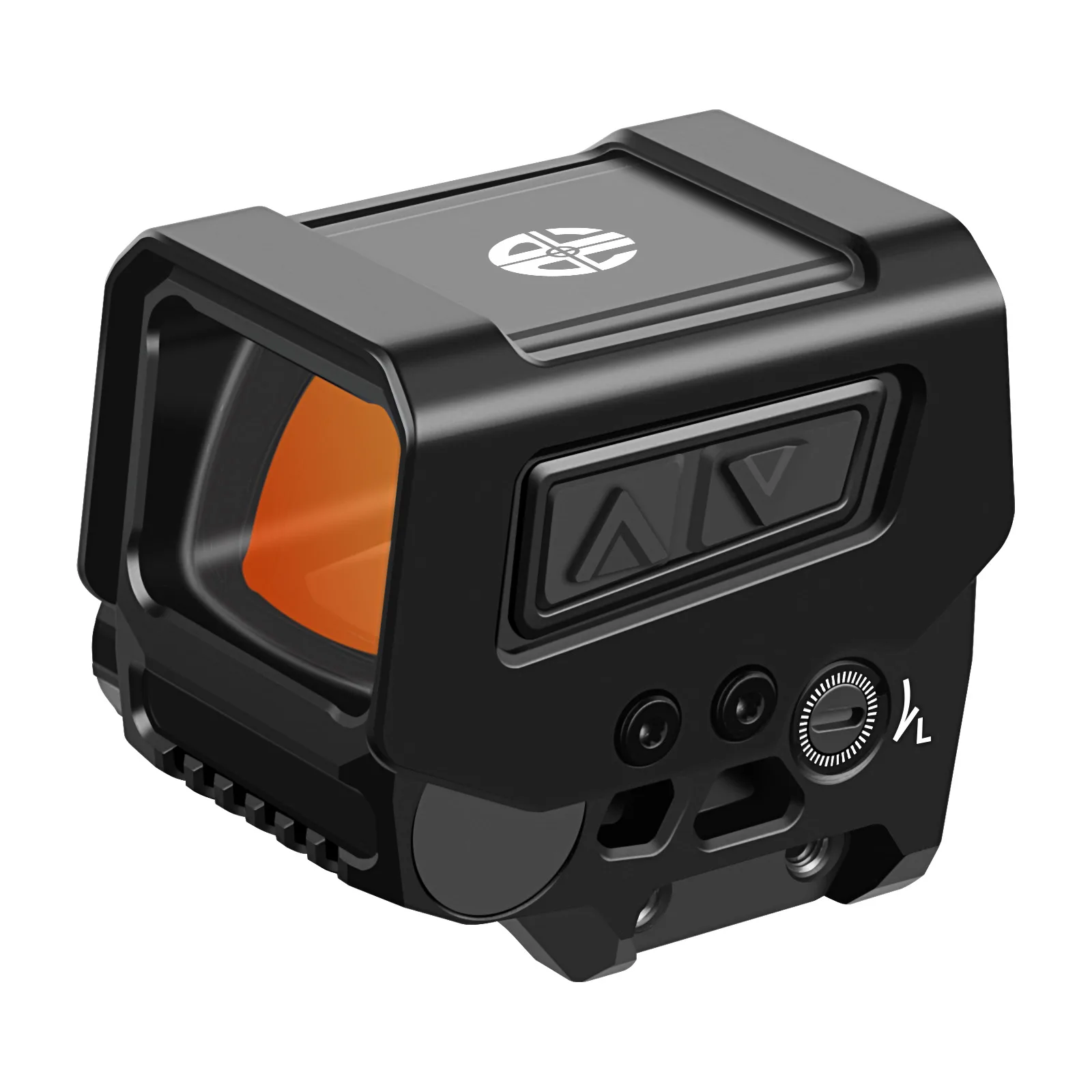
Closed emitter red dots are not inherently bulky, dim, or unnecessary for everyday shooters. The sealed design protects the aiming point from dust, rain, and debris, and modern models like the Apollo Cronus prove you can get a wide window, rugged construction, and a crisp 3 MOA dot in one optic. If you shoot in unpredictable weather or want fewer lens-cleaning headaches, a closed emitter is a practical choice, not overkill.
Myth: Closed Emitters Are Only for Military and Duty Use
The assumption that sealed optics belong only on duty rifles ignores how the design actually works. A closed emitter encloses the LED and lens in a single housing, so dust, rain, and debris cannot settle on the internal reflector. That benefit applies to anyone who shoots outdoors, hunts in wet conditions, or carries a rifle in a dusty environment. The Apollo Cronus is built with a closed emitter design, a 38×28mm window, and all-weather sealing, which means a civilian shooter gets the same protection from the elements that a patrol officer would. The myth persists because closed emitters were once heavier and rarer, but that tradeoff has narrowed. If your range sessions happen in real weather, the sealed design solves a problem you will eventually face.
Myth: You Lose Sight Picture or Speed With a Closed Emitter
A common claim is that the housing around a closed emitter blocks peripheral vision or slows target acquisition. The actual constraint is window size and lens clarity, not the enclosure itself. The Apollo Cronus uses a 38×28mm window, which is generous for a rifle optic and keeps the sight picture open. The 3 MOA aiming point is crisp and precise, so you are not sacrificing speed for durability. What you should check instead is the mounting height and your cheek weld, because a poorly positioned optic will feel slow regardless of emitter type. Closed emitters do not inherently cost you speed; they simply ask you to set up the optic correctly.
Myth: A Closed Emitter Is Always the Right Answer for a Pistol
Closed emitters shine on rifles and carbines, but they are not automatically the best fit for every handgun. Conceal carry and subcompact pistols often prioritize a slim footprint and low profile, which is where micro red dots like the Apollo Eclipse and Nova Green excel. The Eclipse uses a slim RMSc footprint and an 18 × 14.3 mm window, keeping a low profile for daily carry. The Nova Green uses an RMR footprint and a lightweight build so it does not weigh down your slide or holster setup. Neither is a closed emitter, and that is fine. The myth is that one design wins everywhere; the reality is that your firearm and carry method decide which footprint and housing style make sense.
Myth: Closed Emitters Are Too Expensive to Justify
Price is a real consideration, but the gap between open and closed designs is not as wide as the myth suggests. The Apollo Cronus is listed at USD 215.28 with a catalog comparison price of USD 299.00, which puts a sealed, rugged optic within reach for many shooters. Compare that to the Apollo Eclipse at USD 149.25 or the Nova Green at USD 66.33, and you can see the range. The question is not whether closed emitters are expensive in the abstract; it is whether the sealed design solves a problem you actually have. If you shoot in rain, dust, or snow, the added protection can be worth the difference. If you carry a subcompact pistol in a clean environment, a micro red dot may be the smarter spend.
Myth Verdicts
- Closed emitters are only for duty use: The sealed design protects against dust, rain, and debris for any shooter who spends time outdoors. The Apollo Cronus brings that protection to a civilian rifle setup. Verdict: Myth. The benefit applies to hunters, competitors, and recreational shooters too.
- Closed emitters are slow and block your view: Window size and lens clarity determine speed, not the enclosure. A 38×28mm window and a crisp 3 MOA dot keep the sight picture open and fast. Verdict: Myth. Check window dimensions and mounting height instead of assuming the housing is the problem.
- Closed emitters are always the best pistol choice: Conceal carry and subcompact pistols often benefit from slim footprints and low profiles, like the Apollo Eclipse or Nova Green. A closed emitter may add bulk you do not need. Verdict: Myth. Match the optic to your firearm and carry method, not to a blanket rule.
- Closed emitters are too expensive to consider: The Apollo Cronus is listed at USD 215.28, which is a mid-range price for a sealed, rugged optic. The real question is whether the sealed design solves a problem you have. Verdict: Partly myth. Price is a factor, but the gap is narrower than many shooters assume.
Product Facts That Matter
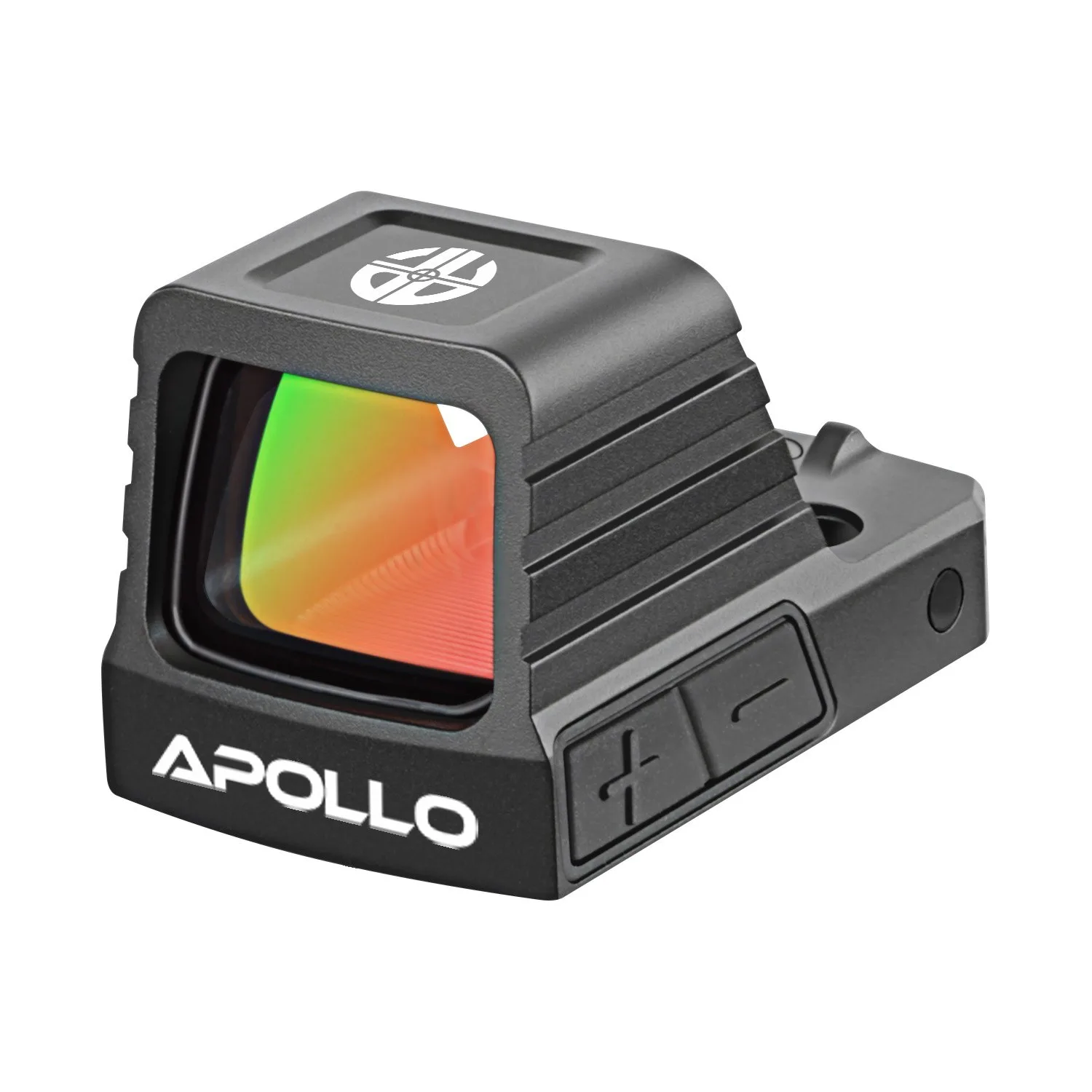
- Apollo Cronus: Closed emitter design with a 38×28mm window, 3 MOA dot, shockproof engineering, and all-weather sealing. This is the core example of a closed emitter that delivers both durability and a wide, clear sight picture for rifle and carbine use.
- Apollo Eclipse: Slim RMSc footprint, 3 MOA red dot, compact 18 × 14.3 mm window, and a 5-Year Warranty. Shows that a micro red dot can prioritize low profile and concealability, which is a different job than a closed emitter rifle optic.
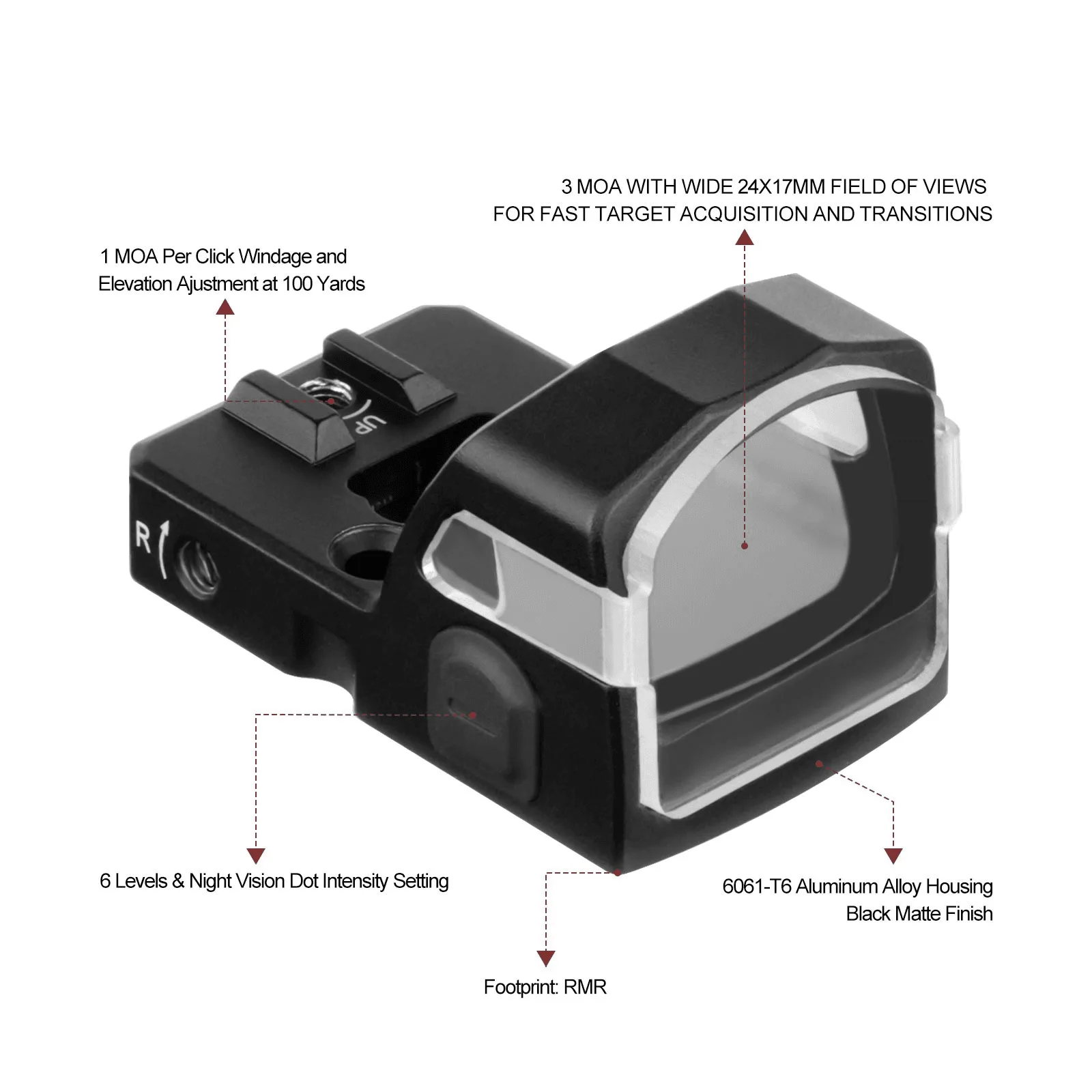
- Nova Green: RMR footprint, 3 MOA green dot, easy brightness control, and lightweight construction. Demonstrates that footprint compatibility and weight matter for carry and duty pistols, and that green dots are an option outside the closed emitter category.