Quick answer
For small aquariums (5–20 gallons), a CO2 diffuser with a 15 mm ceramic disc provides efficient micro-bubble diffusion without overwhelming the tank. The 19 mm disc suits tanks at the larger end of that range or when you want a slightly faster dissolution rate.
Why diffuser size matters in small tanks
In a compact aquarium, every piece of equipment competes for space and visual attention. A diffuser that is too large can crowd the tank, create an unsightly bubble plume, or produce CO2 bubbles that rise too quickly to dissolve. A diffuser that is too small may not deliver enough CO2 for healthy plant growth, especially in denser planted layouts. Matching the ceramic disc diameter to your tank volume and plant mass is the practical way to balance efficiency and aesthetics.
Ceramic disc vs. glass: what to expect
Many nano tank keepers default to glass diffusers because they are inexpensive and common. However, acrylic diffusers with micro-porous ceramic discs produce finer bubbles than standard glass diffusers, which means CO2 dissolves more efficiently before reaching the surface. Acrylic is also less brittle than glass, so it holds up better during cleaning or repositioning in a tight tank. The trade-off is that acrylic may scratch more easily than glass if scrubbed aggressively, but careful handling avoids that issue.
How to choose the right size
- Tank volume 5–10 gallons: Use a 15 mm ceramic disc diffuser. The smaller disc produces fine bubbles that dissolve quickly in a low water volume, and the compact body leaves more room for hardscape and plants.
- Tank volume 10–20 gallons: A 15 mm diffuser still works well, especially if your plant mass is moderate. Switch to a 19 mm disc if you have a dense planted layout or run CO2 at a higher bubble rate — the extra surface area helps dissolve CO2 before it escapes.
- Placement and positioning: Mount the diffuser near the filter outflow or a circulation pump so the water flow carries the fine bubbles throughout the tank. Avoid placing it directly under the filter intake, which can pull bubbles into the filter and reduce efficiency. Check that the diffuser sits low enough in the tank to maximize contact time between bubbles and water.
- Cleaning frequency: Ceramic discs clog over time as algae and biofilm build up. Soak the disc in a 1:1 bleach-water solution for 15 minutes once a month, then rinse thoroughly. A clean disc produces consistently fine bubbles.
Product facts
-
Acrylic CO2 Diffuser – Small (15 mm Ceramic Disc): The Castle Dawn Aquatics Acrylic CO2 Diffuser – Small uses a 15 mm micro-porous ceramic disc that produces finer bubbles than traditional glass diffusers. Finer bubbles mean more CO2 dissolves in the water column, so a small tank gets better gas exchange without needing a high bubble rate.
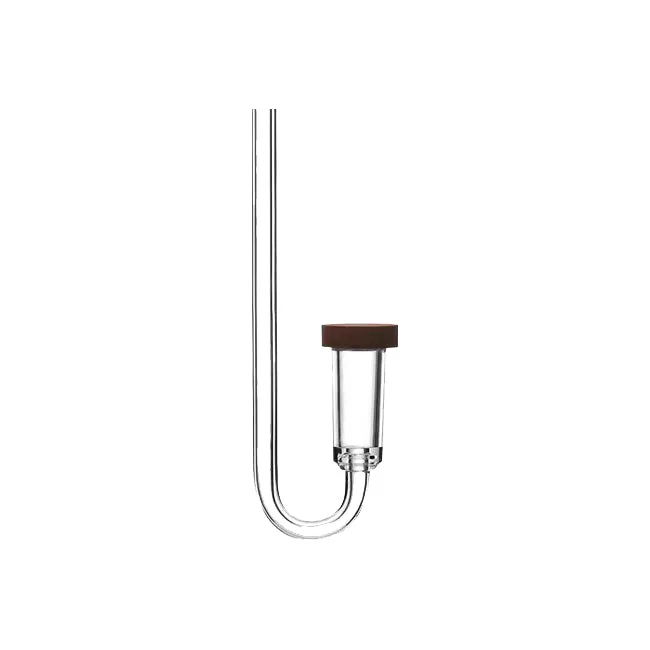
Acrylic CO2 Diffuser – Small (15 mm Ceramic Disc)
-
Acrylic CO2 Diffuser – Medium (19 mm Ceramic Disc): The Castle Dawn Aquatics Acrylic CO2 Diffuser – Medium uses a 19 mm ceramic disc and is made from clear, durable acrylic that resists breakage. The larger disc surface area allows for slightly faster CO2 dissolution, making it a good fit for the upper end of the small-tank range or tanks with heavy plant mass.
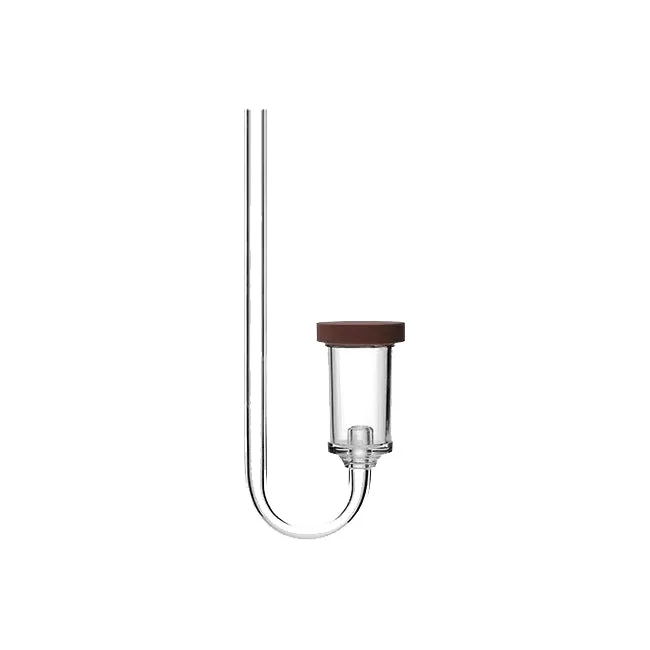
Acrylic CO2 Diffuser – Medium (19 mm Ceramic Disc)
Which diffuser fits your tank?
Best for
- Nano planted tanks (5–10 gallons) with moderate plant density
- Aquascapers who want a compact, break-resistant diffuser for tight spaces
Not for
- Tanks over 20 gallons — a larger diffuser or inline CO2 reactor will be more efficient
- High-tech planted tanks that demand very high CO2 injection rates — consider a reactor or atomizer instead