Quick answer
If your car still has factory speakers and you want the biggest improvement per dollar and per hour of labor, install a coaxial set in the front doors first. Choose a component set instead when the tweeter can be aimed at the listeners, you can mount a crossover, and you plan to run an amplifier or DSP. Coaxial speakers are the safer first upgrade; components are the better final upgrade.
What actually separates coaxial from component speakers
A coaxial speaker mounts a woofer and tweeter on one frame, so the tweeter fires from the center of the woofer. A component set separates those drivers: the woofer goes in the door, the tweeter goes higher and can usually be aimed, and a passive crossover splits the signal between them.
That single difference drives everything else. Coaxials install in one hole per side and need no separate tweeter location or crossover mounting. Components give you control over tweeter height, angle, and distance, which is what cleans up staging and keeps the image above the door line instead of at your knees.
How to decide in five minutes
Answer three questions before you buy. First, can you physically mount a tweeter where it aims across the cabin, such as an A-pillar, sail panel, or dash corner? Second, do you have a place to secure a passive crossover, or will you run active later? Third, will the speakers see real power from an amp or DSP, or stay on head-unit power?
Two or more yes answers point to components. Two or more no answers point to coaxials, and there is no shame in that: a good coaxial on modest power usually beats a component set that is installed badly or left underpowered.
Fit guidance before you order
Confirm the cutout diameter and mounting depth for your specific doors, not just the nominal size. A 6.5-inch speaker from one brand may need a different adapter ring or spacer than another, and deep motors can hit window tracks or door glass.
Check tweeter clearance if you go component: a 1-inch dome still needs room behind the grille or pod. If your doors use odd factory mounts, a coaxial set that drops into the stock location saves fabrication time. If you are unsure about depth, measure with the window down and add a few millimeters of clearance for excursion.
Where each design wins
Coaxials win on simplicity, cost, and reversibility. You keep one mounting point, one set of wires, and no crossover to hide. They also suit rear doors, where staging matters far less than fill.
Components win on staging, tweeter placement, and upgrade path. Because the tweeter is separate, you can aim it, and because the crossover is external, you can later swap to an active setup with a DSP. The tradeoff is more install time, more places for rattles, and usually a higher price for the same woofer quality.
Power and crossover realities
Match the speaker to the power you actually have. A speaker rated at 120W RMS will not sound its best on 18W of head-unit power, but it also will not be damaged by it if you keep the volume sane. If you are staying on head-unit power, a more efficient speaker with a lighter cone and higher sensitivity will play louder and cleaner than a power-hungry design.
Passive crossovers that come with component sets are convenient but not adjustable. If you want to change crossover points or time-align the tweeter, plan for a DSP and an active setup. That decision is worth making before you cut tweeter holes, because active setups often want the tweeter in a different spot than the passive kit assumed.
Decision rules for your front stage
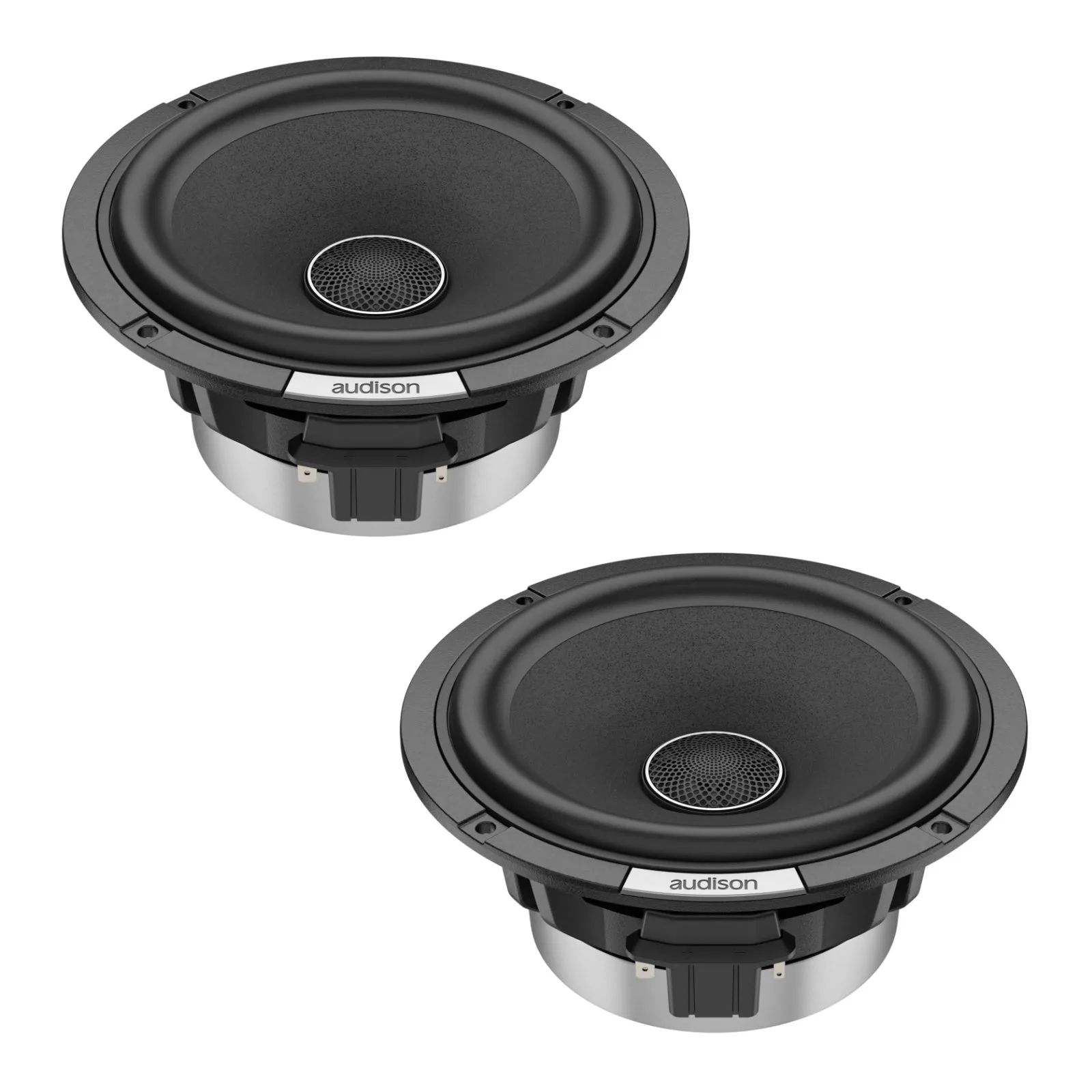
- Rule 1: No tweeter location, no components: If you cannot mount a tweeter where it aims at the listeners, a component set will not deliver its staging advantage. Choose a coaxial like the Audison Voce II AVX 6.5 II and put the savings into sound treatment. Coaxial first when mounting options are limited.
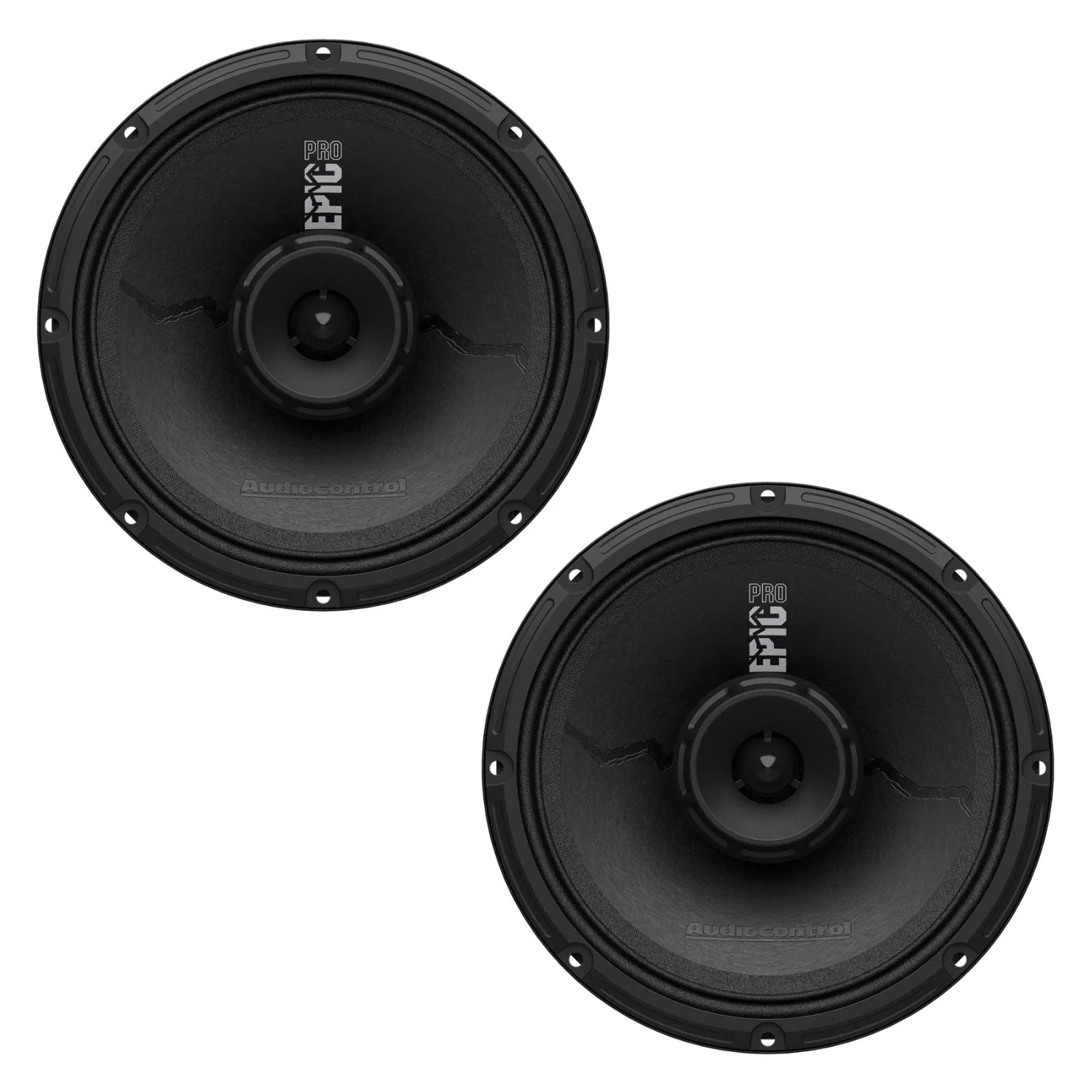
- Rule 2: Head-unit power only? Stay efficient: Without an amplifier, prioritize sensitivity and an easy load over a big RMS rating. A 200W RMS coaxial such as the AudioControl EPICPRO6CX will play, but it will not reach its potential on deck power. Match the speaker to the power you actually have.
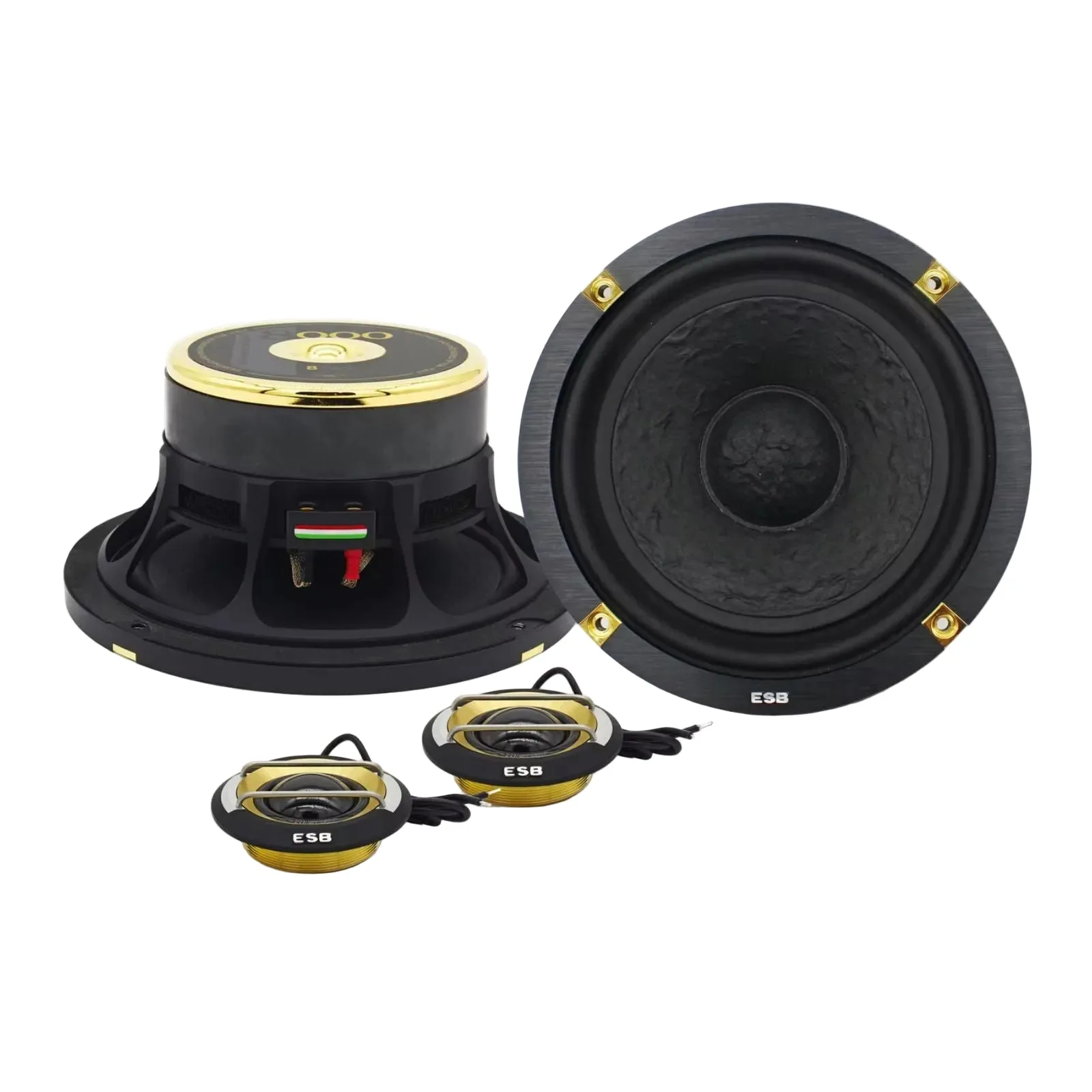
- Rule 3: Planning a DSP or active setup? Buy components: A component set such as the ESB 8.6K2 Ottomila gives you a separate tweeter to aim and time-align, and an external crossover you can later replace with active channels. Components are the better final upgrade when you plan to tune.
- Rule 4: Rear doors are not a stage: Spend the component budget on the front and use a simpler coaxial or the existing speakers in the rear for fill. Rear staging rarely justifies a separate tweeter and crossover. Put the better speaker where you sit.
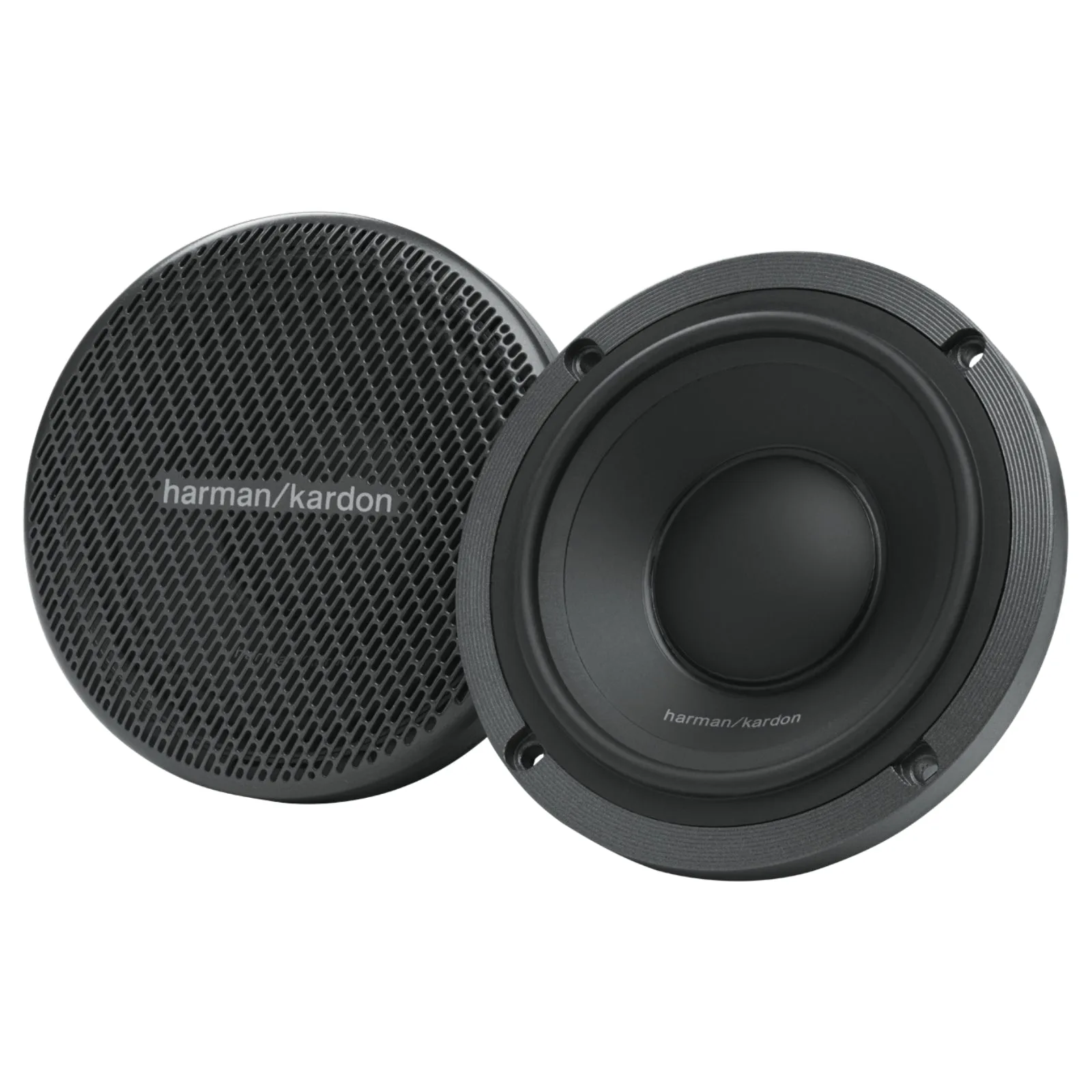
- Rule 5: Measure before you commit: Verify cutout diameter, mounting depth, and tweeter clearance for your exact doors. If depth is tight, a shallow design such as the Harman Kardon Flow 300S midrange can open up options in a three-way build. Fitment failures cost more time than a better speaker costs money.
Options worth comparing
- Audison Voce II AVX 6.5 II Midrange Coaxial Speaker Set 6.5 Inch 4ohm 120w RMS: The Audison Voce II AVX 6.5 II is a 6.5-inch (165mm) coaxial set handling 120W RMS (240W peak) at 4 ohms, with a 6.5-inch woofer and 1-inch tweeter sharing one mounting point. This is the coaxial-first pick for someone who wants proper two-way Voce II sound where separate components will not fit, and it has the power headroom to grow with an amplifier later.
- AudioControl EPICPRO6CX 6.5 Inch Coaxial Speakers 200w: The AudioControl EPICPRO6CX is a 6.5-inch coaxial pair rated 200W RMS / 300W max at 4 ohms, built around efficiency and SPL with lightweight composite cones. A good choice when you want street-loud output from a coaxial footprint, though the high power rating means it rewards an amplifier rather than head-unit power.
- ESB 8.6K2 Ottomila Series 6.5 Inch 2 Way Component Speaker System 160w RMS: The ESB 8.6K2 Ottomila is a 2-way component system with a 1.1-inch (28mm) dome tweeter whose parts are CNC-machined from brass, stainless steel, and Avional aluminum, using a large vented neodymium motor. This is the component path for a listener who can aim a tweeter and wants the staging benefit of a separate, precisely built tweeter rather than a coaxially mounted one.
- Harman Kardon Flow 300S 3 Inch Midrange Woofer Speaker Set and Grills 60w RMS: The Harman Kardon Flow 300S is a 3-inch (89mm) midrange woofer set with aluminum ceramic composite cones, a shallow design, 60W RMS / 180W peak, and 200Hz-10kHz response with sensitivity over 91dB. A shallow 3-inch midrange is useful when you want dedicated midrange drivers in a three-way front stage, and its high sensitivity suits modest amplifier power.
Which upgrade fits your situation
Best for
- Drivers keeping factory head-unit power and wanting a simple, reversible front-door upgrade
- Cars with no clean spot to aim a separate tweeter or hide a passive crossover
- Listeners who want the biggest improvement per dollar and per hour of install time
- Rear-door fill where staging is not a priority
Not for
- Listeners chasing precise staging and image height who can aim tweeters and run an amplifier or DSP
- Builds already planning an active three-way front stage with dedicated midrange drivers
- Anyone who wants to tune crossover points and time alignment after installation