For coffee enthusiasts, consistency is the holy grail. Whether you brew with a French press, pour-over, or espresso machine, the ratio of coffee to water determines the flavor profile. Two common tools promise precision: the humble coffee measuring spoon and the digital scale. Each has its loyal advocates, but which truly delivers better consistency? In this comparison, we'll break down the accuracy, convenience, and practical trade-offs to help you decide.
We'll also explore how these tools fit into your daily routine, from quick morning brews to meticulous weekend pour-overs. By the end, you'll know whether to reach for a scoop or a scale—and how to get the most from your chosen method.
Understanding the Basics: Coffee Measuring Spoon vs Digital Scale
A coffee measuring spoon, often called a coffee scoop, is a simple tool designed to portion ground coffee. Typically, one level scoop holds about 10 grams of coffee, though this varies with bean density and grind size. The digital scale, on the other hand, measures weight precisely, usually to 0.1 grams, eliminating guesswork.
The core difference lies in how they measure: volume vs weight. Volume-based scoops are convenient but can be inconsistent because the same volume of coffee can weigh differently depending on the bean, roast, and grind. Weight-based scales offer exactness, ensuring that every brew uses the same amount of coffee, regardless of these variables.
- Scoops are fast and require no power source.
- Scales provide repeatable measurements for exact ratios.
Accuracy: Which One Delivers Consistent Coffee?
When it comes to accuracy, the digital scale wins hands down. A scale measures coffee in grams, allowing you to replicate the exact coffee-to-water ratio every time. This is crucial for dialing in a brew that suits your taste. For example, the Specialty Coffee Association recommends a 1:18 ratio (coffee to water). With a scale, you can easily adjust the dose by a gram or two to fine-tune flavor.
A coffee scoop, however, relies on volume. A 'scoop' can vary by 2-3 grams depending on how you fill it—heaping, level, or packed. This variability can lead to noticeable differences in strength and taste, especially for darker roasts or fine grinds. While some scoop designs are improved, they still can't match the precision of a scale.
- Digital scales measure to 0.1g for exact dosing.
- Scoops can vary by up to 30% in weight per scoop.
Convenience and Practicality: The Case for Each
Convenience is where the coffee scoop shines. It’s compact, requires no batteries, and is ready to use in seconds. For a quick morning brew, scooping is faster than waiting for a scale to tare. Many scoops are also designed to fit into coffee bags or canisters, making storage easy. The Westmark 12 Garlic presses »Josie«, for instance, shows how thoughtful kitchen tools can simplify tasks, and a good scoop does the same for coffee.
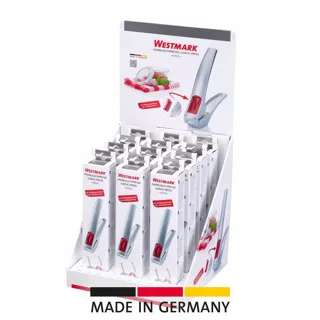
12 Garlic presses »Josie«
Digital scales, while more accurate, demand a bit more setup: you need to place a container, tare it, and slowly add coffee. This can be a minor inconvenience, but many scales are now sleek and responsive, making the process quick. For those who brew multiple cups or experiment with different beans, the scale’s precision often outweighs the extra seconds.
- Scoops are ideal for travel and camping.
- Scales are essential for advanced brewing techniques.
Measuring Coffee Without a Scale: Tips for Better Scoop Accuracy
If you don’t own a scale, you can still improve consistency with a scoop. First, always use a level scoop—use a straight edge to scrape off excess coffee. Second, standardize your grind size; a consistent grind ensures similar density. Third, consider the bean: lighter roasts are denser, so a scoop may weigh more than a dark roast. Adjust your recipe accordingly.
Another tip is to use a designated scoop and not interchange with other kitchen spoons. The Westmark Baller »Woody« is a great example of a purpose-built tool that delivers consistent results for its task, and the same principle applies to coffee scoops. By dedicating a scoop to coffee and using the same technique each time, you can reduce variability.
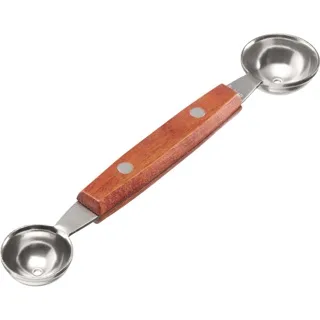
Baller »Woody«
- Level your scoop every time.
- Store your scoop with your coffee to keep it handy.
Which Should You Choose? A Practical Comparison
The choice between a coffee scoop and a digital scale ultimately depends on your priorities. If you value speed, simplicity, and portability, a scoop is your best bet. It’s also budget-friendly—many scoops are inexpensive. However, if you’re chasing the perfect cup and want to replicate results, a scale is a worthwhile investment.
Consider your brewing style: pour-over and espresso benefit greatly from precise measurements, while French press and drip can tolerate slight variations. Many coffee aficionados use both: a scoop for quick brews and a scale when experimenting. For those who want to elevate their coffee game, starting with a scale and using a scoop as backup is a solid approach.
- For casual drinkers: scoop is sufficient.
- For enthusiasts: scale offers control and consistency.
In the debate of coffee measuring spoon vs digital scale, there’s no one-size-fits-all answer. A scale provides unmatched precision for consistent results, while a scoop offers unmatched convenience. Assess your brewing habits and decide what matters more: speed or exactness. Whichever you choose, the key is to be consistent in your method. If you’re ready to upgrade your coffee routine, explore Westmark’s range of kitchen tools, from the 12 Garlic presses »Josie« to the Baller »Woody«, to find the perfect companions for your brewing ritual.