Quick answer
Start with a coffee-to-water ratio of 1:16 for pour over, 1:2 for espresso, and 1:8 for cold brew concentrate. Weigh coffee and water in grams, then adjust by taste. If the cup tastes weak, tighten the ratio; if it tastes bitter or harsh, loosen it slightly.
A good cup usually starts with a number, not a scoop. The coffee-to-water ratio is the base recipe for every brewing method, and once you know it, you can repeat a great cup instead of guessing. This coffee ratio guide walks through the ratios that matter most, then gives you an ordered process you can use with any brewer.
You do not need a lab. A digital scale and a few minutes of attention will do. The goal is to pick a starting ratio, brew, taste, and adjust one variable at a time. That is how you turn a generic recipe into a coffee brewing ratio that fits your beans, your grinder, and your morning.
The golden ratio coffee myth and what to use instead
The so-called golden ratio coffee is often quoted as 1:15 to 1:18, but it is a starting range, not a law. Coffee absorbs water differently depending on roast level, grind size, and brew method. A light, dense pour over coffee may need a slightly tighter ratio to taste sweet, while a darker roast can taste muddy at the same number.
Use the golden ratio as your first guess, then let taste decide. If you change beans, keep the ratio the same for one brew so you can judge the coffee itself. Changing ratio and grind at the same time makes it hard to learn what actually improved the cup.
- Weigh coffee and water in grams for repeatability.
- Write down the ratio, grind, and time for your best cup.
- Change only one variable per brew when dialing in.
Coffee-to-water ratios by brewing method
Pour over ratio: start at 1:16, meaning 20 grams of coffee to 320 grams of water. This range works for Chemex, Hario V60, and most cone brewers. If the brew finishes too fast and tastes thin, grind finer before changing the ratio.
Espresso ratio: start at 1:2, meaning 18 grams of coffee to about 36 grams of espresso. This is a common starting point for a balanced shot. If it runs sour and thin, grind finer; if it runs bitter and dry, grind coarser. Cold brew ratio: use 1:8 for a concentrate you dilute with water or milk, or 1:15 for a ready-to-drink cold brew.
- Pour over: 1:15 to 1:17, adjust by taste.
- Espresso: 1:2 as a starting point, then adjust grind.
- Cold brew: 1:8 concentrate or 1:15 ready to drink.
Why weight beats scoops
A scoop of coffee can vary by several grams depending on bean size, roast, and how you fill it. That variance is enough to move your cup from sweet to weak or bitter. A scale removes that guesswork and makes your coffee-to-water ratio repeatable.
You also need a way to track time. The CDN Waterproof Timer has a large font that helps you quickly scan which brews are about to finish, which is useful when you are pouring and watching a scale at the same time. If you do not have a timer, your phone works, but a dedicated timer keeps your attention on the brew.
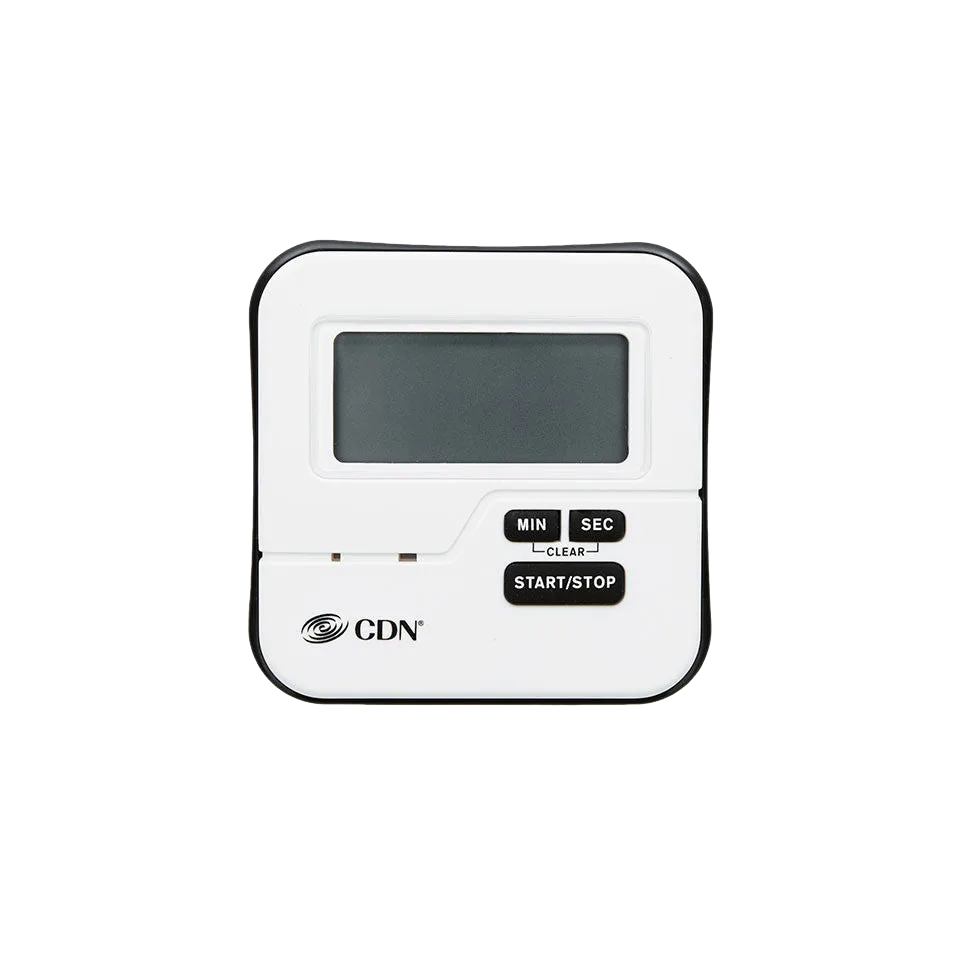
CDN Waterproof Timer
- Use a scale with 0.1 g resolution for espresso.
- Tare the scale with your brewer and cup in place.
- Keep a timer within reach so you are not unlocking a phone mid-pour.
How to adjust ratio without wrecking your cup
If the cup tastes weak or watery, tighten the ratio by using less water or more coffee. Move from 1:16 to 1:15 and taste again. If it tastes bitter, harsh, or drying, loosen the ratio slightly, from 1:16 to 1:17, before you change grind size.
For espresso, adjust grind first and use ratio to fine-tune. A 1:2 shot that tastes sour usually needs a finer grind, not a longer ratio. A 1:2 shot that tastes bitter usually needs a coarser grind, not a shorter ratio. Ratio is the recipe; grind is the dial.
- Weak cup: tighten ratio or grind finer.
- Bitter cup: loosen ratio or grind coarser.
- Change one variable at a time and taste.
Your step-by-step ratio process
- Weigh your coffee: Place your brewer and cup on a scale, tare to zero, then add coffee until you hit your target dose. For pour over, 20 grams is a good starting point. For espresso, 18 grams is common. Checkpoint: if you do not have a scale, use this as the reason to get one. Scoops are not repeatable enough for ratio work.
- Choose your starting ratio: Pour over: 1:16. Espresso: 1:2. Cold brew concentrate: 1:8. Multiply your coffee dose by the ratio to get your water weight. For 20 grams at 1:16, you need 320 grams of water. Checkpoint: write the number down before you brew so you are not doing math mid-pour.
- Heat your water and set your timer: For pour over, bring water to just off boil, around 200-205°F. Start your timer when you begin pouring. The CDN Waterproof Timer is easy to read at a glance, which helps when you are managing a kettle and a scale. Common mistake: letting the water boil hard and pour too hot, which can push bitterness even at a good ratio.
- Brew and watch the time: Pour over should finish in about 2:30 to 3:30 for a 20-gram dose. Espresso should run about 25 to 30 seconds for a 1:2 shot. Cold brew steeps 12 to 18 hours in the fridge. Checkpoint: if the time is far off, adjust grind before you change the ratio.
- Taste and adjust one variable: Too weak? Tighten the ratio or grind finer. Too bitter? Loosen the ratio or grind coarser. Make one change, then brew again. Keep notes on what you changed and how it tasted. Checkpoint: two or three brews is usually enough to land on a ratio you will repeat.
Gear that helps you hit your ratio
- CDN Waterproof Timer: Keeping track of time is a critical step in the coffee brewing process, which is why we sourced from CDN. This family-owned business has been a global leader in kitchen equipment for over 30 years. The large font helps you quickly scan which brews are about to finish. A clear timer lets you watch your pour and your scale at the same time, so you can stop the brew at the right moment instead of guessing.
- Hario V60 Coffee Filters: These cone-shaped thin paper filters fit a Hario V60-01 or V60-02 pourover brewer, known for its nuance and versatility. The 02 brewing option boasts a larger opening that allows for a faster brew. The filter shape and opening affect flow rate, which changes how your pour over ratio tastes in the cup. A faster brew can taste brighter; a slower brew can taste heavier.
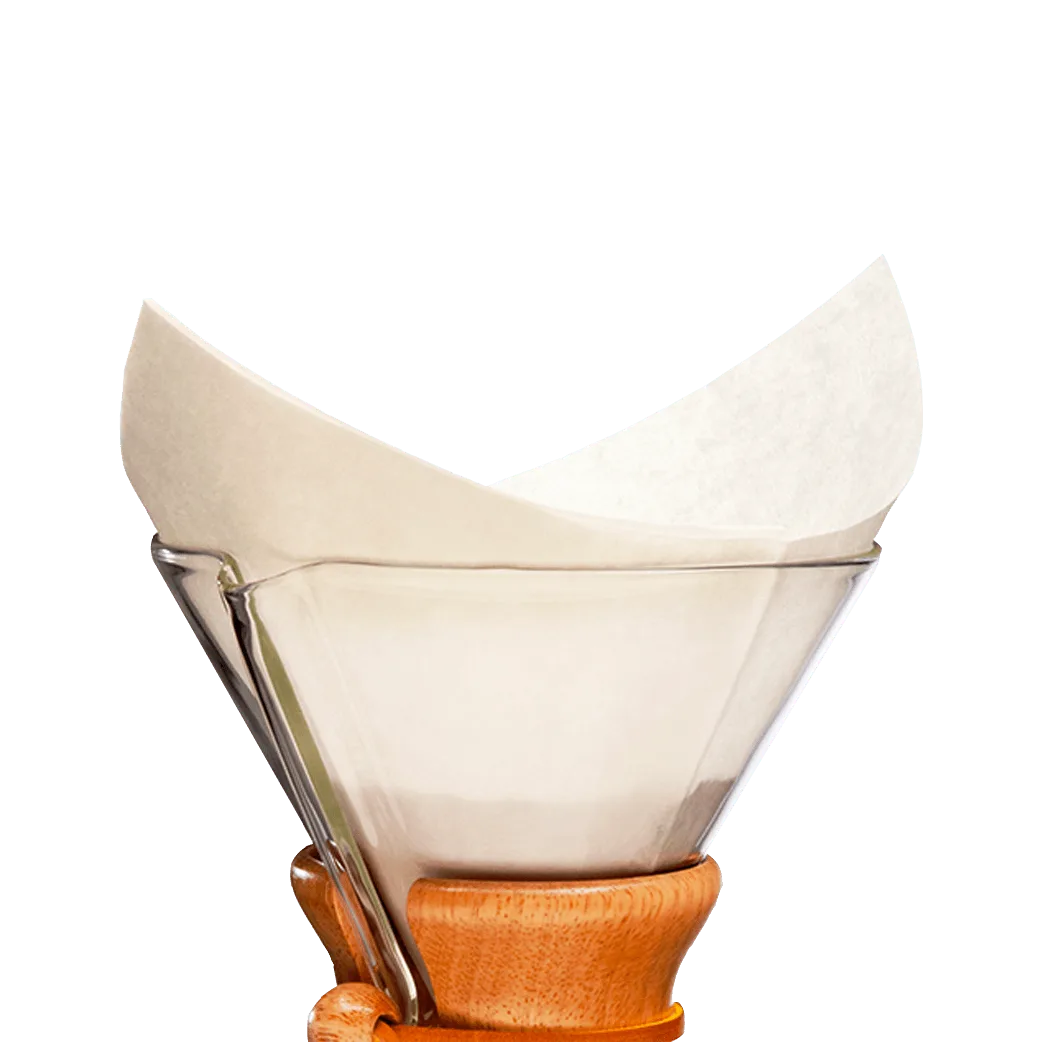
- Chemex Coffee Filters: These cone-shaped filters tout a 20-30% thicker paper than the competition, resulting in more uniform coffee extraction. Each paper filter goes through an oxidizing cleansing bath followed by a series of hot water baths to ensure that the specialty fibers catch all bitter elements, oils, and the finest grounds. Thicker paper slows the brew and traps more oils, so a Chemex at 1:16 can taste cleaner and lighter than the same ratio in a faster brewer.
Pick a starting ratio, weigh your coffee and water, and adjust by taste. The numbers in this coffee ratio guide are a map, not a cage. Once you find the ratio that makes your favorite beans taste sweet and balanced, you have a recipe you can use every morning.