Quick answer
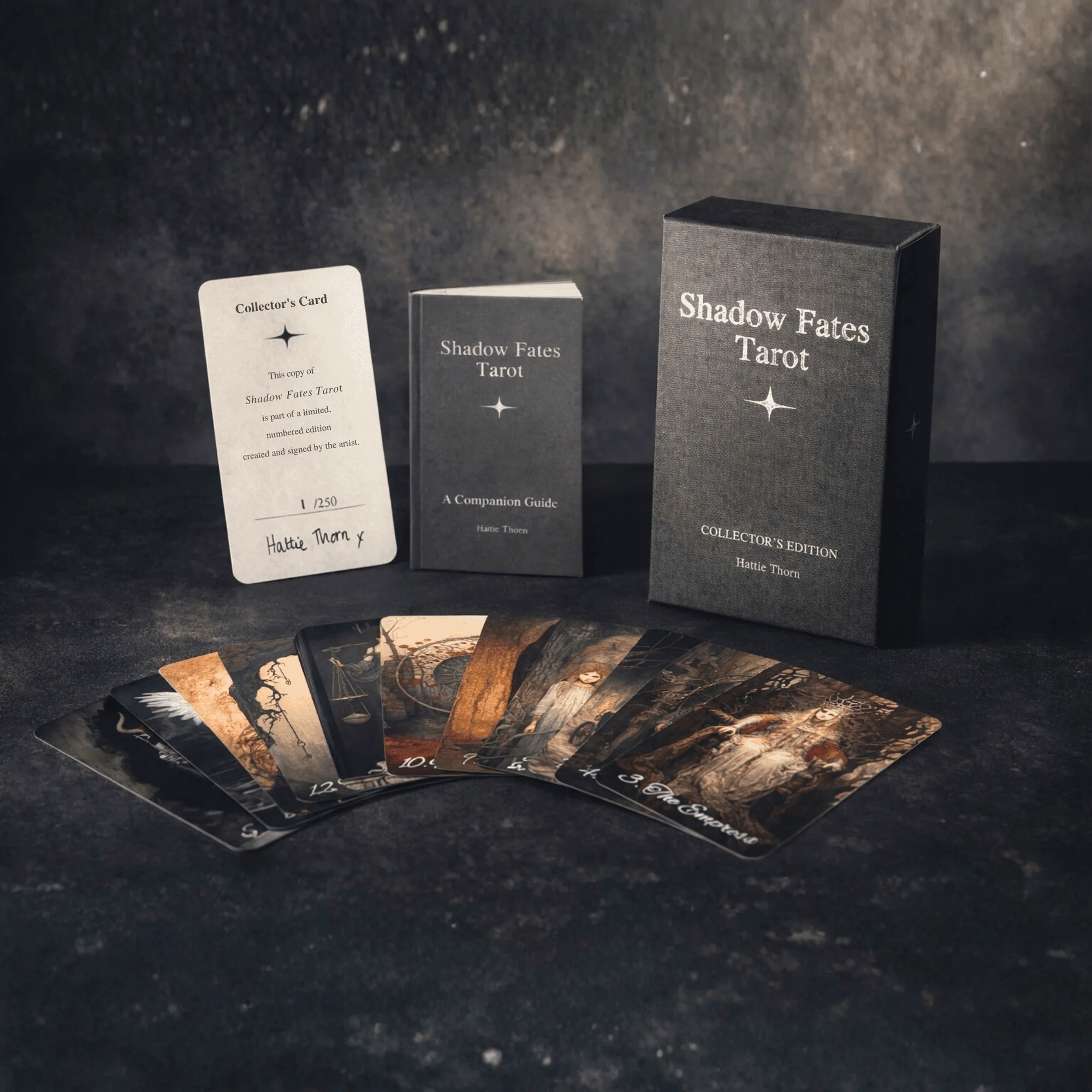
A collector's edition tarot deck is worth it when you want the physical object itself: numbered cards, signed artwork, a foiled rigid box, and borderless images that reward close looking. It is not worth it if you mainly need a working deck to shuffle daily. Buy the limited printing only when the edition details, not the price tag, are what you're actually paying for.
What actually makes a deck a collector's edition
Collector's editions are defined by scarcity and finishing, not by reading accuracy. The signals that matter are a stated print limit, an individually signed element, a numbered card, upgraded packaging such as a foiled rigid box, and artwork that only appears in that printing. If a listing claims 'collector's' but shows none of these, you're paying for a label.
Ask one blunt question before buying: what disappears when this printing sells out? If the answer is 'the signature, the numbering, and the borderless layout,' the premium is real. If the answer is 'nothing,' buy the standard edition and keep the difference.
Price check: what the premium is buying
Compare the collector's price to the standard price of the same deck, not to other decks. Shadow Fates Tarot sits at USD 60.00 against a USD 100.00 comparison price, and its Collector's Edition adds a numbered collector's card, a signature, and a foiled rigid box. That is a concrete list of extras you can hold.
Nightshade Tarot, by contrast, is USD 37.80 against a USD 60.00 comparison price and sells on its theme rather than on a numbered printing. Both are legitimate purchases; they just answer different questions. One is an object you keep, the other is a deck you use.
Borderless artwork and foiled boxes: real value or decoration?
Borderless tarot artwork is a functional upgrade for some readers. Without borders, the image runs to the card edge, which makes spreads read more like continuous scenes and less like framed pictures. That matters most for dark, painterly decks where the composition carries the meaning.
A foiled rigid box is protection first and display second. Rigid boxes hold their shape through years of shelf life, which is exactly what a limited printing needs. If you store decks in bags or tins, you may not care; if you keep them on a shelf, the box is part of the product.
Signed cards and numbering: what they change
A signed numbered card does two things. It proves the printing is finite, and it ties the deck to the person who made it. That second part is why signed editions hold attention: you are buying a direct line to the creator, not a mass-produced object.
Be honest about your own habits here. If you never look at the extra card after unboxing, the signature is not doing work for you. If you keep art books, prints, or first editions, it is the reason to choose this printing over the standard one.
How to avoid paying collector prices for standard decks
Read the edition line before the price. A premium tarot deck buying guide rule that holds up: if the listing does not name a print limit, a signature, or a numbered element, treat it as a standard deck with nicer packaging. That is still fine, but it should not cost collector money.
Also check what is not stated. If a listing omits card count, card stock, or whether a guidebook is included, that is a decision limitation, not a hidden feature. Ask the seller before you assume.
Decision rules for buying a collector's edition
- Rule 1: Name the limited element: Before buying, write down exactly what is limited: print run, signature, numbering, or exclusive artwork. If you cannot name it, the edition is marketing. No named limit, no collector price.
- Rule 2: Match the deck to your hands: Collector's editions are often bought to keep, not to shuffle. If you read daily, budget for a standard deck first and treat the limited printing as a second copy. One deck to use, one to keep.
- Rule 3: Price the extras, not the label: Compare the collector's price to the standard price of the same deck. If the gap buys a signature, a numbered card, and upgraded packaging, it is defensible. A USD 20-40 gap for real extras is reasonable; a gap for a sticker is not.
- Rule 4: Check storage before you check out: Foiled rigid boxes and borderless cards need flat, dry storage. If your shelf space is tight or damp, the packaging advantage disappears. Buy the box only if you can store it properly.
Editions worth comparing
- Shadow Fates Tarot 🌑 A limited Collector’s Edition tarot deck featuring exclusive borderless artwork, a foiled rigid box, and a signed numbered card.: Shadow Fates Tarot Collector's Edition is a limited, individually signed 78-card deck with a numbered collector's card and a foiled rigid box. The signature and numbering are the resale-and-keepsake value; the rigid box protects that value over time.
- Nightshade Tarot 🌿 A 78-card journey through bloom, decay, and the wisdom hidden in shadow: Nightshade Tarot is a 78-card deck built around bloom, decay, and the language of flowers. A strong thematic deck can be the better buy if you read often and care more about imagery than about a numbered printing.
- Winter Pastures Tarot & Lenormand Bundle ❄️ A serene 2-deck bundle capturing the quiet beauty and inner wisdom of winter: The Winter Pastures Tarot and Lenormand bundle pairs two decks with a shared aesthetic, and the 45-card Lenormand includes meanings printed on the cards. If you want two working decks that read together, a bundle gives more usable range per dollar than a single collector's printing.
Who should buy a collector's edition
Best for
- Collectors who keep art books, prints, or first editions and want a signed, numbered object
- Readers drawn to dark, painterly decks where borderless artwork changes how spreads read
- Gift buyers who want a substantial, presentable box rather than a loose deck
Not for
- Daily readers who mostly need a durable deck to shuffle and travel with
- Buyers who never look at extra cards after unboxing
- Anyone shopping on price alone, who should compare standard printings first
If you are still deciding, pick the deck you will actually use first, then decide whether the limited printing is worth a second purchase. Compare the standard and collector's versions side by side, confirm what is numbered or signed, and let your storage space and reading habits make the final call.