Quick answer
If your colored contacts rotate, slide, or spin, the usual causes are a toric lens sitting at the wrong axis, a lens that is too loose or too tight for your eye, or a lens that has been flipped, dried out, or contaminated. For toric lenses, the fix is often a refit with the correct axis and base curve rather than a different color. If a lens keeps rotating after you have checked orientation, cleaning, and insertion, stop wearing it and get your fit reassessed.
Symptom: Your vision blurs and clears when you blink
This is the classic sign of toric lens rotation. Toric colored contacts have a specific axis that must stay aligned with your cornea. When the lens rotates even a few degrees, the cylindrical correction lands in the wrong place, so text and edges go soft. Blinking can nudge the lens back into place for a moment, which is why the blur seems to come and go. Spherical lenses do not have an axis, so if a non-toric lens is sliding, the problem is usually comfort or fit rather than vision correction.
Symptom: The lens feels like it is floating or shifting sideways
A lens that slides when you look left, right, or up is often too loose. It may also be inside out. Before you blame the prescription, check orientation: a correctly placed lens forms a smooth bowl with the edges turned up, not out. If the lens is right-side out and still slides, the base curve may not match your eye. Colored contacts are not one-size-fits-all, and a lens that fits a friend can be wrong for you.
Symptom: The lens spins only in one eye
One-sided rotation usually means that eye has a different curvature or a different astigmatism axis than the other. It is common to need two different toric prescriptions. If you are wearing a 30-pack of toric lenses and only one eye misbehaves, do not assume the whole box is defective. Note which eye and when it happens, then bring that detail to your optometrist.
Cause: Wrong axis or an unstable toric design
Toric lenses use thin zones, prism ballast, or a combination to keep the axis steady. If your axis is off by 10 to 20 degrees, the lens may rotate more easily. A lens that is too thin or too flat for your eye can also fail to settle. This is not a color problem; it is a geometry problem. The fix is a refit, not a different shade.
Cause: Dryness, debris, or a damaged lens
Dry eyes make the lens surface tacky, so it catches on the eyelid and rotates. Makeup, lotion, or a tiny piece of lint under the lens can do the same. Inspect the lens in bright light before insertion. If you see a tear, a rough edge, or a film that will not rinse clean, discard it. Never try to fix a damaged lens with more solution or longer soaking.
Corrective action: A step-by-step check you can do today
Start by washing and drying your hands. Remove the lens and confirm it is not inside out. Rinse it with fresh multipurpose solution, never tap water. Reinsert and blink a few times. If the lens still rotates, note whether it happens immediately or after an hour. Immediate rotation points to axis or base curve. Delayed rotation points to dryness or debris. If you wear a 30-pack, try a fresh lens from the box only after you have ruled out orientation and dryness. If the fresh lens also rotates, the problem is your fit, not the batch.
When to stop and choose another option
Stop wearing the lens if you have pain, redness, a scratching feeling, or sudden light sensitivity. Those are not fit problems you can fix at home. Also stop if the lens rotates consistently after a proper refit with the correct axis. At that point, ask your eye care professional about a different toric design, a different base curve, or a spherical lens if your astigmatism is mild. Do not keep buying the same prescription hoping it will settle.
Rotation diagnosis: match the symptom to the next step
- Blurry vision that clears when you blink: The toric axis is rotating. Check orientation first, then ask for a refit with your exact axis and base curve. If a fresh lens from the same box still rotates, stop wearing it and book a fit check.
- Lens slides when you look side to side: The lens is likely too loose or inside out. Confirm the bowl shape, rinse with solution, and reinsert. If it still slides after two clean attempts, the base curve is wrong for that eye.
- Rotation starts after an hour of wear: Dryness or debris is the likely cause. Use rewetting drops, check for makeup or lint, and avoid overly dry rooms. If dryness is chronic, ask about a lens with higher water content or a different material.
- Pain, redness, or light sensitivity: This is not a rotation problem. Remove the lens immediately and do not reinsert it. See an eye care professional the same day.
Toric options that address rotation
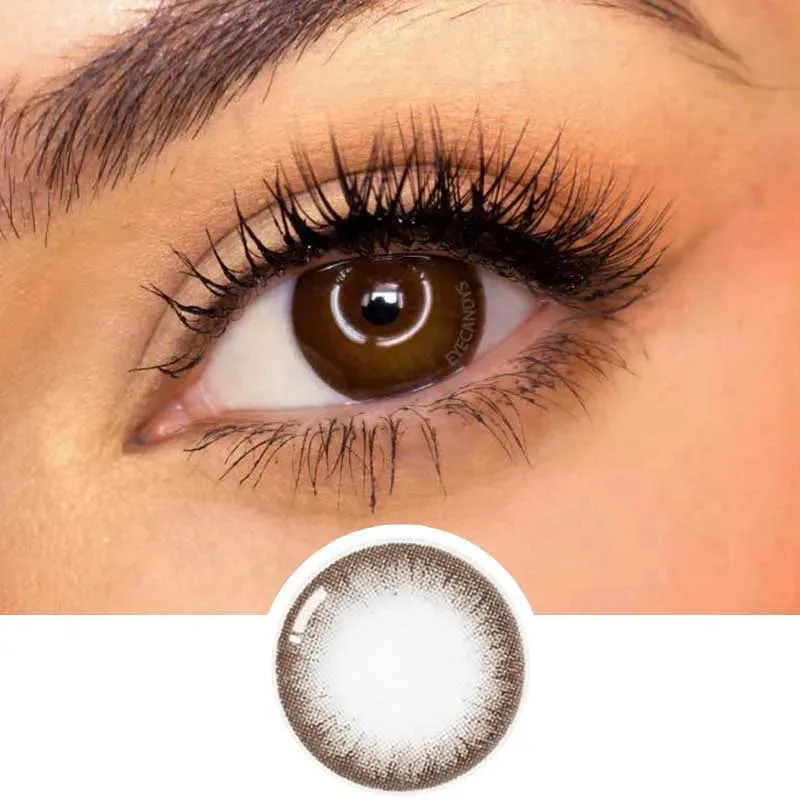
- Clalen Iris Alicia Brown (Toric for Astigmatism) (30pk): Clalen Iris Alicia Brown (Toric for Astigmatism) (30pk) is a daily toric lens with 55% water content methafilcon and is available in Power, Cyl, and Axis options. Because the axis is selectable, this lens can be matched to your astigmatism instead of forcing a generic fit. The 30-pack also lets you test a full month of daily wear before committing to a larger supply.
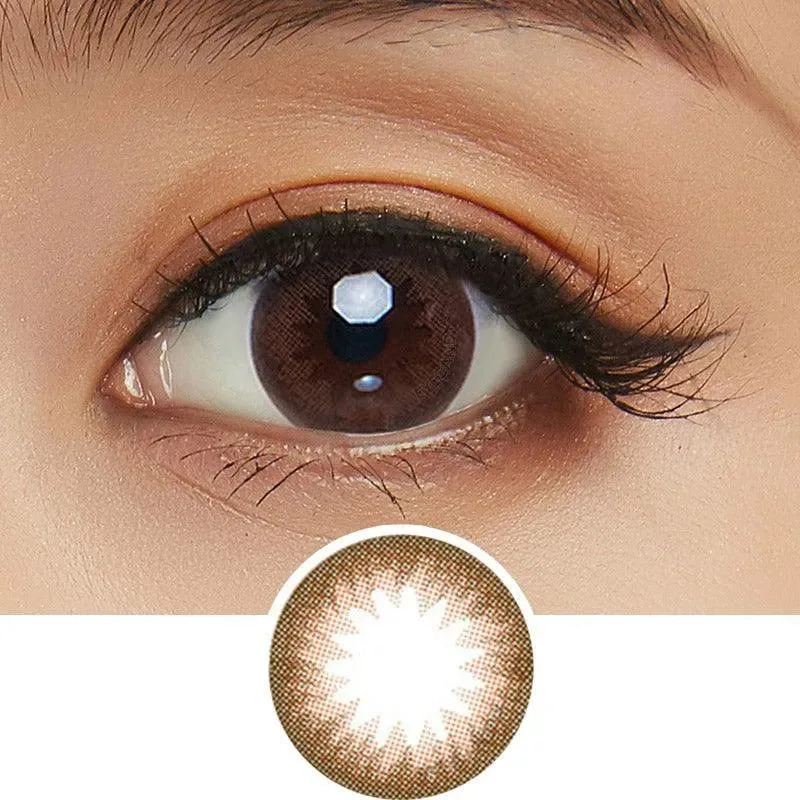
- Pink Label Pointe Choco (Custom Toric for Astigmatism): Pink Label Pointe Choco (Custom Toric for Astigmatism) is a custom toric lens sold as a 1 pair (2 toric lenses). A custom toric is worth considering when standard axis options do not hold steady. The 1-pair format keeps the initial cost lower while you and your fitter confirm the rotation is under control.
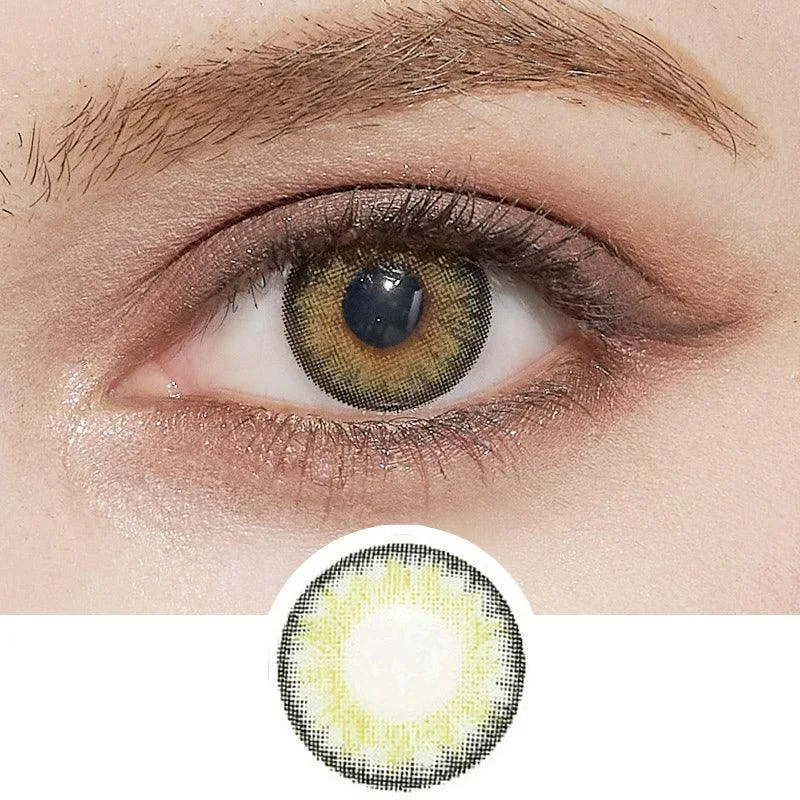
- NEO Vision Cosmo Green (Custom Toric for Astigmatism): NEO Vision Cosmo Green (Custom Toric for Astigmatism) is a custom toric lens sold as a 1 pair (2 toric lenses) with a printed diameter slightly larger than average. A larger printed diameter can give a wider-eyed look, but it also changes how the lens interacts with your eyelid. If you are prone to rotation, test this design in the 1-pair format before ordering more.