Quick answer
Most lingerie sizing problems come from a wrong band size, incorrect cup depth, or strap tension that doesn't match your body shape. Start by checking your band fit first—it does 80% of the support work—then adjust straps and cup position. If the issue persists, the cut or style may not suit your breast shape, and that's when you should consider a different silhouette rather than forcing a size change.
Why the band is the real culprit
A band that rides up in the back or feels uncomfortably tight almost always means the wrong band size. If the band creeps upward, it's too large; if it digs in and leaves red marks after an hour, it's too small. Because the band provides most of the support, fixing this one measurement solves the majority of ill fitting lingerie solutions. Measure your ribcage directly under your bust while exhaling, then add four inches if the number is even or five if odd—that's your starting band size. If you're between sizes, choose the smaller band for firmer support and use a band extender during the break-in period.
Cups that gape or spill over
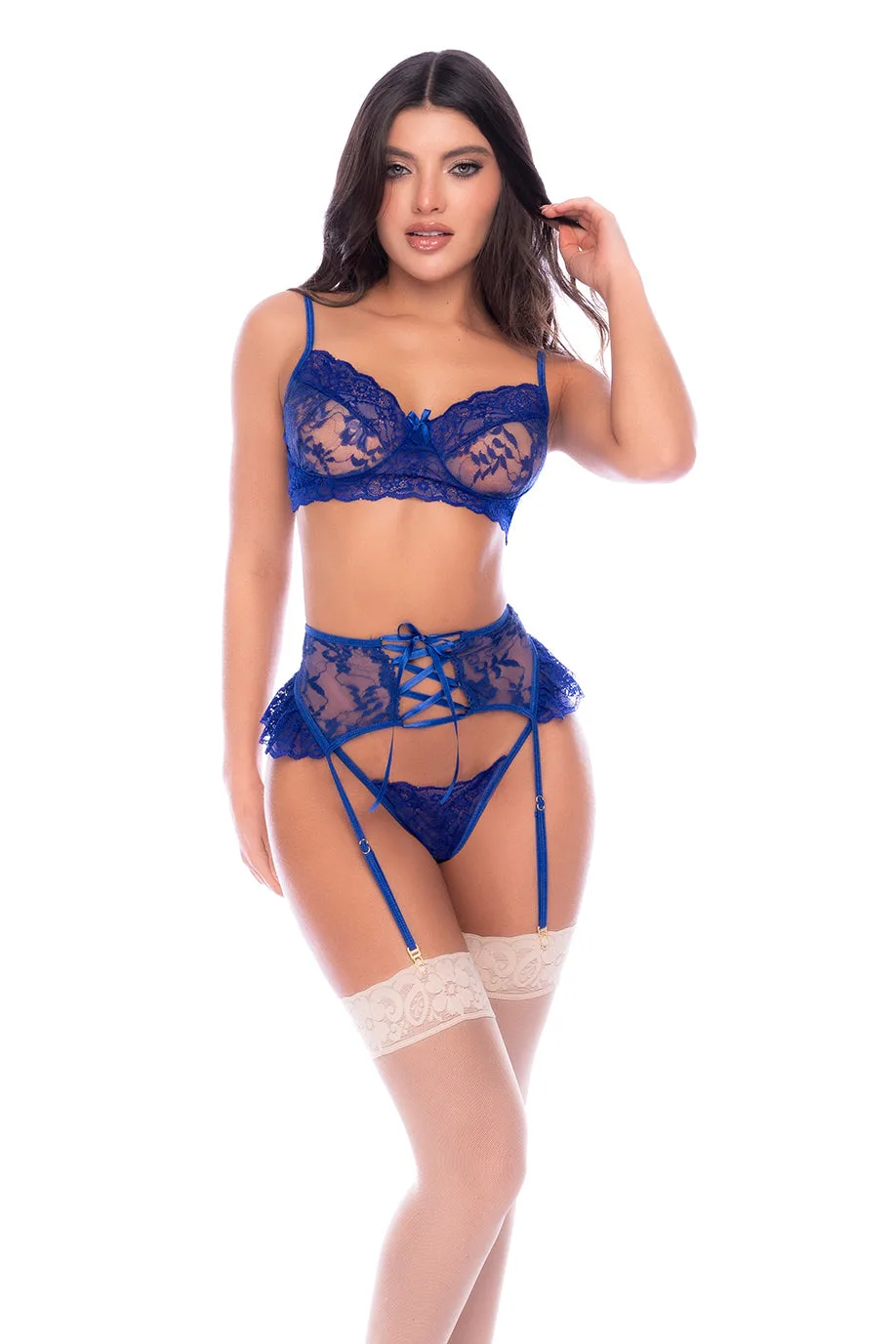
Gaping at the top of the cup usually means the cup is too large or the style is too tall for your breast shape. Spillage at the sides or center indicates a cup that's too small or a wire that doesn't match your root width. For a fix, try a demi or balconette cut if you have a shallower shape, or a full-coverage style if you have more projection. Underwire cups, like those found in the Dusty Bra and Garter Set, can help define shape when the wire sits flat against your sternum. If the wire lifts away from your chest, the band is likely too small.
Straps that slip or dig in
Straps that fall off your shoulders are often a sign that the band is too large, not that the straps are too loose. Tightening straps on a loose band just shifts the load and creates shoulder pain. Conversely, straps that dig in may mean the cups are too shallow or the band is too small. Look for sets with double adjustable straps, which give you more fine-tuning options. If slipping persists after adjusting the band, a racerback or multiway style may work better for your shoulder slope.
Diagnose your lingerie sizing problem
- Symptom: Band rides up in back: The band creeps above your shoulder blades within a few minutes of wear. Band is too large. Go down one band size and keep the same cup letter.
- Symptom: Red marks or pain under band: Deep red lines that don't fade after a few minutes, or you feel the need to loosen the band immediately. Band is too small. Try a band extender first, or size up one band size and adjust the cup letter accordingly.
- Symptom: Cups gape at the top: Fabric wrinkles or stands away from your breast tissue at the upper edge of the cup. Cup too large or style too tall. Try a demi or balconette cup in the same band size, or go down one cup letter.
- Symptom: Spillage at sides or center: Breast tissue bulges over the cup edges or the underwire sits on breast tissue instead of your ribcage. Cup too small or wire too narrow. Go up one cup letter. If spillage continues, try a style with a wider wire channel.
- Symptom: Straps fall off repeatedly: Straps slide down your shoulders even after tightening. Band is likely too large. Fix the band first. If the band fits, consider a racerback or convertible style.
Lingerie sets that help solve fit issues
- Dusty Bra and Garter Set: This romantic, lace lingerie set includes a bra with strappy front detail, underwire cups, double adjustable straps, a hook and eye back closure, a matching garter belt with adjustable garters and hook and eye back closure, and a matching panty. Double adjustable straps let you fine-tune tension on each side, which is especially useful if one shoulder sits lower than the other. The underwire cups provide defined shape, and the hook-and-eye closure on both bra and garter belt gives you multiple band tightness options.
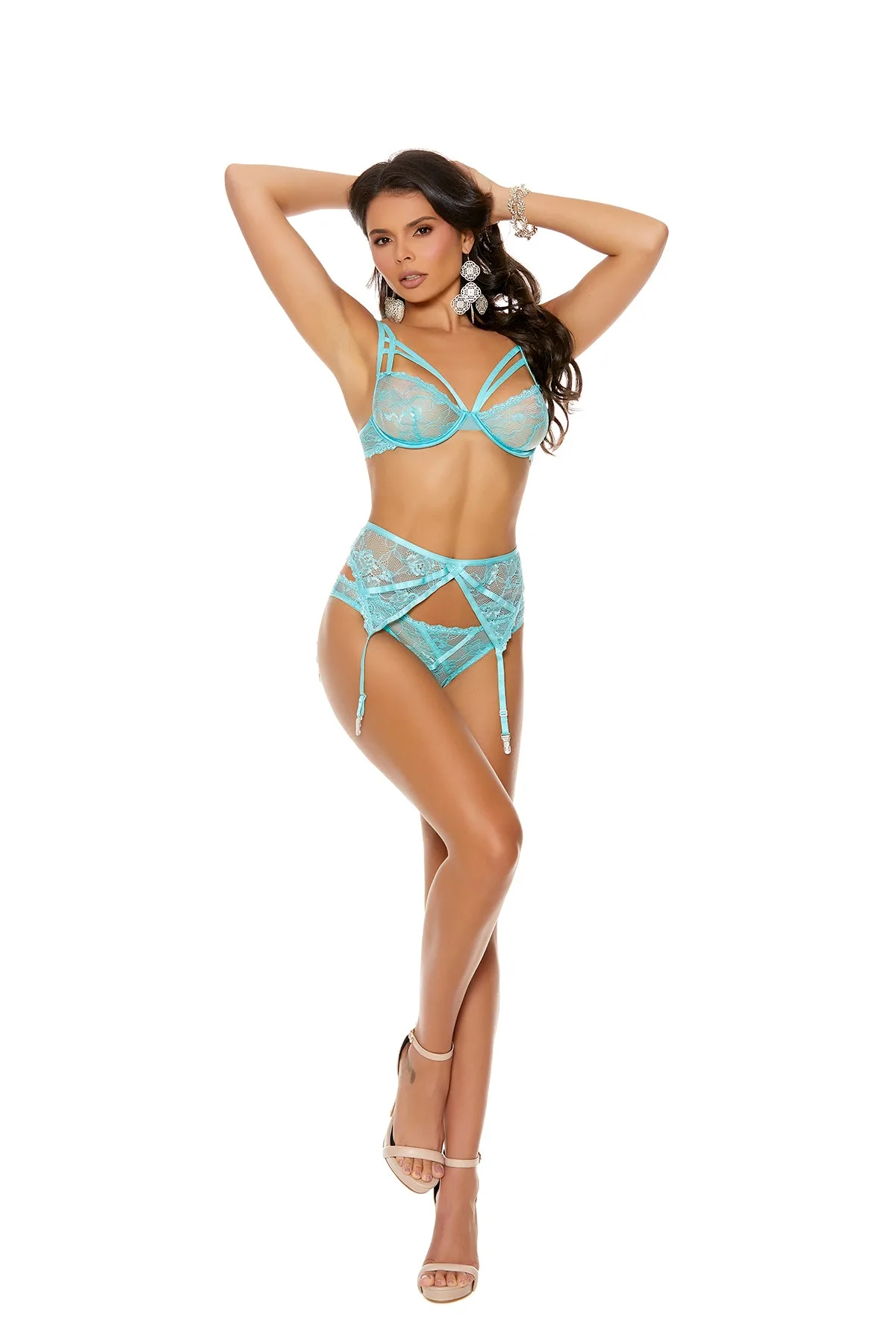
- Strappy Cage Bra and Panty: This multi strap lingerie set includes a lace bra top with a strappy bust, and matching high waisted panties with strappy details. The multi-strap design distributes tension across more points, reducing pressure on any single strap. The high-waisted panty offers more coverage and stays in place better than low-rise styles for those who experience waistband rolling.