Quick Answer
The biggest Montessori toy mistakes at home are not about buying the wrong toy. They're about too many toys out at once, jumping in to rescue play, and treating open-ended toys like they need instructions. Fix those three habits and most Montessori toys already in your home start working better.
Montessori
Most parents don't set out to use Montessori toys wrong. They buy a thoughtful wooden toy, set it on the shelf, and then quietly wonder why their child bangs it once and walks away. The toy usually isn't the problem. The setup around it is.
This article walks through the common Montessori mistakes I see at home, gives a clear verdict on each, and explains the fix using only what we actually know about the toys. No research claims, no miracle promises — just practical adjustments you can make this week.
Mistake 1: Assuming More Toys Means More Learning
A crowded shelf is the most common Montessori mistake at home. When ten toys compete for attention, a toddler often flits between them without settling into deep play. Montessori-style play depends on choice, but choice works best when it's limited. A few options visible at once gives a child a real decision to make instead of a wall of noise.
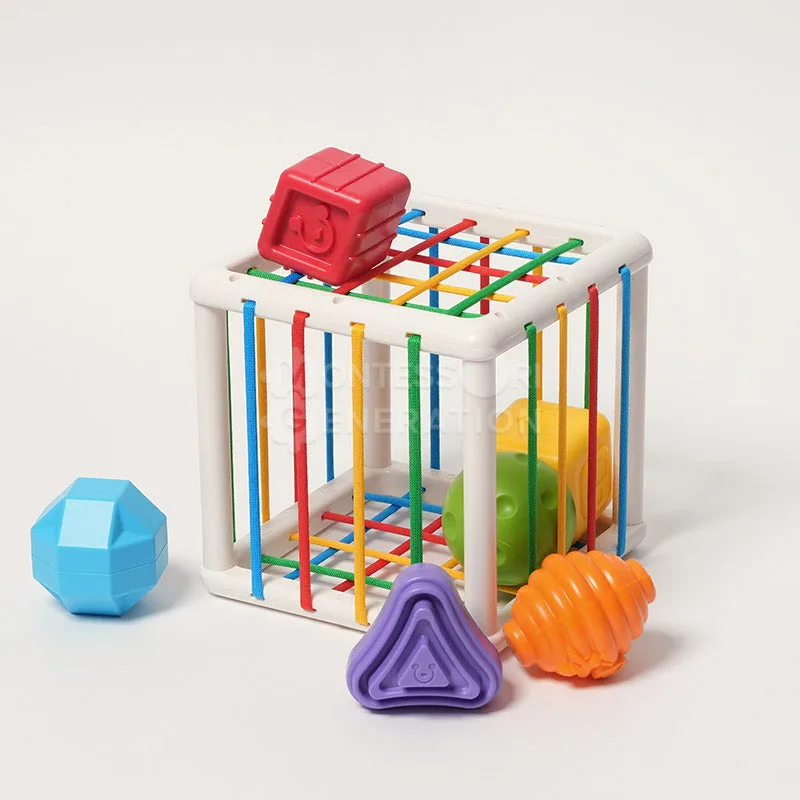
The fix is simple: keep a small number of toys accessible and store the rest out of sight. Rotate every week or two. This also protects your investment — toys feel new again after a break, and you get more value from pieces like the Montessori Laugh & Learn Bundle, which groups multiple play items into one set designed for everyday play at home or in a classroom setting.
- Aim for a handful of toys on the shelf, not a full collection.
- Rotate rather than replace — stored toys come back fresh.
- If a toy hasn't been touched in two rotations, it may be too advanced or too easy right now.
Mistake 2: Treating Open-Ended Toys Like They Need Instructions
Many parents assume a toy without instructions is incomplete or that they're using it wrong. The opposite is usually true. The Montessori Castle Construction Set contains 80 pieces with zero instructions and, as the catalog puts it, infinite places to start — a tower, a road, a castle that took forty minutes and fell down. That falling-down part is the learning.
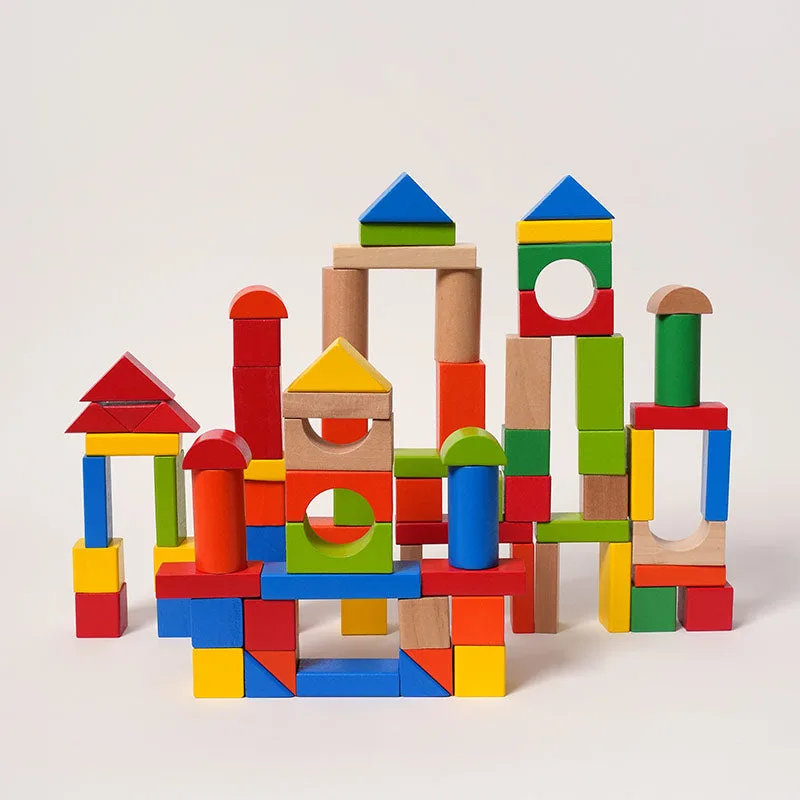
Montessori Castle Construction Set
If you feel lost, model one simple idea and then step back. Build a single tower, then stop. Children copy the beginning of an idea far more readily than a finished masterpiece. Your job is to lower the barrier to starting, not to direct the play.
- Start one small build, then hand it over.
- Resist the urge to finish what your child started.
- Falling down is part of the play, not a failure.
Mistake 3: Rescuing Play Too Quickly
When a child gets stuck or frustrated, the instinct to swoop in is strong. But frustration within reach is where problem-solving grows. The practical rule: wait, watch, and only intervene if your child asks or if safety is involved. This is the hardest Montessori parenting mistake to unlearn because it feels like helping.
A useful test is whether your child is still engaged. Banging, testing, and repeating are all engagement. Throwing a toy across the room and walking away is a signal to reset — maybe the toy is too hard right now, or maybe it's simply time for a different activity.
- Wait ten seconds before stepping in.
- Narrate what you see instead of solving it.
- If your child asks for help, give the smallest amount that unblocks them.
Mistake 4: Ignoring Age and Stage Because the Toy Looks Simple
A wooden toy can look timeless and still have a specific age range that matters. The Montessori Baby Stacking Cups are listed for 6+ months, while the Montessori Shape Blocks are listed for 12+ months. Giving a one-year-old a toy designed for a six-month-old often leads to boredom, and the reverse leads to frustration.
Check the stated age before you decide a toy is 'too easy' or 'too hard.' If a toy is being ignored, age mismatch is one of the most common and most fixable causes. Put it away and bring it back in a few weeks rather than pushing through.
- Match the toy to the stated age range, not to how advanced your child seems.
- Store out-of-range toys instead of donating them immediately.
- Reintroduce after a month — readiness changes fast.
Mistake 5: Skipping the Care Instructions
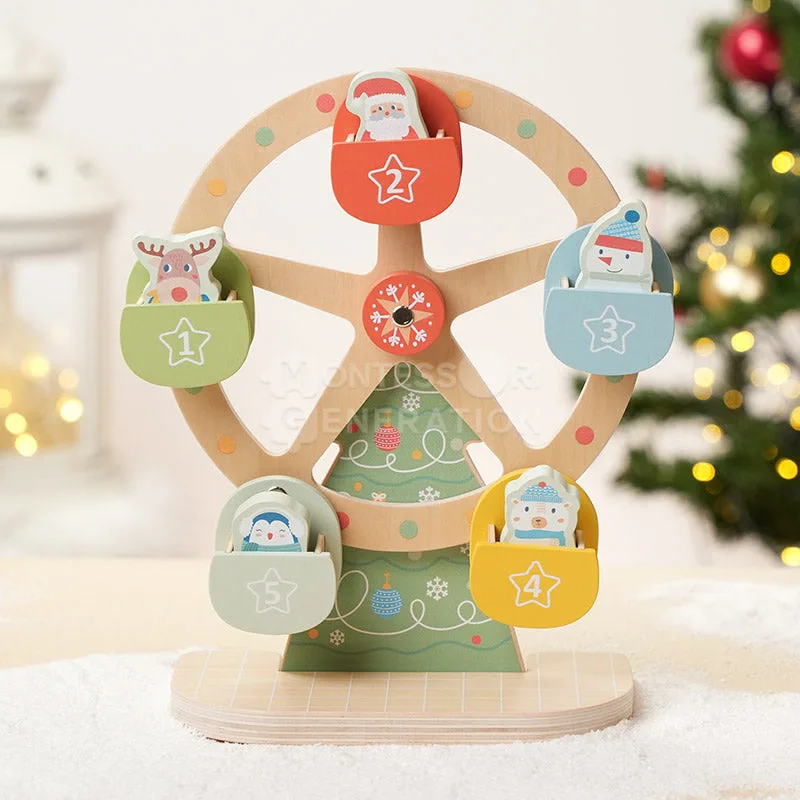
Wood and silicone toys have different care needs, and ignoring them shortens the toy's life. The Montessori Xmas Ferris Wheel should be cleaned with a damp cloth and mild soap, then dried immediately, with prolonged contact with liquids avoided. The Montessori Santa's Workshop calls for a dry cloth only. The Montessori Baby Stacking Cups are food-grade silicone and should be handwashed with warm water and mild detergent, then wiped dry or air dried.
Using the wrong method once usually isn't a disaster, but repeated soaking or harsh cleaners can dull finishes and warp wood. Keep care instructions where you'll actually see them, and treat cleaning as part of the toy's setup rather than an afterthought.
- Dry wood immediately after any wipe-down.
- Handwash silicone rather than putting it in the dishwasher.
- When in doubt, use less water, not more.
Verdicts on Common Montessori Toy Myths
- Myth: A good Montessori toy should come with instructions.: The Montessori Castle Construction Set has 80 pieces and zero instructions by design. Open-ended toys are meant to be figured out, not followed. Verdict: False. No instructions is a feature, not a missing piece.
- Myth: If my child ignores a toy, the toy was a waste of money.: Age mismatch is a common cause. The Montessori Baby Stacking Cups are rated 6+ months and the Montessori Shape Blocks 12+ months. A toy can be right for your child and wrong for this month. Verdict: Mostly false. Store it and try again later.
- Myth: All wooden Montessori toys can be wiped with a damp cloth.: Not quite. The Montessori Santa's Workshop specifies a dry cloth only, while the Montessori Xmas Ferris Wheel allows a damp cloth and mild soap but requires immediate drying. Verdict: False. Check each toy's care note before cleaning.
- Myth: More toys on the shelf means more play options.: In practice, a crowded shelf tends to scatter attention. Rotating a smaller selection keeps toys interesting and makes bundles like the Montessori Laugh & Learn Bundle easier to actually use. Verdict: False. Fewer toys visible, more play depth.
What the Catalog Actually Tells Us
- Montessori Castle Construction Set: Contains 80 pieces with zero instructions and infinite places to start; includes a wooden Noah's Ark, wooden figures, wooden animal pairs, and a 20-page illustrated storybook; age 2+. The storybook gives a natural entry point if free building feels daunting, and the piece count explains why storage and rotation matter more here than with a single-piece toy.
- Montessori Baby Stacking Cups: Seven silicone stacking cups, age 6+ months, made from 100% safe food-grade silicone, handwash only. The 6+ month rating and simple stacking format make this a realistic first toy — but the handwash requirement means it doesn't belong in the dishwasher.
- Montessori Xmas Ferris Wheel: Includes one wooden Ferris Wheel and five Christmas-themed figurines, age 2+, eco-friendly wood, clean with a damp cloth and mild soap then dry immediately. The figurines extend play beyond the wheel itself, and the immediate-drying instruction is the detail most parents skip.
- Montessori Santa's Workshop: Includes one foldable dollhouse and 18 wooden figurines, age 3+, clean with a dry cloth only. The dry-cloth-only rule is stricter than most wooden toys, so it's worth knowing before you reach for a damp rag.
None of these Montessori toy mistakes require buying anything new. They require fewer toys out at once, a little patience before stepping in, and a quick look at the age and care notes. Start with one change this week — the shelf reset is usually the one parents notice fastest.