Quick answer
Most packing mistakes come from packing without a plan, guessing what you'll need, or using the wrong bag for the trip. Fix them by making a list, choosing versatile pieces, and packing by category. If you're still overpacking after two rounds of edits, switch to a smaller bag or a capsule wardrobe.
You've got your flights booked, your itinerary mapped, and your out-of-office set. Then you open your suitcase and freeze. Packing is the part of travel that trips up even frequent flyers, and the mistakes tend to repeat: overpacking, forgetting essentials, or cramming everything into a bag that fights you the whole trip.
The good news is that most packing mistakes have clear causes and simple corrections. Below are five of the most common ones, with a diagnosis for each so you can spot the problem, fix it, and know when to stop adjusting and move on.
Mistake 1: Packing for 'what if' instead of what's planned
Symptom: your bag is heavy, you wear less than half of what you brought, and you still feel like you have nothing to wear. Likely cause: packing for imaginary scenarios rather than the actual itinerary. Corrective action: check the weather forecast and your daily plans, then pack only for those. Build outfits around a few versatile pieces, like a reversible dress that gives you two looks in one garment.
If you're still adding 'just in case' items after that, stop. A good rule is to lay everything out, then remove one item from each category. If you can't name a specific day or activity where you'll wear it, leave it home. That single edit often solves the heaviest packing problems.
- Check the forecast for your destination and travel dates.
- Plan outfits for each day, then pack only those pieces.
- Remove one item from each category before zipping up.
Mistake 2: Leaving packing to the last minute
Symptom: you're throwing things into a bag at midnight, forgetting chargers and toiletries, and arriving stressed. Likely cause: no packing window and no list. Corrective action: start a list a week ahead and pack in two short sessions. The first session handles clothes and gear; the second handles toiletries, documents, and electronics.
Last-minute packing also makes it harder to organize small items. A dedicated case for jewelry or accessories keeps earrings, rings, and small watches from tangling or disappearing into the bottom of your bag. If you're short on time, pack the essentials first and accept that you may need to buy a forgotten item at your destination. That's a better trade than missing a flight.
- Create a packing list at least five days before departure.
- Pack clothes and gear first, then toiletries and documents.
- Keep small valuables in a dedicated case, not loose in your bag.
Mistake 3: Using the wrong bag for the trip
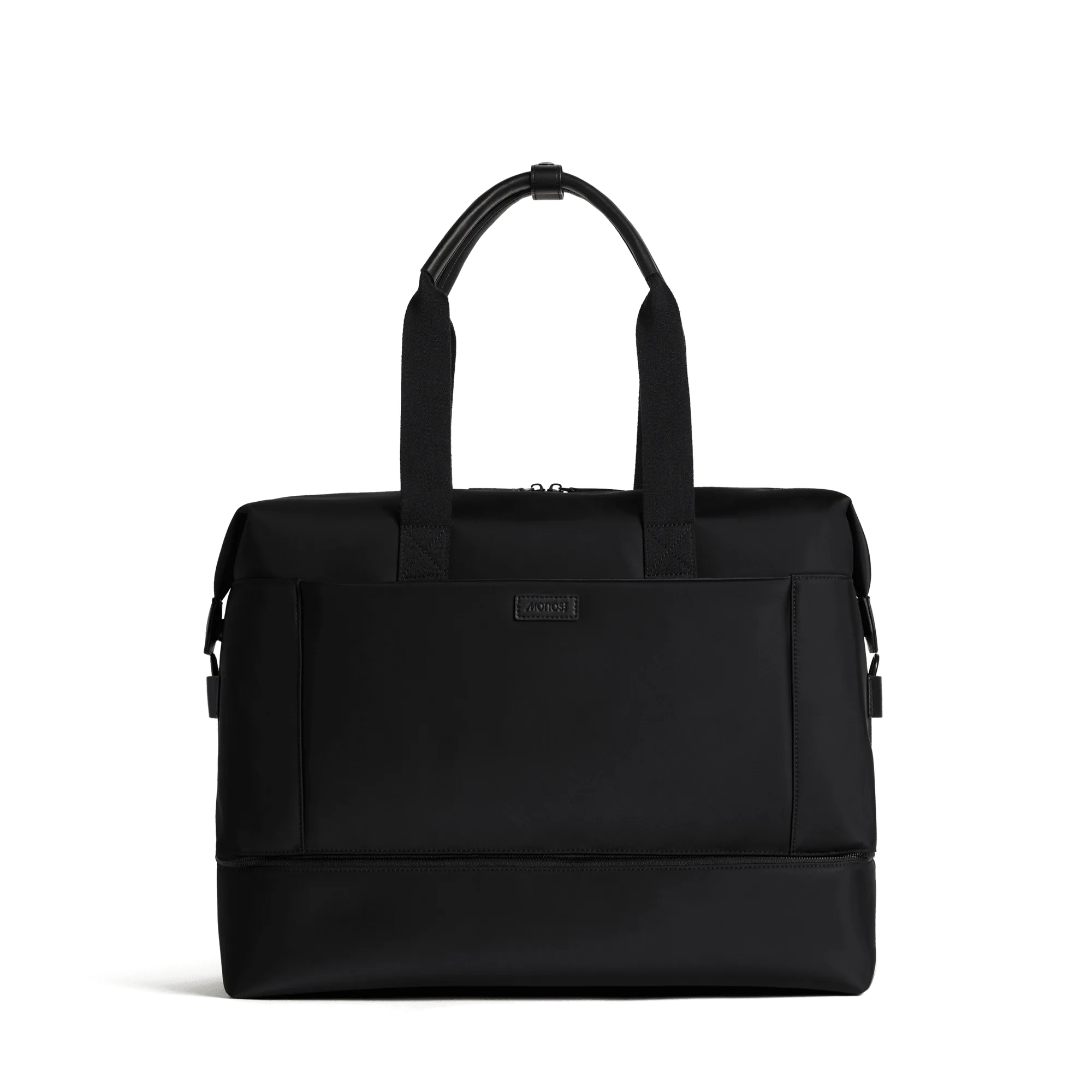
Symptom: your bag is uncomfortable, doesn't fit in the overhead, or lacks a spot for your laptop. Likely cause: choosing a bag by looks rather than by trip type. Corrective action: match the bag to your travel style. A weekender with a padded laptop compartment and water-resistant finish works for short business trips, while a compact crossbody keeps essentials hands-free for day tours.
If your bag still feels wrong after you've packed it, don't force it. A bag that's too big encourages overpacking; one that's too small creates daily frustration. Test-pack before you leave, and if it doesn't work, switch to a better-suited option rather than hoping it improves on the road.
- Test-pack your bag at least two days before you leave.
- Choose water- and scratch-resistant materials for unpredictable weather.
- Make sure your laptop fits if you're bringing one.
Mistake 4: Forgetting to organize small essentials
Symptom: you're digging through your bag for your passport, keys, or sunglasses, and small items end up scratched or lost. Likely cause: no dedicated pockets or pouches for daily essentials. Corrective action: use a crossbody with built-in organization for your phone, wallet, and passport, and keep sunglasses in a protective case when they're not on your face.
Organization isn't about owning more stuff; it's about giving each item a home. If you find yourself repeatedly searching for the same three things, that's your cue to add a pocket, pouch, or case. Once everything has a place, you can stop reorganizing and just travel.
- Use a crossbody with a passport pocket and card slots for travel days.
- Store sunglasses in a case to prevent scratches.
- Give your most-used items a consistent home in your bag.
Mistake 5: Ignoring the return trip
Symptom: your bag barely closes on the way home, and you're leaving things behind or paying extra fees. Likely cause: packing only for the outbound journey. Corrective action: leave a little space and weight for souvenirs, or pack a foldable tote for overflow. Choose clothing that can be worn multiple ways to reduce what you bring in the first place.
If you're consistently coming home with a bursting bag, it's a sign your starting load is too heavy. Reduce your base packing list by 20 percent, or plan to ship purchases home. There's a point where adding more organization won't help; you simply need to pack less.
- Leave 10-15% of your bag empty for the return trip.
- Pack a lightweight foldable bag for extras.
- Choose reversible or multi-way clothing to cut down on items.
Packing mistake diagnosis
- Overpacking: You pack for 'what if' scenarios and end up with a heavy bag and unused clothes. Fix it by planning outfits for your actual itinerary and removing one item per category. If your bag is still heavy after one edit, switch to a smaller bag or a capsule wardrobe.
- Last-minute packing: You pack the night before and forget essentials. Fix it by starting a list a week ahead and packing in two sessions. If you're still scrambling, accept that you may need to buy a forgotten item and focus on the essentials.
- Wrong bag: Your bag doesn't fit your trip type or your gear. Fix it by test-packing and choosing a bag with the right compartments and materials. If the bag still doesn't work after test-packing, change the bag, not your packing style.
- Disorganized essentials: You can't find your passport, keys, or sunglasses when you need them. Fix it by using a crossbody with built-in organization and a case for sunglasses. Once every essential has a home, stop reorganizing and start traveling.
- No return-trip plan: Your bag bursts on the way home. Fix it by leaving 10-15% empty space and packing a foldable tote. If you consistently overflow, reduce your base packing list by 20% or plan to ship purchases.
Gear that helps you avoid these mistakes
- Sevilla Dress: The short-sleeved design is front-back reversible with a V-neck on one side and a high neck on the other, providing two looks in one garment. Crafted with a blend of sustainable bamboo rayon and breathable cotton. Two looks from one piece means you can pack fewer clothes and still have options, directly reducing overpacking.
- Metro Weekender: Features a 16-inch laptop compartment, water- and scratch-resistant finishes, and a main compartment with a zippered pocket, end pocket with magnetic snap closure, and two side pockets. A bag with dedicated pockets and a laptop sleeve keeps you organized and protects your gear, solving the 'wrong bag' and 'small essentials' mistakes.
- Travel Jewelry Case: Designed to keep earrings, rings, and small watches organized and secured, with a modular design and removable components including a small vegan leather pouch. Keeps small valuables tangle-free and easy to find, so you're not digging through your bag at security or in a hotel room.
Packing mistakes are rarely about packing itself; they're about planning, choosing the right gear, and knowing when to stop. Fix the cause, not just the symptom, and your next trip will start with a lighter bag and a calmer mind.