Quick answer
Most rabbit hutch problems come down to moisture, wear, and overlooked cleaning. Regular inspections, proper placement, and prompt repairs will prevent the majority of issues before they start.
Why routine checks matter more than you think
A hutch that looks fine from the outside can be hiding early signs of trouble. Wood rot often starts at the base where it meets damp ground, and wire mesh can corrode silently. Catching these early is far cheaper and easier than replacing parts or the whole hutch.
Weather is the biggest factor. Rain, frost, and direct sun all stress the materials. Positioning the hutch in a sheltered spot and using a cover can dramatically extend its life.
The cost of ignoring small problems
A small leak can lead to soggy bedding, which then causes foot problems for your rabbit. A loose hinge might seem harmless until a predator exploits it. Fixing small issues promptly avoids more serious health and safety risks.
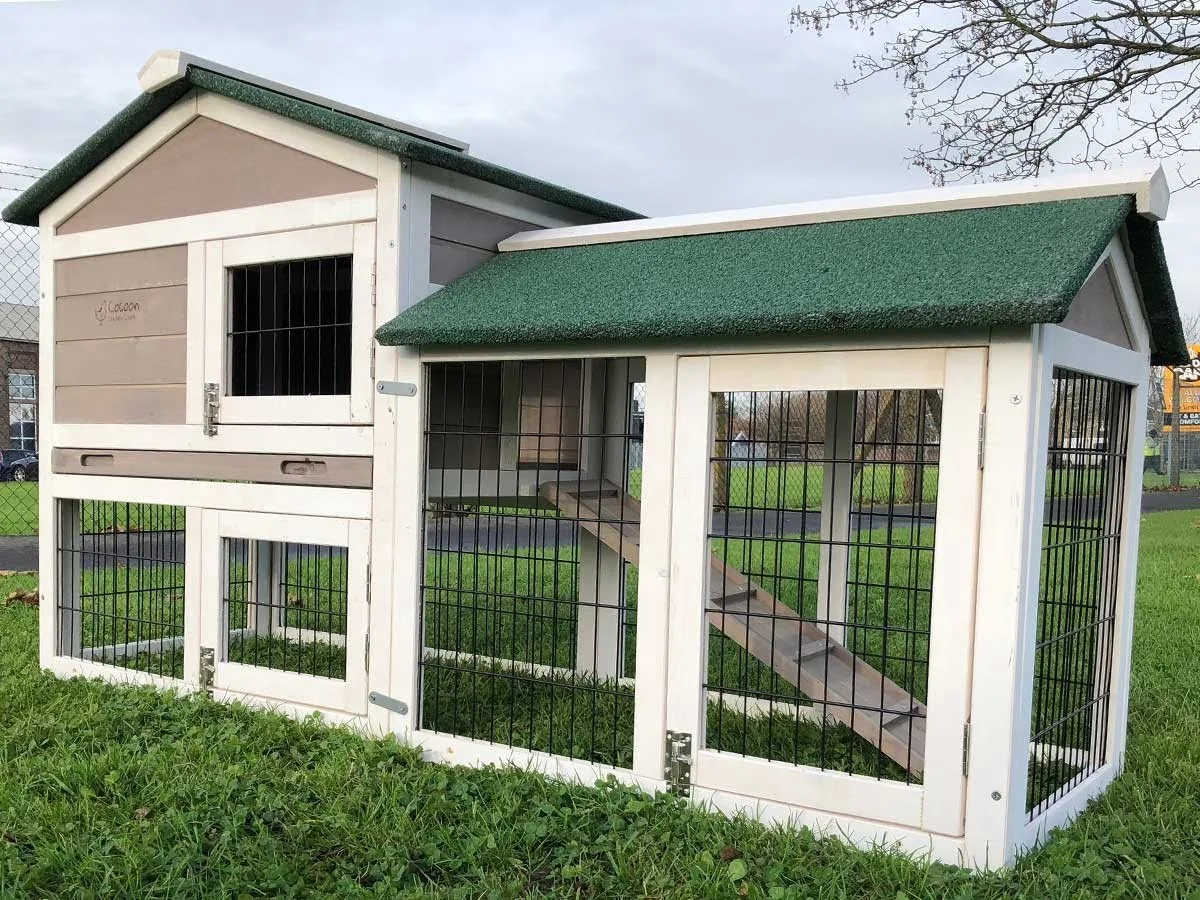
Also consider the hutch's design. For example, a hutch without a floor, like the Shadow 5ft Grey Rabbit Hutch, is meant for grassy areas. This allows your rabbit to feel freer, but it also means you need to move it regularly to prevent the ground underneath from becoming soiled or muddy.
Diagnosing and solving common hutch problems
- Symptom: Damp or musty smell inside the hutch: Likely cause: poor ventilation or wet bedding. Corrective action: increase airflow by trimming nearby plants, clean out wet bedding daily, and ensure the hutch is not in a damp, shaded spot. Stop if the smell persists after cleaning – it may indicate deep-seated mold or rot, and you may need to replace the affected wood. Check ventilation and bedding moisture weekly.
- Symptom: Rust or corrosion on wire mesh: Likely cause: exposure to moisture and urine. Corrective action: scrub rust with a wire brush, apply a rust-inhibiting primer and pet-safe paint, and improve drainage under the hutch. Stop if the mesh is severely weakened – replace the panel or the hutch to ensure your rabbit's safety. Inspect wire mesh monthly for early rust spots.
- Symptom: Wood splintering or soft spots: Likely cause: water damage from rain or ground contact. Corrective action: move the hutch to a sheltered area, use a waterproof cover, and treat the wood with a pet-safe sealant. Stop if the structure feels unstable – the hutch may be beyond repair, and a new one is safer. Elevate the hutch slightly to reduce ground moisture contact.
- Symptom: Unpleasant odor that returns quickly after cleaning: Likely cause: urine soaking into untreated wood or inadequate cleaning routine. Corrective action: use a vinegar-water solution to neutralize odors, replace soiled bedding more frequently, and consider lining the tray with a waterproof liner. Stop if the odor persists – the wood may be permanently impregnated, and you might need to replace the hutch. Deep-clean the hutch at least once a month.
Product facts
-
Shadow 5ft Grey Rabbit Hutch: The Shadow 5ft Grey Rabbit Hutch has no floor, designed for grassy areas. You'll need to rotate its position regularly to keep the grass healthy and avoid mud patches, which is key to preventing hygiene problems.
Shadow 5ft Grey Rabbit Hutch