In the quest for a zero waste kitchen, swapping out plastic scrubbers for a bamboo dish brush is one of the simplest and most effective changes you can make. Not only do bamboo dish brushes look beautiful on your countertop, but they are also durable, biodegradable, and gentle on your cookware. This guide will walk you through everything you need to know about bamboo dish brushes, from their many uses to proper care and when to replace the heads.
Whether you're new to eco-friendly cleaning or looking to optimize your dishwashing routine, understanding how to get the most out of your bamboo brush is key. We'll cover the different types available, how to use them effectively, and essential maintenance tips to ensure your brush lasts as long as possible. Plus, we'll share insights on replacement heads, so you can keep your brush in action without generating unnecessary waste.
Why Choose a Bamboo Dish Brush?
Plastic dish brushes are a staple in most kitchens, but they come with a heavy environmental cost. They are made from petroleum-based plastics that take hundreds of years to break down, and they often end up in landfills or oceans. Bamboo dish brushes, on the other hand, are made from rapidly renewable bamboo, a grass that grows quickly without the need for pesticides or fertilizers. The bristles are typically made from plant-based materials like agave or coconut fiber, making the entire brush compostable at the end of its life.
Beyond their eco-credentials, bamboo dish brushes are incredibly functional. The natural bristles are stiff enough to scrub away stuck-on food but gentle enough not to scratch non-stick pans or delicate glassware. Bamboo is also naturally antimicrobial, which helps prevent the buildup of bacteria on the brush handle. Plus, the lightweight yet sturdy design makes them comfortable to hold and easy to control, even during long dishwashing sessions.
- Biodegradable and compostable: unlike plastic brushes, bamboo brushes can be composted at home or in industrial facilities.
- Durable and long-lasting: with proper care, a bamboo brush can last for months, reducing waste.
- Gentle on cookware: natural bristles are tough on grime but safe for non-stick surfaces.
- Naturally antimicrobial: bamboo contains a natural bio-agent called 'bamboo kun' that resists bacteria and odors.
Types of Bamboo Dish Brushes and Their Uses
Bamboo dish brushes come in various shapes and sizes, each designed for specific tasks. The most common is the standard dish brush with a short handle and stiff bristles, perfect for everyday scrubbing of plates, bowls, and pots. For deeper cleaning, a long handle dish brush is ideal for reaching into tall glasses, bottles, and jars. These brushes often feature angled bristles to get into corners and narrow openings with ease.
Some bamboo brushes come with replaceable heads, allowing you to keep the handle and simply swap out the bristle part when it wears out. This is a fantastic zero waste option because it reduces the amount of material you consume over time. For example, the Replacement Heads for Long Handle Dish Brush (Pack of 4) are designed to fit specific handles, so you can extend the life of your brush without buying a whole new one. Whether you're washing a mountain of dishes after a dinner party or just a few everyday items, there's a bamboo brush suited to the job.
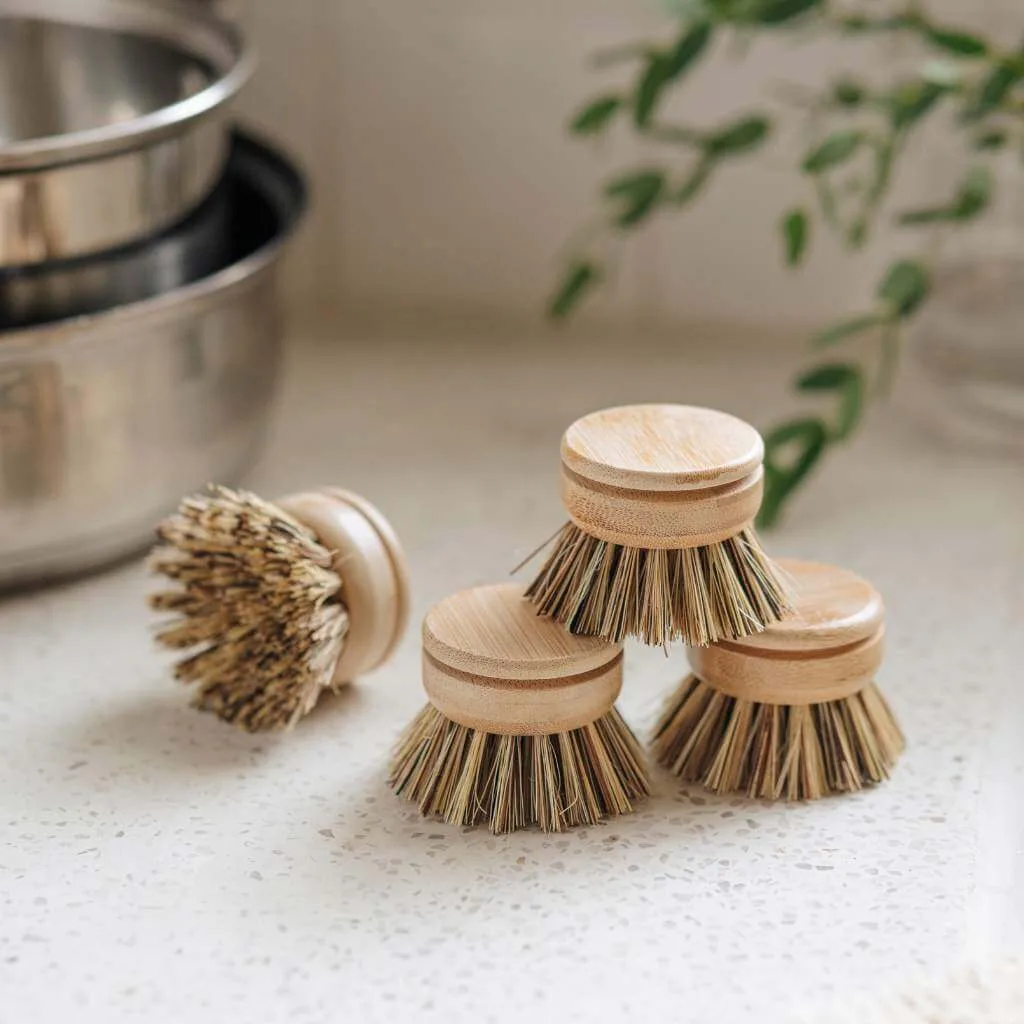
Replacement Heads for Long Handle Dish Brush (Pack of 4)
- Standard dish brush: all-purpose scrubbing for most kitchen items.
- Long handle dish brush: perfect for reaching deep into bottles, vases, and tall containers.
- Replaceable head brush: sustainable choice that lets you reuse the handle multiple times.
How to Use a Bamboo Dish Brush Effectively
Using a bamboo dish brush is straightforward, but a few tips can enhance its effectiveness and lifespan. First, always rinse the brush under hot water before use to soften the bristles. This makes them more flexible and less likely to break. When scrubbing, use a circular motion and apply moderate pressure—let the bristles do the work. For stubborn, dried-on food, soak the dish in warm soapy water for a few minutes before scrubbing, which will make the job easier and reduce wear on the brush.
It's also important to use the right brush for the right job. For example, don't use your bamboo dish brush on abrasive surfaces like cast iron without seasoning, as it can remove the seasoning. Instead, reserve your bamboo brush for everyday dishes, glassware, and non-stick pans. Additionally, consider using a separate brush for cleaning vegetables or produce, as this can help prevent cross-contamination and keep your dish brush cleaner for longer.
- Rinse bristles in hot water before first use to soften them.
- Soak heavily soiled dishes to minimize scrubbing effort.
- Use a dedicated brush for produce to avoid transferring food residues.
- Avoid using on seasoned cast iron or other delicate surfaces.
Caring for Your Bamboo Dish Brush
Proper care is essential to maximize the lifespan of your bamboo dish brush and maintain hygiene. After each use, rinse the brush thoroughly under hot water to remove food particles and soap residue. Shake off excess water and allow it to air dry in a well-ventilated area, ideally with the bristles facing down or in a brush holder that allows airflow. Avoid leaving the brush in a pool of water or in a closed container, as this can cause the bamboo to crack or develop mold.
Periodically, you should deep clean your brush to remove trapped debris and bacteria. You can soak it in a solution of warm water and white vinegar for about 30 minutes, then rinse and dry completely. This also helps to deodorize the brush. Never put your bamboo brush in the dishwasher, as the heat and moisture can warp the handle. With these simple steps, your bamboo dish brush can last for several months, reducing your environmental impact even further.
- Rinse and shake after each use, then air dry bristles down.
- Deep clean weekly with a vinegar solution to remove buildup.
- Never soak for extended periods or place in the dishwasher.
- Store in a dry, ventilated spot away from direct sunlight.
When and How to Replace Your Brush Head
Even with excellent care, the bristles of a bamboo dish brush will eventually wear down and lose their effectiveness. Signs that it's time to replace the brush or the head include bristles that are frayed, bent, or shedding excessively. A worn brush can harbor bacteria and won't clean as effectively, so it's important to replace it promptly. With a replaceable head brush, you can simply detach the old head and attach a new one, which is both cost-effective and eco-friendly.
When choosing a replacement, look for heads that are compatible with your brush handle. For instance, the Replacement Heads for Long Handle Dish Brush (Pack of 4) are a great option for those with a long-handled brush. They are made from sustainable materials and are fully compostable. By replacing only the head, you reduce waste and save money in the long run. Remember to recycle or compost the old head appropriately—if it's made of natural materials, you can add it to your compost bin.
- Replace when bristles are frayed, bent, or shedding.
- Opt for replaceable head brushes to minimize waste.
- Compost old heads if they are made of natural materials.
Bamboo Dish Brushes vs. Other Eco-Friendly Options
While bamboo dish brushes are a popular choice, there are other eco-friendly alternatives on the market, such as coconut fiber scrubbers, loofah sponges, and metal scourers. Each has its pros and cons. Coconut fiber scrubbers are excellent for tough scrubbing but can be harsh on delicate surfaces. Loofah sponges are soft and great for general cleaning but need frequent replacement. Metal scourers are durable but can scratch surfaces and are not compostable.
Bamboo dish brushes strike a balance between durability, gentleness, and sustainability. They are sturdy enough for heavy-duty cleaning yet gentle enough for everyday dishes. Plus, they are compostable at the end of their life, making them a truly zero waste option. When you combine a bamboo brush with other eco-friendly kitchen tools like reusable straws and bamboo cutlery, you can significantly reduce your kitchen's plastic footprint.
- Bamboo brushes: durable, gentle, and compostable.
- Coconut fiber: tough but may scratch.
- Loofah: soft but short lifespan.
- Metal scourers: durable but not eco-friendly.
Switching to a bamboo dish brush is a small change that makes a big difference for the planet. By understanding how to use, care for, and replace your brush, you can enjoy a clean kitchen while minimizing waste. Ready to make the swap? Check out our range of eco-friendly dish brushes and replacement heads to find the perfect fit for your zero waste lifestyle.