Quick answer
Choose a flat skin barrier if your stoma is flush with or protrudes slightly from your abdomen. Choose a convex barrier if your stoma is flush or retracted, or if you have skin folds or creases near the stoma.
Why barrier shape matters for leak prevention
The shape of the skin barrier—flat or convex—determines how the pouch fits around your stoma. A flat barrier sits level against the skin and works well for stomas that stick out. A convex barrier curves inward, putting gentle pressure on the peristomal area to help the stoma protrude into the pouch. This pressure can prevent leaks when the stoma is flush, retracted, or surrounded by skin folds.
Using the wrong shape often leads to leakage, skin irritation, and frequent pouch changes. Matching the barrier to your body shape and stoma type is one of the most important steps in ostomy management.
One-piece vs two-piece: which system to choose
Both flat and convex barriers come in one-piece and two-piece systems. A one-piece ostomy pouch has the barrier and pouch attached as a single unit. It is thinner, more flexible, and easier to apply. A two-piece system uses a flange that stays on your skin while you snap different pouches on and off.
One-piece pouches are often preferred for their simplicity and lower profile. They work well for people who change their entire appliance at each pouch change and want fewer parts to manage.
Trade-offs between convex and flat barriers
- Flat barrier: Best for stomas that protrude at least 1/2 inch from the skin. Sits flush against the abdomen with no added pressure.
- Convex barrier: Best for flush, retracted, or irregular stomas. The inward curve pushes peristomal tissue back, helping the stoma extend into the pouch. Convex barriers can cause pressure ulcers if too firm or worn too long. Start with a soft convex model and check skin daily.
- One-piece system: Fewer parts, easier application, and a lower profile. The barrier and pouch are one unit, so you replace everything at each change. If you prefer simplicity and don't need to swap pouches between changes, a one-piece ostomy pouch is a practical choice.
Product facts at a glance
-
Hollister Premier™ One-Piece Drainable Pouch, Flat CeraPlus™ Skin Barrier, Cut-to-Fit, 2-1/2" (64mm) Stoma: Hollister Premier One-Piece Drainable Pouch with Flat CeraPlus Skin Barrier is cut-to-fit for stomas up to 2-1/2 inches. This flat barrier suits stomas that protrude normally, and the cut-to-fit design lets you customize the opening for a snug seal.
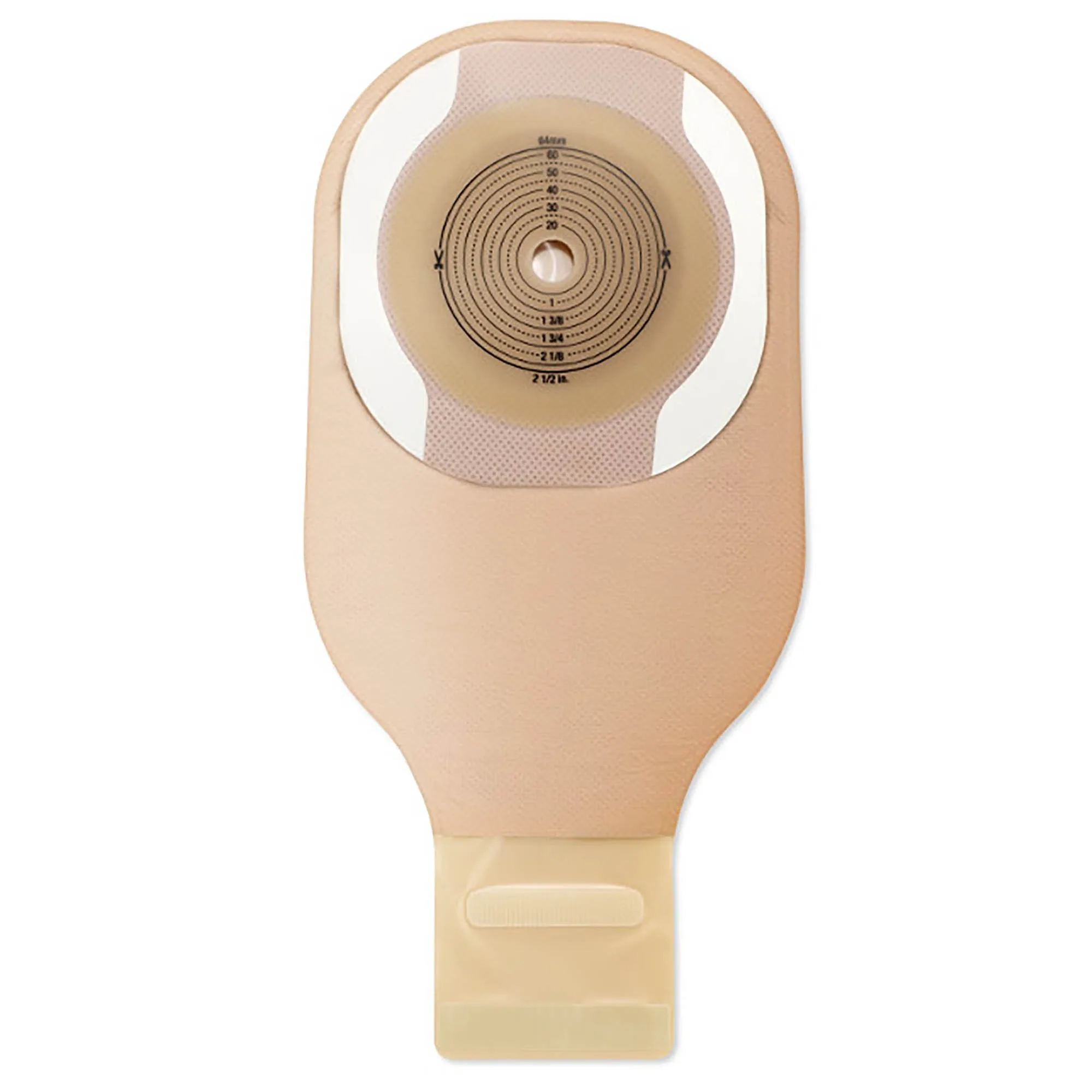
Hollister Premier™ One-Piece Drainable Pouch, Flat CeraPlus™ Skin Barrier, Cut-to-Fit, 2-1/2" (64mm) Stoma
-
Hollister CeraPlus™ Ostomy Pouch One-Piece System 12 Inch Length Soft Convex,Cut to Fit Up to 2-1/8 Inch.: Hollister CeraPlus One-Piece Pouch with Soft Convex barrier is cut-to-fit for stomas up to 2-1/8 inches. The soft convex shape provides gentle pressure around a flush or retracted stoma to help prevent leaks without excessive force.
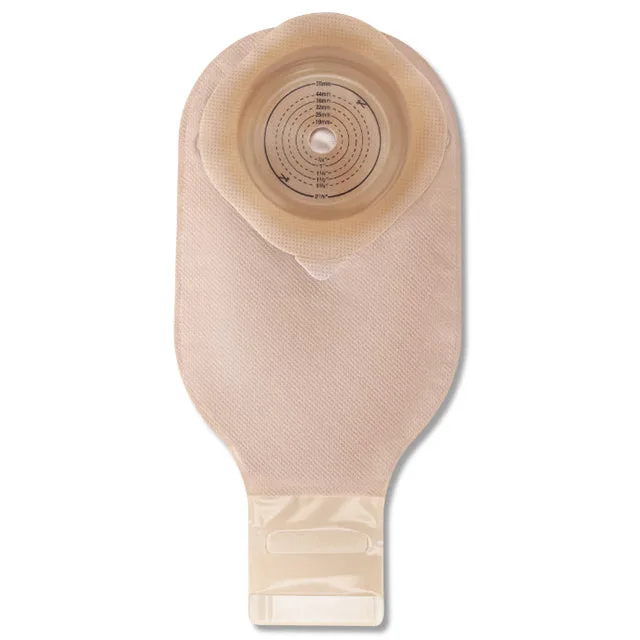
Hollister CeraPlus™ Ostomy Pouch One-Piece System 12 Inch Length Soft Convex,Cut to Fit Up to 2-1/8 Inch.
Which barrier fits your stoma?
Choose a flat barrier if
- Your stoma protrudes 1/2 inch or more from the skin
- You have firm, flat abdominal skin around the stoma
- You want the least pressure on peristomal skin
Choose a convex barrier if
- Your stoma is flush with or retracted below the skin surface
- You have skin folds, creases, or a hernia near the stoma
- You experience frequent leaks with a flat barrier