Why cork needs a lighter touch than foam
Cork is a renewable, biodegradable material harvested from the bark of cork oak trees, and the bark regenerates every 9–10 years without harming the tree. That natural structure is what gives a cork block its grip and stability, but it also means you should treat it more like a natural surface than a sealed foam prop. The Öko Living Cork Yoga Block is described as naturally antimicrobial and hypoallergenic, with rounded edges for comfort and a non-slip, durable surface. Those traits are exactly what you want to protect with a simple care routine.
The good news: cork is not fragile. The block is described as ultra-stable solid cork, so it can handle regular practice. The goal of cork yoga block care is not to baby it but to keep sweat, chalky residue and moisture from sitting on the surface or soaking in.
How to clean a cork yoga block after practice
The supplied product information lists the block as easy to clean but does not provide a specific cleaning procedure, dilution, or drying time. Use the steps below as a conservative, material-appropriate routine rather than a manufacturer instruction, and test any method on a small area first.
- Wipe, don't soak: After a sweaty session, wipe the block with a barely damp cloth. Cork is porous, so avoid submerging it or letting water pool on the surface.
- Use a mild approach: The product record does not specify a cleaner. A mild, unscented soap diluted in water is a reasonable starting point for a natural material, but check a hidden corner first and avoid harsh chemicals or abrasives that could dull the surface.
- Remove residue at the edges: The rounded edges are a comfort feature, but they can collect sweat and dust. Wipe along them rather than scrubbing hard.
- Air-dry fully before storage: Stand the block on its side in a ventilated spot so air reaches all faces. Do not put it away damp, and do not use direct high heat, which is not supported by the supplied information and can stress natural materials.
Cork block storage tips that prevent crumbling
The supplied information does not describe a crumbling issue or a specific cause. What it does confirm is that the block is solid cork with a non-slip, durable surface. Storage that keeps the block dry and evenly supported is the sensible way to protect that surface.
- Keep it dry between sessions: A damp block stored in a closed bag is the most common setup for surface breakdown. Let the block air-dry completely after cleaning or a heavy sweat session.
- Avoid leaving it in a hot car or damp studio bag: Heat and trapped moisture are not kind to natural cork. If you commute with your block, take it out of the bag when you get home.
- Store flat or on a stable edge: The block measures 4" x 6" x 9" and weighs 1.5 lbs. Store it on a flat shelf or standing on a long edge so it does not get compressed under other props.
- Keep it away from rough storage: Loose keys, metal buckles and gritty bags can scuff the surface. A simple cloth bag or a dedicated shelf spot reduces that wear.
What the Öko Living cork block confirms
-
Yoga Block - Cork (1pc): Ultra-stable solid cork with a non-slip, durable surface and rounded edges for comfort. A solid cork block is designed for support and grip, so care should focus on keeping the surface clean and dry rather than reshaping or softening it.
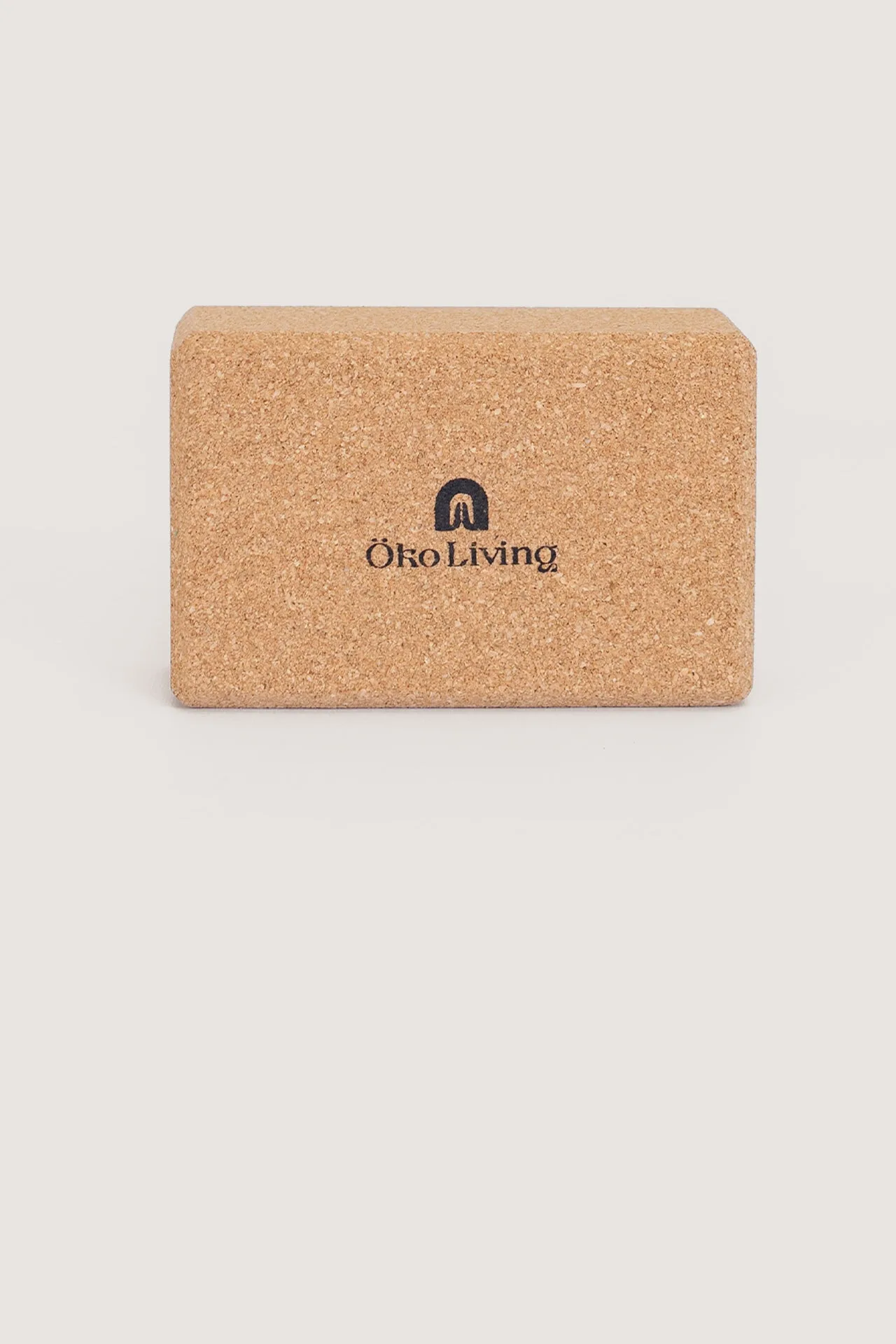
Yoga Block - Cork (1pc)
-
Yoga Block - Cork (1pc): Naturally antimicrobial and hypoallergenic; no PVC, latex, plastics or rubber smells. These properties reduce the need for aggressive cleaning and make a simple wipe-and-dry routine a reasonable default.
-
Yoga Block - Cork (1pc): Renewable and biodegradable cork; zero plastic packaging; 100% vegan. The material's natural origin is why a gentler cleaning approach fits better than harsh chemical cleaners.
-
Yoga Block - Cork (1pc): Dimensions: 4" x 6" x 9"; weight: 1.5 lbs. Knowing the size helps you choose storage that supports the block evenly and keeps it from being crushed.
Extend cork yoga block life: what to watch for
Because the supplied record does not list a lifespan or a wear schedule, treat these as observation points rather than guarantees. Check the block after each cleaning: if the surface feels slick rather than grippy, residue may be building up. If edges look dry or scuffed, reduce scrubbing and keep the block out of rough storage. If a corner starts to feel soft after a damp wipe, it likely was not fully dry before storage.
Cork yoga block maintenance is mostly about moisture control and gentle handling. The block is naturally grippy and durable, and the rounded edges are there for comfort, so you do not need to sand, oil, seal or otherwise alter it based on the supplied information. If you are unsure about a cleaner or treatment, the honest answer is that the supplied product record does not confirm it, so test on a small area or skip it.
Cleaning do's and don'ts for a cork block
These are practical guardrails, not manufacturer instructions. The product record confirms the block is easy to clean but does not supply a step-by-step cleaning protocol.
- Do wipe with a barely damp cloth: This removes surface sweat without soaking the cork.
- Do air-dry on all sides: Stand the block up so air reaches every face before it goes back in a bag or on a shelf.
- Don't soak or submerge: Cork is porous, and the supplied information does not support soaking as a cleaning method.
- Don't use harsh chemicals or abrasives: The block is a natural material with a non-slip surface; harsh cleaners can work against both.
- Don't store it damp: Trapped moisture is the main avoidable risk for any natural cork prop.