Quick answer
Most cork yoga mat smell comes from the cork itself or from moisture trapped between the mat and the floor, and both fade with airing and a gentle wash. If the odor is sharp, sour, or musty and returns within a day of drying, treat it as trapped moisture first: wash with mild soap, dry both sides fully, and store the mat unrolled or loosely rolled. Only replace the mat if the smell persists after two full clean-and-dry cycles.
You unroll your mat, settle in, and catch a whiff that wasn't there last week. Before you assume the worst, know that a cork yoga mat smell is common, and in most cases it is not a sign that your mat is ruined. Cork is a natural material, and natural materials have a scent.
The useful question isn't whether your mat smells, but what kind of smell it is and where it's coming from. This guide separates the normal earthy scent of new cork from the musty, sour odor of trapped moisture, then walks through the fixes in the order that actually works.
First, identify which smell you have
Natural cork has a faint woody, earthy scent that is strongest when the mat is new and when it's warm. That smell is a property of the material, not a defect, and it typically softens over the first few weeks of regular use. If your mat smells like a forest floor or dry bark, you are almost certainly dealing with normal cork odor.
A different smell tells a different story. Sour, musty, or ammonia-like notes usually point to moisture that hasn't dried, either from sweat absorbed into the surface or from a damp floor underneath. If the odor is strongest in the middle of the mat or along the edges where it curled, moisture is the likely cause. If it smells like perfume, detergent, or chemicals, the source is probably something you applied to the mat rather than the cork.
- Earthy or woody: normal natural cork odor, no action needed beyond airing.
- Sour or musty: moisture trapped in the cork or rubber backing.
- Chemical or perfumed: residue from a cleaner, oil, or storage next to something scented.
Why cork mats develop odor in the first place
Cork is naturally antimicrobial, which is one reason it resists the bacterial buildup that makes synthetic mats smell over time. That property reduces odor, but it doesn't eliminate moisture. When sweat sits on the surface and the mat gets rolled up while still damp, that moisture has nowhere to go. The rubber backing, which is what gives cork mats their grip on the floor, can also trap dampness against the ground.
Storage habits matter as much as cleaning. A mat rolled tightly and left in a hot car or a closed bag holds warmth and humidity together, which is the combination that produces a musty smell fastest. Mats left unrolled on a cool floor dry out between sessions and rarely develop odor at all. If you've changed nothing about your cleaning routine but the smell appeared, look at where and how the mat is stored.
- Roll the mat with the cork facing outward so the surface can breathe.
- Never store a damp mat in a closed bag or a hot car.
- Let the mat air for 15–30 minutes after a sweaty session before rolling.
How to remove the odor: air, wash, dry
Start with air. Unroll the mat and lay it flat, cork side up, in a shaded, well-ventilated spot for a full day. Flip it once so the rubber side dries too. Many mild odors disappear at this step alone, especially if the mat was rolled damp. Avoid direct sun for long periods, since strong heat can stress the cork and rubber over time.
If airing doesn't do it, wash the surface. Mix a few drops of mild dish soap or castile soap in lukewarm water, wipe the cork with a soft cloth or sponge, then wipe again with clean water to remove residue. Don't soak the mat or submerge it. Soap left on the surface can itself hold odor, so the rinse matters as much as the wash.
Drying is the step people rush, and it's the step that decides whether the smell comes back. Lay the mat flat or drape it over a rack so air reaches both sides, and give it a full 24 hours before rolling. If you roll it while the rubber backing is still cool and damp to the touch, you've recreated the conditions that caused the problem.
- Use lukewarm water, never hot, and a mild soap with no added fragrance.
- Skip vinegar, essential oils, and bleach on cork; they can leave residue or damage the surface.
- Dry flat or draped for 24 hours before storing.
What not to do
A few common fixes make cork mats worse. Submerging the mat in a bathtub can saturate the cork and rubber layers, and they may not dry evenly afterward. Machine washing is out of the question for the same reason. Strong cleaners, disinfecting sprays, and scented products can leave their own odor behind and may dry out the cork surface, which affects grip.
It's also worth resisting the urge to mask the smell with a scented spray. That treats the symptom and leaves the cause in place. If the underlying moisture isn't removed, the musty smell will return within a day or two, now layered under a fragrance.
- No soaking, no machine washing, no bleach.
- No scented sprays or oils on the cork surface.
- No direct sun for hours at a time.
When to stop treating and consider a different mat
If you've aired the mat for a full day, washed and rinsed it gently, and dried it completely for 24 hours, and the musty smell still returns within a day or two, the moisture has likely reached deeper than surface cleaning can fix. At that point, repeating the same wash cycle rarely helps. Two full clean-and-dry cycles is a reasonable stopping point.
It's also worth checking whether the mat is the right fit for how you practice. A mat that stays damp because it's used for very sweaty sessions and stored in a gym bag may keep cycling through the same problem. A thicker mat with more cushioning, or a round mat used for gentler home practice where it can stay unrolled, often sidesteps the storage issue entirely. If odor keeps returning despite good habits, the storage routine is the real problem, not the cork.
- Two failed clean-and-dry cycles: stop treating and replace.
- Odor that returns within 24 hours of full drying: moisture is deeper than the surface.
- Odor only in one spot: check for a spill or a persistently damp floor area.
Odor diagnosis: match the smell to the fix
- Earthy, woody, or bark-like smell: This is the natural scent of cork, strongest when the mat is new or warm. It is not a defect and typically softens with regular use. No treatment needed. Air the mat for a few hours if the scent is stronger than you'd like.
- Sour, musty, or ammonia-like smell: Moisture is trapped in the cork or against the rubber backing, often from rolling the mat damp or storing it in a closed bag or hot car. Air flat for a full day, wash gently with mild soap, rinse, and dry 24 hours before rolling.
- Chemical or perfumed smell: Residue from a cleaner, oil, or scented product, or from storing the mat next to something strongly scented. Wipe with plain lukewarm water and a soft cloth, then dry fully. Stop using scented products on the mat.
- Musty smell that returns within 24 hours of drying: Surface cleaning is no longer reaching the source, or the storage routine keeps reintroducing moisture. After two full clean-and-dry cycles with no improvement, replace the mat or change how and where you store it.
How Scoria cork mats are built
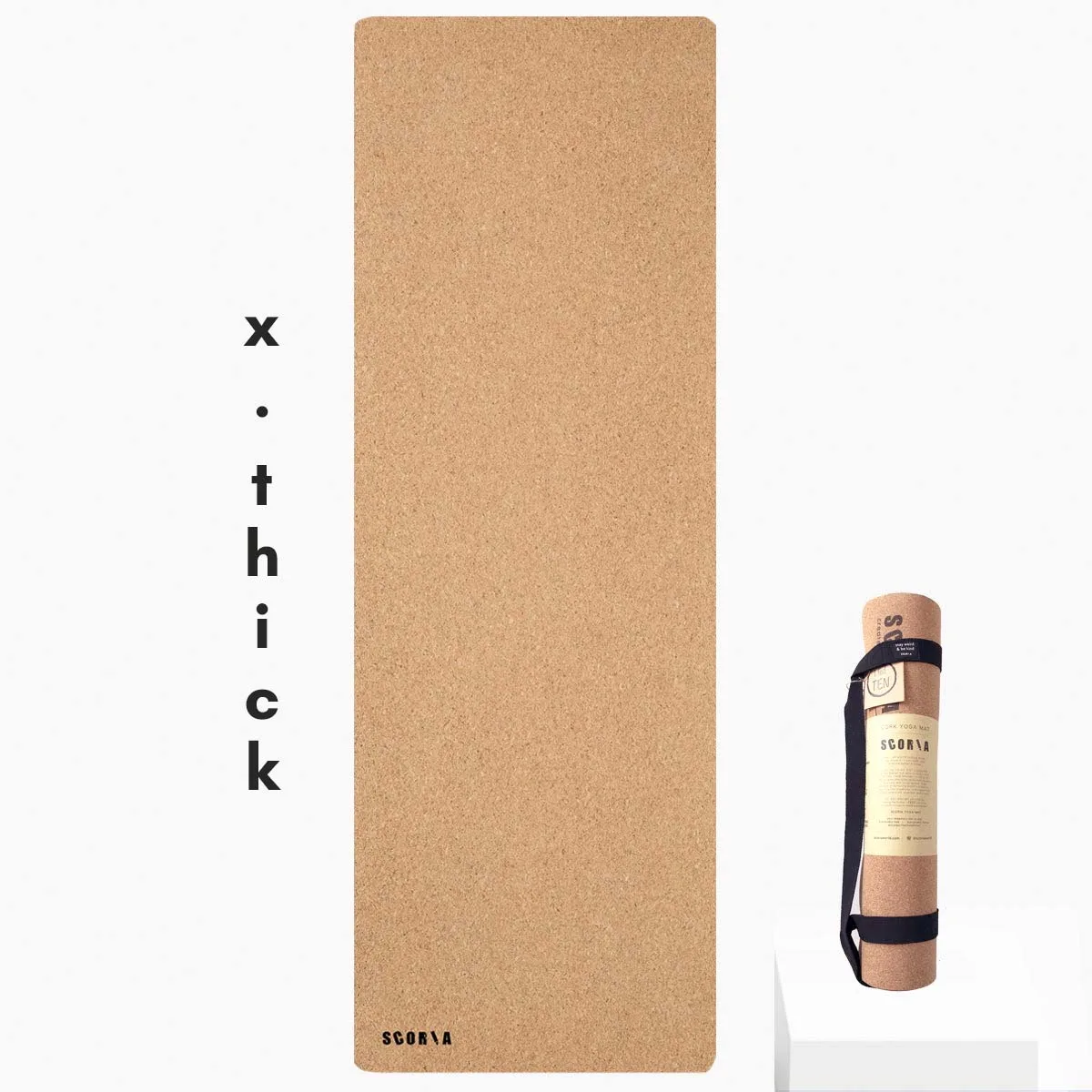
- X-Thick Essential Cork Yoga Mat | 6MM: Backed by natural tree rubber unlike other mats with synthetic TPE/PVC, and it's the thickest mat in the range for knee comfort. A natural rubber backing grips the floor well, but it also means the underside needs to dry fully before you roll the mat, since rubber holds moisture against the floor.
- Essential Round Cork Yoga Mat | Multi-use | 53" dia: Crafted from 100% natural cork and FSC-certified rubber, designed for home practice corners, stretching nooks, or meditation areas. A round mat that stays unrolled in a home corner dries between sessions far better than a mat that gets rolled and bagged, which is the simplest way to prevent recurring odor.
- Kids Unicorn Play & Cork Yoga Mat: Naturally anti-microbial cork surface, backed by natural tree rubber, safe and non-toxic for kids. The antimicrobial cork surface resists odor buildup, but a kids' mat used on the floor still needs to be aired and dried after spills or active play.
Most cork yoga mat smell is either the material's natural scent or a moisture problem you can fix with air, a gentle wash, and patience. Diagnose the smell first, treat the cause rather than masking it, and give the mat a full day to dry before you roll it. Do that, and your cork mat should stay fresh for years of practice.