Quick answer
Start with an 18 g dose, a 1:2 ratio (36 g yield), and a 27–30 second shot, then adjust grind by taste. If the shot runs faster than 25 seconds and tastes sharp or thin, grind finer; if it runs past 32 seconds and tastes drying or bitter, grind coarser. The yellow honey process and 1,900–2,000 m elevation of Costa Rica Santa Rosa 1900 Espresso support a softer acidity and steady structure, so small grind changes show up clearly in the cup.
Why this coffee responds well to a simple recipe
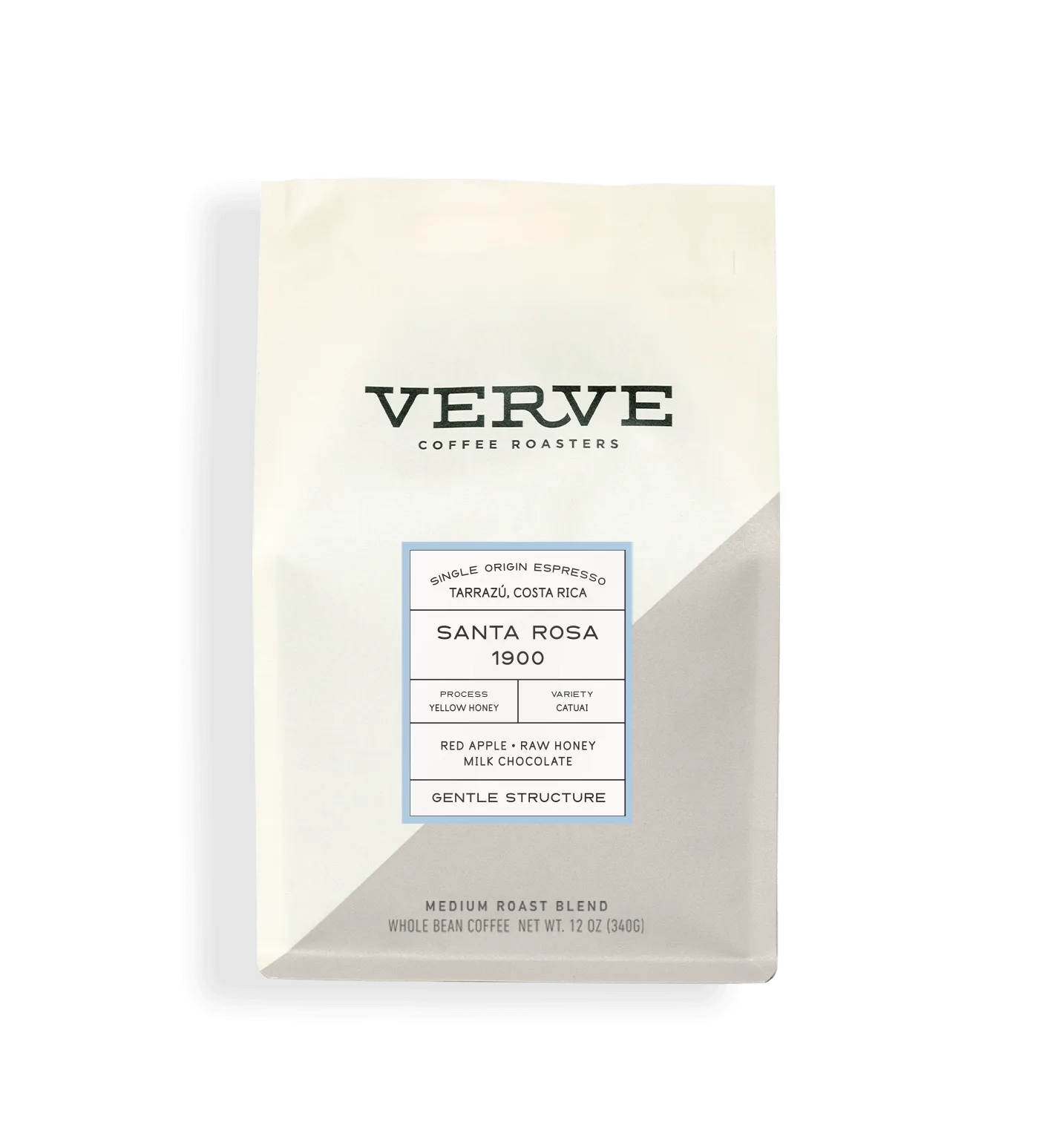
Costa Rica Santa Rosa 1900 Espresso is a Catuai with a yellow honey process, which leaves moderate mucilage on the bean during drying. That adds body and sweetness without burying clarity, so you can taste what your grind and ratio changes are doing. The coffee is grown between 1,900 and 2,000 meters, where slower maturation supports softer acidity and a consistent structure. In practice, that means you do not need a complicated profile to get a balanced shot—you need a repeatable starting point and one variable changed at a time.
Set up before you chase the grind
Before adjusting the grinder, confirm your basket, tamper, and scale are consistent. Use a scale that reads to 0.1 g for both dose and yield; volume-based espresso is too variable for dialing in. Weigh the dose after grinding, not before, so you account for retention. Level the bed and tamp flat with even pressure—an angled tamp creates channeling that mimics grind problems and sends you in the wrong direction. If your machine has pre-infusion, keep it on the same setting for every shot while dialing in.
How to read the shot and adjust
Pull your first shot with the starting recipe and watch the flow. A healthy extraction begins as a thin, dark stream and gradually lightens to a honey-like ribbon. If the stream turns pale and watery before 25 seconds, the grind is likely too coarse. If it barely drips and looks dark for most of the shot, the grind is too fine. Taste before you change anything: sour, sharp, or hollow usually means under-extraction; drying, bitter, or ashy usually means over-extraction. Change grind in small increments—one or two notches on a stepped grinder, or a very small turn on a stepless grinder—then repeat the same dose and yield.
Keep the recipe stable as the coffee ages
Freshly roasted coffee releases gas for several days, which can make espresso flow faster and taste sharper. As the coffee rests, you may need to grind slightly finer to maintain the same shot time and sweetness. Store beans in an airtight container away from light and heat, and grind immediately before brewing. If you change brew temperature, do it after you have a grind that tastes balanced—temperature shifts sweetness and acidity, but grind controls the fundamental extraction.
Dial-in steps with checkpoints
- Weigh and grind 18 g: Grind directly into a dry, room-temperature portafilter basket and weigh the grounds to 0.1 g. Common mistake: dosing by volume or eyeballing, which makes every shot a new variable. Checkpoint: dose is within 0.2 g of 18 g before you tamp.
- Level and tamp flat: Distribute the grounds evenly, then tamp with level pressure. A tilted tamp causes channeling that can look like a grind problem. Keep the tamper flat and consistent. Checkpoint: the puck surface is level and the tamper sits flat before you lock in.
- Pull to a 1:2 ratio in 27–30 seconds: Start the shot and stop at 36 g yield. If it reaches 36 g before 25 seconds, grind finer next time. If it takes longer than 32 seconds, grind coarser. Checkpoint: note time and yield; change only grind for the next shot.
- Taste and adjust grind: Sour or thin means grind finer; drying or bitter means grind coarser. Make one small change, then repeat the same dose and yield. Do not change dose, ratio, and grind at once. Checkpoint: the shot should taste sweet and balanced with a soft finish before you move on.
- Re-check as beans rest: If shots start running faster after a few days, grind slightly finer to keep the same time and sweetness. Store beans airtight and away from heat. Checkpoint: keep a written note of the grind setting that works for your setup and bean age.
What you are working with
- Costa Rica Santa Rosa 1900 Espresso: A yellow honey process gives this Catuai its balance of body and sweetness, with moderate mucilage retention adding weight without sacrificing clarity. You can push the ratio slightly longer for more sweetness without the cup turning muddy, which makes dialing in more forgiving.
- Costa Rica Santa Rosa 1900 Espresso: Grown between 1,900 and 2,000 meters, the coffee matures slowly, supporting softer acidity and a steady, consistent structure. Shots stay balanced across a range of grind settings, so you can fine-tune for taste rather than fighting sharp acidity.