Measure the neck, not the old collar
The most reliable way to size a fabric dog collar is to measure your dog's neck directly. Wrap a soft tape measure around the middle of the neck, where the collar normally sits, and keep it snug but not tight. If you don't have a soft tape, use a piece of string or a strip of fabric, mark where it meets, then lay it flat against a ruler.
Don't measure the old collar itself unless you know it was adjusted correctly. A stretched or incorrectly adjusted collar can send you toward the wrong size. For a growing puppy, measure every few weeks; for an adult dog, measure once before you buy and recheck if the coat gets thicker in winter or if the dog's weight changes noticeably.
Once you have the number, compare it with the collar's stated neck range rather than guessing from the breed or the dog's weight. The Cotton & Hemp Dog Collar lists specific neck ranges for each size, so the tape measure is the only tool you really need.
What the Cotton & Hemp Dog Collar offers
-
Cotton & Hemp Dog Collar | Adjustable Soft Fabric Dog Collar: Sizes: Small fits necks 10–14" (0.59" width); Medium fits necks 14–18" (1" width); Large fits necks 18–26" (1" width). Match your tape measurement to these ranges first. The width also changes with size, so a small dog gets a narrower, lighter collar.
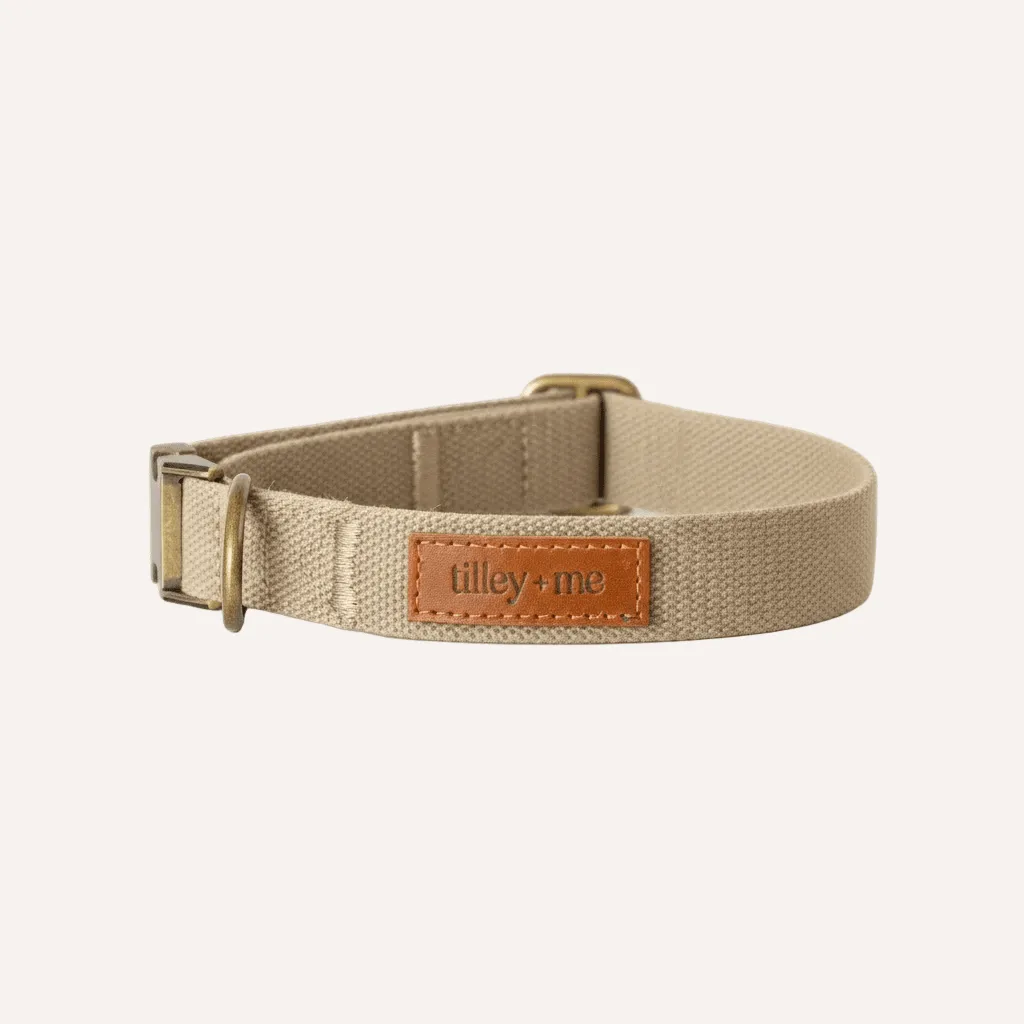
Cotton & Hemp Dog Collar | Adjustable Soft Fabric Dog Collar
-
Cotton & Hemp Dog Collar | Adjustable Soft Fabric Dog Collar: Crafted from a durable hemp cotton blend that becomes softer and more flexible with every walk. This is the main reason to choose fabric over nylon: the material is designed to soften with use while staying durable.
-
Cotton & Hemp Dog Collar | Adjustable Soft Fabric Dog Collar: Features antique brass hardware, a genuine leather tag, a safety lock clasp, and a reinforced D-ring for leash attachment. These are the parts that take the daily wear, so check them against how your dog behaves on leash.
The two-finger check, and when to ignore it
The two-finger rule is a quick field test, not a substitute for measuring. Slide two fingers under the collar at the side of the neck. They should pass with light resistance: not so loose that the collar can slip over the head, and not so tight that the skin bunches or the dog coughs or pulls away.
- Test in the position the collar actually sits: On many dogs the collar rests lower on the neck than where you first placed the tape. Adjust, then recheck.
- Recheck after the first walk: A soft fabric collar can settle slightly once it's been worn and adjusted. A quick second check after the first outing catches a fit that has loosened.
- Don't use the two-finger rule alone for a puppy: Puppies grow quickly. A fit that passes today may be tight in a few weeks, so measure again rather than relying on the finger test.
- Treat the clasp as part of the fit: The safety lock clasp needs to close cleanly with the collar adjusted to the right length. If it feels strained, the collar is probably too tight.
Hemp-cotton vs nylon: what actually differs
Nylon collars are common because they're inexpensive and easy to wipe clean. A hemp-cotton collar takes a different approach: the natural fibres are breathable, the blend is designed to soften with wear, and the hardware is brass rather than plastic. Neither material is universally better; the right choice depends on your dog's coat, your walking routine, and how much care you want to put into the collar.
- Comfort against the coat: The Cotton & Hemp Dog Collar is described as lightweight and breathable, with natural fibres intended to keep the dog comfortable across seasons. Nylon can feel smoother or slicker, but it doesn't soften in the same way.
- Sensitive skin: The hemp-cotton blend is a soft fabric option, but the supplied information does not confirm it as a treatment for skin conditions. If your dog has a diagnosed skin issue, ask your vet before switching collars.
- Care routine: The hemp-cotton collar is machine washable, but the care instructions specify hand washing in cold water and laying flat to dry. Nylon is often simply wiped down, so consider whether you want a collar that needs a little more attention.
- Hardware and longevity: The hemp-cotton collar uses antique brass hardware and a reinforced D-ring, with a safety lock clasp. Check that the metal and clasp suit your dog's pulling habits; the supplied information does not rate the collar for a specific pull strength.
A simple buying sequence
- Measure the neck: Use a soft tape or string around the middle of the neck and note the measurement in inches.
- Match the range: Compare your number with the Small (10–14"), Medium (14–18"), or Large (18–26") range. If you're between sizes, choose based on where the adjustment sits rather than sizing up automatically.
- Choose the width that suits the dog: Small is 0.59" wide; Medium and Large are 1" wide. A smaller, lighter dog may be more comfortable with the narrower Small.
- Pick a colour: The collar comes in Sagebrush Green, Desert Sand, Terracotta Clay, and Indigo Sky Blue, each in Small, Medium, and Large 1.5" Width variants.
- Plan the care: Set aside time for hand washing in cold water and laying flat to dry, and pair the collar with the matching hemp cotton dog leash if you want a set.
Where this collar fits best, and where to think twice
This collar suits owners who want a soft, adjustable fabric collar for everyday walks, hikes, and park visits, and who don't mind hand washing. It's a reasonable choice for a puppy that will grow through a size or two, because the adjustment range is generous and the material is designed to soften rather than stiffen. It's also a natural pick for someone comparing hemp vs nylon and leaning toward natural fibres and brass hardware.
Think twice if you want a collar you can simply throw in the washing machine, or if your dog's neck measurement falls outside every listed range. The supplied information doesn't confirm suitability for very small necks below 10" or for dogs that pull hard enough to stress the hardware, so in those cases check with the store before buying. And if your dog has a skin condition, treat the soft fabric as a comfort feature, not a medical solution.