Start with your baby's weight, not the calendar
The Cove Lark carries babies from 10 to 45 lbs, starting at size 3-6 month clothing. That range, not your baby's birthday, is the first thing to check when you decide which carry position to use. If your baby is within the weight range and fits the clothing-size starting point, the carrier is designed for that stage.
The Cove Lark record does not confirm newborn suitability, so treat the 10 lb minimum and size 3-6 month clothing as the starting line. From there, front and back carry are both listed options, which means your choice is about the day in front of you, not a fixed schedule.
Front carry: the default for errands and face-to-face time
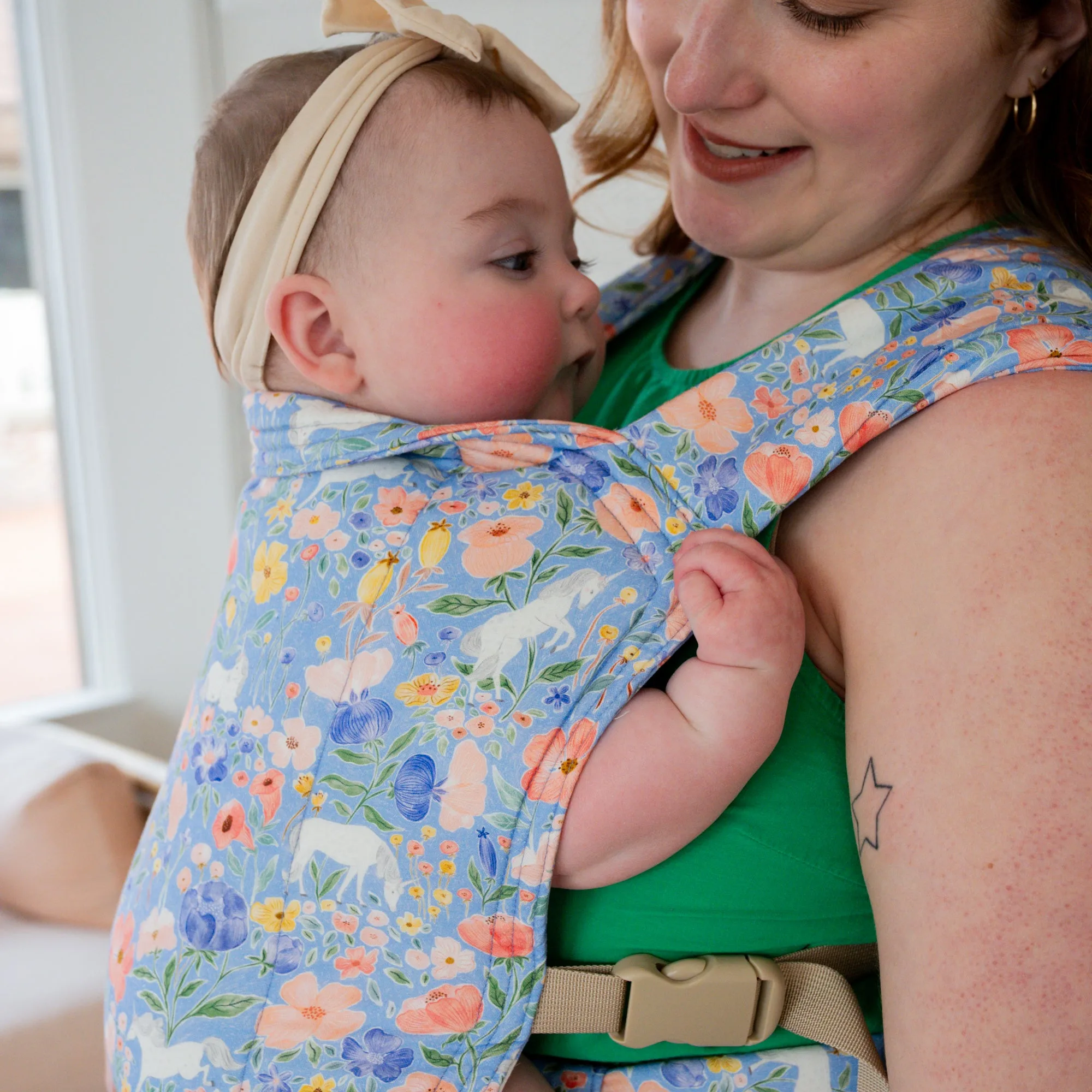
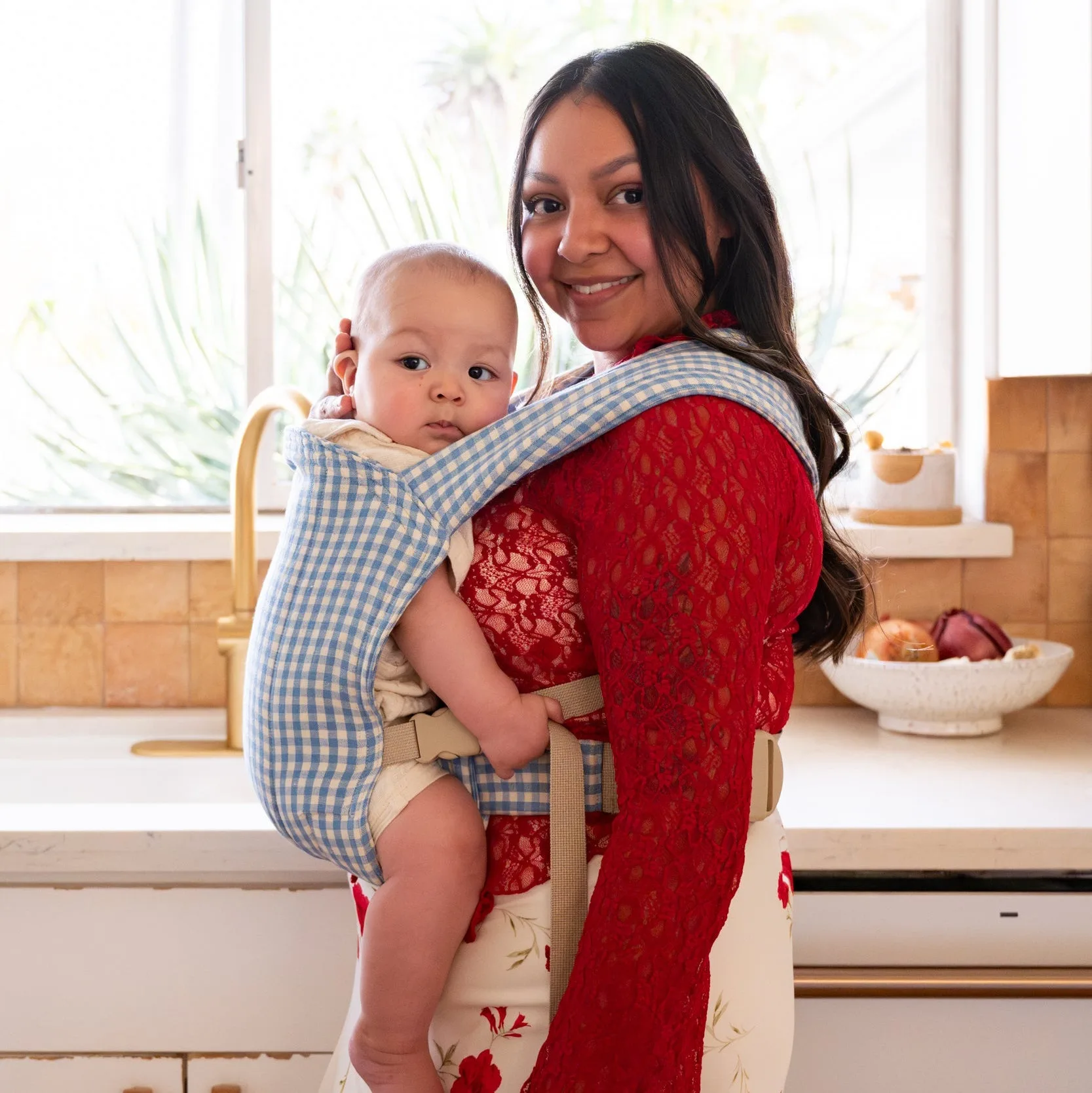
Front carry keeps your baby where you can see and respond to them, which suits quick errands, travel days, and any moment when you want to check positioning without a mirror. The Cove Lark's apron-style waistband adjusts to your torso, and the wide cross-back straps spread weight across your shoulders.
If you are new to the carrier, front carry is the simpler place to start because you can watch the seat and straps as you tighten them. The wide, adjustable seat is built to support a natural hip-healthy seated position, and the record lists front carry as one of the two positions the carrier is made for.
Back carry: when you need your hands and your view
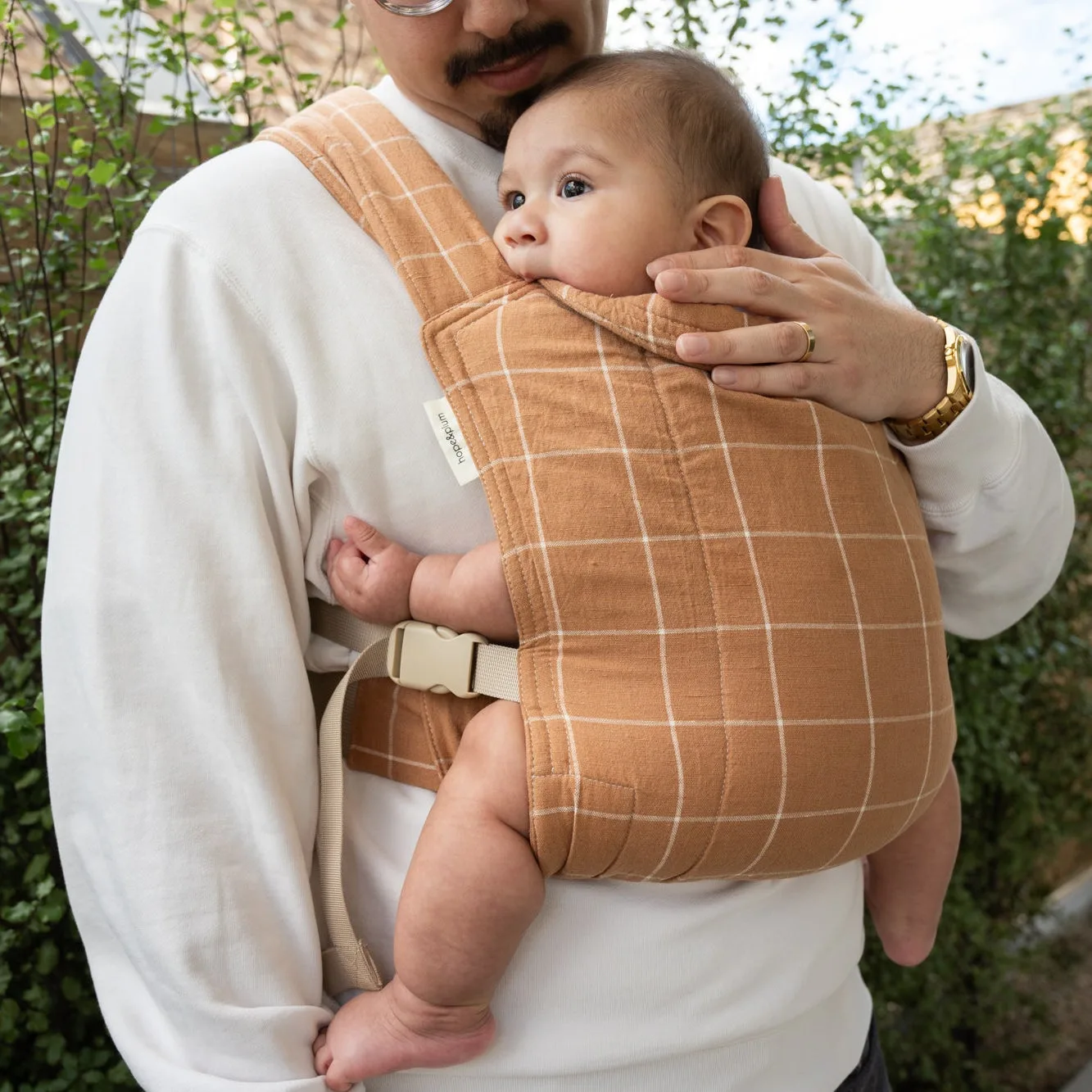
Back carry moves your baby behind you, which frees your front for tasks and changes how the weight sits on your body. The Cove Lark record lists back carry as an option alongside front carry, and the same apron waistband and cross-back straps are part of the design.
The supplied information does not give a specific age or weight at which back carry becomes appropriate, so do not treat a number as a green light. Instead, use the 10–45 lb range as the outer boundary and follow the carrier's own setup guidance for back carry. If you are unsure whether your baby is ready, keep using front carry until you have confirmed the fit.
What the Cove Lark record confirms
-
Cove Lark Baby Carrier: Carries babies from 10 to 45 lbs, starting at size 3-6 month clothing. This is the range that decides whether the carrier fits your baby at all, before you choose a position.
Cove Lark Baby Carrier
-
Cove Lark Baby Carrier: Front and back carry are both listed, with an apron-style waistband and wide cross-back straps. Both positions are supported by the same adjustment system, so your choice can change day to day.
-
Cove Lark Baby Carrier: The wide, adjustable seat supports a natural hip-healthy seated position. Seat support matters in either position, so check it after every switch.
-
Cove Lark Baby Carrier: No infant insert needed. You do not need to add a separate insert before using the carrier within its stated range.
Short or Long: the choice that comes before the carry position
The Cove Lark comes in two lengths: Short, sized for adult clothing XXS through L, and Long, sized for adult clothing XL through 6X. Pick your length first, because a carrier that does not fit your torso will make either carry position feel wrong.
If you are between sizes or unsure which length fits, the record points to a 30-day return policy for exchanges. That makes length the lower-risk decision to settle early, before you spend time fine-tuning front or back carry.
Front vs back carry at a glance
Both positions use the same carrier and the same 10–45 lb range. The differences below come from what the record lists, not from a recommended schedule.
- Front carry: Face-to-face visibility, easier to check the seat and straps as you tighten them, and a natural fit for errands and travel.
- Back carry: Listed as an option for when you want your front clear and your baby behind you; the record does not specify a starting age or weight for it.
- Shared across both: Apron-style waistband, wide cross-back straps, and a wide adjustable seat for a hip-healthy seated position.
When to switch carry positions
Switch when the day changes, not when a milestone arrives. If you are doing close, checkable work such as errands or travel, front carry keeps your baby in view. If you need your hands and your front clear, back carry is the listed alternative.
The record does not give a weight or age at which back carry becomes the better choice, so treat any switch as a fit decision. Check the seat support and strap tension after every change, and go back to front carry if the back carry setup does not feel secure.
Fabric and safety details that apply to every position
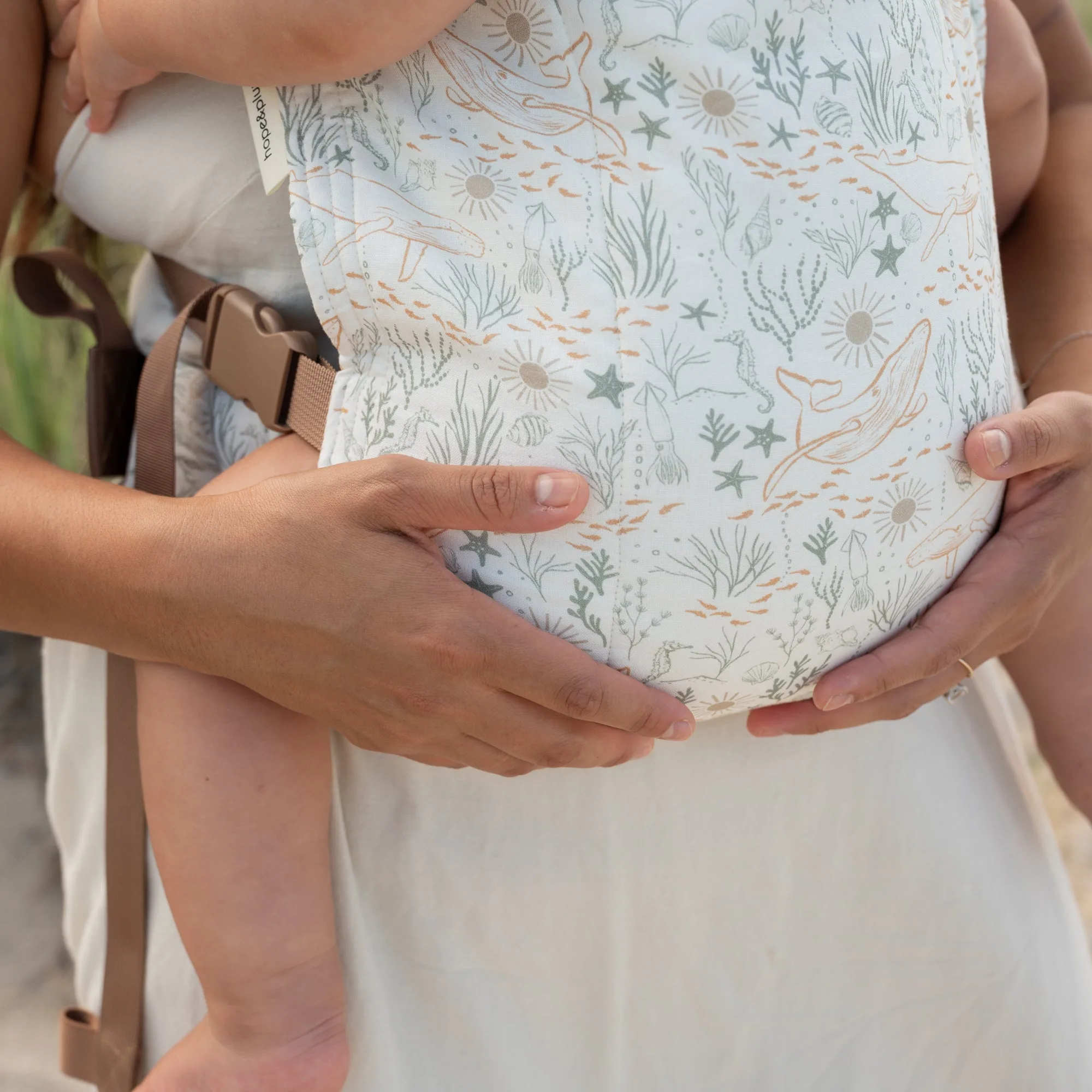
The Cove Lark is made from 55% hemp and 45% organic cotton, with no foam and no synthetic mesh. The natural-fiber construction is described as breathable and softening with every wash, which matters because you will be adjusting the same fabric whether you carry front or back.
The carrier meets ASTM F2236-24 safety standards for structured carriers and is sewn by fairly paid sewing teams in Saint Paul, Minnesota. Those details do not change with carry position, but they are part of what you are buying when you choose the Cove Lark over another carrier.
What the record does not settle
The supplied information does not confirm newborn suitability, safe-sleep or car-seat compatibility, or a specific age for back carry. It also does not give step-by-step operating instructions for either position. Use the carrier within its stated 10–45 lb range and size 3-6 month clothing starting point, and rely on the carrier's own setup guidance for the position you choose.