Quick answer
A CPL (circular polarizer) filter removes glare and boosts color saturation in reflective scenes like water or glass. A UV filter protects your lens front element from dust, scratches, and moisture but has no effect on reflections. Choose a CPL when you need to cut haze or reflections; pick a UV filter for everyday lens protection.
What each filter actually does
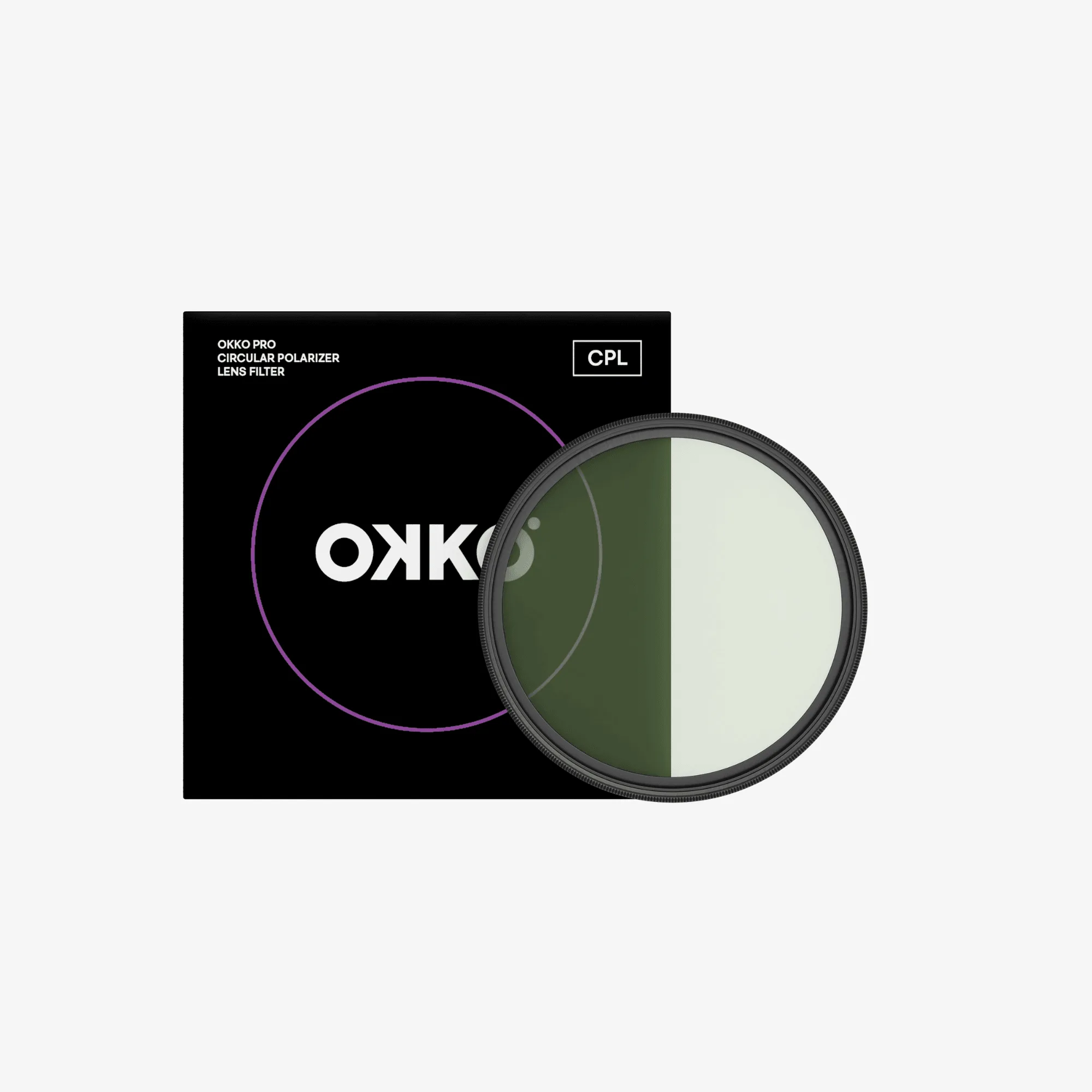
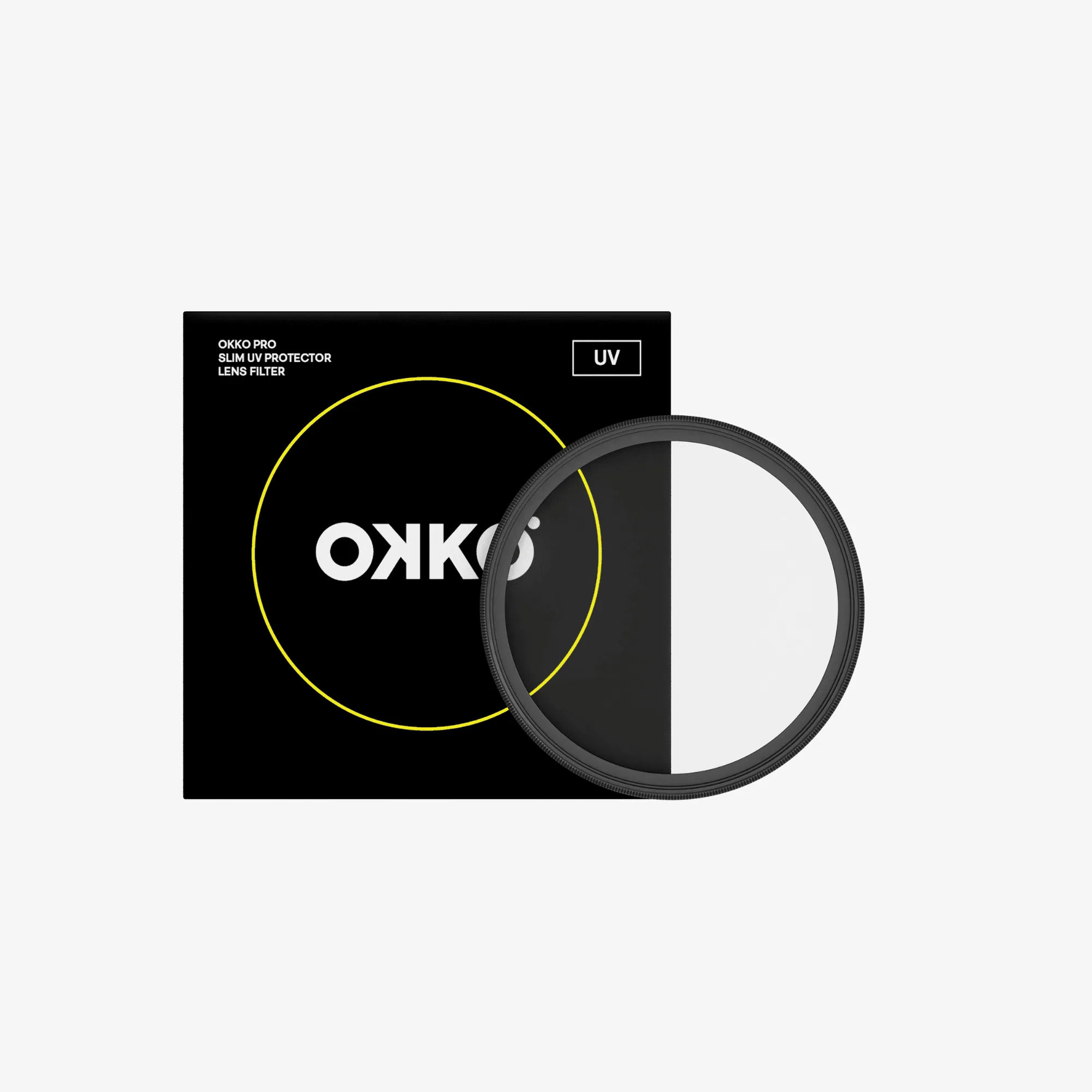
A circular polarizer filter, like the OKKO Pro Circular Polarizer Filter - CPL, is designed to block polarized light that bounces off water, snow, glass, or atmospheric haze. This cuts glare and deepens blue skies and green foliage. A UV filter, such as the OKKO Pro UV Protection Lens Filter, has a different job: it shields your lens from physical hazards like dust, grit, sand, rain, and sea spray while allowing 99.5% light transmission through its German-made Schott glass.
The CPL is an adjustable tool — you rotate the front ring to dial in the exact amount of polarization. The UV filter is a fixed, always-on protector. Neither is inherently better; they serve separate purposes, and many photographers carry both.
Key differences at a glance
The OKKO Pro CPL uses an ultra-slim frame and 2.0mm glass to prevent vignetting on wide-angle lenses, and its 14 anti-reflective coatings maintain image clarity. In contrast, the OKKO Pro UV filter has a 1.1mm ultra-thin profile with 16 layers of Nano coating, maximizing light transmission while adding negligible weight. The UV filter's primary spec is protection, not optical manipulation.
If you shoot landscapes, architecture, or water scenes, the CPL's ability to control reflections and increase contrast will matter more. If you shoot in dusty, coastal, or rainy environments, the UV filter's all-weather protection is the practical choice.
Trade-offs to consider
- Image quality impact: A CPL can slightly reduce light entering the lens (about 1-2 stops), which may require a slower shutter or higher ISO in dim conditions. A quality UV filter like the OKKO Pro is optically neutral with 99.5% transmission, so it barely affects exposure or sharpness. If you shoot in low light often, the UV filter is more forgiving. If you have plenty of light, the CPL's glare control outweighs the small exposure penalty.
- Versatility vs. dedicated protection: The CPL is a creative tool that you'll only use when you want to cut reflections or boost contrast. The UV filter stays on your lens full-time, guarding against physical damage without needing adjustment. For a single-filter kit, consider your most common scene. If you rarely shoot reflective surfaces, the UV filter gives daily peace of mind.
- Cost and build differences: The OKKO Pro CPL is priced at USD 57.60, while the OKKO Pro UV filter costs USD 37.82. Both use quality glass and slim frames, but the CPL's rotating mechanism and extra coatings add to the price. If budget is tight and you need protection first, the UV filter is the more affordable entry point.
Filter facts that matter
- OKKO Pro Circular Polarizer Filter - CPL: Prevent hazy images caused by polarized light reflected from water, snow, glass or water droplets in the atmosphere. The Pro CPL filter eliminates glare and helps you capture rich, clear shots in challenging bright conditions. This means you can shoot through a car windshield or across a lake without unwanted reflections washing out your subject. It also deepens sky and foliage color in-camera, reducing post-processing work.
- OKKO Pro UV Protection Lens Filter: Protect your valuable camera lens’ front element from dust, grit, sand, rain and sea spray. This robust lens filter with all-weather protection is for everyday use in all environments. If you frequently shoot outdoors or near water, a UV filter acts as a sacrificial layer. A scratch or salt spray on the filter is far cheaper to replace than a damaged lens coating.
Which filter fits your style?
Best for
- Landscape and travel photographers who want richer skies and reduced haze
- Shooters who frequently photograph water, glass, or wet foliage and need glare control
Not ideal for
- Photographers who primarily shoot in low-light interiors or at night, where the CPL's light loss is a drawback
- Anyone who only needs lens protection and doesn't require reflection control — a UV filter is the simpler, cheaper choice