Quick answer
Crelly nail polish is a cream-jelly hybrid: it has the pigment of a cream but the see-through, squishy depth of a jelly. Most crellies need two to three thin coats to look even, and they reward thin layers more than thick ones. If you want opaque color, choose a cream; if you want a soft, layered look that shows depth, choose a crelly.
Crelly is one of those polish terms that gets used loosely, so it helps to pin down what it actually means. The word is a blend of cream and jelly, and that is exactly what the finish does: it carries cream-level pigment in a jelly-like base, so color builds gradually instead of covering in one stroke.
That in-between nature is why crelly polish behaves differently from both ends of the spectrum. It is more forgiving than a cream when you are learning to paint with thin layers, and it looks less flat than a jelly because the pigment gives it body. Below are the questions readers ask most about the crelly finish, answered one at a time.
What is crelly polish, exactly?
Crelly polish is a cream and jelly hybrid. The base is translucent like a jelly, but it is loaded with enough pigment that two or three coats read as solid color rather than a wash. You get the depth and glow of a jelly with more coverage per coat than a true jelly typically offers.
The practical result is a finish that looks slightly squishy and dimensional rather than flat. Because the layers stay a little translucent, light passes through them and the color looks deeper at the edges of the nail than at the center. That is the visual signature of a crelly, and it is why the finish is popular for shades with shimmer or flakies suspended inside.
- Think cream pigment plus jelly base, not a watered-down cream.
- Expect visible depth rather than a flat, opaque surface.
Crelly vs jelly: what is the real difference?
The difference is pigment load. A jelly is deliberately sheer and often needs three or four coats before it stops looking like stained glass; a crelly carries more pigment, so it usually reaches even coverage in two to three coats. Both finishes let some light through, which is why they get grouped together.
If you want a true see-through, layered look, go with a jelly. If you want color that reads clearly as the shade in the bottle but still has that translucent glow, a crelly is the better fit. Neither is more advanced than the other; they simply solve different looks.
- Jelly: sheer, buildable, often 3-4 coats.
- Crelly: more pigmented, often 2-3 coats, still translucent.
How many coats does crelly polish need?
Two to three thin coats is the normal range, and the exact number depends on how opaque you want the result. The first coat will look streaky and uneven; that is expected and not a sign of a bad polish. The second coat usually evens out the color, and a third adds depth if you want it.
Resist the urge to load the brush for a faster result. Thick coats of a translucent formula tend to pool at the cuticle, take much longer to dry, and can still look patchy underneath. Thin, even layers dry faster and build a smoother surface.
- Wipe one side of the brush before each stroke to control the amount of polish.
- Let each coat dry to the touch before adding the next.
Do you need a base coat and top coat with crelly polish?
Yes to both, and they do different jobs. A base coat smooths the nail surface and creates a barrier, which matters more with translucent finishes because any ridges or staining underneath can show through the color. A top coat seals the layers and adds gloss, and it also protects the softer jelly-like film from chipping at the tips.
If your crelly contains shimmer, flakies, or glitter, a glossy top coat keeps those particles looking bright rather than dull. One coat of top coat is usually enough; wrap the tip of the nail as you apply it to reduce edge wear.
- Base coat first for an even canvas under translucent color.
- Top coat last to seal and add shine.
Can you layer a crelly over other polishes?
Layering is where crelly polish gets fun. Because the finish is translucent, it works as a tint over a cream or a metallic base, shifting the underlying color without hiding it. A single coat of a crelly over a light base gives a soft, watercolor effect; two or three coats push it closer to the bottle color.
You can also flip the order and put a shifty topper over a crelly. A glitter topper that looks dramatic on a dark base will read more subtly over a lighter crelly, so the base color you choose changes the final look considerably. Test on one nail before committing to all ten.
- One coat over a base color equals a soft tint; more coats equal more coverage.
- Toppers look boldest over dark bases and softer over light ones.
How do you remove crelly polish without a fight?
Crelly polish removes like most standard lacquer, so ordinary remover and a cotton pad are enough. Soak the pad, press it against the nail for a few seconds, then wipe from cuticle to tip in one motion rather than scrubbing back and forth. If the shade has shimmer or flakies, a slightly longer soak loosens the particles so they lift cleanly.
For very glitter-heavy layers, a peel-off base coat underneath makes removal much faster, though it trades some wear time. If your polish has thickened in the bottle over time, a few drops of nail polish thinner restores the working consistency; remover should never be used for that job because it breaks down the formula.
- Press and hold before wiping to avoid staining the skin around the nail.
- Use thinner, not remover, to revive a thickened bottle.
Crelly questions, answered at a glance
What is crelly polish?
A cream and jelly hybrid: pigmented enough to build to even color, translucent enough to keep depth. Pick it when you want glow and dimension, not flat opacity.
Crelly vs jelly
Jelly is sheer and often needs three to four coats; crelly carries more pigment and usually needs two to three. Choose jelly for a stained-glass look, crelly for clearer color with depth.
How many coats
Two to three thin coats, drying between each. Thick coats pool and stay patchy. If coat one looks streaky, that is normal, not a defect.
Base and top coat
Base coat prevents ridges and staining from showing through; top coat seals the softer film and adds gloss. Wrap the tip with top coat to slow edge wear.
Layering
One coat over a base color gives a tint; more coats push toward bottle color. Toppers read bolder over dark bases. Test the combination on one nail before doing all ten.
Removal
Standard remover works. Press, hold, then wipe cuticle to tip instead of scrubbing. Revive a thick bottle with nail polish thinner, never remover.
Crelly-friendly shades worth knowing
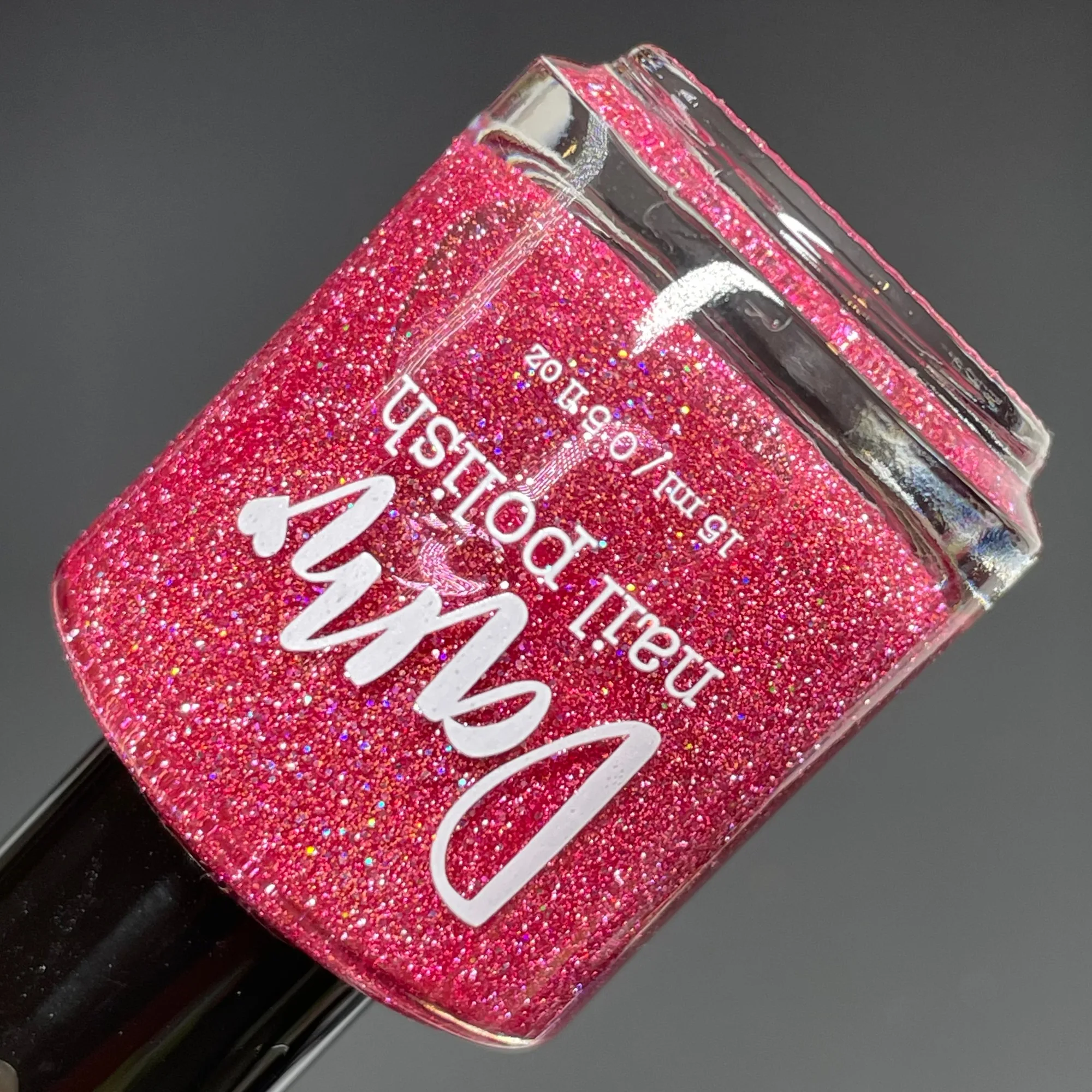
- I Wear My ❤️ On My Nails - Pink Holo Nail Polish - Pink Shimmer Nail Polish - Valentine's Day Duo: A pink-based polish with assorted holographic flakes and a pink, gold, and green shifting shimmer, recommended at two to three coats in a 15ml bottle. The shifting shimmer is the kind of detail that reads best through a translucent finish, so it is a good example of why crelly-style layering appeals to shimmer fans.
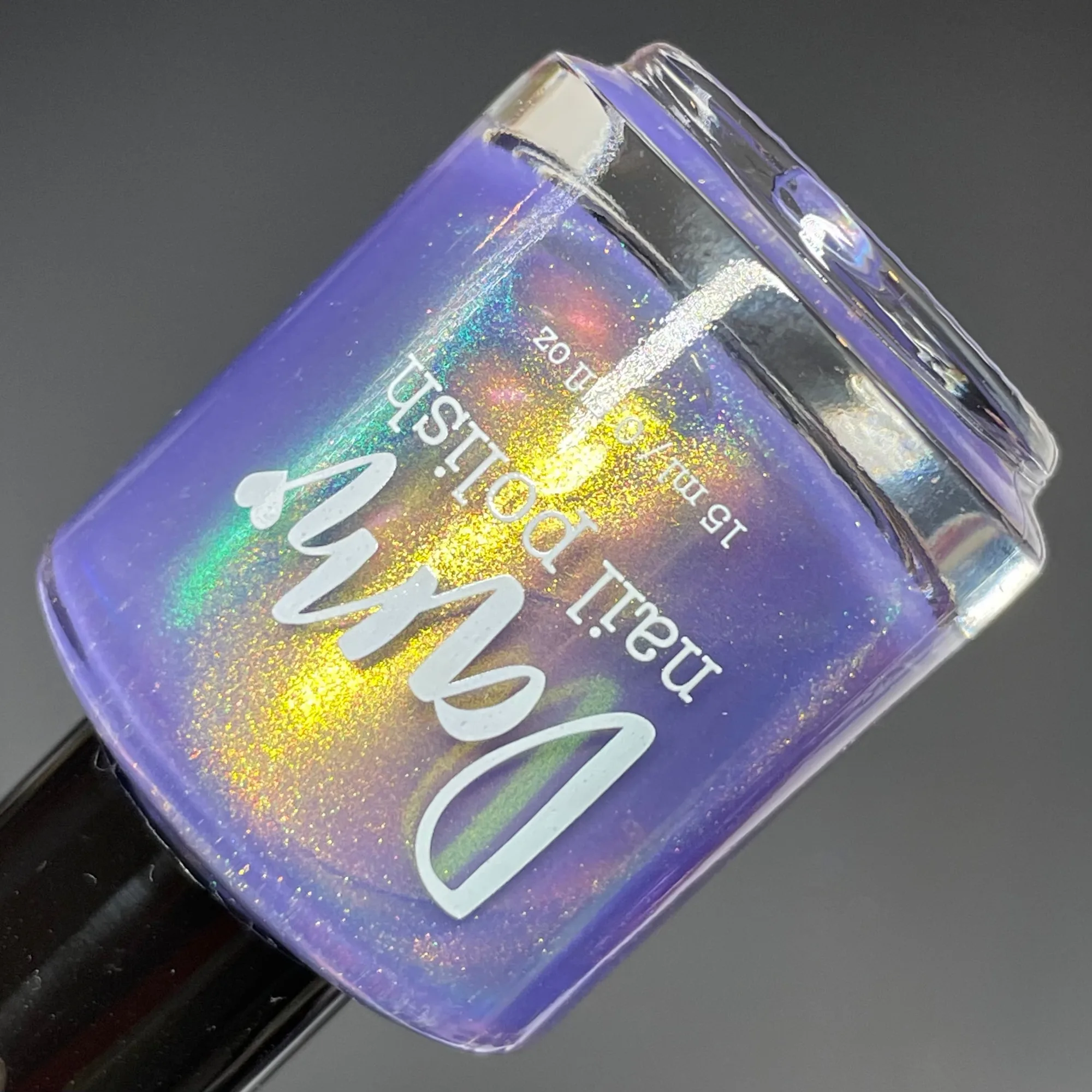
- A Fairy Good Time - Purple Shimmer Nail Polish - The Secret Fairy Garden: A cool-toned purple jelly with gold, green, and blue shifting shimmer, recommended at two to three coats in a 15ml bottle. A jelly base is the closest cousin to a crelly, so comparing the two side by side shows how much pigment load changes the final look.
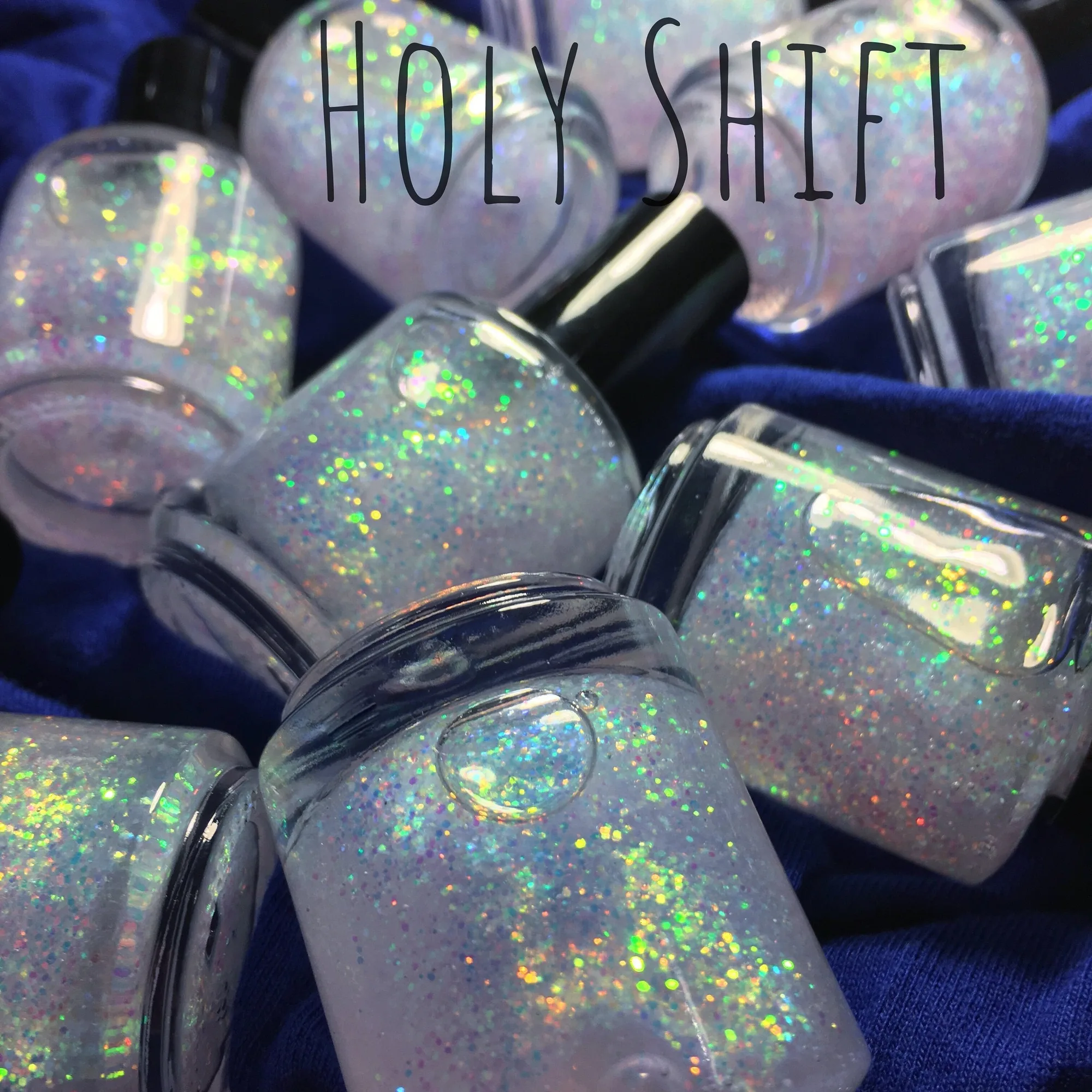
- Holy Shift - Chameleon Glitter Top Coat: A shifty glitter topper that looks gold and green on a dark base and opal on lighter bases, ready in one to two coats, in a 15ml bottle. This is the clearest demonstration that your base color drives the result: the same topper gives two very different effects depending on what sits underneath.
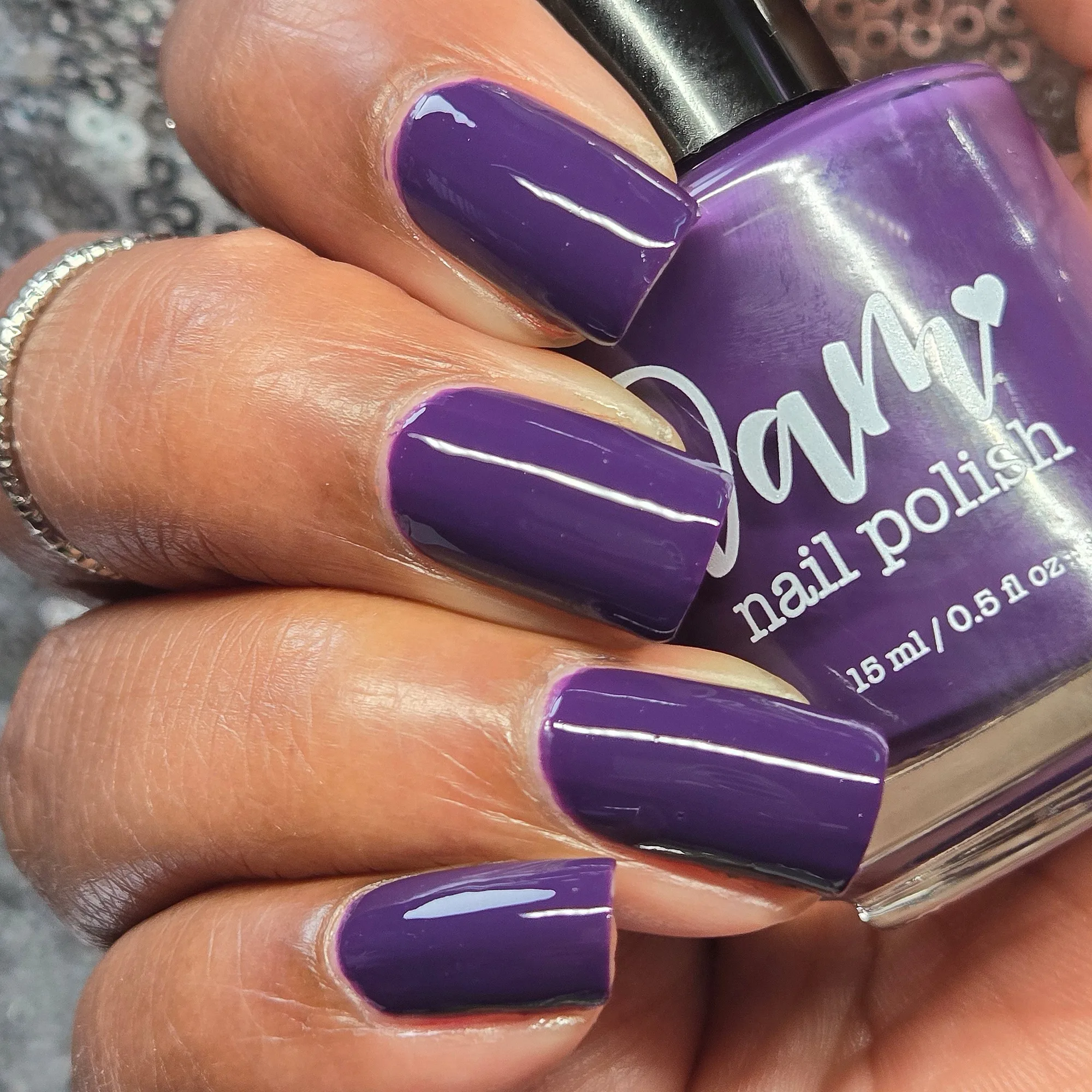
- Big Eggplant Energy - Purple Cream Nail Polish - Fall Nail Polish - Autumn Harvest Creams: An eggplant purple cream polish with a smooth, opaque finish, recommended at two to three coats in a 15ml bottle. A cream is the opacity benchmark, so it is the right choice when you want full coverage rather than the see-through depth a crelly gives.
Crelly polish is less a category to master than a finish to choose on purpose. Reach for it when you want color with depth and a slightly squishy glow, and reach for a cream when you want full coverage in fewer coats. Either way, thin layers and a good top coat do most of the work.