Quick answer
Crew socks offer more coverage and stay-put reliability for active play, while no-show socks provide a cleaner look under shorts or sneakers. For toddlers and younger kids, crew socks are usually the practical choice. Older children who prefer a sporty or minimal look may lean toward no-show styles.
Coverage and comfort differences
Crew socks rise to mid-calf, which means they cover more skin and help prevent blisters from shoe tops. This extra fabric also keeps little legs warm on cooler days. No-show socks sit below the ankle, so they hide inside sneakers and give a sockless appearance. The trade-off is that no-show socks can slip off the heel more easily, especially during active movement.
For toddlers who are still learning to walk or run, crew socks provide a secure fit that stays in place. The higher cuff also protects against scrapes from crawling or low furniture. Older kids who wear sneakers for sports or casual wear may appreciate the invisible look of no-show socks, but they might need to adjust them throughout the day.
Style and outfit pairing
Crew socks are a natural match with joggers, leggings, and boots. They add a visible pop of color or pattern that can complement an outfit. No-show socks work best with shorts, cropped pants, and low-top sneakers where you want the shoe to stand out without visible sock fabric.
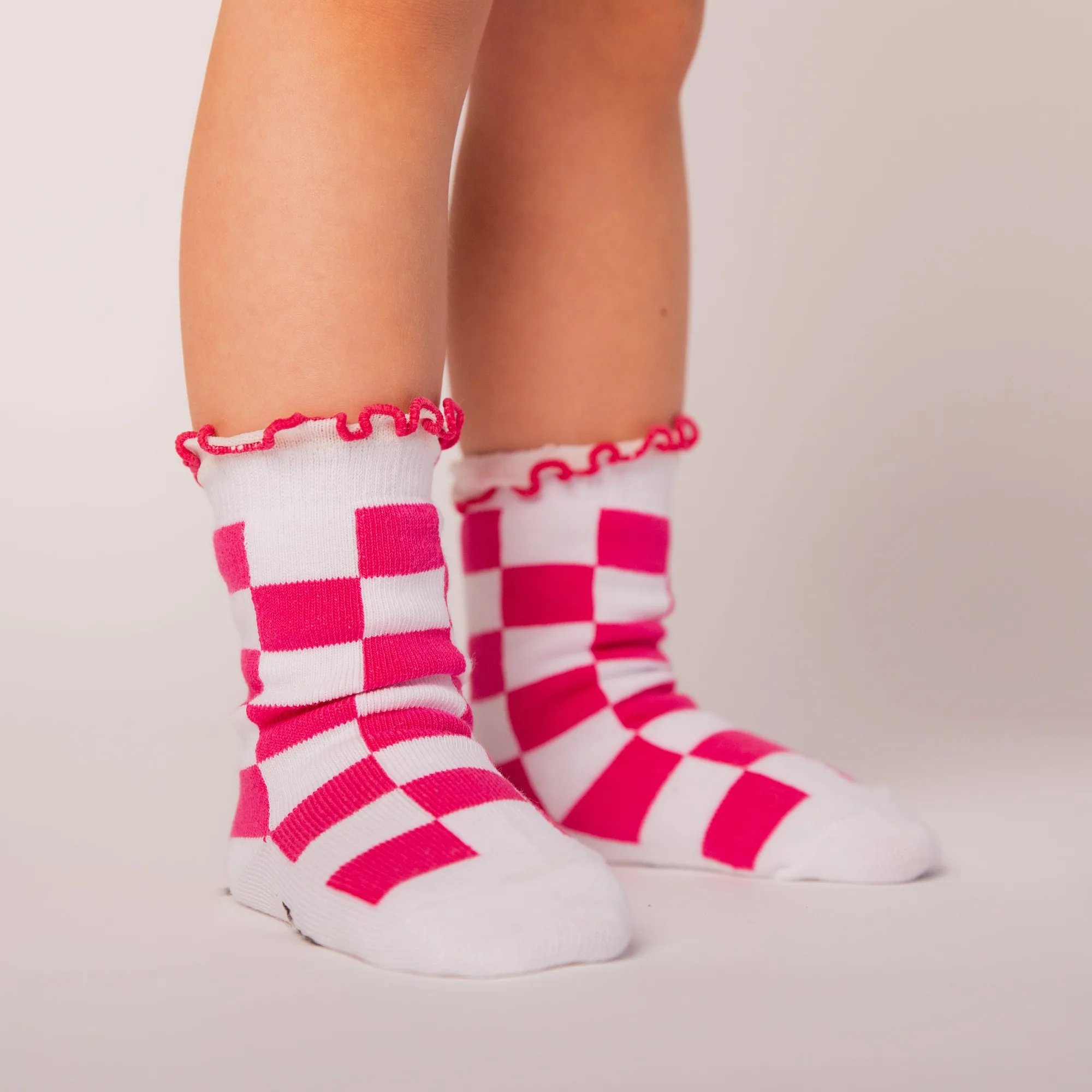
If your child wears a romper or playsuit, crew socks can complete the look with a coordinated print or solid color. For example, a pink check crew sock adds a playful detail under a neutral romper. No-show socks keep the focus on the romper itself, which some parents prefer for a cleaner silhouette.
Sizing and fit considerations
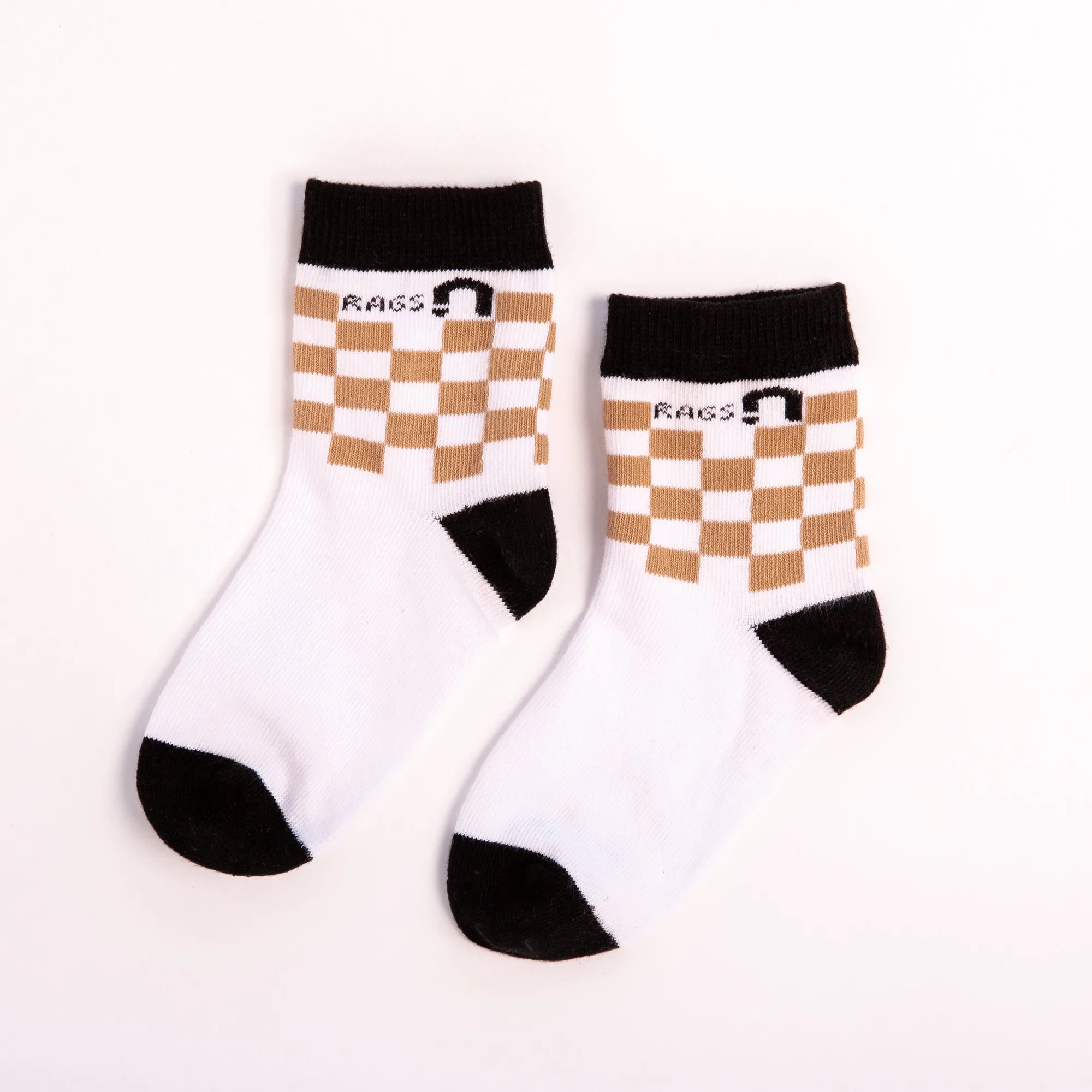
Both crew and no-show socks for kids typically come in size ranges that span multiple years. The supplied crew socks from RAGS are available in sizes 2/3 through 8/12, which covers toddler to pre-teen. No-show socks often have a similar range, but the fit depends more on heel construction and elastic grip.
When choosing, check the size chart for foot length rather than age alone. A sock that is too large will bunch or slip, while one that is too small can leave marks or cause discomfort. Crew socks with a stretchy cuff and reinforced heel tend to stay put better than basic no-show styles.
Crew vs no-show: trade-offs at a glance
- Coverage: Crew socks cover the calf and protect against blisters and scrapes. No-show socks sit low and hide inside shoes. Choose crew for active play and no-show for casual, low-shoe looks.
- Stay-put reliability: Crew socks generally stay in place better because of their higher cuff and longer length. No-show socks can slip off the heel, especially in kids who move a lot. If your child frequently loses socks, crew socks are the more reliable option.
- Style versatility: Crew socks add visible color or pattern to an outfit. No-show socks create a sockless appearance that keeps the focus on shoes or bare legs. Crew socks are great for making a style statement; no-show socks work best for a minimal look.
Product details
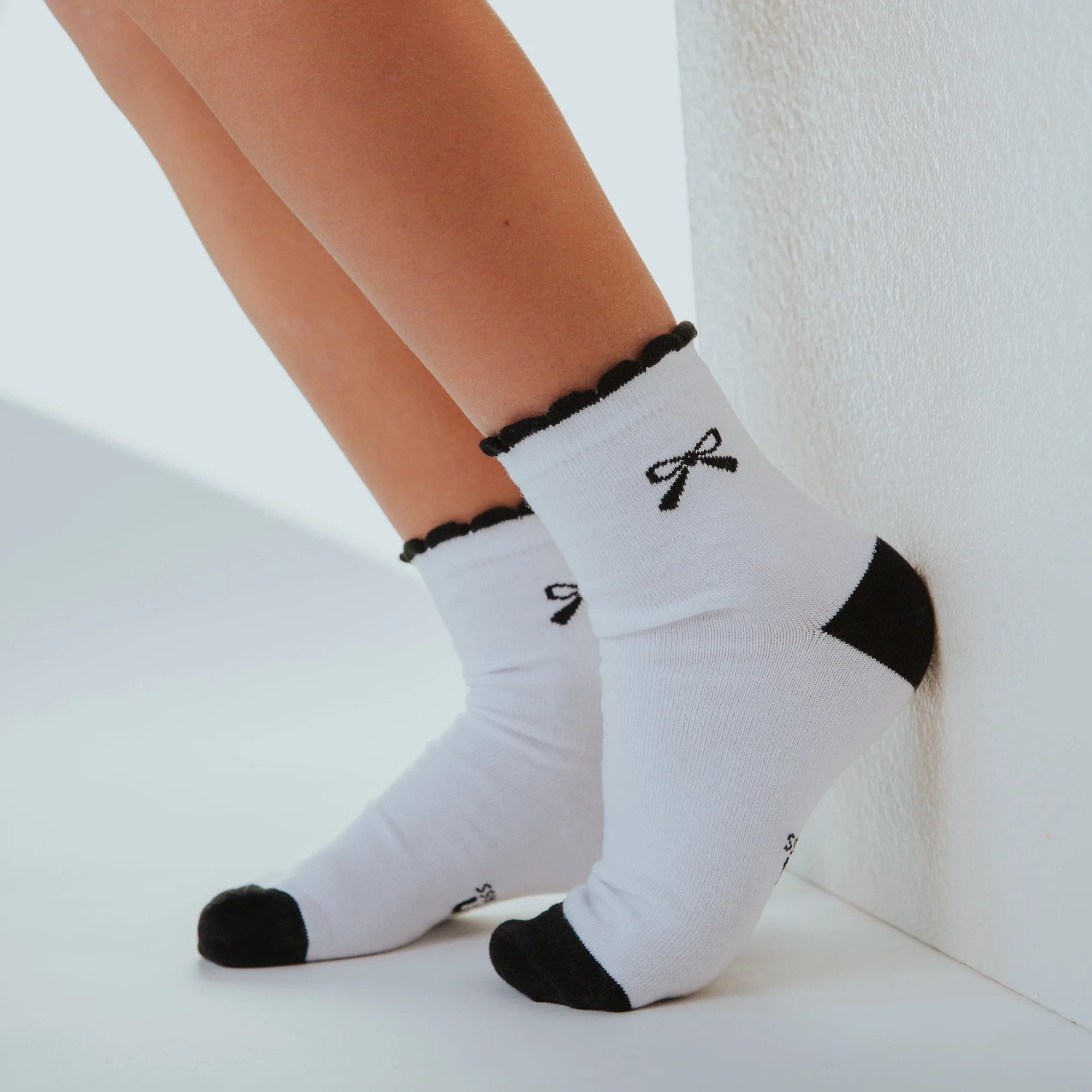
- Crew Socks - Tiny Bow: Introducing our new 'Tiny Bow' crew socks! These socks are not only cute and stylish, but also incredibly comfortable. Available in sizes 2/3 - 8/12. The bow detail adds a decorative touch that pairs well with rompers and dresses, while the size range covers toddler to pre-teen.
- Crew Socks - Pink Check: Introducing our new crew socks in Pink Check! These socks are not only cute and stylish, but also incredibly comfortable. Available in sizes 2/3 - 8/12. The pink check pattern offers a classic, versatile look that matches many outfits, and the same size range makes it easy to stock up for growing kids.
Which sock type fits your child?
Best for
- Toddlers and younger children who need extra coverage and sock stability
- Active play, outdoor activities, and cooler weather
- Outfits with joggers, leggings, boots, or rompers where visible socks are welcome
Not ideal for
- Kids who prefer a sockless look with shorts or low-top sneakers
- Formal or dressy occasions where visible socks might clash
- Very warm weather when minimal coverage is preferred