Quick answer
Buy a criss-cross wireless maternity bra that fits your current band on the middle hook, then plan to remeasure every four to six weeks. A wireless bra relies on band tension and cup coverage rather than underwires, so a band that rides up or cups that cut in are your signal to size up, not to tighten the straps.
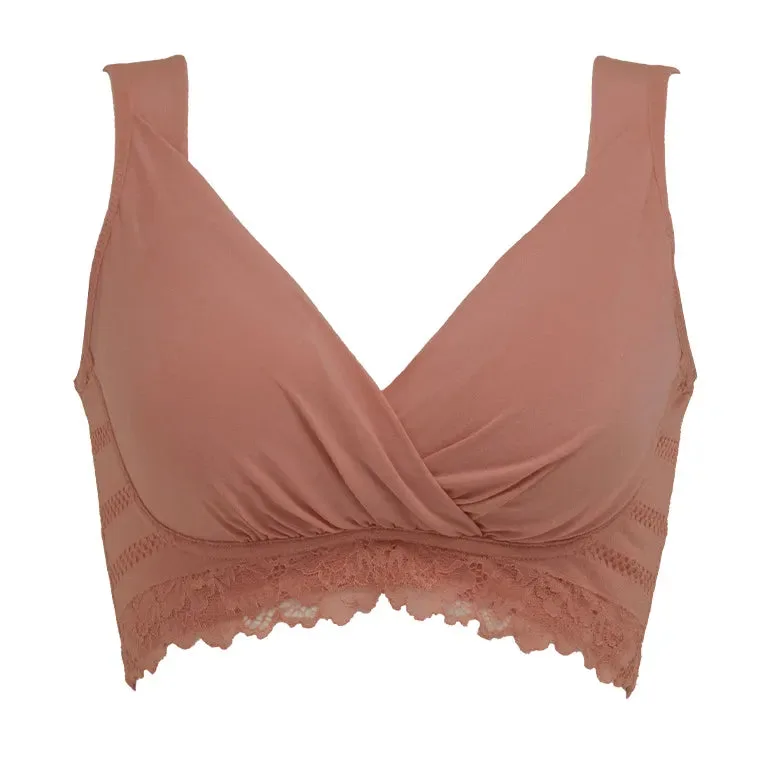
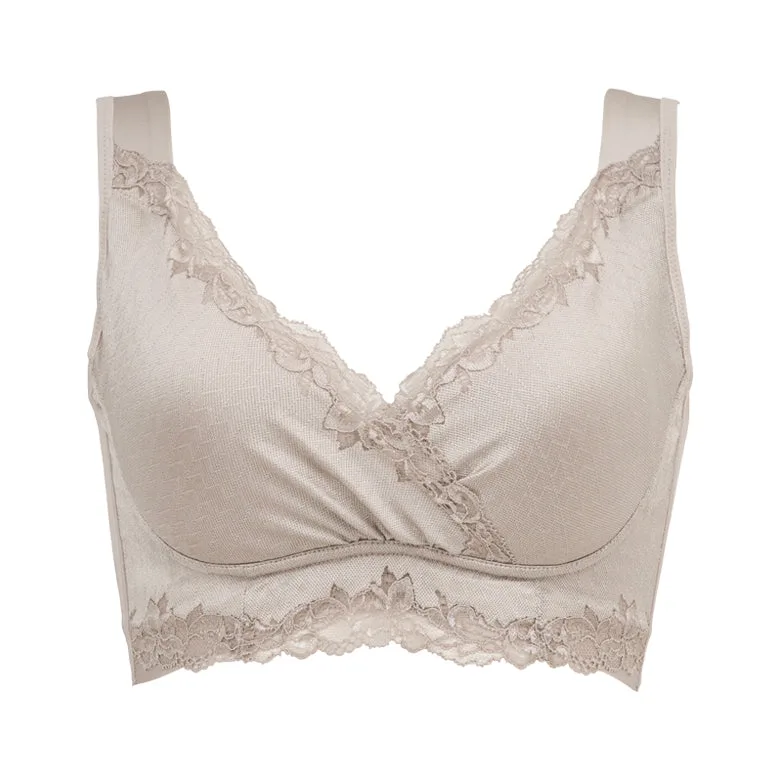
criss-cross wireless maternity bra
Your ribcage can expand several inches during pregnancy, and your cup size often changes faster than your band. A criss-cross wireless maternity bra is designed to flex with both, but only if you treat the fit as a moving target rather than a one-time purchase.
This guide walks through the order of operations: measure, choose the right style for your stage, test the band and cup, and recheck as your body changes. It also covers when a wireless bra is the wrong tool and how to read the fit signals that tell you it is time to size up.
Why a criss-cross wireless maternity bra behaves differently
A wireless maternity bra holds and shapes the bust using the band, the cup seams, and the fabric's stretch rather than an underwire. Criss-cross straps or front panels add another layer of adjustment: they can distribute pressure across the shoulders and create a neckline that works under lower-cut tops. That makes the style forgiving, but it also means the band does most of the work.
Because the band carries the load, a wireless bra that is too loose will slide up in back and let the bust drop forward. A bra that is too tight will dig into the ribcage and feel worse as the day goes on. The criss-cross detail does not fix either problem, so the band fit is the first thing to get right.
- Check the band before you check the straps; a band that rides up cannot be saved by tightening straps.
- Criss-cross straps are a styling and pressure-distribution feature, not a substitute for band support.
Measure at the right time and in the right state
Measure at the end of the day, when your body is at its most expanded, and wear a non-padded bra or no bra. Use a soft tape measure snug around your ribcage directly under the bust for the band, then around the fullest part of your bust for the cup. If the two numbers differ by more than an inch or two from your pre-pregnancy measurement, that is normal and expected.
Do not measure right after a feeding if you are nursing, because the breast is at its emptiest and you will undersize the cup. For the most useful number, measure when you are comfortably full but not engorged. Write the date next to the measurement so you can track the trend rather than guessing.
- Measure at the end of the day, not first thing in the morning.
- Record the date so you can see how fast your size is changing.
Choose the right stage and support level
Maternity and nursing bras are often sold in stages. Step 1 styles tend to be lighter and more about comfort, Step 2 styles add shaping and lift, and Step 3 styles offer firmer support. If you are in the first trimester and your size is still shifting, a lighter wireless style is usually enough. If you are further along or need more lift, a Step 2 wireless or a structured wireless bra will feel more secure.
The tradeoff is real: firmer support usually means more fabric and a slightly warmer feel, while lighter styles are cooler but can feel less secure as you grow. Match the stage to your current body, not to a due date, and expect to move up a stage if your bust becomes heavier.
- Start with the lightest support level that feels secure today.
- Move up a stage if you find yourself pulling the band down or adjusting all day.
Test the band, cup, and straps in that order
Fasten the bra on the middle hook. You should be able to slide two fingers under the band at the back, and the band should stay level all the way around. If it rides up, the band is too loose; if it leaves red marks or you can only take a shallow breath, it is too tight. Next, check the cup: the center front should sit flat against your sternum, and the top edge should not cut into breast tissue.
Finally, adjust the criss-cross straps so they lie flat without digging. You should be able to fit one finger under each strap. If the straps are doing the lifting, the band is too loose or the cup is too small. A wireless bra should feel secure without being tight anywhere.
- Middle hook first; you need room to tighten or loosen as your ribcage changes.
- If the center front floats away from your body, the cup is too small.
Recheck every four to six weeks
Pregnancy size changes are not linear. Many people gain a band size in the first trimester, then another later, while cup size can jump faster. Set a reminder every four to six weeks to redo the band and cup check. If the band is on the tightest hook and still loose, or the cups spill or gape, it is time for a new size.
If you are nursing, also check the bra after a feeding. A cup that fits when full may gap when empty, and a cup that fits when empty may cut in when full. The goal is a fit that works across the range, which often means a slightly stretchier cup or a style with more give.
- Put a recurring reminder in your phone; do not rely on noticing discomfort.
- Keep one bra in your current size and one in the next size up if you are changing quickly.
Know when wireless is not the right answer
Wireless bras are comfortable and forgiving, but they are not the best choice for every body or every activity. If you have a heavy bust and need maximum lift, a well-fitted underwire may support you better, provided it sits on your ribcage and not on breast tissue. If you are between sizes or your size is changing weekly, a wireless style is usually the more practical bridge.
The honest tradeoff is that wireless bras can feel less lifted and may create a softer silhouette under fitted clothing. If that matters for a specific outfit, choose a molded wireless style with a smooth cup rather than a lace or seamed cup.
- Wireless is a fit strategy, not a rule; choose it when comfort and flexibility matter most.
- For smoothness under knits, look for a molded cup rather than an unlined lace cup.
Your step-by-step maternity bra fit check
- Measure and record: Measure band and bust at the end of the day, note the date, and compare to your last measurement. Checkpoint: if the band changed by more than an inch, expect to resize.
- Pick your stage: Choose a light, medium, or firm support level based on how secure you feel today, not on your due date. Checkpoint: if you adjust all day, move up a support stage.
- Fasten on the middle hook: The band should sit level and allow two fingers underneath at the back. Checkpoint: riding up means too loose; red marks mean too tight.
- Check the cup: The center front should lie flat and the top edge should not cut into breast tissue. Checkpoint: floating center front or spillage means size up the cup.
- Adjust criss-cross straps last: Straps should lie flat with one finger of slack and should not be doing the lifting. Checkpoint: if straps dig, fix the band or cup first.
- Recheck every four to six weeks: Redo the band and cup check on a schedule, and keep a next-size-up bra on hand if you are changing quickly. Checkpoint: tightest hook plus loose band equals time to resize.
Wireless and shaping options that fit the maternity brief
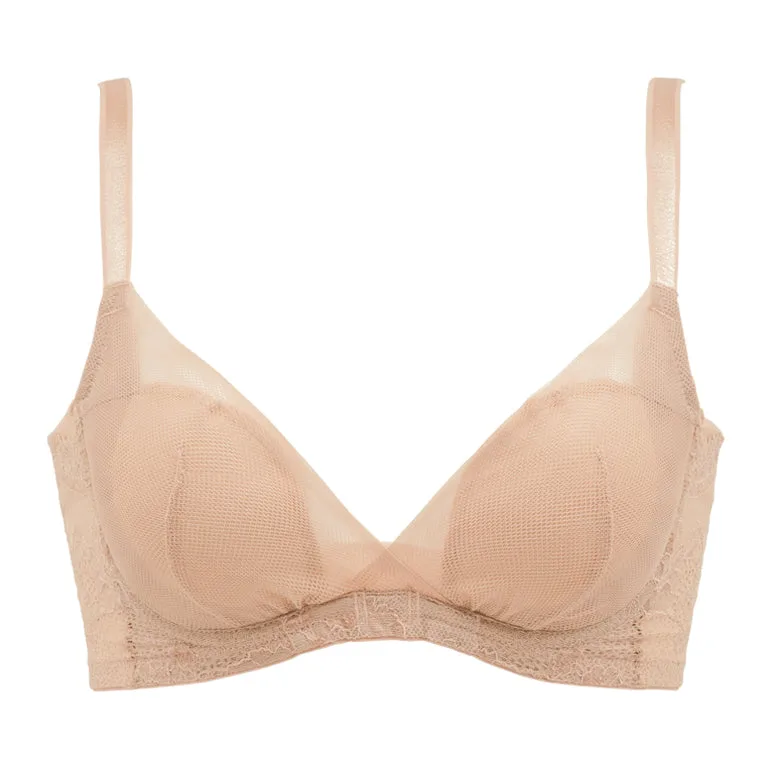
- Smooth Lace Wireless Shaping Bra 25: Full-cup design with arch panel technology and a Beauty Wave Cup, plus smooth molded cups and built-in bust lifting. The full-cup coverage and molded cup give a clean line under clothes, while the wireless construction avoids underwire pressure as your ribcage expands.
- Nudy Molded Cup Light Shaping Bra 24S1: L-shaped wires and lift panels on both sides provide firm support while reducing pressure for those sensitive to wires. If you want more lift than a pure wireless bra but still need pressure relief, this is a middle path worth trying before you commit to a full underwire.
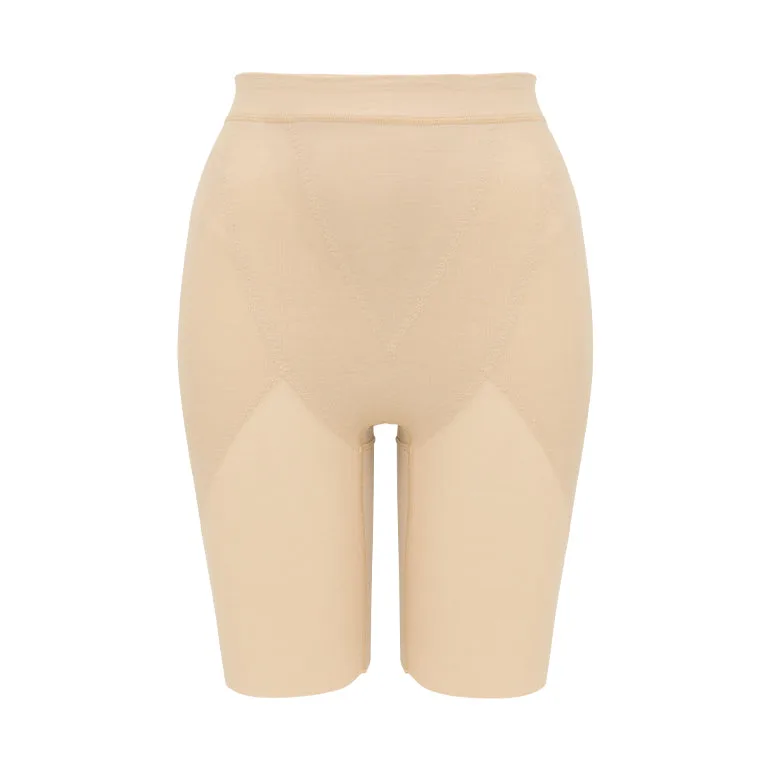
- Momo Perfect Shaping Girdle: Patented 3D construction with layered two-way stretch panels and precision-cut edges to prevent binding and bunching. Postpartum or later pregnancy, a girdle with non-binding edges can smooth without rolling, which matters when you are already adjusting to a changing torso.
A criss-cross wireless maternity bra works best when you treat fit as a process, not a purchase. Measure on a schedule, fasten on the middle hook, and let the band and cup tell you when to size up. If you want a smoother line under clothes, start with a molded wireless style; if you need more lift, try a light-shaping option with pressure-relieving wires before committing to a full underwire.