Quick answer
No, cut cards are not required for bridge, but they can help keep your score sheets organized and visible at a busy table.
Myth: Cut cards are mandatory for bridge
Some players assume cut cards are a rule in bridge, like in poker. In fact, bridge rules do not mandate a cut card. The cut card's traditional role in card games is to prevent a player from seeing the bottom card of the deck, but in bridge, the deck is typically shuffled and dealt without one.
Reality: Cut cards serve a different purpose at bridge tables
At a bridge table, cut cards are more often used as scorekeeping aids. A wide, brightly colored cut card can mark your place on a score sheet or tally card, making it easy to find the right row during fast-paced play. This is especially helpful in duplicate bridge where multiple scores are recorded on one sheet.
Trade-off: Extra item vs. convenience
Adding a cut card to your bridge kit is a small expense for the convenience of not losing your spot on a score sheet. However, if you prefer a minimalist setup or use digital scoring apps, you likely won't miss it. The choice comes down to personal preference and how you track scores.
Verdicts on common cut card myths
- Myth: Cut cards are required by bridge rules: Bridge rules do not require a cut card. The deck is dealt directly after shuffling.
- Myth: Cut cards are only for poker: While poker uses cut cards to protect the deck, bridge players use them as scorekeeping markers.
- Myth: You need a cut card for every player: One cut card per table is enough. A set of four covers multiple tables or provides spares. If you play bridge socially, a single wide red cut card can make score tracking easier.
Product facts
-
Cut Cards: Wide Size, Red (Set of 4): Set of 4 wide-size cut cards in red for easy visibility. The red color stands out on a score sheet, helping you quickly find your place without squinting.
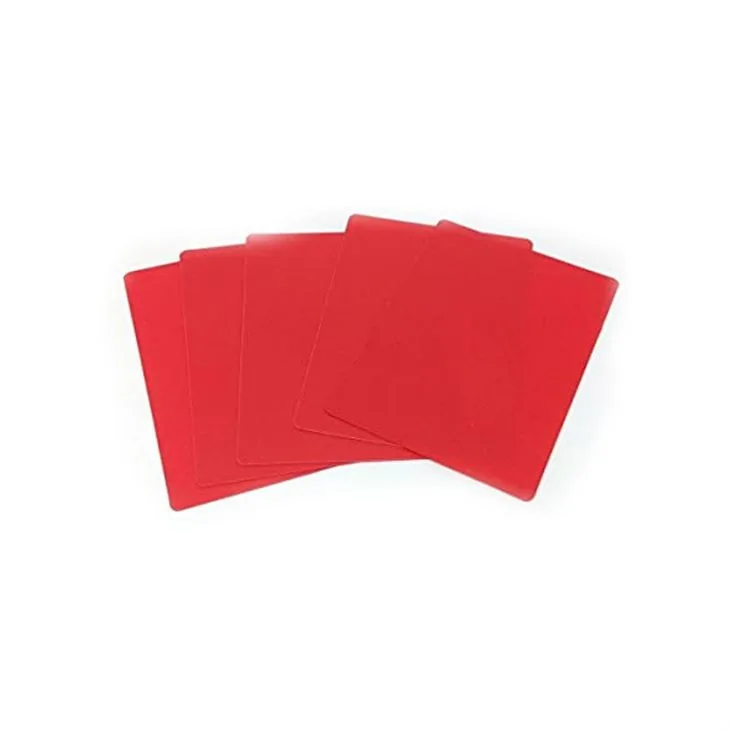
Cut Cards: Wide Size, Red (Set of 4)