Quick answer
Start with the Cutting Fruits set if your toddler is 18 months or older and ready to practice slicing motions; choose the Picnic Basket first if your child is younger or more interested in open-ended role play and social scenarios.
Why the order matters
Both toys support pretend play and fine motor development, but they target slightly different stages. The Cutting Fruits set focuses on a specific, repeatable action—slicing—that builds hand strength and coordination. The Picnic Basket, by contrast, offers a broader narrative: packing food, setting out utensils, and sharing a meal. Introducing the more structured toy first can give your toddler a clear skill to master before moving to open-ended storytelling.
What each toy teaches
The Cutting Fruits set (22 × 15 × 2.5 cm) is compact and table-friendly, making it ideal for focused practice. The safe wooden knife and fruit pieces encourage repetition of a precise hand motion. The Picnic Basket (22 × 15 × 25 cm) is larger and includes multiple pieces, which invites sorting, matching, and cooperative play. Its size also makes it a more immersive prop for group play or solo storytelling.
Trade-offs to consider
- Skill focus: Cutting Fruits teaches a single, repeatable slicing motion that builds hand strength and precision. The Picnic Basket spreads skill development across multiple actions (packing, pouring, serving). Choose Cutting Fruits if you want a concentrated fine motor challenge; choose Picnic Basket for a broader skill mix.
- Play style: Cutting Fruits works best as a solo or parallel-play activity. The Picnic Basket naturally invites two or more children to share roles and negotiate a meal scenario. Pick Picnic Basket if your toddler has a playmate or sibling; Cutting Fruits suits independent exploration.
- Portability and storage: The Cutting Fruits set is compact (22 × 15 × 2.5 cm) and stores flat. The Picnic Basket is taller (22 × 15 × 25 cm) and includes loose pieces that need a container. Cutting Fruits is easier to pack for outings; Picnic Basket stays home but offers a more immersive setup.
Product facts at a glance
-
Cutting Fruits: This wooden Cutting Fruits set lets kids slice colorful fruits with a safe wooden knife, promoting hand-eye coordination and fine motor skills. The slicing action isolates a specific fine motor skill, making it easier for toddlers to practice and master one movement before moving to more complex pretend play.
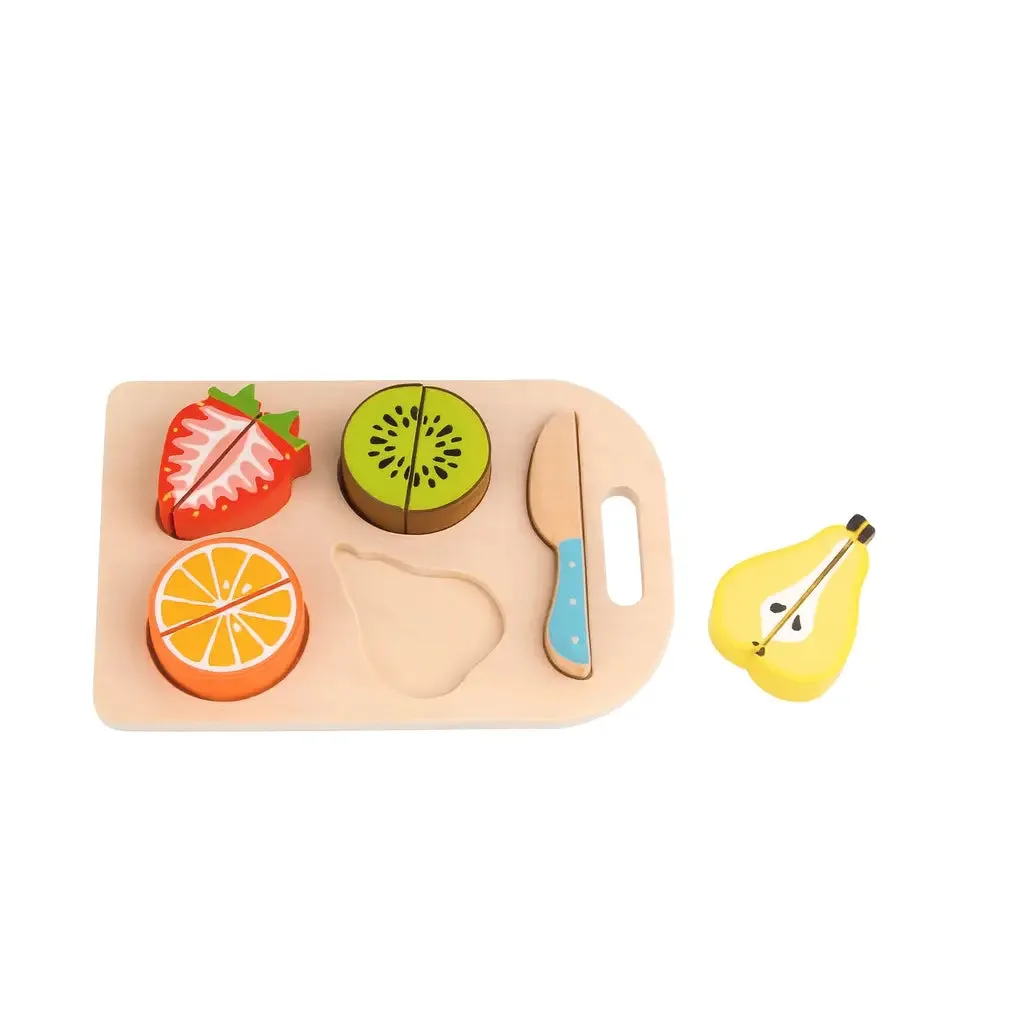
Cutting Fruits
-
Picnic Basket: This wooden toy picnic basket inspires imaginative play and hands-on learning with colorful food pieces and utensils, encouraging creativity, fine motor skills, and pretend play. The multiple pieces and basket format naturally lead to sorting, sharing, and storytelling—ideal for developing social skills and language through role play.
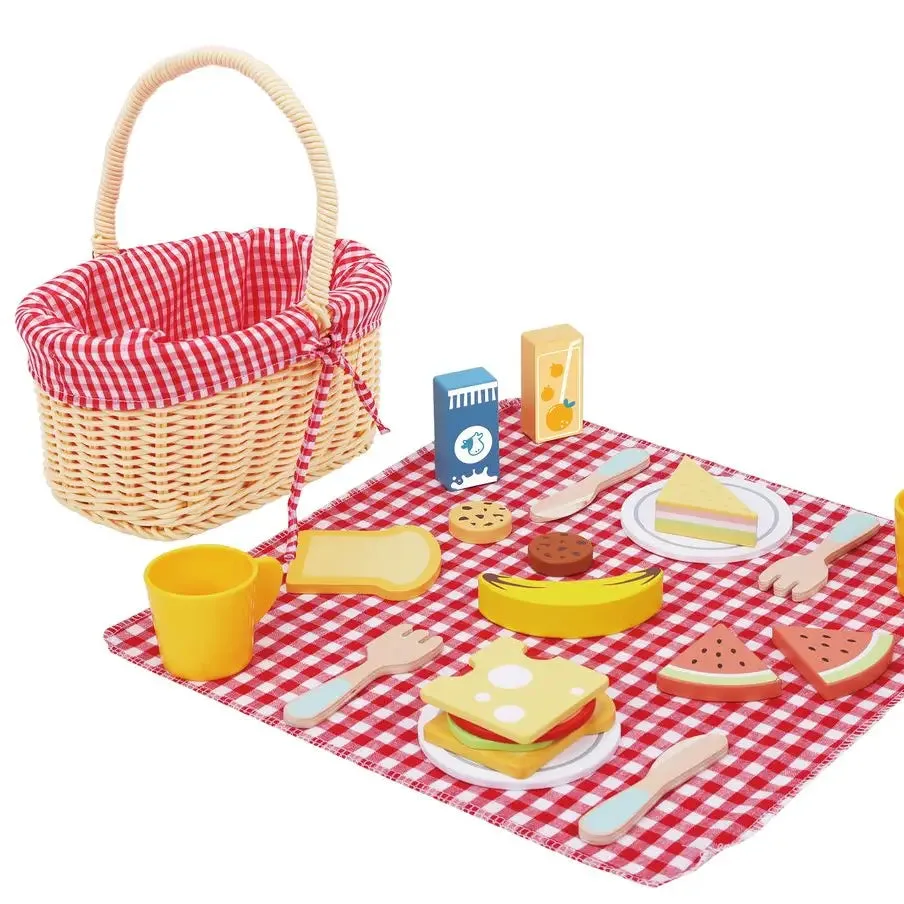
Picnic Basket
Which one fits your toddler?
Best for
- Toddlers 18+ months who enjoy repeating a single action and are ready for a focused fine motor challenge (Cutting Fruits)
- Children who love open-ended role play and social scenarios with multiple characters (Picnic Basket)
Not ideal for
- Younger toddlers (under 18 months) who may not have the hand control for the slicing motion (choose Picnic Basket first)
- Families with very limited shelf or floor space who prefer a single, compact toy (Cutting Fruits is the better fit)