Quick answer
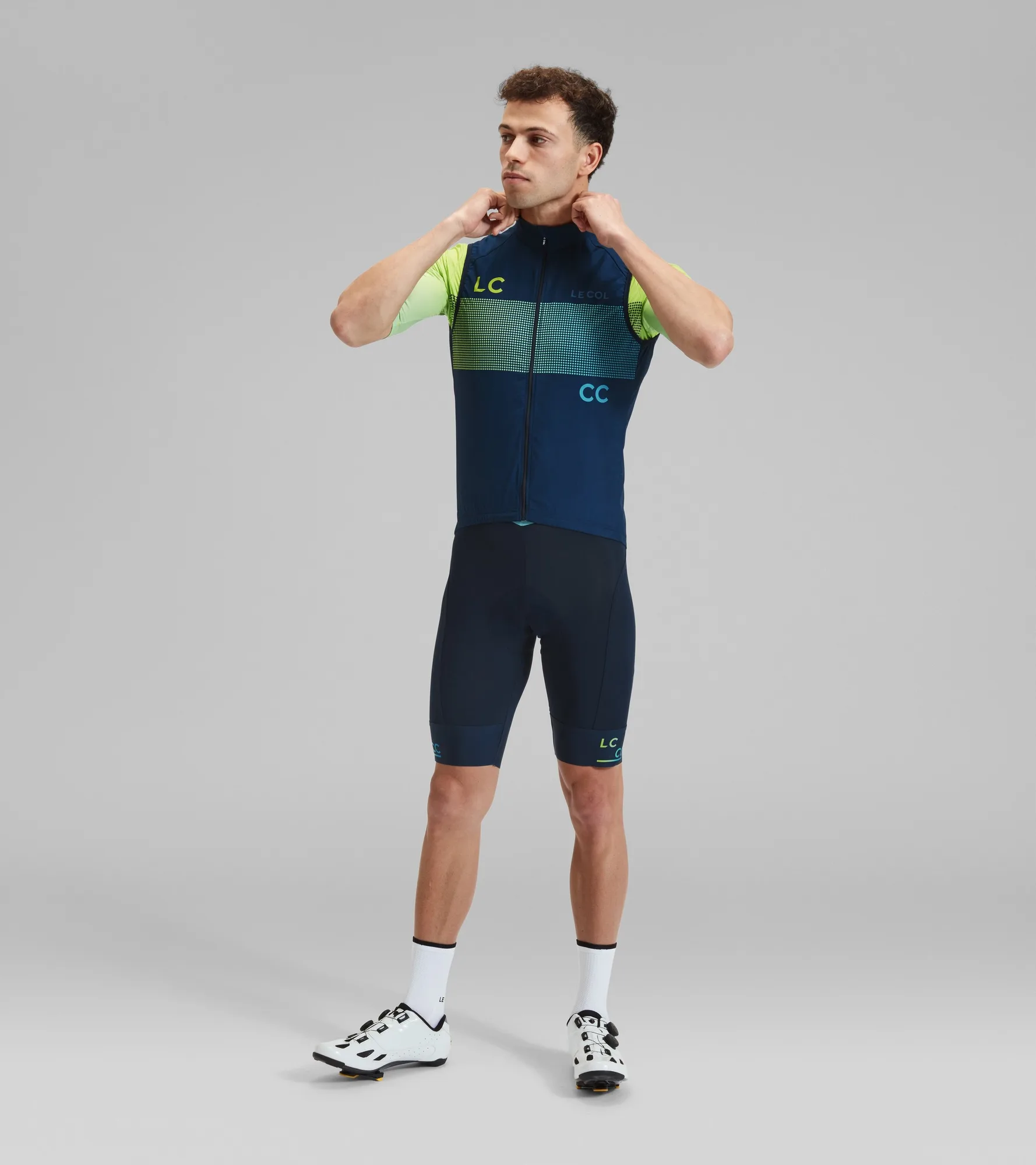
A cycling gilet is the right choice when your core needs wind protection but your arms don't need full coverage—typically in mild-to-cool conditions, on variable rides, or as a packable emergency layer. If you ride in sustained rain or near-freezing temperatures, a jacket like the Pro Rain Jacket II or Women's Hors Categorie Jacket will serve you better. For most everyday riding, start with a windproof, packable gilet such as the LC__CC Sport Gilet.
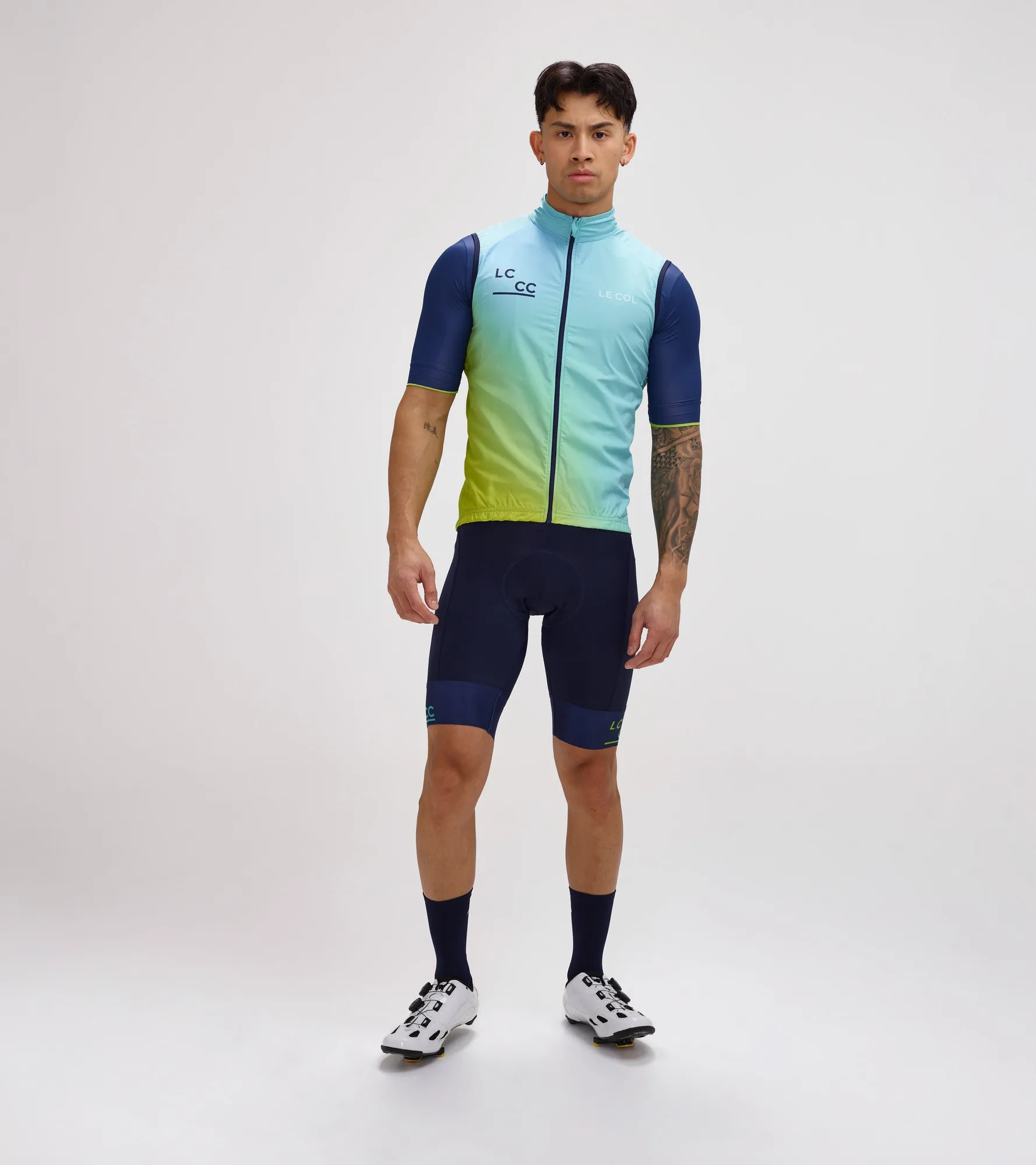
LC__CC Sport Gilet
What a gilet actually does (and what it doesn't)
A gilet is a sleeveless outer layer that targets wind and light rain protection to your core while leaving your arms free to regulate their own temperature. That's the key difference from a jacket: your arms stay cooler, which is often exactly what you want when the temperature is borderline or your effort level fluctuates. The trade-off is obvious—your arms get no wind or rain protection, so in cold headwinds or persistent rain you'll notice the difference immediately.
Most gilets use a tightly woven or membrane fabric on the front and shoulders, with more breathable panels elsewhere. The LC__CC Sport Gilet, for example, uses a showerproof and windproof fabric across the core with mesh panels at the sides and rear for ventilation. That combination is what makes a gilet comfortable across a wide range of conditions rather than just one narrow window.
When to wear a cycling gilet (and when to reach for a jacket)
Use a gilet when the temperature sits roughly in the mild-to-cool range, when conditions change over the course of a ride, or when you run warm and overheat in a full jacket. It's also the ideal layer for long descents or early starts where you want protection you can remove and stash once you warm up.
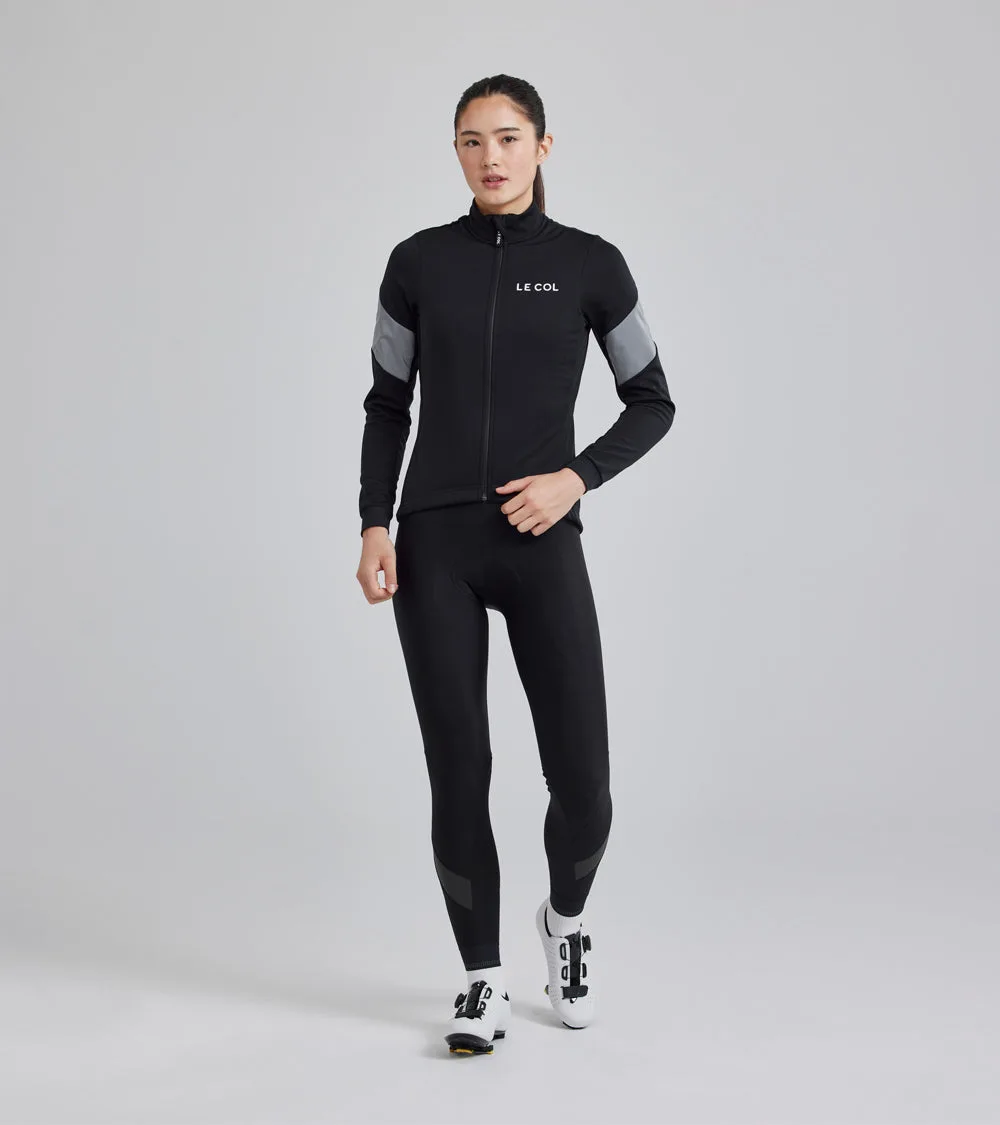
Switch to a jacket when rain is sustained rather than showery, when temperatures drop toward freezing, or when you know you'll be exposed to wind for hours without a chance to change layers. The Women's Hors Categorie Jacket is engineered as Le Col's warmest winter jacket and uses Polartec® fabrics for consistent warmth without overheating—a different job entirely from a gilet. The Pro Rain Jacket II is the faster, rain-focused option, built for elite-level waterproof protection and breathability in a pro fit.
Packability: the feature that changes how often you use it
A gilet you can fold into a jersey pocket is a gilet you'll actually carry. If a gilet is too bulky to stash, you'll leave it at home and get caught out. Look for a lightweight construction and check whether it compresses small enough for your pocket or saddle bag.
The LC__CC Sport Gilet is designed as a packable layer that's lightweight and protective, which is why it works as an everyday training piece rather than a special-occasion item. If you ride in changeable conditions, packability matters more than any single fabric claim.
Fit and sizing: how a gilet should sit
A gilet should fit close to the body without restricting breathing or bunching at the front when you're in the drops. It needs to sit smoothly over your jersey and any base layer, but not so loose that it flaps in the wind—flapping fabric defeats the purpose of a windproof layer.
Check the front hem length: it should cover your core when you're stretched out on the bike, not ride up. The rear should drop lower to protect your lower back from road spray. If you plan to wear a gilet over a thick winter jersey, size up; if it's for summer mornings over a lightweight jersey, stay with your usual size. Le Col gilets are available in Size and Colour options, so you can dial in both fit and visibility.
Small accessories that extend a gilet's range
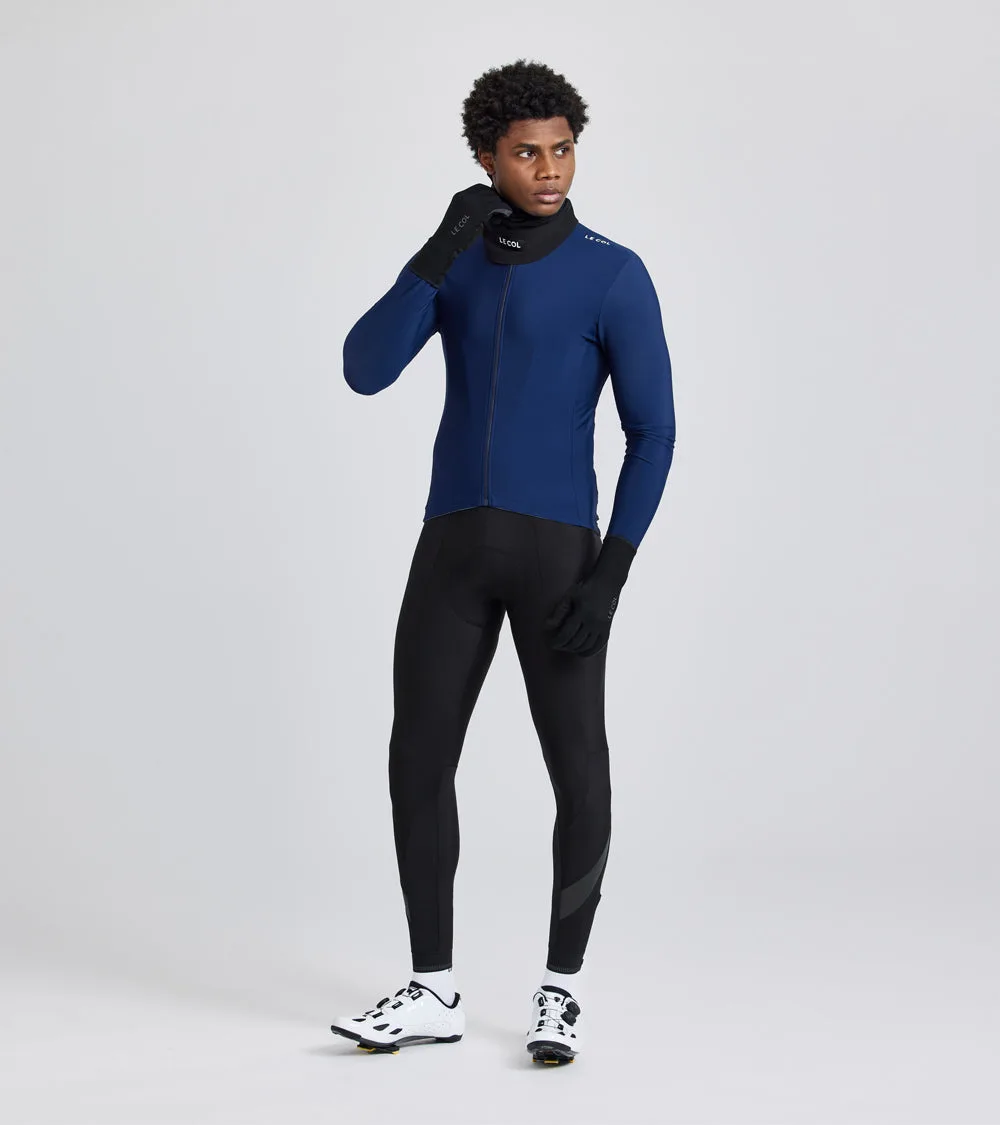
A gilet leaves your neck and head exposed, which is where a lot of heat escapes. A neck warmer like the Le Col Cycling Snood locks in body warmth and can be pulled up over your head in different ways as conditions change. It's a small addition that makes a gilet viable in colder conditions than you'd otherwise manage.
Pair a gilet with a good base layer and you can cover a surprisingly wide temperature range without switching to a full jacket. The snood is shaped to your body with rear seams and raw cut edges to reduce irritation—details that matter when you're wearing it for hours.
Decision rules: gilet or jacket?
- Mild, variable conditions: If the temperature is cool but not cold and you expect to warm up as you ride, choose a windproof, packable gilet like the LC__CC Sport Gilet. You can remove it and stash it once you're warm.
- Sustained rain or strong cold wind: If rain is persistent or you'll be exposed to cold wind for hours, choose a jacket such as the Pro Rain Jacket II for full-arm waterproof protection. A gilet leaves your arms exposed, which becomes a real problem in these conditions.
- Deep winter or near-freezing temperatures: If warmth is the priority rather than just wind blocking, choose an insulated winter jacket like the Women's Hors Categorie Jacket. A gilet is a wind layer, not a warmth layer.
- Rides where conditions change: If you start cold and finish warm, or face long descents, carry a packable gilet and add a snood for neck and head warmth. Layering flexibility beats a single heavy layer.
Key products for gilet weather
- LC__CC Sport Gilet: The LC__CC Sport Gilet is Le Col's most popular cycling gilet for everyday riding and training, using a tightly woven showerproof and windproof fabric with mesh panels across the sides and rear. This is the gilet to start with if you want one layer that handles wind, light rain, and changing effort levels without overheating.
- Pro Rain Jacket II: The Pro Rain Jacket II is Le Col's fastest rain jacket, built for elite-level waterproof protection, effective breathability, and a pro fit. Choose this instead of a gilet when rain is sustained and you need full-arm protection, not just core coverage.
- Womens Hors Categorie Jacket: The Women's Hors Categorie Jacket is engineered as Le Col's warmest winter jacket, combining Polartec® fabrics for consistent warmth and reliable protection without overheating. This is the right layer for deep winter or near-freezing rides where a gilet alone won't keep you warm enough.
- Snood: The Le Col Cycling Snood keeps body warmth locked in and can be extended over the head in various ways as temperatures and intensity dictate. A snood fills the gap a gilet leaves at your neck and head, making a gilet work in colder conditions.
Who a cycling gilet is for
Best for
- Riders in mild-to-cool conditions who want core wind protection without overheating
- Commuters and training riders who need a packable layer for changing weather
- Riders who run warm and find full jackets too hot
Not for
- Riders facing sustained rain who need full-arm waterproof protection
- Deep winter riders who need insulation, not just wind blocking
- Anyone who wants one layer to cover every condition without adding or removing pieces