Quick answer
For low-light rides, choose a clear or light-tinted lens that boosts contrast without cutting brightness. Yellow and light rose tints work well for overcast evenings; clear lenses are best for night cycling.
Why lens tint matters for evening cycling
Standard dark sunglasses reduce glare on sunny days but become dangerous when the sun drops. In low light, a dark lens forces your pupils to dilate, which can cause eye strain and reduce your ability to spot road hazards. The right tint keeps your vision sharp without overworking your eyes.
Lens tint affects how much visible light reaches your eyes (measured as VLT or visible light transmission). Clear lenses let in nearly 100% of light, while yellow or light rose tints typically transmit 70–90%. For evening cycling, you want a VLT above 70% to maintain depth perception and reaction time.
Trade-offs: tint vs. protection
Clear lenses offer the best light transmission but provide no glare reduction. If you ride through areas with oncoming car headlights, a very light yellow or rose tint can cut harsh glare while still keeping the road visible. On the other hand, a dark tint that works for midday rides will leave you squinting at dusk.
UV protection is separate from tint darkness. Many clear cycling sunglasses still block 100% of UVA and UVB rays. Always check the lens specs regardless of color. A low-light lens that lacks UV coating leaves your eyes exposed even when the sun is low.
How to choose the right low-light lens tint
- Check the visible light transmission (VLT): Look for a VLT of 70% or higher. Clear lenses are near 100%, yellow or light rose tints are usually 70–90%. Avoid any lens with a VLT below 50% for evening or night cycling. A common mistake is assuming all 'sport' lenses are suitable for low light. Read the VLT spec on the product page.
- Match tint to your typical evening conditions: Use clear lenses for true night riding or very dark trails. Choose yellow or light rose tints for dusk, overcast skies, or shaded paths. These warm tints boost contrast against gray pavement and green foliage. If you ride both at dusk and after dark, keep a pair of clear lenses as backup.
- Verify UV protection independently of tint: Confirm the lens blocks 99–100% of UVA and UVB rays. Many clear cycling sunglasses offer full UV protection even though they look plain. Do not skip this step just because the lens is light. UV damage accumulates even on cloudy evenings. A clear lens without UV coating leaves your eyes vulnerable.
Product spotlight
-
A Unicorn's Calamity: The A Unicorn's Calamity features a black-on-black frame and lens, made with eight years of development and a touch of unicorn magic. Its dark lens is ideal for bright daytime rides, but for low-light conditions you would want a clear or light-tinted option from the same lineup to maintain visibility.
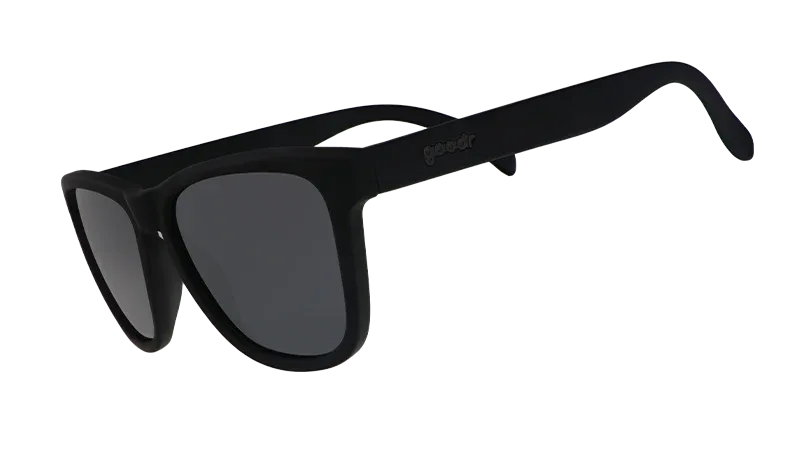
A Unicorn's Calamity