Quick answer
For most DD+ cup sizes, start with an underwire bra that has a band snug enough to carry at least 80% of the support, then choose the cup depth and coverage based on your shape and outfit. If you want lift and a rounded profile, a balconette or demi style works well; if you want natural shaping with lighter coverage, an unlined underwire cup is often more comfortable. Always prioritize band fit over cup size numbers, because a loose band lets the cups tilt forward and cause digging.
Why band fit matters more than cup size
In DD+ sizes, the band does the heavy lifting. A band that rides up in the back or shifts when you raise your arms is too loose, and that forces the underwire to press into your ribcage or breast tissue. Fasten the bra on the loosest hook when new; if you can pull the band more than an inch away from your back, size down in the band and adjust the cup accordingly. The cups should contain all breast tissue without cutting in or gaping at the top.
- Check the band first: it should sit level all the way around and stay put when you move.
- Scoop and swoop: lean forward, guide breast tissue into the cups, then check for spillage or empty space.
- If the center gore floats away from your chest, the cup is likely too small or too shallow.
Match cup construction to your shape and outfit
Unlined underwire cups with seams or stretch mesh give a natural shape and adapt to asymmetry, which is common in full bust sizes. Lined or padded demi cups create a rounder profile and can hide nipples, but they may not flex with a fuller upper bust. Balconette styles lift from the bottom and work well under wide necklines, while plunge and demi cuts suit lower-cut tops but offer less coverage. There is no single best bra for large busts; the right choice depends on whether you prioritize a smooth line under clothing, a lifted silhouette, or all-day breathability.
- Choose unlined mesh or lace when you want a natural shape and cooler wear.
- Choose lined demi or balconette cups when you want a rounded profile and nipple coverage.
- If you are between cup sizes, size up in the cup and down in the band before trying a different style.
How to test a DD+ bra before you commit
Wear the bra for at least ten minutes before deciding. Raise your arms, sit down, and bend forward to see whether the band stays level and the underwire stays flat against your ribcage. The wires should not sit on breast tissue or poke your armpits; if they do, the cup is likely too shallow or the wire shape does not match your root. Adjust the straps so they lie flat without digging, and remember that straps should not be doing the supporting work. If a bra fails the band test, changing the cup size alone will not fix it.
- Underwire should encase the breast root, not rest on top of it.
- Straps should stay put without leaving deep marks after 20 minutes.
- If the band rides up, try a smaller band and a larger cup before giving up on the style.
Decision rules for buying a DD+ bra
- Band first, cup second: Measure your underbust snugly and start with that band size. If the band rides up or shifts, go down a band and up a cup before trying another style. A bra that fails the band test will not be fixed by a different cup.
- Unlined vs lined cups: Choose unlined underwire cups for natural shaping, breathability, and flexibility with asymmetry. Choose lined or padded cups for a rounder profile and nipple coverage. Neither is universally better; match the cup to the outfit and your comfort priority.
- Coverage vs neckline: Full-coverage and balconette styles support more upper bust tissue, while demi and plunge cuts suit lower necklines but may require more frequent readjustment. Pick the cut based on the top you wear most, not just the bra size.
- Strap width and adjustability: Wider or adjustable straps distribute weight better, but straps should never be the main support. If you need to tighten straps heavily to feel secure, the band is too loose. Set straps level and snug, then rely on the band for lift.
Product facts: DD+ friendly styles at Journelle
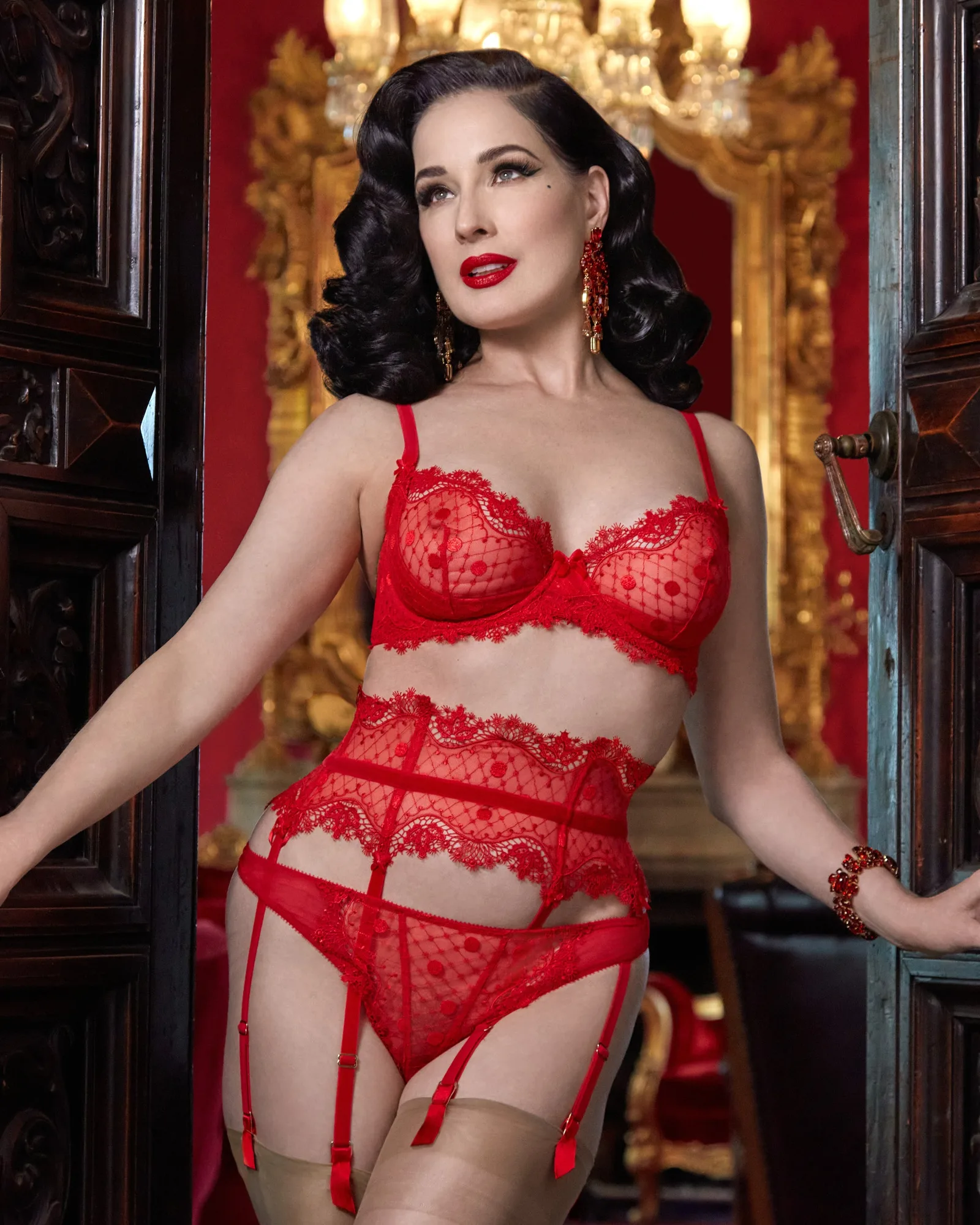
- Muse Bustiere: Dita Von Teese Muse Bustiere features unlined underwire cups, sheer lace and mesh panels, and a bustiere-length silhouette that sits at the ribcage. The unlined underwire cups give a naturally shaped fit without padding, while the longer ribcage silhouette can feel more secure than a standard bra band for full bust wear.
- Etta Wired Bra: Etta Wired Bra is a plunge demi cup bra with premium sheer mesh, directional strapping, gold hardware, and adjustable straps with hook-and-eye rear fastening. The plunge demi cut works under lower necklines, and the adjustable straps plus hook-and-eye closure let you fine-tune band tension, which matters when you need support without a full-coverage shape.
- Glamour Couture Demi Cup: Glamour Couture Demi Cup has a demi-cut underwire design with non-padded cups, faux leather accents, and floral embroidered lace cups. Non-padded demi cups offer a lighter feel and a lower neckline profile, while the underwire provides structure for full bust shapes that want lift without extra bulk.
- Nora Balconette Bra: Nora Balconette Bra is made from recycled polyester silk satin with fully lined underwire cups, tulle embroidery, and 24 carat gold details. The balconette cut lifts and enhances natural shape, and the fully lined underwire cups add a smooth, supportive layer that can reduce show-through under fitted clothing.
Who this DD+ bra approach is for
Best for
- Shoppers who wear DD or larger and want a repeatable way to test band and cup fit
- Anyone choosing between unlined, lined, demi, and balconette styles for daily wear
- Full bust shoppers who want lift and shape without relying on padded cups
Not for
- Shoppers looking for a wireless or bralette-only solution with no underwire structure
- Those who prefer molded, seamless cups with no visible seams or lace texture
- Anyone who needs a strapless bra, which requires a different fit strategy