Quick answer
Dexterity games are gaining fans because they deliver real skill, quick setup, and genuine laughs — not because they are simpler than strategy games. Flick Wars proves the point: it seats 1–6 players, runs 30–60 minutes, and hides real tactics under its 3D terrain. If your group wants something that rewards a steady hand and a smart plan, this genre is worth your table.
Myth 1: Dexterity games are just toys for kids
The label 'kids' game' gets slapped on anything you play with your hands. That misses what is actually happening on the table. Flick Wars is listed for ages 12 and up, and it asks players to command one of six factions — humans, mechs, and alien races — each with a unique set of units. The goal is to eliminate all enemy units, which means every flick is a tactical decision about position, risk, and timing. That is not a toy. It is a skill-based board game that happens to use your fingers instead of dice.
Myth 2: Adults will get bored after one round
A common worry is that flicking wears thin fast. The opposite tends to happen when the game has layers. Flick Wars includes an advanced mode with specific scenarios and new gameplay, so the same box can start as a light family skirmish and grow into something groups return to. The 30–60 minute play time also fits adult schedules: long enough to feel like a real contest, short enough to run twice in an evening. Dexterity games popularity is growing precisely because adults want that mix of quick fun and repeatable depth.
Myth 3: Skill-based games can't be strategic
People often frame dexterity game vs strategy game as a choice. In practice, the best dexterity games are strategy games with a physical execution layer. In Flick Wars, you still choose which faction to play, where to position units, and when to commit to an attack. The flick is the execution, not the whole decision. That is why the game works for players who usually prefer heavier strategy titles: the planning is real, but the tension comes from whether your hand can deliver what your brain planned.
Myth 4: You need a huge table and a long setup
Another assumption is that 3D terrain means a complicated build. Flick Wars uses an awesome 3D terrain play mat, which sets the battlefield quickly and gives the game its visual punch without turning setup into a chore. If you have a standard dining table, you have enough space. That low barrier matters for the trend: tabletop flicking games spread through game nights because they are easy to teach and easy to reset between matches.
Myth 5: Dexterity games only work for two players
Many people picture a head-to-head duel and assume larger groups are left out. Flick Wars supports 1–6 players, so it scales from solo play up to a full table. That range is unusual and useful: it means the same game can cover a quiet afternoon alone or a loud six-player brawl. For groups that struggle to agree on a game because player counts vary, that flexibility is a practical reason dexterity games are finding new fans.
Where Flick Wars fits next to word and card games
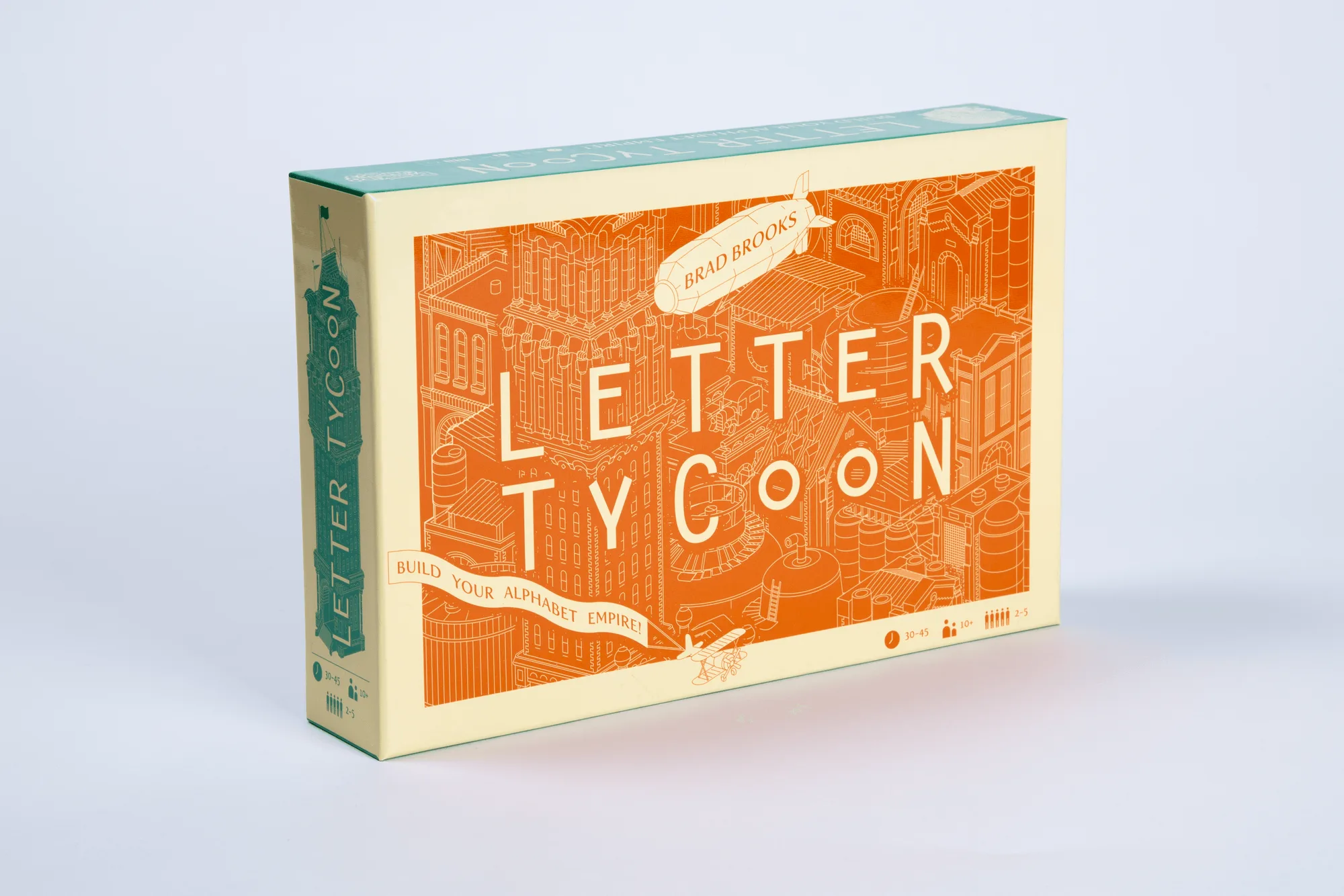
If your shelf already leans toward word-building or card strategy, Flick Wars is a different kind of energy. Letter Tycoon, for example, is a 2–5 player word-building game for ages 10+ that runs 30–45 minutes and was a Mensa Mind Games winner in 2015. It rewards vocabulary and patent timing. Flick Wars rewards aim and spatial planning. Keeping both means your group can pick the mental muscle it wants to use that night, and you are not forcing a word game on friends who want to stand up and move.
Verdicts on the biggest dexterity game claims
- Claim: Dexterity games are only for kids: Flick Wars is listed for ages 12+ and uses six factions with unique units, so the decisions are tactical, not childish. Verdict: false. Age rating and faction variety point to a teen-and-up audience.
- Claim: Adults outgrow flicking games quickly: The advanced game adds specific scenarios and new gameplay, and a 30–60 minute session fits an adult game night. Verdict: false. The box is built to be revisited, not retired.
- Claim: Skill-based games are not strategic: Flick Wars is described as a strategy and tactics dexterity game, so planning and execution both matter. Verdict: false. The flick executes a plan; it does not replace it.
- Claim: 3D terrain means a long setup: Flick Wars uses a 3D terrain play mat that sets the battlefield without a complicated build. Verdict: false. Setup stays table-ready for repeat matches.
- Claim: Dexterity games are only for two players: Flick Wars supports 1–6 players, covering solo play up to a full six-player game. Verdict: false. Player count is a strength, not a limit.
Product facts behind the verdicts
- Flick Wars - Tabletop Dexterity Combat Game with 3D Terrain: Flick Wars supports 1–6 players, ages 12+, with a 30–60 minute play time and six factions ranging from humans to mechs to alien races, each with a unique set of units. It covers solo through full-group play, so one box can serve different game nights without buying a second title.
- Flick Wars - Tabletop Dexterity Combat Game with 3D Terrain: Flick Wars is a strategy and tactics dexterity game played on a 3D terrain play mat, and the advanced game adds specific scenarios and new gameplay. The 3D mat sets the battlefield quickly, and the advanced scenarios give the game room to grow after the first few sessions.
- Letter Tycoon: Mensa Select Word-Building Strategy Game for Families and Friends, Ages 10+, 2-5 Players: Letter Tycoon is a 2–5 player word-building game for ages 10+ that plays in 30–45 minutes and was a Mensa Mind Games winner in 2015. It is a strong contrast pick when your group wants a seated, language-based strategy game instead of a physical one.