Quick answer
DHEA capsules for women are a supplement some use to support hormonal balance and energy. This guide explains how to evaluate their potential uses and safety considerations before trying one.
What is DHEA and why might women consider it?
DHEA (dehydroepiandrosterone) is a hormone naturally produced by your adrenal glands. Its levels peak in your 20s and gradually decline with age. Some women explore DHEA supplements hoping to support energy, mood, or hair, skin, and nail health, though individual results vary and research is ongoing.
Because DHEA is a hormone, it's not a casual supplement. Understanding its potential effects and risks is essential before adding it to your routine.
Key safety considerations with DHEA
DHEA can influence hormone levels, which means it's not suitable for everyone. Possible side effects include acne, hair thinning, or changes in menstrual cycle, especially at higher doses. It's important to start with a low dose and monitor how you feel.
Women with hormone-sensitive conditions (like certain cancers or endometriosis) should typically avoid DHEA. It can also interact with medications, including birth control and insulin. Always consult a healthcare provider before starting.
Decision rules: choosing and using DHEA capsules
- Check your baseline: Before starting, ask your doctor to test your DHEA-S levels. Supplementing is most relevant if levels are low, and a test helps determine the right starting dose.
- Start low and go slow: Begin with a low dose, such as 25 mg per day, and assess your tolerance for at least 2–4 weeks. Many women's formulas offer 50 mg, which may be appropriate only after a lower dose is well-tolerated. Track any changes in energy, mood, or skin to guide adjustments.
- Look for complementary ingredients: Some DHEA capsules include supporting nutrients like biotin. This can simplify your routine if you also want to support hair, skin, and nail health without an extra supplement. Check the full ingredient list to avoid unnecessary additives or allergens.
- Cycle or take breaks: Prolonged daily use may affect your body's natural hormone production. Many experts recommend cycling DHEA (e.g., 5 days on, 2 days off) or taking a break after 3–6 months.
- Monitor for side effects: Common signs to watch for include acne, hair shedding, irritability, or menstrual changes. If any occur, reduce your dose or stop and consult your healthcare provider. Discontinue use if side effects persist or worsen.
Product spotlight
-
DHEA Capsules for Women, 120ct: Each capsule delivers DHEA 50 mg along with biotin 5000 mcg. The addition of biotin targets beauty-from-within support, which may appeal if you're looking for combined hair, skin, and nail benefits alongside hormonal balance.
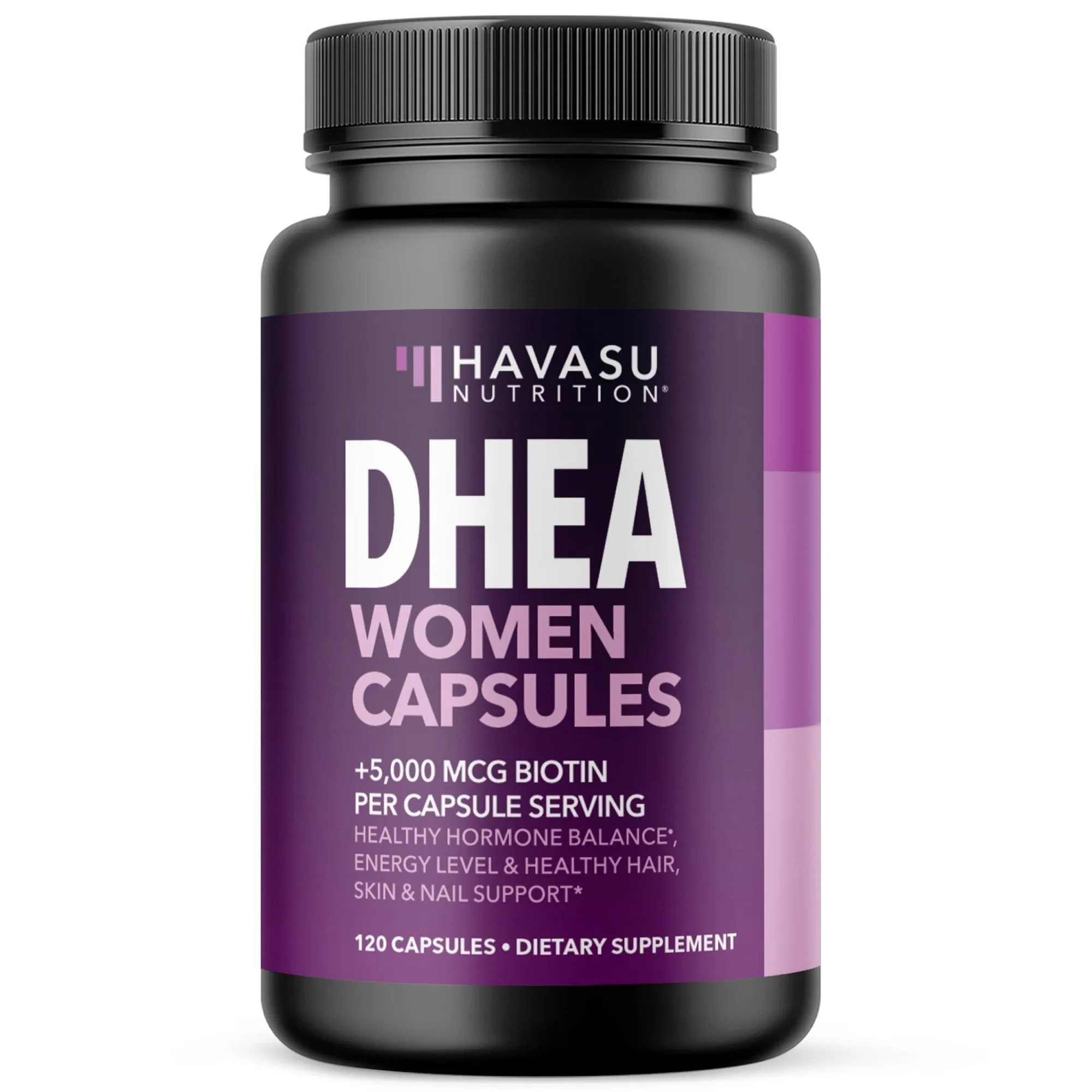
DHEA Capsules for Women, 120ct
Who should consider it?
Best for
- Women over 30–35 experiencing low energy or changes in skin/hair who have confirmed low DHEA-S levels
- Those seeking a combined supplement with DHEA and biotin for convenience
Not for
- Women under 30 without medical guidance
- Anyone with a history of hormone-sensitive conditions, pregnancy, or breastfeeding